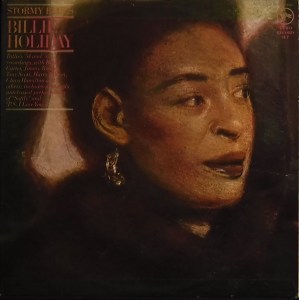
- Outstanding throughout with Triple Plus (A+++) sound on the second side and solid Double Plus (A++) sound on the other three sides
- All four sides here have intimate, relaxed, breathy vocals – the only way to hear Lady Day in her prime sounding the way she should
- This double LP set captures Billie from 1954-1955 and features Benny Carter, Jimmy Rowles, Tony Scott, Harry Edison, Chico Hamilton and other jazz greats
- “The first popular jazz singer to move audiences with the intense, personal feeling of classic blues, Billie Holiday changed the art of American pop vocals forever.”
This vintage Verve pressing has the kind of Tubey Magical Midrange that modern records can barely BEGIN to reproduce. Folks, that sound is gone and it sure isn’t showing signs of coming back. If you love hearing INTO a recording, actually being able to “see” the performers, and feeling as if you are sitting in the studio with the band, this is the record for you. It’s what vintage all analog recordings are known for — this sound.
If you exclusively play modern repressings of vintage recordings, I can say without fear of contradiction that you have never heard this kind of sound on vinyl. Old records have it — not often, and certainly not always — but maybe one out of a hundred new records do, and those are some pretty long odds.
What amazing sides such as these have to offer is not hard to hear:
- The biggest, most immediate staging in the largest acoustic space
- The most Tubey Magic, without which you have almost nothing. CDs give you clean and clear. Only the best vintage vinyl pressings offer the kind of Tubey Magic that was on the tapes in 1954 and 1955
- Tight, note-like, rich, full-bodied bass, with the correct amount of weight down low
- Natural tonality in the midrange — with all the instruments having the correct timbre
- Transparency and resolution, critical to hearing into the three-dimensional studio space
No doubt there’s more but we hope that should do for now. Playing the record is the only way to hear all of the qualities we discuss above, and playing the best pressings against a pile of other copies under rigorously controlled conditions is the only way to find a pressing that sounds as good as this one does.
What We Listen For on Stormy Blues
- Energy for starters. What could be more important than the life of the music?
- Then: presence and immediacy. The vocals aren’t “back there” somewhere, lost in the mix. They’re front and center where any recording engineer worth his salt would put them.
- The Big Sound comes next — wall to wall, lots of depth, huge space, three-dimensionality, all that sort of thing.
- Then transient information — fast, clear, sharp attacks, not the smear and thickness so common to these LPs.
- Tight punchy bass — which ties in with good transient information, also the issue of frequency extension further down.
- Next: transparency — the quality that allows you to hear deep into the soundfield, showing you the space and air around all the instruments.
- Extend the top and bottom and voila, you have The Real Thing — an honest to goodness Hot Stamper.
TRACK LISTING
Side One
Too Marvelous For Words
P.S. I Love You
Softly
I Thought About You
Love Me Or Leave Me
Willow Weep For Me
Stormy Blues
Do Nothing Till You Hear From Me
Side Two
Always
Everything Happens To Me
I Wished On The Moon
Ain’t Misbehavin’ (I’m Savin’ My Love For You)
Say It Isn’t So
Side Three
I’ve Got My Love To Keep Me Warm
I Don’t Want To Cry Anymore
Prelude To A Kiss
(I Don’t Stand A) Ghost Of A Chance
When Your Lover Has Gone
Gone With The Wind
Side Four
Please, Don’t Talk About Me When I’m Gone
It Had To Be You
Nice Work If You Can Get It
Come Rain Or Come Shine
I Gotta Right To Sing The Blues
Billie Holiday Bio
The first popular jazz singer to move audiences with the intense, personal feeling of classic blues, Billie Holiday changed the art of American pop vocals forever. Almost fifty years after her death, it’s difficult to believe that prior to her emergence, jazz and pop singers were tied to the Tin Pan Alley tradition and rarely personalized their songs; only blues singers like Bessie Smith and Ma Rainey actually gave the impression they had lived through what they were singing. Billie Holiday’s highly stylized reading of this blues tradition revolutionized traditional pop, ripping the decades-long tradition of song plugging in two by refusing to compromise her artistry for either the song or the band. – AMG