test-rock-pop

Some of our favorite rock and pop test discs.

Listening in Depth to Tarkio

More Albums with Key Tracks for Critical Listening

Analog richness, sweetness and Tubey Magic are elements absolutely indispensable to the sound of these recordings. Without them you might as well be playing a CD.

Some of the reissue pressings actually do sound like CDs and are not part of the shootouts for this album anymore. Who wants a record that sounds like a CD? They may be pressed on vinyl but they’re no less an embarrassment to analog for it. As you can imagine we feel the same way about most of the Heavy Vinyl records being made today. They’re just embarrassing.

The best pressings, on the other hand, are everything that’s good about the analog medium — smooth, sweet, relaxed and involving. You had best have a fast cartridge and not overly rich electronics to get the most out of this one. The richness on this record is already baked-in; no need to add more.

Side One

One Toke Over the Line

This track is almost always ever so slightly too bright on even the best copies. How many records do we know that have the projected hit single EQ’d a little brighter (or a lot brighter) than the rest of the album? Sergio Mendes’ first album and Mona Bone Jakon spring immediately to mind and I’m sure if I thought about it for a while I could think of many more. It’s a common practice and there’s nothing that can be done about it.

But what this slightly bright track helps the listener to notice is whether there is grain to those brighter highs. The Hot Stamper copies will still be sweet and clear even though they are a little tipped up on the top. The typical copy, pressed on the typically bad vinyl Buddah records is infamous for, will be edgy and aggressive when the vocals get loud.

(more…)

Salvation Is a Tough Test on Honky Chateau

Hot Stamper Pressings of the Music of Elton John Available Now

We award the Four Plus A++++ grade so rarely that we don’t have a graphic for it in our system to use in the grading scale. So the side two here shows up on the chart as A+++, but when you hear this copy you will know why we gave it a fourth plus.


UPDATE 2020

We no longer give out grades of Four Pluses as a matter of policy, but that doesn’t mean we don’t come across records that deserve them from time to time.


When I hear a record with a side this phenomenally good, with the stereo tuned-up and tweaked within an inch of its life to reproduce the album at the highest level I can manage, I will sometimes sit my wife down and play her a track or two. I did it for a Four Plus Deja Vu earlier this year [2016] as a matter of fact, playing Country Girl: Whiskey Boot Hill on side two, with that crazy HUGE organ blasting out of the right speaker — what a thrill!

For this record I played her Salvation, with one huge chorus following another, like powerful waves crashing on the shore, until Elton takes a deep breath and belts out the final, biggest chorus, hitting his peak an octave higher and taking the song to an emotional level neither one of us had ever experienced with it before.

We followed it up with the lovely Mona Lisas and Mad Hatters, and that was about as much Elton John live in my listening room at practically concert hall levels we could take in one sitting.

(more…)

Listening in Depth to Mona Bone Jakon

Hot Stamper Pressings of the Music of Cat Stevens Available Now

Right off the bat I want to say this is a work of GENIUS. Cat Stevens made three records that belong in the Pantheon of greatest popular recordings of all time. In the world of folk-pop, Mona Bone Jakon, Teaser and the Firecat and Tea for the Tillerman have few peers. There may be other recordings that are as good but there are no other recordings that are better.


Side One

Lady d’Arbanville

This track will always be a little bright. It was supposed to be a hit song, and hit songs are frequently mixed a little bright.

Maybe You’re Right
Pop Star
I Think I See the Light (more…)

Boys And Girls – Two Tracks Are Key

More of the Music of Bryan Ferry

More Albums with Key Tracks for Critical Listening

The song Valentine, the second track on side two, is a key test for that side. Note how processed Ferry’s vocals are. On even the best copies they will sound somewhat bright. The test is the background singers: they should sound tonally correct and silky sweet.

If Ferry sounds correct, they will sound dull, and so will the rest of the side. That processed sound on his vocal is on the tape. Trying to “fix” it will ruin everything.

You can be pretty sure that whatever Heavy Vinyl pressing has been made for this album that they tried to fix the hell out of it. Doubtless the result is not a pretty one. It rarely is.

On the top copies the lead on the very next track, Stone Woman, is tonally right on the money.

These two tracks, two of the best on the album, together make it easy to know if your copy is correct in the midrange.

Track two: background vocals.

Track three: lead vocal.

What could be easier?

Key Listening Test for Both Sides

The quality of the percussion is critical to much of the music here. There’s tons of it on Boys and Girls, even more than on its predecessor Avalon, and unless you have plenty of top end, presence and transparency, all that percussion can’t work its magic to drive this rhythmic music.

How About the British Pressings?

Bryan Ferry is British, as is bandmate David Gilmour and the recording and producing team headed by the amazing Rhett Davies. And yes, the recording was done at many studios, most of them overseas.

But the album is mixed by Bob Clearmountain at The Power Station and mastered by Robert Ludwig at Masterdisk, and that means the master tape was right here in America when it came time to get the sound of the tape onto vinyl.

The British pressings are made from dubs and sound like it.

(more…)

Listening in Depth to Blood, Sweat and Tears

Hot Stamper Pressings of Top 100 Titles Available Now

In my opinion this is the BEST SOUNDING rock record ever made. Played on a BIG SPEAKER SYSTEM, a top Hot Stamper pressing is nothing less than a thrill, the ultimate Demo Disc.

Credit must go to the amazing engineering skills of ROY HALEE. He may not be very consistent (Graceland, Still Crazy After All These Years) but on this album he knocked it out of the park. With the right copy playing on the right stereo, the album has the potential to sound like LIVE MUSIC.

You don’t find that on a record too often, practically never in fact. I put this record at the top of The Best Sounding Rock Records of All Time.

Side One

Variations on a Theme by Erik Satie (1st & 2nd Movements)

The song is always going to be plagued with a certain amount of surface noise. A solo guitar opening on a pop record pressed on Columbia vinyl from the ’60s? A brand new copy would have surface noise, so it’s important to not get too worked up over surfaces that are always going to be problematical.

Smiling Phases
Sometimes in Winter

This shootout taught me a lot about this track. There is a huge amount of bass which is difficult to reproduce; the best copies have note-like, controlled (although prodigious) bass which is a very tough system test.

Having said that, what separates the killer copies from the merely excellent ones is the quality of the flute sound. When you can hear the air going through the flute, and follow the playing throughout the song, you have a superbly transparent copy with all the presence and resolution of the best. If the flute sounds right, Katz’s voice will too. The sound will be Demonstration Quality of the highest order. Want to shoot out two different copies of this album on side one? Easy. Just play this track and see which one gets the flute right.

By the way, we LOVE the version of this song that Sergio Mendes does on Stillness. Eric Katz is a decent singer; the two girls in Brazil ’66 are SUPERB singers. The fact that they are female, that there are two of them and that they can harmonize as beautifully as any two singers you’ve ever heard allows their version of the song to have qualities far beyond the boys in Blood Sweat and Tears. But the BS&T guys make up for it by being REAL JAZZ MUSICIANS. Most of this album is real jazz played by top notch players. No other successful pop album to my knowledge can make that claim. In that sense it’s sui generis. But it’s unique in other ways as well, not just that one.

(more…)

Blood Sweat and Tears – The 30 Second Spinning Wheel Test

Hot Stamper Pressings of the Music of Blood, Sweat and Tears Available Now

This test is found in the track commentary for side two of our Hot Stamper listings for the album.

If you think you have a hot copy, see if yours does what our best copies do.

We also think that a record like this — a dynamic, full-spectrum recording, not overly concerned with detail — makes a much better Test Disc than the kind most audiophiles seem to prefer.

Patricia Barber it is not.

If you’re in the market for new speakers, take this record — or one like it — with you to the audition. Any speaker that can play this record properly deserves your consideration, or at the very least your respect.

In my experience not many speakers have what it takes to do this album justice.

The Blood, Sweat and Tears Spinning Wheel Test 

The first thirty seconds are key. Here is what you should be listening for.

Piano, Cowbell, Snare

Side two starts off with a bang; note that the piano has real weight to it right from the git go. When the cowbell comes in it should not sound muffled in any way (it’s a bell, don’t you know), quickly followed by the solid-as-a-rock-snare (the best on record.)

The Brass

On the killer copies that first blast of brass will be completely free of grain or grunge, yet the brass instruments themselves (trumpets and trombone) have all their leading edge transients, their “bite,” fully intact. They’re not in any way muffled or smeared, yet the sound is never aggressive. If anything, the brass is so free from distortion and so tonally correct it should actually sound smooth.

(more…)

Vivid and Accurate Timbre for Reeds and Percussion – A Demo Disc Like No Other

Hot Stamper Pressings of Percussion Recordings Available Now

This is one of the most phenomenal sounding records I have ever heard in my life.

Take the best sound you’ve ever heard from the best authentic Mercury classical record you own (not that Heavy Vinyl BS) and translate it into pop arrangements for clarinets, flutes, saxes, oboes, bassoons, percussion and who-knows-what-else and what do you have?

Sound that leaps out of the speakers with absolutely dead on tonality.

But what is most shocking of all is how vivid and accurate the timbre of every instrument is.

Yes, it’s multi-miked, and sometimes the engineers play with the channels a bit much (especially at the start of the first track).

That said, if you have the system for it, it’s very possible you have never heard most of these instruments sound this real on any other recording. It’s as if you were standing right in the studio with them. Yes, it’s that crazy good.

For our last shootout, it took two copies to provide you with top sound on both sides. Clean stereo pressings are very hard to find. Most copies are mono, and most copies are beat, and that combination makes for some slim pickings indeed. This side two is not especially quiet but it’s the best we can find, and we hope that when you hear the glorious sound the surfaces will be easy to ignore. If not, send it back.

(more…)

Leaner and Cleaner Just Won’t Cut It on the Last Record Album

Hot Stamper Pressings of the Music of Little Feat Available Now

To our way of thinking, this is the kind of record one should bring to one’s favorite stereo store to properly judge their equipment.

They can play female vocals; they do it all day long.

But can they play The Last Record Album and have it sound musical and involving?

Can they get it to ROCK?

Will they even turn it up loud enough to find out? My jaded money is on no, for all three. 

Rockin’ The Last Record Album is a much, much tougher test than what they are used to, one that their systems will struggle to pass. (That’s what makes it a good test, right?)

Leaner and cleaner — the kind of audiophile sound I used to hear everywhere I go — is simply not going to work on this album, or Zuma, or Houses of the Holy, or the hundreds of other Classic Rock records we put up on the site every year. There has to be meat on those bones. To switch metaphors in the middle of a stream, this album is all about the cake, not the frosting.

Bear that in mind when they tell you at your local salon that the record you brought with you is at fault, not their expensive and supposedly “correct” equipment. I’ve been in enough of these places to know better. If you’ve put your audio time in, their excuses should fall on deaf ears. 

Whose Fault Is It?

Most copies of this album are ridiculously dull and compressed. The band itself sounds bored, as if they lack faith in their own songs. But it’s not their fault. Whose fault it is is never easy to fathom; bad mastering, bad tapes, bad vinyl, bad something else — whatever it is, that thick, lifeless sound turns this powerfully emotional music into a major snooze-fest. It’s positively criminal but it happens all the time. It’s the reason we have to go through a dozen copies to find one that sounds like this. (more…)

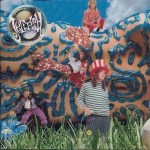
Maybe Not a Perfect Recording, a Good One for Testing Though

Reviews and Commentaries for the Music of Jellyfish

I spent quite a few hours tuning up the stereo with side two of the album, specifically the song Now She Knows She’s Wrong, with its glockenspiel, loudly clanging tubular bells and yelling chorus at the end. 

It’s exceedingly hard to get everything right at the same time: the energy, the deepest bass, the extension at the very top of the top end, the greatest transparency, just to mention a few of the main ones. There are always trade-offs, and being able to balance the trade-offs against the gains in these areas and others is a real test of your critical listening skills.

It’s not a perfect recording, and those are usually the ones that can teach you the most about your system’s strengths and weaknesses.

DMM

The problem with the typical copy of this record is gritty, grainy, grungy sound — not the kind that’s on the master tape, the kind that’s added during the mastering and pressing of the record. When that crap goes away, as it so clearly does on side one of the copy we played recently, it lets you see just how good sounding this record can be. And that means REALLY good sounding.

While during the shootout I had completely forgotten that all the domestic pressings of Bellybutton are direct metal mastered. (The import pressings are clearly made from copy tapes and are to be avoided.) It was only afterwards, when looking for stamper variations, that I noticed the DMM in the dead wax .

On most copies the CD-like opacity and grunge would naturally be attributed to the Direct Metal Mastering process; that’s the conventional wisdom, so those with a small data sample (in most cases the size of that data sample will be no more than one) could be forgiven for reaching such a conclusion. Based on our findings, it turns out to be completely erroneous.

The bad pressings do indeed sound more like CDs. The better pressings do not. All are DMM, so the conventional wisdom, a term of disparagement here at Better Records to start with, again shows how little probative value it actually brings to the discussion.

We would love to hear a version of the album that was not Direct Metal Mastered, just for comparisons sake. That unfortunately is an experiment that cannot be run. What we can do is play the CDs — I have several, the earliest ones being the best — and note that they are clearly grungier and grittier sounding than the better LP pressings. Some of that sound is on the Master Tape, how much we will probably never know.

(more…)

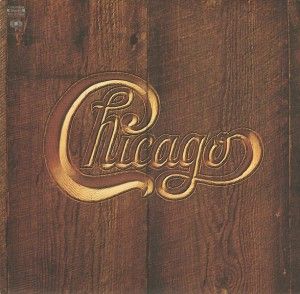
The Brass Are Key on Chicago V

More Rock and Pop Titles that Are Good for Testing

The brass on any Chicago album has to have just the right amount of transient bite yet still be full-bodied and never blary. In addition, on the best of the best pressings you can really hear the air moving through the horns.

Most copies suffer from dull highs and smeary, compressed brass. This is a sound we cannot abide. The lively copies with real bite to the brass and plenty of ENERGY in the music are the only ones for us. Finding them is not easy but we came across a few that made the grade and are proud to offer them here.

More often than not the brass lacks bite and presence, but these sides had the Chicago horns leaping out of the speakers. What is a Chicago record without great horns? Without that big bold sound you may have something, but it sure ain’t Chicago.

Most pressings don’t reproduce the percussion harmonics, the leading edge transients of the horns, or the big, open space around Peter Cetera’s vocals that we know is there, but a high-res, super-transparent copy like this one brings out all those qualities and more.

One More Sonic Note

We always notice during our Chicago shootouts that the songs on their albums tend to be hit and miss sonically (especially when it comes to the more multi-layered and dynamic tracks).

But on the hotter copies the production missteps don’t seem to be nearly as problematical.

(more…)