 Hot Stamper Pressings of the Music of Tom Petty Available Now
The earliest stampers for this mysterious Tom Petty album — not the one you see pictured — were some of the worst sounding in our shootout.
Most audiophiles, when given a choice between earlier stampers and later stampers, all other things being equal, would take the early ones, right?
As a matter of fact, so would we. Most of the stamper sheets we put up on this blog show the early numbers beating the later numbers.
As a rule of thumb it’s not a bad one, but unless you actually do a shootout, how would you know that your SS1/SS2 copy isn’t the best?
How could you possibly know that the SS4/SS3 murdered it?
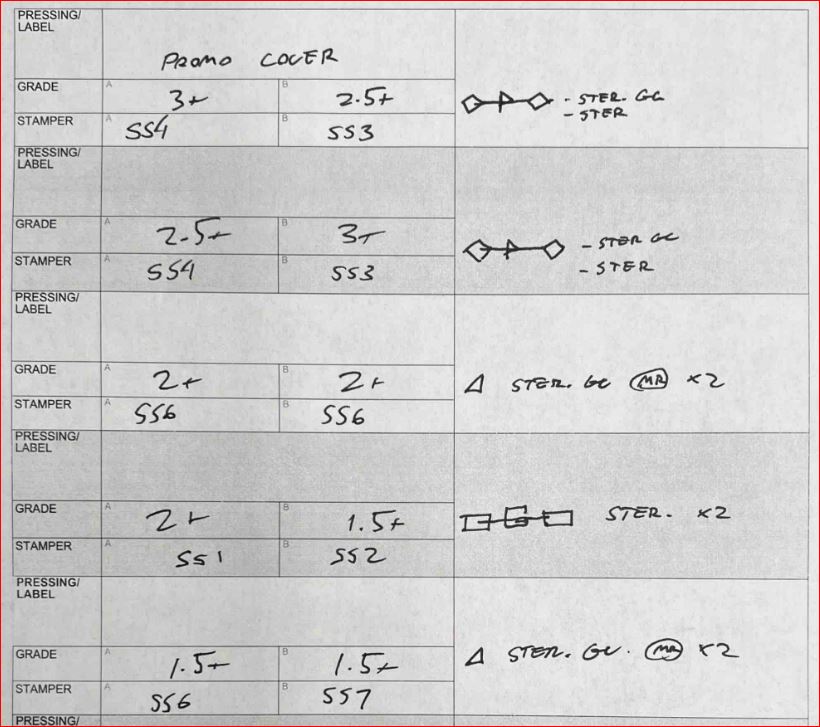
The promo cover might be helpful, but lots of promo pressings don’t win shootouts, or even do all that well in them.
Like so many realities of the world of records, these are all mysteries, ones that are very unlikely to be solved.
The winners of the next shootout could have the exact same stampers as the record that did the worst in this one. It happens!
One of the best reasons mysteries such as this have little chance of being solved is that no one with any real expertise, using methodologies that are reliable and reproducible in any serious way, is taking on this kind of work — other than us.
We actually like testing records, and over the many years we have been in business we’ve refined* a method for doing it that is as reliable and reproducible as any method can be in the world of audio: the record shootout.
*As far as I know, my friend Robert Pincus was the one who invented the record shootout. He would evaluate each side of a record independently against other copies of the same album, taking notes that described the strengths and weaknesses he heard on each copy he played.
He assumed nothing, and neither do we. Our rigorous controls, blinded experiments and use of the scientific method to arrive at reproducible results are simply advances on his original approach.
(One of the most important differences between his shootouts and ours is that we have someone whose only job is to play the records, and another person to do the listening and take the notes. When the listener has no idea what pressing is being played, there is little chance of the kinds of psychological biases that are the scourge of the record shootout.)