1959

Benny Carter – Swingin’ the ’20s

More of the Music of Benny Carter

  • Boasting seriously good Double Plus (A++) grades from top to bottom, this vintage Contemporary pressing is doing just about everything right
  • These sides are bigger and more open, with more bass and energy, than most others we played – the saxes and trumpets are immediate and lively
  • Mr. Earl Hines himself showed up, a man who knows this music like nobody’s business – Leroy Vinnegar and Shelly Manne round out the quartet
  • “Great musicians produce great results, and most of the LP’s tracks were done in one or two takes. The result is ‘a spontaneous, swinging record of what happened’ when Carter met Hines ‘for the first time. . . .'”

For us audiophiles, both the sound and the music here are enchanting. If you’re looking to demonstrate just how good a 1959 All Tube Analog recording can sound, this killer copy will do the trick. (more…)

Miles Davis – Kind of Blue on a Killer 70s Red Label Pressing

More Miles Davis

  • With two solid Double Plus (A++) sides, this Red Label pressing has Demo Disc sound – sound that’s guaranteed to make you want to take all of your remastered pressings and dump them off at the Goodwill
  • After auditioning a Hot Stamper Kind of Blue like this one – a pressing that captures the sound of this amazing group like nothing you have ever heard – you may be motivated to add a hearty, “Good riddance to bad audiophile rubbish!”
  • KOB is the embodiment of the big-as-life, spacious and timbrally accurate 30th Street Studio Sound Fred Plaut was justly famous for
  • Space, clarity, transparency, and in-the-room immediacy are some of the qualities to be found on this pressing (particularly on side one)
  • It’s guaranteed to beat any copy you’ve ever played, and if you have the new MoFi pressing, please, please, please order this copy so that you can hear just how screwy the sound of their ridiculous remaster is
  • 5 stars: “KOB isn’t merely an artistic highlight for Miles Davis, it’s an album that towers above its peers, a record generally considered as the definitive jazz album, a universally acknowledged standard of excellence.”
  • If you’re a fan of the music Davis, Adderley and Coltrane were playing circa 1959, this album clearly belongs in your collection

The Labels of Kind of Blue

The 6 Eye label domestic stereo pressings win our shootouts, in the case of Kind of Blue without exception.

The 360 label pressings, black print (1962-63) or white print (1963-70), as well as the rare 70s red label (1970-?), can sound very good, but they never win shootouts.

We’ve identified a select group of reissues with the potential to do well in shootouts, typically earning a grade of Super Hot (A++) when up against the best originals, which earn our top grade, White Hot (A+++). Kind of Blue is one of those recordings.

Scores of differently mastered versions have been cut over the years, but to find one that’s lively and dynamic yet still communicates the relaxed nature of this music is a trick that few of them can pull off. These sides did just that.

When the band really starts cutting loose on “So What,” you’re going to lose your mind! The sound is open and spacious with a wonderful three-dimensional quality that gives each musician a defined space. You can easily tune in to one player or another and follow their contribution as the band stretches out.

Quick Listening Tests

This is an easy one. Just listen to the trumpet at the start of Freddie Freeloader. Most copies do not properly reproduce the transient information of Miles’ horn, causing it to have an easily recognizable quality we talk about all the time on the site: smear. No two pressings will have precisely the same amount of smear on his trumpet, so look for the least smeary copy that does everything else right too. (Meaning simply that smear is important, but not all-important.)

On All Blues (track one, side two), the drums in the right channel are key to evaluating the sound of the better copies. The snare should sound solid and fat — like a real snare — and if there is space in the recording on your copy you will have no trouble hearing the room around the kit.

[The drums are precisely where one of the major faults of the disastrous MoFi 2 LP 45 RPM pressing can be heard. A fuller review is coming, soon I hope!}

Next check the cymbals. No two copies will get the cymbals to sound the same, so play a few and see which ones sound the most natural to you. The most natural will be the one with the best top end.

When Adderley comes in hard left, his alto should not be thin, squawky or stuck in the speaker. The best of the best copies have the instrument sounding full-bodied (for an alto) and reedy. The reedy quality tells you that your pressing is highly resolving and not smeared.

(more…)

Martin Denny / Quiet Village

More Exotica

  • Quiet Village returns to the site for only the second time in years on this original Stereo Liberty pressing with solid Double Plus (A++) sound or close to it throughout – fairly quiet vinyl too
  • This side two is huge and rich, with a big stage, Tubey Magic and correct tonality from top to bottom, and side one is not far behind in all those areas
  • The tonality is right on the money – it’s remarkably lively, with tight, clear bass (particularly on side two)
  • Listen to how open the drum sound is (also particularly on side two) – that sound is just not to be found on popular albums anymore

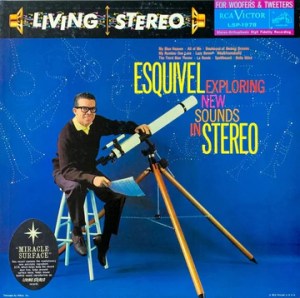
This superb sounding copy of Quiet Village has a lot in common with the other Bachelor Pad / Exotica titles we’ve listed over the years, albums by the likes of Esquivel, Dick Schory, Edmundo Ros, Arthur Lyman and others.

But c’mon, nobody really buys these records for the music (although the music is thoroughly enchanting). It’s all about the Tubey Magical Stereoscopic presentation, the wacky 3D sound effects (of real birds and not-so-real ones) and the heavily percussive arrangements. In all of these areas and more this record does not disappoint.

If you’re an audiophile, both the sound and the music are crazy fun. If you want to demonstrate just how good 1959 All Tube Analog sound can be, this is the record that will do it.

(more…)

Music Of Berlioz / Martinon

Hot Stamper Pressings on Decca and London Available Now

  • You’ll find big, dynamic and tubey sonics throughout this early Stereo London pressing of CS 6101, with both sides earning solid Double Plus (A++) grades or BETTER
  • This is kind of record that Decca’s reputation as the purveyor of the world’s greatest orchestral recordings rests on
  • If you want to hear some exciting French orchestral music played by one of the great orchestras under the direction of the amazing Jean Martinon, you will have a hard time finding a record that delivers the goods better than this one

(more…)

Rodgers – Slaughter On Tenth Avenue / Fiedler

More Orchestral Spectaculars

  • With two outstanding Double Plus (A++) sides, you’ll have a hard time finding a copy that sounds remotely as good as this vintage Shaded Dog pressing, recorded in All Tube 1959 Living Stereo
  • Boasting two INCREDIBLE Shootout Winning Triple Plus (A+++) sides or close to them, this early Shaded Dog pressing, recorded in Living Stereo, is practically as good a copy as we have ever heard
  • It’s also fairly quiet at Mint Minus Minus, which makes it unusual in our experience for a record made in 1959
  • These sides are doing nearly everything right – they’re rich, clear, undistorted, open, spacious, and have depth and transparency to rival the best recordings you may have heard
  • The music flows from the speakers effortlessly – you are there
  • This record will have you asking why so few Living Stereo pressings actually do what this one does. The more critical listeners among you will recognize that this is a very special copy indeed. Everyone else will just enjoy the hell out of it.
  • Like many of our favorite orchestral spectaculars, weighty, powerful brass is key to the sound of the best copies like this one
  • 1959 was a phenomenal year for audiophile quality recordings – we’ve auditioned and reviewed more than a hundred and thirty so far, and there are undoubtedly a great many more that we’ve yet to play

Years ago we wrote:

This copy was so good it almost left me speechless. Why is it not one of the most sought-after recordings in the RCA canon? Beats the hell out of me.

But wait just one minute. It wasn’t until a few years ago that I found out just how good this record could sound, so how can I criticize others for not appreciating a record I had never taken the time to appreciate myself?

Which more than anything else prompts the question — why is no one exploring, discovering and then bringing to light the exceptional qualities of these wonderful vintage recordings (besides those of us here, of course)?

(more…)

Chet Baker / Plays The Best Of Lerner And Loewe

More Chet Baker

  • This superb Riverside stereo recording boasts Double Plus (A++) sound or close to it from first note to last, pressed on exceptionally quiet OJC vinyl
  • Big, rich, smooth, open, natural, with plenty of note-like bass (particularly on side one) – what’s not to like? This copy is doing just about everything right
  • Some of the best jazz guys of the day back up Chet on this one: Zoot Sims, Pepper Adams, Bill Evans, Herbie Mann and more
  • “…the timelessness of the melodies, coupled with the assembled backing aggregate, make Chet Baker Plays the Best of Lerner and Loewe (1959) a memorable concept album.”

This is a wonderful Chet Baker record that doesn’t seem to be getting the respect it deserves in the wider jazz world. You may just like it every bit as much as the Chet album, and that is one helluva record to compare any album to. In our estimation it’s about as good as it get. (more…)

Barney Kessel / Barney Kessel Plays Carmen

  • Solid Double Plus (A++) grades bring Kessel’s inspired jazz album to life on this early Contemporary stereo LP (one of only a handful of copies to hit the site in years)
  • Tubey Magic, richness, sweetness, dead-on timbres from top to bottom – this is a textbook example of Contemporary sound at its best
  • The sonics are gorgeous – all tube, live-to-two-track, direct from the Contemporary studio to you, on glorious un-remastered analog vinyl
  • Marks in the vinyl are sometimes the nature of the beast with these early pressings – there simply is no way around them if the superior sound of vintage analog is important to you

The Sound We Love

For those of you who appreciate the sound that Roy DuNann (and Howard Holzer on other sessions) were able to achieve in the 50s at Contemporary Records, this LP is a Must Own (unless you already have it, which is doubtful considering how hard it is to find a copy in clean condition). Their stuff just doesn’t get any better than this.

From an audiophile point of view, how can you beat a Roy DuNann recording of so many instruments? It’s audiophile heaven.

Talk About Timbre

Man, when you play a Hot Stamper copy of an amazing recording such as this, the timbre of the instruments is so spot-on it makes all the hard work and money you’ve put into your stereo more than pay off. To paraphrase The Hollies, you get paid back with interest. If you hear anything funny in the mids and highs of this record, don’t blame the record. (This is the kind of record that shows up audiophile BS equipment for what it is: audiophile BS. If you are checking for richness, Tubey Magic and freedom from artificiality, I can’t think of a better test disc. It has loads of the first two and none of the last.)

Two of the best sounding jazz guitar records in the history of the world were made by Barney Kessel for Contemporary: this one, and Music To Listen To Barney Kessel By. I used to have them both in my collection, but they long ago were sent to good homes.

(more…)

Carlos Montoya – From St. Louis to Seville

Living Stereo Titles Available Now

  • Flamenco meets Jazz in this extraordinary Living Stereo all analog recording from 1958
  • Both of these sides are exceptionally big and rich, with clear guitar transients, an abundance of three-dimensional space and Tubey Magic that will have your jaw on the floor
  • …”Carlos Montoya, the great flamenco guitarist, played for the first time on record with a jazz rhythm accompaniment, giving his unique and expressive interpretation of five pop tunes, best of which is a virtuoso treatment of ‘St. Louis Blues.’ The rest of the album spotlights the exciting flamenco guitar work on three Montoya originals, and a couple of Spanish popular gypsy songs.” – Fresh Sound Records.com
  • The three-dimensional space and Tubey Magic are superb on this copy
  • An amazing Webster Hall Living Stereo all analog recording from 1958 – nothing else sounds like it
  • It’s yet another recording we’ve discovered with (potentially) excellent sound
  • When you’ve played as many Living Stereo titles as we have (250+ and counting), you’re bound to run into this kind of Demo Disc sound from time to time – it’s what makes record collecting fun

Ed Begley is the engineer here and he knocked this one out of the park. What an amazing sounding Living Stereo recording.

Need a refresher course in Tubey Magic after playing too many modern recordings or remasterings? This record is overflowing with it. Rich, clear, natural, sweet, overflowing with space and ambience, absolutely correct tonality — it’s all here.

The rhythm accompaniment is made up of three top players from New York. Sally Montoya noted at the time: “Carlos just recorded the first Flamenco jazz record for Victor, with Osie Johnson and Milt Hinton and Barry Galbraith on electric guitar. A most relaxed and informal session. The other musicians said it was unique in their experience.”

It’s certainly a unique record in my experience, with mind-blowingly good sound and engaging music.

(more…)

Copland – Rodeo / El Salon Mexico / Danzon Cubano / Dorati

More Music Conducted by Antal Dorati

  • Dorati and the Minneapolis Symphony Orchestra’s performance of these wonderful Copland works appears on the site for only the second time ever, here with solid Double Plus (A++) sound or BETTER throughout this original Plum Label Mercury stereo pressing of SR 90172
  • It’s also remarkably quiet at the high end of Mint Minus Minus, a grade that even our most well-cared-for vintage classical titles have trouble playing at
  • This copy is everything that a good Mercury should be: dynamic, open, immediate, exciting, and of course, with Dorati and the MSO, beautifully performed
  • The “of course” should be taken with a grain of salt — plenty of Dorati Mercury records do not sound good, and if anybody should know, we should, we’ve played them by the score
  • But we love what he and the MSO have done with these Copland pieces – we tried lots of other recordings, and nothing could touch Mercury for exciting, lifelike and energetic sound
  • 1959 was a phenomenal year for audiophile quality recordings – as of 2025 we’ve auditioned hundreds and reviewed more than one hundred and seventy titles, and there are undoubtedly a great many more that we’ve yet to discover.
  • We think there are a large number that belong in any audiophile’s record collection worthy of the name.

(more…)

Respighi / Ancient Dances and Airs on Golden Import

More of the Music of Ottorino Respighi

  • Outstanding sound for this vintage import reissue pressing, with both sides earning solid Double Plus (A++) grades or close to them
  • I believe this is only the second Golden Import Mercury reissue we have ever listed on the site — good sounding ones are few and far between, but they do exist, and this is one of them
  • It’s more transparent, less distorted, smoother, and more tonally correct than much of what we played (particularly on side two)
  • More reviews and commentaries for Mercury Golden Import pressings can be found here.
  • We had three copies of the Golden Import, all with the same stamper numbers, and this one came out on top, although it is far from the best, the best being the right pressings on the real Mercury Living Presence label

Of course the music is wonderful, with Respighi looking back and paying homage to the music and the musical structures of the past. This is no Pines of Rome.

(more…)