Gus Dudgeon, Producer-Engineer – Reviews and Commentaries

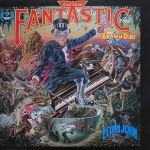
Captain Fantastic… – Number Six of Seven Consecutive Chart Topping Albums

More Reviews and Commentaries for the Music of Elton John

The Classic Elton John According to Wikipedia

Besides being the most commercially successful period, 1970–1976 is also held in the most regard critically. Within only a three-year span, between 1972 and 1975 John saw seven consecutive albums reach number one in the US, which had not been accomplished before. Of the six Elton John albums to make Rolling Stone’s list of “The 500 Greatest Albums of All Time” in 2003, all are from this period, with Goodbye Yellow Brick Road ranked highest at number 91; similarly, the three Elton John albums given five stars by Allmusic (Tumbleweed Connection, Honky Château, and Captain Fantastic) are all from this period. 

After 1975, good Elton John music is hard to come by. A few songs scattered among a few albums — pretty slim pickins. But the four or five albums he made in the early ’70s are nothing less than AMAZING (and amazing sounding, when you get the right pressings of course).

The albums that went to Number One are listed below in bold.

Three of his best, including his absolute best album, Tumbleweed, did not go to Number One, although they did make the top ten.

1969 Empty Sky 
1970 Elton John 
1971 Tumbleweed Connection
1971 11-17-70 [live] 
1971 Madman Across the Water 
1972 Honky Chateau 
1973 Don’t Shoot Me I’m Only the Piano Player
1973 Goodbye Yellow Brick Road 
1974 Caribou 
1975 Captain Fantastic and the Brown Dirt Cowboy
1975 Rock of the Westies 

Elton John Shootouts

Elton John is one of the handful of artists to produce an immensely enjoyable and meaningful body of work throughout the ’70s, music that holds up to this day. The music on his albums, so multi-faceted and multi-layered, will endlessly reward the listener who makes the effort and takes the time to dive deep into the sound of his classic releases.

Repeated plays are the order of the day. The more critically you listen, the more you are sure to discover within the exceedingly dense mixes favored by Elton and his bandmates. And the better your stereo gets the more you can appreciate the care and effort that went into the production of the recordings.

Elton John albums always make for tough shootouts. His producers’ (Gus Dudgeon being the best of them) and engineers’ (Ken Scott and Robin Geoffrey Cable, likewise the best) approach to recording — everything-but-the-kitchen-sink as a rule — make it difficult to translate their complex sounds to disc, vinyl or otherwise.

Everything has to be tuned up and on the money before we can even hope to get the record sounding right. Careful VTA adjustment could not be more critical in this respect.

If we’re not hearing the sound we want, we keep messing with the adjustments until we do. There is no getting around sweating the details when sitting down to test a complex recording such as this. If you can’t stand the tweaking tedium, get out of the kitchen (or listening room as the case may be). Obsessing over every aspect of record reproduction is what we do for a living. Pink Floyd’s recordings require us to be at the top of our game, both in terms of reproducing their albums as well as evaluating the merits of individual pressings.

When you love it, it’s not work, it’s fun. Tedious, occasionally exasperating fun, but still fun nonetheless.

Obsessed? You Better Believe It

Many of the Elton John albums you see listed above are records we admit to being obsessed with.

Currently we have identified about 150 that fit that description, so if you have some spare time, check out what we have to say about them.

Goodbye Yellow Brick Road – What to Listen For

More Elton John

More Reviews and Commentaries for Goodbye Yellow Brick Road

The richness, sweetness and freedom from artificiality is most obvious where you often hear it on a Pop Rock Big Production like GYBR: in the loudest, densest, most climactic choruses.

We set the playback volume so that the loudest parts of the record are as huge and powerful as they can possibly become without crossing the line into distortion or congestion.

On some records, Dark Side of the Moon comes instantly to mind, the guitar solos on Money are the loudest thing on the record.

On Breakfast in America the sax toward the end of The Logical Song is bigger and louder than anything on the record, louder even than Roger Hodgson’s near-hysterical multi-tracked screaming “Who I am” about three quarters of the way through the track. Those, however, are clearly exceptions to the rule. Most of the time it’s the final chorus of a pop song that gets bigger and louder than what has come before.

A pop song is usually designed to build momentum as it works its way through the verses and choruses, past the bridge, coming back around to make one final push, releasing all its energy in the final chorus, the climax of the song. On a good recording — one with real dynamics — that part of the song should be very loud and very powerful.

Testing the Climaxes

The climax of the biggest, most dynamic songs are almost always the toughest tests for a pop record, and it’s the main reason we play our records loud. The copies that hold up through the final choruses of their album’s largest scaled productions are the ones that provide the biggest thrills and the most emotionally powerful musical experiences one can have sitting in front of two speakers. Our Top 100 is full of records that reward that kind of intense listening at loud levels.

We live for that sound here at Better Records. It’s precisely what the best vintage analog pressings do so brilliantly. In fact they do it so much better than any other medium that there is really no comparison, and certainly no substitute. If you’re on this site you probably already know that.

Two to Listen For

Number one: Too many instruments and voices jammed into too little space in the upper midrange. When the tonality is shifted-up, even slightly, or there is too much compression, there will be too many elements — voices, guitars, drums — vying for space in the upper part of the midrange, causing congestion and a loss of clarity.

(more…)

Goodbye Yellow Brick Road – A Heavy Vinyl Winner!

Hot Stamper Pressings of the Music of Elton John Available Now

Sonic Grade: B (or better)

I think these are the labels for the copy we played, It came out around 2000-2005. It’s not Speakers Corner, Simply Vinyl or Back to Black. Those are labels best avoided in our experience.

Hey, they really did a good job with this one. We are going to listen to it again at a later date to see if our initial impressions were correct [I guess by now it should be clear that we are never going to do that, sorry], but it sure sounded good to us when we played it recently during our big GYBR shootout. 

I’m guessing no domestic copy can beat it, and certainly no audiophile half-speed mastered pressing can hold a candle to it. Those records are pretty awful.

Goodbye Yellow Brick Road – Modern Sounding Stampers?

More of the Music of Elton John

Some British copies on some sides sound too much like a modern reissue; they lack weight and tend to be too “clean” sounding.

We take serious points off when records sound modern, a sound the current spate of reissues cannot get away from and one of the main reasons we gave up on them many, many years ago.

Not our thing, sorry.

All the other major audiophile record dealers sell that junk, so if you like that sound you will have no trouble finding plenty of titles that offer it. It frankly bores us to tears.

Why do audiophiles like the sound of records that sound like good CDs? We like to play records that sound like good records. We like records that sound so real that we can forget that we’re even listening to a record.

Goodbye Yellow Brick Road – Disastrous Remasters from MoFi and Direct Disk Labs

More of the Music of Elton John

More Reviews and Commentaries for Goodbye Yellow Brick Road

Sonic Grade: F (DD Labs) / D (MoFi)

If you have the Direct Disc Labs half-speed you have one truly awful record in your collection, so sucked out in the midrange, so compressed everywhere, what the hell were they thinking making this rockin’ album sound like that? It’s positively disgraceful. It makes MoFi look like they knew what they doing, and we know that sure isn’t true.

In truth we did not actually have a copy of the MoFi handy for this shootout, but in our defense let us just say that we’ve heard their pressing many times over the course of the last twenty years. It’s better than the DD Labs version but not good enough for me to want to play it — compressed and sucked-out like practically every record they ever made, just not as badly as the DD Labs version.

The most obvious problems with the sound of this album are ones common to many if not most rock records of the era: lack of presence, too much compression, smear, lack of weight from the lower mids on down — we hear lots of Classic Rock records with this litany of shortcomings. But it’s not the fault of the master tape, it’s probably not even the fault of the mastering engineer most of the time. It’s just plain bad pressing quality. The sound simply doesn’t get stamped onto the vinyl right and the result is one or more of the problems above. And if you don’t know how to clean your records properly, forget it, you have virtually no chance of hearing good sound on GYBR.

The Average Copy (more…)

Letter of the Week – “Great job on finding what for me is a new reference disk”

More of the Music of Elton John

More Reviews and Commentaries for Goodbye Yellow Brick Road

The entire letter can be found below, along with our general notes about the recording.

Hi, Tom:

Got a chance to try your Elton John Goodbye Yellow Brick Road hot stamper, and wow! EJ has never been one of my favorite artists, my liking his earlier output to some degree, but in my opinion GYBR is his magnum opus and his high water mark, down from which he slid rapidly into mediocrity.

I have tried a number of pressings of this record and always found it to be a good, but not great, recording, which is a shame considering it is one of the few double LP’s extant without anything approaching filler material. So I tried my Direct Disk Labs version, which was OK, but sounded veiled compared to the MFSL version, actually not bad for one of their efforts.

But the cinemascape evolved entirely with the hot stamper, bringing these great songs to life in my listening room like few others I have heard. If you want to hear a demo disk performance of this record you won’t find it outside a hot stamper in my experience. EJ’s voice is front and center, rich and full, allowing me to hear every vocal inflection. I swear I could tell what EJ had for breakfast–eggs and chutney, even! Pianos were arrayed in space with the correct surface loudness, guitars crunched on Funeral For a Friend/Love Lies Bleeding, the drums on Jamaica Jerkoff were massive and dynamic, and the bass drum whacks on I’ve Seen That Movie Too had that sock-in-the-gut punch.

This hot stamper shows off the difference between a recording and a performance. Great job on finding what for me is a new reference disk.

Roger

(more…)