Misc. Content

Peter Green – The Last of a Hundred Deaths

The Last of a Hundred Deaths

We Love the Early Fleetwood Mac with Peter Green

This is the first iteration of the band from way back in the day, back when they were playing their unique brand of Blues Rock with Peter Green leading the band — about as far from Rumours as you can get.

If you like British Blues Rock I don’t think any other band can hold a candle to the Mac from this period. Clapton may have been considered a god but Green is the better guitar player; this album is proof of that.

(more…)

Classic Tracks: “How Sweet It Is (to Be Loved by You)”

Mixonline Classic Tracks

BY ROBYN FLANS

How sweet it is! The James Taylor track of that name with Carly Simon vocals and a David Sanborn sax solo went to Number 5 on the Billboard 100 in 1975, dominating radio and adding a sweet voice to the din of the turbulent mid-1970s.

The Russ Titelman/Lenny Waronker production of “How Sweet It Is (To Be Loved By You)” became the most successful version of the Holland-Dozier composition, originally recorded by Marvin Gaye in 1964. (more…)

Letter of the Week – Aphex Aural Excitement

One of our good customers had this to say about some Hot Stampers he purchased a while back:

Hey Tom, 

Love your efforts to upgrade audio listening. Keep it up! FYI (and you may already be aware of this) the original Aphex units were handmade tube pieces that used the nature of “Tubey Magic” to accentuate the even-order harmonics so pleasing to the human ear when they occur in music and voice.

The later solid state units just didn’t sound the same and are basically crap. Only a handful of original tube models survived and are rented out to studios or artists when they feel the need. Here’s a great link to an interview with Val Garay.

Cheers!
Paul K.

Jascha Heifetz Plays the 1st Movement of the Tchaikovsky Violin Concerto (Brilliantly)

Amazing! If only the sound of the original records were better!

[Oh but they are, or they certainly can be. We admit we was wrong! 

A classic case of Live and Learn

Hot Stamper Pressings Featuring the Violin

Pat Metheny Has a Few Thoughts about Kenny G

More of the Music of Pat Metheny

Question:

Pat, could you tell us your opinion about Kenny G – it appears you were quoted as being less than enthusiastic about him and his music. I would say that most of the serious music listeners in the world would not find your opinion surprising or unlikely – but you were vocal about it for the first time. You are generally supportive of other musicians it seems.

Pat’s Answer:

Kenny G is not a musician I really had much of an opinion about at all until recently. There was not much about the way he played that interested me one way or the other either live or on records.

I first heard him a number of years ago playing as a sideman with Jeff Lorber when they opened a concert for my band. My impression was that he was someone who had spent a fair amount of time listening to the more pop oriented sax players of that time, like Grover Washington or David Sanborn, but was not really an advanced player, even in that style. He had major rhythmic problems and his harmonic and melodic vocabulary was extremely limited, mostly to pentatonic based and blues-lick derived patterns, and he basically exhibited only a rudimentary understanding of how to function as a professional soloist in an ensemble – Lorber was basically playing him off the bandstand in terms of actual music.

But he did show a knack for connecting to the basest impulses of the large crowd by deploying his two or three most effective licks (holding long notes and playing fast runs – never mind that there were lots of harmonic clams in them) at the key moments to elicit a powerful crowd reaction (over and over again). The other main thing I noticed was thathe also, as he does to this day, played horribly out of tune -consistently sharp.

Of course, I am aware of what he has played since, the success it has had, and the controversy that has surrounded him among musicians and serious listeners. This controversy seems to be largely fueled by the fact that he sells an enormous amount of records while not being anywhere near a really great player in relation to the standards that have been set on his instrument over the past sixty or seventy years. And honestly, there is no small amount of envy involved from musicians who see one of their fellow players doing so well financially, especially when so many of them who are far superior as improvisors and musicians in general have trouble just making a living. There must be hundreds, if not thousands of sax players around the world who are simply better improvising musicians than Kenny G on his chosen instruments. It would really surprise me if even he disagreed with that statement.

Having said that, it has gotten me to thinking lately why so many jazz musicians (myself included, given the right “bait” of a question, as I will explain later) and audiences have gone so far as to say that what he is playing is not even jazz at all. Stepping back for a minute, if we examine the way he plays, especially if one can remove the actual improvising from the often mundane background environment that it is delivered in, we see that his saxophone style is in fact clearly in the tradition of the kind of playing that most reasonably objective listeners WOULD normally quantify as being jazz. It’s just that as jazz or even as music in a general sense, with these standards in mind, it is simply not up to the level of playing that we historically associate with professional improvising musicians. So, lately I have been advocating that we go ahead and just include it under the word jazz – since pretty much of the rest of the world OUTSIDE of the jazz community does anyway – and let the chips fall where they may.

And after all, why he should be judged by any other standard, why he should be exempt from that that all other serious musicians on his instrument are judged by if they attempt to use their abilities in an improvisational context playing with a rhythm section as he does? He SHOULD be compared to John Coltrane or Wayne Shorter, for instance, on his abilities (or lack thereof) to play the soprano saxophone and his success (or lack thereof) at finding a way to deploy that instrument in an ensemble in order to accurately gauge his abilities and put them in the context of his instrument’s legacy and potential.

As a composer of even eighth note based music, he SHOULD be compared to Herbie Hancock, Horace Silver or even Grover Washington. Suffice it to say, on all above counts, at this point in his development, he wouldn’t fare well.

But, like I said at the top, this relatively benign view was all “until recently.”

Not long ago, Kenny G put out a recording where he overdubbed himself on top of a 30+ year old Louis Armstrong record, the track “What a Wonderful World”. With this single move, Kenny G became one of the few people on earth I can say that I really can’t use at all – as a man, for his incredible arrogance to even consider such a thing, and as a musician, for presuming to share the stage with the single most important figure in our music.

This type of musical necrophilia – the technique of overdubbing on the preexisting tracks of already dead performers – was weird when Natalie Cole did it with her dad on “Unforgettable” a few years ago, but it was her dad. When Tony Bennett did it with Billie Holiday it was bizarre, but we are talking about two of the greatest singers of the 20th century who were on roughly the same level of artistic accomplishment. When Larry Coryell presumed to overdub himself on top of a Wes Montgomery track, I lost a lot of the respect that I ever had for him – and I have to seriously question the fact that I did have respect for someone who could turn out to have such unbelievably bad taste and be that disrespectful to one of my personal heroes. (more…)
The Theft, Recovery, and Legend of Joshua Bell’s Red Stradivarius Violin | Robb Report

Hot Stamper Pressings Featuring the Violin

Violin Records that Are Good for Testing

We wrote a long piece explaining how the presentation of the solo violin on the famous Reiner Scheherazade on Heavy Vinyl, whether on Classic Records or Analogue Productions, gets the sound of the instrument completely wrong.  Please to enjoy.

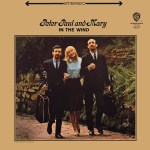
In The Wind – with Dylan’s Liner Notes

More Peter, Paul and Mary

Hot Stamper Pressings of TAS List Super Disc LPs in Stock

The sound is big, open, rich and full, with the performers front and center (as well as left and right). The highs are extended and silky sweet. The bass is tight and punchy. And this copy gives you more life and energy than others by a long shot. Very few folk records offer the kind of realistic, lifelike sound you get from this pressing, on both sides!

This original Gold Label stereo LP also has the MIDRANGE MAGIC that’s no doubt missing from whatever 180g reissue has been made from the 50+ year old tapes. As good as that pressing may be, we guarantee that this one is dramatically more REAL SOUNDING. It gives you the sense that Peter, Paul and Mary are right in the room with you.

They’re no longer a representation — they’re living, breathing persons. We call that “the breath of life,” and this record has it in spades. Their voices are so rich, sweet, and free of any artificiality, you immediately find yourself lost in the music, because there’s no “sound” to distract you.

’Very Last Day’, Don’t Think Twice It’s All Right’, and ’Freight Train’ sound particularly nice here.

Warners pressings are all over the map. When you find a good one, you can be pretty sure it’s the exception, not the rule. That’s been our experience anyway.


Liner Notes by Bob Dylan

(more…)

The Day the Music Burned

The Day the Music Burned

Jody Rosen

Please read the entire article. It is long but eminently worth your while if you care about music.

An excerpt:

But the case for masters extends beyond arguments about bit depth and frequency ranges audible only to dogs. It enters the realms of aesthetics and phenomenology. Simply put, the master of a recording is that recording; it is the thing itself. The master contains the record’s details in their purest form: the grain of a singer’s voice, the timbres of instruments, the ambience of the studio. It holds the ineffable essence that can only truly be apprehended when you encounter a work of art up-close and unmediated, or as up-close and unmediated as the peculiar medium of recorded sound permits. “You don’t have to be Walter Benjamin to understand that there’s a big difference between a painting and a photograph of that painting,” Zax said in his conference speech. “It’s exactly the same with sound recordings.”

The comparison to paintings is instructive. With a painting, our task as cultural stewards is to hang the thing properly, to keep it away from direct sunlight, to guard it from thieves. A painting must be maintained and preserved, but only in rare cases will a technological intervention improve our ability to see the artwork. If you were to stand before the Mona Lisa in an uncrowded gallery, you would be taking in the painting under more or less ideal circumstances. You will not get a better view.

In the case of a recording, a better view is possible. With recourse to the master, a recording’s “picture” can, potentially, be improved; the record can snap into sharper focus, its sound and meaning shining through with new clarity and brilliance. The reason is a technological time lag: For years, what people were able to record was of greater quality than what they were able to play back. “Most people don’t realize that recording technology was decades more sophisticated than playback technology,” Sapoznik says. “Today, we can decode information off original recordings that was impossible to hear at any time before.”

The process of revisiting and decoding can transfigure the most familiar music. In May 2017, a new box set of the Beatles’ “Sgt. Pepper’s Lonely Hearts Club Band” was released to mark the album’s 50th anniversary. “Sgt. Pepper’s” is one of the most famous recordings in history, but the version most listeners know is the stereo mix, which was of secondary importance to the Beatles, their producer George Martin and his engineer, Geoff Emerick. It was the mono mix that consumed the Beatles’ attention, and it is to those materials that the box set’s producer, Martin’s son Giles, returned, creating a fresh stereo mix from the mono masters. “The job was to strip back layers, to get back to that original sound and intent,” he says. “The detail we can garner from the mix compared to what they could have done 50 years ago is fantastic.”

The result is a vivid new “Sgt. Pepper’s.” In certain quarters, the album has been regarded as twee, but Giles Martin’s mix reveals a burlier rock ’n’ roll record. The box set opens new vistas on the album’s themes and adds force to its pathos. The opus “A Day in the Life” sounds more ominous than ever, a portent of late ’60s chaos, of the storm gathering on the other side of the Summer of Love. These epiphanies would not have been possible without masters. “Working without the master tapes,” Martin says, “would be like a chef having to use precooked food.”

The “Sgt. Pepper’s” masters are kept in a secure location in London. The tape boxes are marked with recording notes that helped guide Martin’s mixing decisions. The tapes themselves feature additional recordings — alternate versions, overdubs, studio chatter — that were included on the rerelease. Tens of millions of copies of “Sgt. Pepper’s” have been sold over the years; it may seem precious to place special value on the original of a record that is so well known and ubiquitous. But the masters in the London archive are unique. They have greater fidelity than any copy of “Sgt. Pepper’s” that is out in the world. They have more documentation than any version anywhere. And the masters contain more Beatles music too.

Jody Rosen is a contributing writer for the magazine. His book about the history of the bicycle will be published in 2020.