*Robert Brook’s Guide

Robert Brook’s Guide for the Dedicated Analog Audiophile

Get the Phono Finish!

Robert Brook runs a blog called The Broken Record, with a subtitle explaining that his blog is:

A GUIDE FOR THE DEDICATED ANALOG AUDIOPHILE

We know of none better, outside of our own humble attempt to enlighten that portion of the audiophile community who love hearing music reproduced with the highest fidelity and are willing to go the extra mile to make that happen.

Get the PHONO FINISH!

Robert’s Approach

Robert has methodically and carefully — one might even say scientifically — approached the various problems he’s encountered in this hobby by doing the following:

(more…)

The Fascinating Lifecycle of Our Stereo Cartridge

Robert Brook runs a blog called The Broken Record, with a subtitle explaining what the aim of his blog is:

A GUIDE FOR THE DEDICATED ANALOG AUDIOPHILE

We know of none better, outside of our own humble attempt to enlighten that portion of the audiophile community who love hearing music reproduced with the highest fidelity and are willing to go the extra mile to make that happen.

The FASCINATING LIFECYCLE of Our Stereo CARTRIDGE

An excerpt:

Whatever the number of hours our cartridge will last, and however long we can expect it to perform well, I’d say most of us who do avoid breaking it will run it too long. Which is completely understandable and not totally without its merits. Great cartridges are expensive and the degradation of their sound is often gradual and not necessarily universal across every record in our collection. Plus it’s really not all that easy to know exactly when our cartridge is starting to sound audibly worse.

So how do we know when it’s time to replace our cartridge? Before I answer that question I need to point out that audiophiles are too focused on stylus wear and not enough on degradation of the cantilever assembly, which plays a sizable role in the quality of sound our cartridge delivers.

As Robert makes clear in his piece, a properly setup, fresh-sounding cartridge is fundamental to achieving high quality playback.

In both his system and mine, it starts with this little fellow right here.

If you are interested in acquiring what we consider to be the best sounding cartridge on the market, please contact us. We are dealers for Dynavector and can get you a 17dx at a good price, and typically in short order.

(more…)

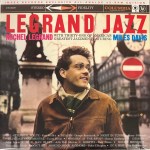
Robert Brook’s Guide to Legrand Jazz on Impex

Robert Brook has a blog which he calls

A GUIDE FOR THE DEDICATED ANALOG AUDIOPHILE

Robert tries to remain positive when choosing the words that would best describe the award winning Impex release of Legrand Jazz. In the end he goes with the spoken word over the written one.

Years ago I wrote about how important the Legrand Jazz album was for me in my growth as a critical listener. It’s yet another example of an album that helped make me a better audiophile by showing me the errors of my tweaking and tuning ways.

Let’s watch the video and see what Robert has learned about Impex’s recent release.

Legrand Jazz (featuring Miles Davis) – the 2019 IMPEX Double 45 rpm

Michael Fremer gives the Impex pressings an 11 for sound. He writes (emphasis added):

“This IMPEX reissue is sourced from an “analog mix-down transfer of the original 1958 work tape by Mark Wilder at Battery Studios” and cut by Chris Bellman and Bob Donnelly at Bernie Grundman Mastering on Grundman’s all-tube mastering system. I have a clean, original 6-Eye pressing that this superbly pressed reissue betters in every way. This will make both your stereo and your heart sing. Some of the greatest jazz musicians of that or any era wailing and clearly having a Legrand time. Limited to 3000 copies. Don’t miss it!”

Who are you going to believe, the Self-Appointed Vinyl Experts of the World and Bestowers of Prestigious Audio Awards (awards which you may have never heard of; I sure hadn’t), or some guy who’s just dedicated to being an Analog Audiophile and knows a good record when he hears one? (Or doesn’t hear one, as the case may be.)

Like Robert, I tried being kinder and gentler, but it didn’t take. I may resolve to try harder in 2024 2026. Then again, I may not. If we’re nicer to the people currently making Heavy Vinyl records, aren’t we running the risk, to cop a line from the late, great P.J. O’Rourke, of encouraging them?

(more…)

Robert Brook Compares Different Hot Stamper Pressings of Crosby’s Must Own Debut

Hot Stamper Pressings of the Music of David Crosby Available Now

Robert Brook has a blog which he calls

A GUIDE FOR THE DEDICATED ANALOG AUDIOPHILE

Below is a link to the review he has written for one of our favorite records, If Only I Could Remember My Name.

In this review he compares two Hot Stamper pressings, one a Super Hot, and one the next grade up from a Super, a Nearly White Hot stamper pressing.

When an amazing recording meets a system that can play it right, inevitably sparks fly, and these two copies were apparently giving off a lot of sparks.

IF ONLY I COULD REMEMBER MY NAME & The NW HOT STAMPER

(more…)

Emerson, Lake and Palmer’s Debut Is an Audiophile Must Own

Hot Stamper Pressings of the Music of Emerson, Lake and Palmer Available Now

Robert Brook has a blog which he calls

A GUIDE FOR THE DEDICATED ANALOG AUDIOPHILE

Below is a link to a review Robert Brook wrote for a pressing of the album I had loaned him so that he could hear just how good ELP’s debut can sound on one of our hottest Hot Stampers. Please to enjoy.

Emerson, Lake & Palmer and Why You NEED a Hot Stamper of THIS Record!


Robert’s Approach

Robert has methodically and carefully — one might even say scientifically — approached the various problems he’s encountered in this hobby by doing the following:


(more…)

The “X-Factor” in Analog Playback

Robert Brook runs a blog called The Broken Record, with a subtitle explaining that his blog is:

A GUIDE FOR THE DEDICATED ANALOG AUDIOPHILE

We know of none better, outside of our own humble attempt to enlighten that portion of the audiophile community who love hearing music reproduced with higher fidelity — and are willing to go the extra mile and pay the extra dollar to make that happen.

The “X-FACTOR” in ANALOG PLAYBACK

Robert closes his story with some ideas that I have been advancing for years, ideas that, implemented with the seriousness and rigor required, are practically guaranteed to help anyone find more joy in the music they love.

Systems that have this X-factor are a rare thing indeed. The time and effort they require is far beyond what most of us are willing to put into this hobby, and even then, we need to be blessed with a good ear to boot.

But such a system is well worth striving for. And while not cheap, money only gets us so far in building it. Rather, we need to have a clear understanding of what we’re aiming for. We need to know what a system with this X-factor actually sounds like. Which means we need to be able to hear it in the first place.

Robert is a case study in what it takes to make the kind of dramatic progress in this hobby that he has achieved.

He also has written at some length about what motivated him to devote so much time and energy to the improvement of the playback quality of his favorite recordings. For some of us this is very familiar ground. It has been my experience that only the unrestrained love of the sound of music can be the driver of real success in audio.

Music does the driving, sure, of course it does, but the vast majority of music lovers never cared much about sound, which is no doubt why Spotify has been so successful. I hope to be able to find the time to write about an experiment I carried out not long ago comparing the sound of a track I heard on SiriusXM versus the same track called up on my phone with Spotify. The differences I heard really knocked me back on my heels.

(more…)

Problem Solving in Audio

Robert Brook runs a blog called The Broken Record, with a subtitle explaining that his blog is:

A GUIDE FOR THE DEDICATED ANALOG AUDIOPHILE

We know of none better, outside of our own humble attempt to enlighten that portion of the audiophile community who love hearing music reproduced with the highest fidelity — and are willing to go the extra mile and pay the extra dollar to make that happen.

PROBLEM SOLVING in AUDIO

We have a section on the blog under the heading Making Progress that digs into the kinds of issues that audiophiles tend to run into, especially when they are first getting started. They’re the ones Robert Brook writes about in his commentary above, and they’re the ones that tripped me up over and over for decades after I first got started in this hobby sometime in the mid-70s.

It wasn’t until around 2005 that I stumbled upon, mostly through luck and audiophile friends, the elements that make up my current system.

Imagine being so clueless that you actually had to spend thirty years in a hobby before you figured out. That was me!

Of course I thought I had it all figured out right from the start. I was the proud owner of monstrously-large, ridiculously-expensive speakers, tube equipment (also expensive, and the latest and greatest cutting edge technology back in those days), Half-Speed mastered records, records made live directly to disc, fancy cables — you name it, I had everything required to play music at nearly-live levels with near-perfect fidelity.

All the most important boxes I was told about had been checked off right from the get-go in the 70s. I was all in, and for the next thirty years I did everything the audiophiles I knew liked to do: find and evaluate better gear, try new tweaks, and, more than anything else, learn to appreciate music that I had never heard before — some of it new, some of it very old.

These are all stories that have been told here on the blog in hundreds and hundreds of posts.

Everything changed when I started doing audio and records in ways that nobody I knew had ever done them before. (That also is a story that has been frequently told here.)

Taking the approach to audio and software that audiophiles tend to take — the bulk of the story Robert Brook tells in his commentary — can only get you so far. That’s the lesson I learned after spending my first thirty years in the hobby.

It’s why this blog is devoted to one concept above all others — the importance of being skeptical.

Requiring empirical evidence to back up whatever I might choose to believe was the shock that my system — my nervous one, as well as my audio one — needed to jolt it out of its comfort zone and force it to come up with a better way.

At the start I believed what I was told — hey, it seemed to be working, and who was I to argue with the “experts” anyway? I went along with the crowd, and I got the average results crowds tend to get.

This blog, as well as Robert’s, is simply trying to help you circumvent the bad ideas that we run into everywhere in audio these days. We’ve tried lots of them, most of them didn’t work, or didn’t work very well, and the good news for you, dear reader, is that we found others that we know do work.

(more…)

Robert Brook Knows a Better Way to Do Analog – Part Two

Robert Brook runs a blog called The Broken Record, with a subtitle explaining that his blog is:

A GUIDE FOR THE DEDICATED ANALOG AUDIOPHILE

We know of none better, outside of our own humble attempt to enlighten that portion of the audiophile community who love hearing music reproduced with the highest fidelity and are willing to go the extra mile to make that happen.

There’s a BETTER WAY to do ANALOG – Part 2


(more…)

Your Shootout Questions Answered – Part One

Hot Stamper Pressing of the Music of The Rolling Stones Available Now

Robert Brook wrote to me recently with some questions.

Hi Tom,

I read your recent post about Sticky Fingers and the European TML reissues you included in shootouts.

It raised a question for me that I’ve been wanting to ask you for a while now.

The fact that the UK TML earned an A+ to A++ grade and that, with just a one copy sample, you wouldn’t consider that pressing to have shootout winning potential, suggests to me that the US pressings you favor will grade at A++ or higher.

In other words, if you put a shootout together of [redacted stamper] pressings and whatever else you like, does every copy in the shootout grade at least A++ / A++? Are the right stampers that reliable?

I guess I’ve always assumed that even if you put together a shootout with this or any other title, and even if you only include pressings that have won or placed high in the past, at least a couple of them would end up graded no higher than A+ or A+ to A++.

And if that is correct, wouldn’t it be worth buying more UK TML’s to see if any emerge that could win a shootout?

With Revolver, for instance, why not just do shootouts with [redacted numbers] if those are the ones that win the shootouts? Why even bother with [later pressings]?

Robert,

All good questions! I could go on for days with this kind of inside baseball stuff. I’ve been living it full time for more than twenty years, and it obviously interests you because you are actually trying to hone your shootout skills and figure out how many of what pressings you need to get one going, etc., etc.

Not many others are doing what you are doing in a serious way, so how helpful anyone will find this information is hard to know. Under the circumstances, I should have kept my answers shorter rather than longer but I could not resist going into more detail than might have been advisable. Feel free to skim if you like.

Why not put more TML pressings into shootouts?

If they had pressed plenty of them and they’d ended up sitting in record bins all over town for twenty bucks a pop, we could get a bunch in and see if we could figure which stampers, if any, are able to reach the Super Hot stamper level.

(more…)

Why Does “Why” Matter in Analog Audio

Robert Brook runs a blog called The Broken Record, with a subtitle explaining that his blog is:

A GUIDE FOR THE DEDICATED ANALOG AUDIOPHILE

We know of none better, outside of our own humble attempt to enlighten that portion of the audiophile community who love hearing music reproduced with the highest fidelity — and are willing to go the extra mile and pay the extra dollar to make that happen.

Why Does “WHY” Matter in Analog AUDIO?


I wrote a piece about this subject years ago, exhorting audiophiles to forget their theories. An excerpt:

We don’t know what causes some copies to sound so good.

We know them when we hear them and that’s pretty much all we can say we really know. Everything else is speculation and guesswork.

We have data. What we don’t have is a theory that explains that data.

And it simply won’t do to ignore the data because we can’t explain it. Hot Stamper deniers are those members of the audiophile community who, when faced with something they don’t want to be true, simply manufacture reasons why it can’t be true or shouldn’t be true. That’s not science. It is in fact the very opposite of science.

Practicing science means following the data wherever it leads.

The truth can only be found in the record’s grooves and nowhere else.

If you don’t understand record collecting as a science, you won’t be able to do it well and you certainly won’t achieve the success that’s possible by using a scientific approach.

(For those who like to get into the weeds with data in the form of stamper numbers, we’ve got plenty on the blog to share with you.)

(more…)