Advice-WTLF, Jazz

Jazz records with advice on what to listen for, in order to help you separate the best pressings from the also-rans and improve the quality of your collection.

Bashin’ Is a Good Test for Setup, Tweaks, Room Treatments, etc.

Hot Stamper Pressings of Large Group Jazz Recordings Available Now

On side one of Smith’s (and Oliver Nelson’s) Masterpiece, Bashin’, the bell tree in the right channel on track one is a great test for top end extension, resolution of harmonic complexity, overall clarity and freedom from smear.

Get all the top end you can from whatever turntable adjustment, tweak or room treatment you’re messing around with, then check to make sure that all the brass instruments still sound right. If they do, you are probably good to go.

Blary, smeary, leading-edge-challenged horns are the kiss of death on this album, as are grainy, gritty, transistory ones.

When the horns have clarity, correct tonality, plenty of space around them and a solid, full-bodied sound, probably every other instrument in the soundscape will too. Other records with brass instruments that are good for testing can be found here.

(more…)

The Yellow Label Reissues Can Sound Very Good, But Great? Not a Chance

Hot Stamper Pressings of Contemporary Jazz Albums Available Now

The earlier pressing on the site as of this writing is an amazingly well recorded album with many fine qualities:

Boasting seriously good grades from top to bottom, this vintage Contemporary pressing is doing just about everything right.

These sides are bigger and more open, with more bass and energy, than most others we played – the saxes and trumpets are immediate and lively.

Mr. Earl Hines himself showed up, a man who knows this music like nobody’s business – Leroy Vinnegar and Shelly Manne round out the quartet.

“Great musicians produce great results, and most of the LP’s tracks were done in one or two takes. The result is ‘a spontaneous, swinging record of what happened’ when Carter met Hines ‘for the first time. . . .'”

Our notes for the Yellow Label reissues point out that they are always more compressed, with some added upper midrange. The intro benefits from this but the peaks can get congested.

The earlier pressings, especially the originals on the Black Label, are the most likely to sound right, but they are tough to find in audiophile playing condition.

If you see a copy on the site with these grades — less than 2+ on both sides — it will proabably have a Yellow Label and some of the shortcomings we mention above.

Correct, In This Case

Some people like to search for relationships between the sound of the pressing and the label it has, but in our experience that is more often than not a fool’s errand once confirmation biases and other kinds of mistaken audiophile thinking are taken into account.

When the conventional wisdom turns out to be correct — in other words, when it comports with reality, at least for the six copies of this album that we played — we are happy to temporarily put aside our skepticism and learn the lessons playing a stack of copies of this title has taught us.

Why? Because the experimental evidence supports it.

(more…)

Virtuoso Guitar Is Potentially an Awesome Direct to Disc Record

Hot Stamper Pressings of Direct-to-Disc Recordings Available Now

This recording has very little processing or EQ boost, and the studio is somewhat dead sounding (all too common in the late-70s). That combination can mean only one thing: If you don’t play this record loud, it will not sound right. 

The famous Sheffield S9 is exactly the same way. It sounds dead and dull until you turn it up good and loud. When you do, lookout — it really comes alive. The best pressings can sound shockingly like live music, something one just does not hear all that often, even when one plays records all day long as we do.

The snare drum on this copy represents one of the most realistic and dynamic sounding snares I have ever heard. Talk about jumping out of the speakers! If you have plenty of large, fast, powerful dynamic drivers like we do, you are in for a real treat. Track one, side one — lookout!

Our Shootout Winner from Years Ago

As usual, the shootout allowed us to hear what was lacking on side two.

Side One

A+++ As Good As It Gets sound from top to bottom. No copy was as transparent, lively or high-rez. No copy actually did ANYTHING better, which is unusual. The distortion level is close to zero on this one. The louder you play it the better it sounds.

Side Two

With a grade of A Double Plus this copy was close to the best, falling a bit short in the area of upper midrange presence and top end. Still, there’s lots of space, the cello sounds full and rich, as does the guitar, and none of the plucked instruments suffer from smear at all.

A great side, just a bit dark compared to the very best.

(more…)

Our Shootout Winner Had Sound that Was Really Jumping Out of the Speakers

Hot Stamper Pressings of Direct-to-Disc Recordings Available Now

Recently we put up a copy of this wonderful direct to disc recording with this description:

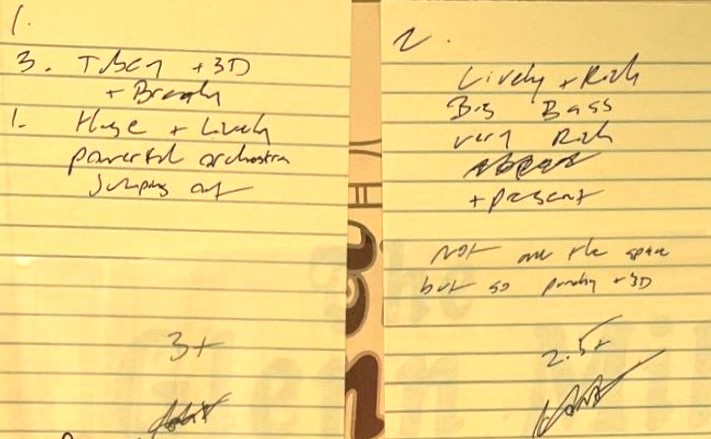
Here are just a few of the things we had to say about this incredible copy in our notes: “tubey and 3D and breathy”…”huge and lively”…”powerful orchestra”…”jumping out of the speakers”…”very rich and present.”

Great energy, but the sound is relaxed and Tubey sweet at the same time, never squawky, with plenty of extension on both ends – that’s analog for ya!

This is no sleepy over-the-hill Sheffield Direct-to-Disc (referring to the later Harry James titles, not the excellent first one) – these guys are the real deal and they play their hearts out on this album, recorded in a church with exemplary acoustics.

Note that side two did not have all the space, but was so punchy and 3-D that it was easy to award it a Nearly White Hot Stamper grade of 2.5+. The copy that beat it had all the same qualities and more space, sounding more like side one of this very pressing.

And here are the actual notes for the Shootout Winning copy we found.

We have no trouble hearing when a record is doing everything right, and when a record has one side that is a bit lacking, it’s the shootout that shows us in what area it is lacking.

In this case, our notes read:

  • Not all the space but so punchy and 3-D

Track one had sound that “jumped out of the speakers,” and if — like us — that’s the kind of sound you are looking for, our Hot Stamper pressings are where you can find it.

If you would like to test the pressings you own, here are a few that might make good tests for that quality. Also, many of our customers have commented about that quality in the Hot Stamper pressings we sent them, and you can read their letters here.

(more…)

The Strings on this Album Are a Tough Test

jobimthecomposerHot Stamper Pressings of the Music of Antonio Carlos Jobim Available Now

Credit engineer Phil Ramone for correctly capturing the sound of every instrument here: the guitars, piano, flutes, strings, drums, percussion instruments — everything has the natural timbre of the real thing.

I used to think this recording erred on the bright side, but not the Hot Stamper copies. They are tonally right on the money.

When the balance lacks lower midrange, the sound can get lean, which causes the strings to seem brighter than they really are, a not uncommon problem with some of the pressings we heard.

We had quite a batch of these to play, including imports, originals, reissues (all stereo), and one lone mono, which was so ridiculously bad sounding we tossed it right out of the competition and into the trade pile.

For those of you playing along at home, we are not going to be much help to you here in finding your own Hot Stampers. Every version had strengths and weaknesses and all are represented in the three listings we are putting up today.

The sound of this side one blew our minds — no other copy could touch it. So open and airy, yet with real weight to the piano and a clear and strong bass line, this copy did EVERYTHING right.

The strings are very much part of the ensemble on this album, and getting good string tone, with just the right rosiny texture, the least amount of smear, freedom from shrillness or hardness — this is not easy to do. 

Side two was quite good at A+ to A++, but we found other copies that bested it, including one Triple Plus that was in a league of its own. Even so, this copy on side two would be hard to beat without a number of carefully cleaned pressings to choose from. 

Here are some records we’ve discovered that are good for testing string tone and texture.

Here are some records we’ve discovered that are good for testing midrange tonality.

(more…)

Jazz Giant and Tube Versus Transistor Tradeoffs

Hot Stamper Pressings of Contemporary Jazz Albums Available Now

In a commentary from more than ten years ago we weighed the tradeoffs in the sound of the originals versus the reissues.

This superb sounding original Black Label Contemporary pressing of Benny Carter’s swingin’ jazz quartet is the very definition of a top jazz stereo recording from the late ’50s recorded and mastered through an All Tube Chain.

There’s good extension on the top end for an early pressing, with TONS of what you would most expect: Tubey Magic and Richness. If that’s what you’re looking for, this copy has got it!

We prefer the later pressings in most ways, but this record does something that no later pressing we have ever played can do — get Benny’s trumpet to sound uncannily REAL.

If you want to demonstrate to your skeptical audiophile friends what no CD (or modern remastered record) can begin to do, play side two of this copy for them. They may be in for quite a shock.

The sound of the muted trumpet on side two is out of this world. 

It’s exactly the sonic signature of good tube equipment — making some elements of a recording sound shockingly real.

(more…)

The Dreadful Sound of the Heavy Vinyl Reissues Doug Sax Mastered in the 90s

Hot Stamper Pressings of the Music of Sonny Rollins Available Now

Longstanding customers know that we have been relentlessly critical of so-called “audiophile” LPs for years, especially in the case of these Analogue Productions releases from back in the early-90s. A well-known reviewer loved them, I hated them, and he and I haven’t seen eye to eye on much since.


(Old) Newflash!

Just dug up part of my old commentary discussing the faults with the original series that Doug Sax cut for Acoustic Sounds. Check it out.

In the listing for the OJC pressing of Way Out West we wrote:

Guaranteed better than any 33 rpm 180 gram version ever made, or your money back! (Of course I’m referring to a certain pressing from the early 90s mastered by Doug Sax, which is a textbook example of murky, tubby, flabby sound. Too many bad tubes in the chain? Who knows?

This OJC version also has its problems, but at least the shortcomings of the OJC are tolerable. Who can sit through a pressing that’s so thick and lifeless it communicates none of the player’s love for the music they’re making?

If you have midrangy transistor equipment, go with the 180 gram version (at twice the price).

If you have good equipment, go with this one.


UPDATE 2015

We are no longer fans of the OJC of Way Out West, and would never sell a record that sounds the way even the best copies do as a Hot Stamper. It’s not hopeless the way the Heavy Vinyl pressing is, but it’s not very good either. It’s yet another example of a record we was wrong about.

Live and learn, right?


(more…)

God Bless the Child Has Some of Don Sebesky’s Best Arrangements

Hot Stamper Pressings of the Music of Kenny Burrell Available Now

This is one of our favorite orchestra-backed jazz records here at Better Records. A few others off the top of my head would be Wes Montgomery’s California Dreaming (1966, also Sebesky-arranged), Grover Washington’s All the King’s Horses (1973) and Deodato’s Prelude (also 1973, with brilliant arrangements by the man himself).

On a killer copy like this the sound is out of this world. Rich and full, open and transparent, this one defeated all comers in our shootout, taking the Top Prize for sound and earning all Three Pluses.

What’s especially notable is how well recorded the orchestra’s string sections are.

They have just the right amount of texture and immediacy without being forced or shrill. They’re also very well integrated into the mix. I wouldn’t have expected RVG to pull it off so well — I’ve heard other CTI records where the recording quality of the orchestration was abominable — but here it works as well as on any album I know.

[Or maybe I just had a bad pressing of a very good recording!]

Both sides impressed us with their deep, wide soundstaging and full extension on both the top and the bottom.

The bass is deep and defined; the tonality of the guitar and its overall harmonic richness are right on the money.

The piano has the weight and heft of the real thing.

This kind of warm, rich, Tubey Magical analog sound is gone forever. You might have to go all the way back to 1971 to find it!

Watch out for some of the later pressings, even the later ones still mastered by Rudy Van Gelder. A case in point:
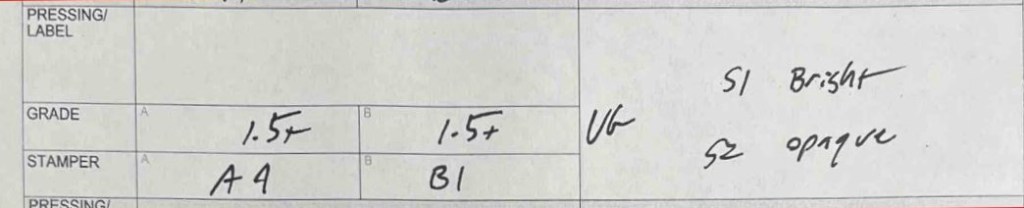
VAN GELDER in the dead wax is no guarantee of high quality sound, on any record.

Side one of this original pressing with later stampers was bright and side two opaque. This pressing was not awful, or even mediocre — the reissues without VAN GELDER in the dead wax would most likely be much worse sounding, we stopped buying them years ago — but at 1.5+ we would say these grades point to the sound is good, not great.

The only way to guarantee higher quality sound is to put the album through a shootout with a good-sized pile of cleaned pressings and find the one that sounds the best using the rigorous testing methodologies we recommend. For this kind of work to be meaningful and reproducible, top quality playback is a must.

There is of course a way to avoid doing all that work and spending all the kind of money it takes to acquire piles of pressings — most of which you will eventually have no use for — and that’s to buy a Hot Stamper copy of the album from us.

The Music

The high point for side one is clearly the first track. It’s got a Midnight Blue relaxed groove going on, the kind that Kenny Burrell seems to be able to bring to any session he plays on. Or maybe it’s the rhythms Ray Barretto works out in the songs that make them so relaxed and swinging at the same time.

Side two is magical from start to finish. The two extended songs, both more than eight minutes in length, leave plenty of room for the band — and the orchestra! — to stretch out.

(more…)

Top End Extension Is Key to the Best Pressings of Fingers

airtofinge_

Hot Stamper Pressings of Jazz Fusion Albums Available Now

The best copies have the highs that are missing from so many of the CTI originals. When you play them against most copies, there is an extension to the top end that you won’t hear elsewhere. Since this album is heavy on percussion, that difference is critical.

The HARMONICS of the percussion are critically important to the music. When they go missing, it’s as if the music seems to slow down, a strange effect but a fairly common one with rhythmically dense arrangements such as these. Some of the energy of the music is lost. 

With an extended top end the sound is SWEET, not HARSH. Believe us when we tell you, the last thing you want is a harsh sounding pressing of a Rudy Van Gelder recording. (Not unless you have a dull, dull, deadly dull system. Those old school stereos are practically the only way one can tolerate some of his early recordings.)

With so many high frequency transients and such complex arrangements, this is a record that must be mastered (and pressed) with great skill or the result is going to be trouble. RVG, who both recorded and mastered the album, has a penchant for over-cutting records and being heavy handed when it comes to his favorite studio tricks, often to the detriment of instrumental fidelity. When his approach works, the resulting recordings are wonderful. When he gets too carried away with his “sound,” look out.

This is without a doubt the best album Airto ever made. On top of that, this copy really has the kind of sound we look for, with an open, fully extended top end that gives all the elements of this complex music room to breathe.

(more…)

Our Stereo Just Loves Certain Records – Why Do You Suppose That Is?

Basic Audio Advice — The Fundamentals of Good Sound

The highest quality vintage pressings are truly amazing if you can play them right. That’s a big if.

In fact, it may just be the biggest if in all of audio.

Be that as it may. What do we love about vintage pressings like the Ted Heath’s Swings in High Stereo album you see pictured?

The timbre of the instruments is hi-fi in the best sense of the word.

The unique sound of every instrument is being reproduced with remarkable fidelity on this old record.

That’s what we mean by “hi-fi,” not the kind of audiophile phony BS sound that passes for hi-fidelity on some records.

Older audiophile records, typically those made by Mobile Fidelity in the 70s and 80s, suffered from a common group of problems on practically every record they released:

A boosted top, a bloated bottom, and a sucked-out midrange.

Nowadays that phony sound is no longer in vogue. A new, but equally phony sound has taken its place.

What seems to be in vogue these days, judging by the Heavy Vinyl reissue pressings we’ve played over the last few years, is a very different sound, with a very different suite of shortcomings.

(more…)