 Hot Stamper Pressings of Recordings by Rudy Van Gelder Available Now
It’s certainly a proposition worth considering, mostly because so many audiophiles seem to believe it. Or maybe in spite of their believing it, skeptics such as myself being the troublemakers they always are.
So let’s dig down into the dirt of a record that Rudy both recorded and mastered.
None of the Rudy Van Gelder cuttings we played of Eric Dolphy’s 1961 release of Out There were better than passable, and some had sides that were downright awful sounding, as you can plainly see from our notes.
The copies that won our most recent shootout were mastered by George Horn, and the best of them sound amazing. Here are some comments we made for the album years back as well as the Allmusic review:
Insanely good sound throughout with both sides earning Shootout Winning Triple Plus (A+++) grades. This copy was doing it all right: rich, full-bodied and Tubey Magical yet still super open and spacious.
“A somber and unusual album by the standards of any style of music, Out There explores Dolphy’s vision in approaching the concept of tonality in a way few others — before, concurrent, or after — have ever envisioned.” – 5 stars
As you will see from our notes, we played some very disappointing early pressings. All the early pressings we had on hand were expensive to acquire, the vintage jazz pressing market being what it is: expensive and full of optimistic record graders of questionable skill. (For these kinds of vintage pressings we probably return 70-80% of what comes our way.)
We have to pay top dollar to get copies that are clean, even on the 60s and 70s reissue labels. Noisy old jazz records are simply not saleable to audiophiles no matter how good they sound.
None of the early copies we played earned grades good enough to bother pursuing, not when there are wonderful sounding vintage reissues from the 80s available. On a more positive note, this being our first shootout for the album in many years, we certainly learned a lot, so let’s just chalk up the losses to the cost of doing business. Our newfound knowledge of the best pressings will continue to pay dividends for years to come now that we know what the right stampers tend to be.
The original recording of Out There was released in 1961 and was not available in stereo until 1969. (Prestige was famous for being an anti-stereo holdout long after everyone else in the jazz world had come to terms with the superiority of two channels over one. Apparently the age-old controversy over mono versus stereo is ongoing, which is why we write about it so often.)
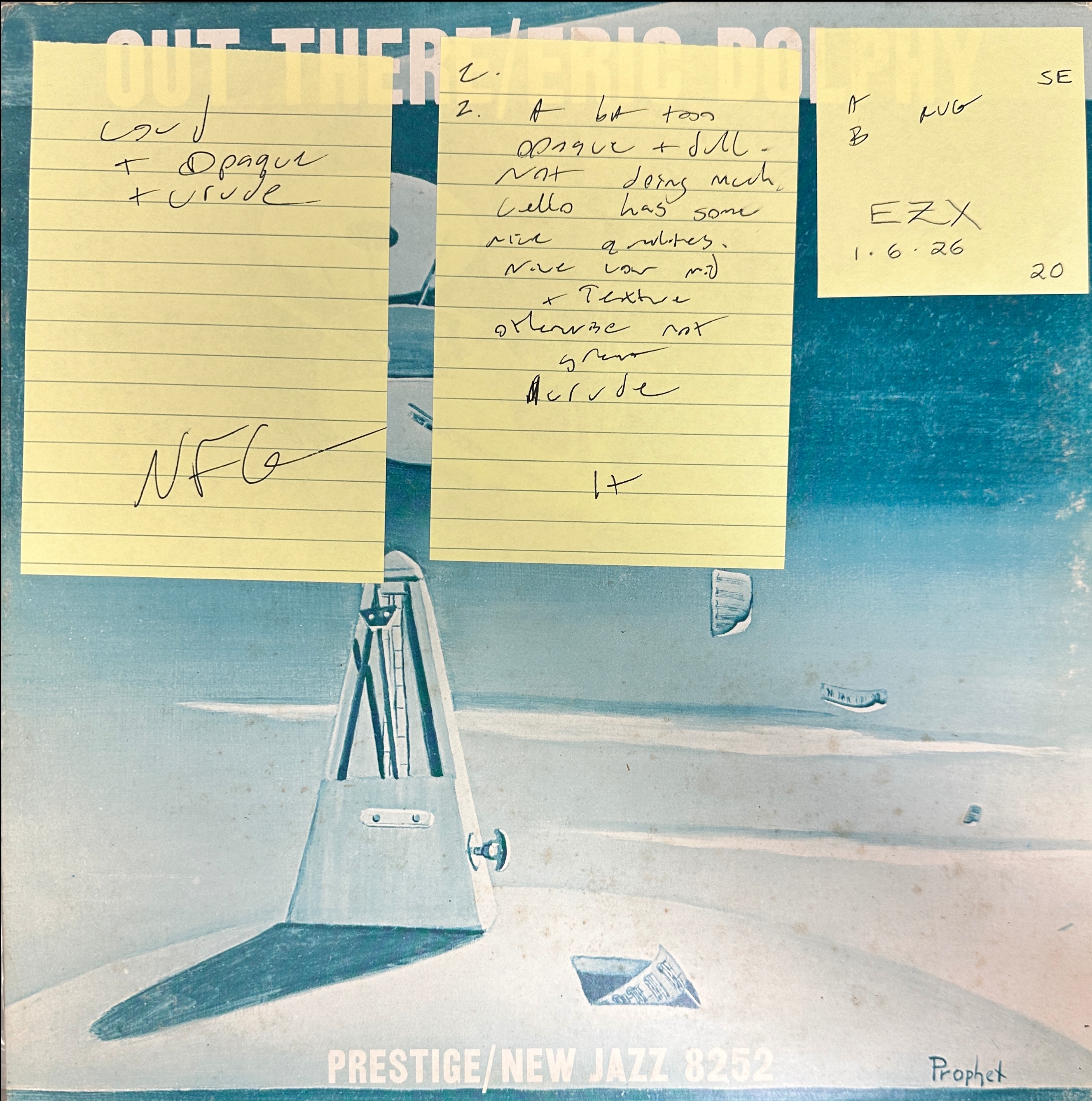
The first record you see pictured below is the mono reissue from 1965, released with a different cover and pressed on the lovely dark blue Prestige label. It, like the stereo reissue below it, was mastered by RVG.
A word to the audiophile types who like to do their own hunting: we rarely buy vintage jazz reissue records from the 60s and 70s that were not mastered by RVG. Their track record is poor, with maybe one winner out of ten, if that.
Back to this mono reissue from 1965. It’s a mess on side one, NFG, with side two being passable at best, earning one plus.
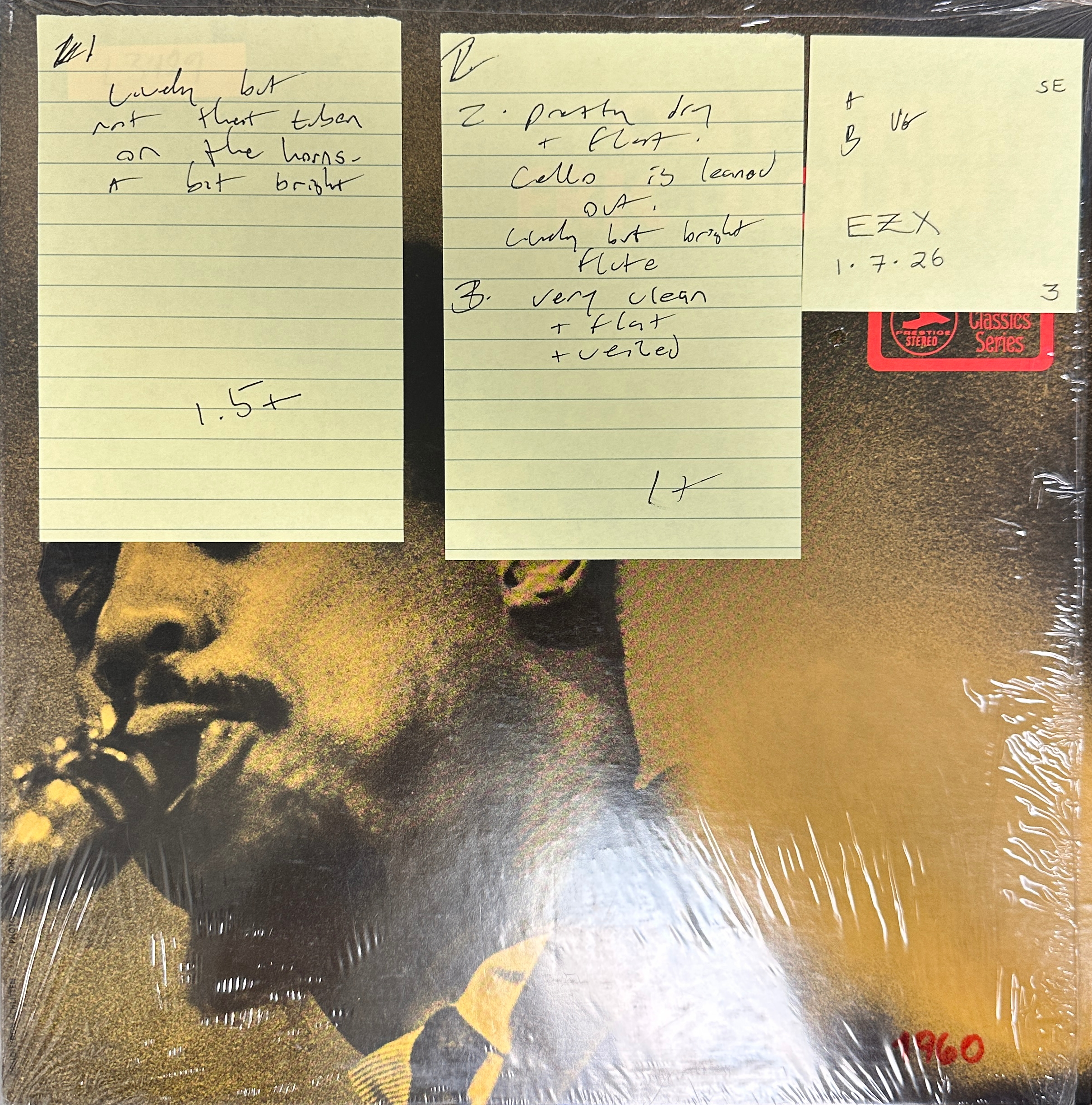
The second record you see, the one with a different cover, is the stereo reissue from 1969, also on the dark blue label and mastered by RVG.
It too is a mess, with side one being good, not great, but side two earning a less-than-Hot Stamper grade of 1+.
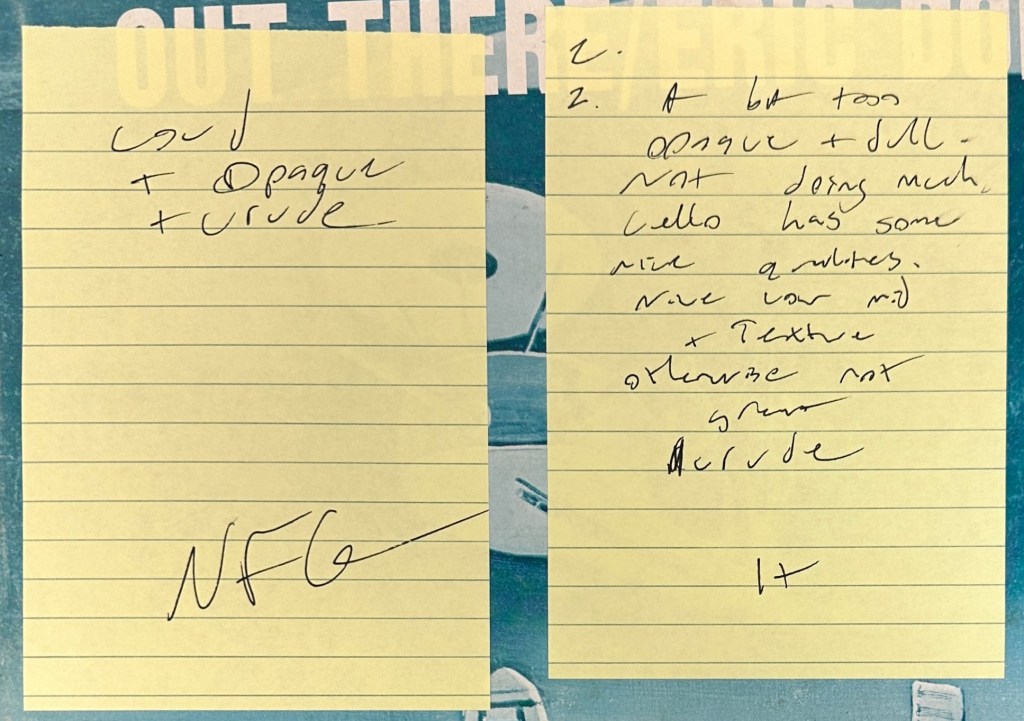
Side One
- Loud and opaque and crude
- NFG
Side Two
- A bit too opaque and dull
- Not doing much
- Cello (played by Ron Carter no less!) has some qualities
- Nice lower mids and texture
- Otherwise not great
- Crude
- 1+
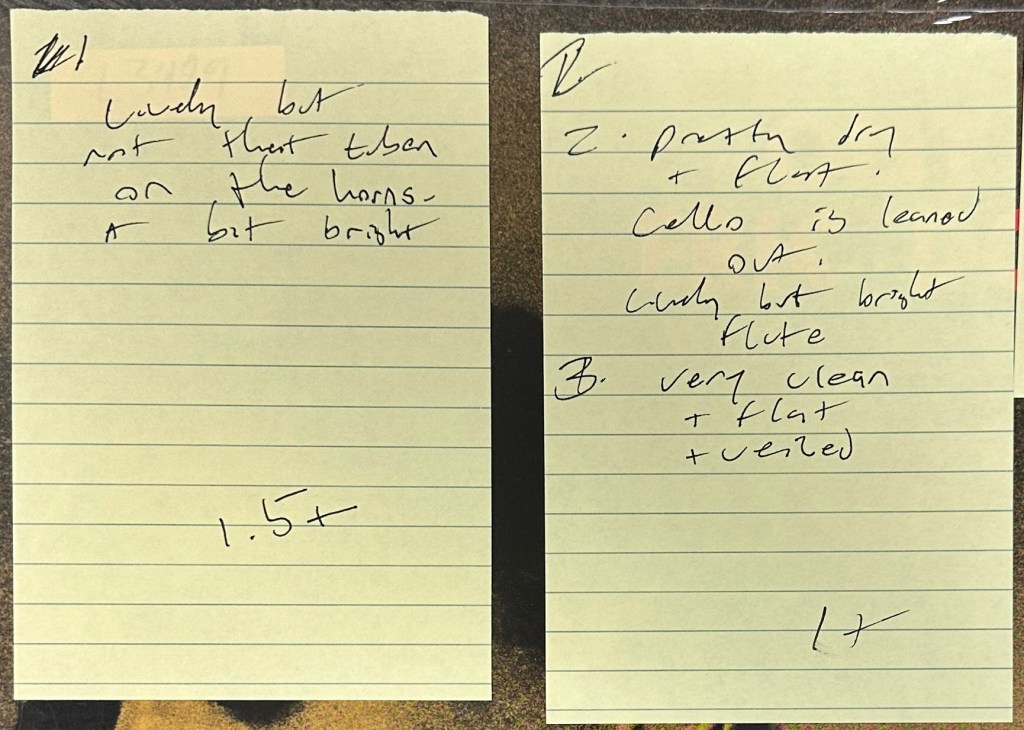
Side One
- Lively but not that tubey on the horns
- A bit bright
- 1.5+ (good, not great)
Side Two
- Pretty dry and flat
- Cello is leaned out
- Lively but bright flute
- Very clean and flat and veiled
- 1+
We do not sell records with 1+ grades. You should have no trouble finding those on your own. The world is full of them, and worse. (We assume, at least for the purposes of our grading scale, that the average record would earn no pluses for sound quality, especially if such a record had never been cleaned properly.)
Poor Rudy
Rudy Van Gelder comes in for a lot of criticism from the audiophile community, especially from audiophiles who tend to prefer the remastered Heavy Vinyl pressings made from his recordings.
Unsurprisingly, much of the criticism comes from some of the very same engineers responsible for the remastering of those records. Those who produce reissues of his recordings are notable critics as well.
But when he masters records that sound as bad as these do, he deserves all the criticism he gets. (Including from us.)
Rudy’s mastering is at fault, not the recording he made. The recording sounds amazing. You just need to find the pressing that was mastered by somebody else to know that.
Further Reading