More of the Music of Neil Young
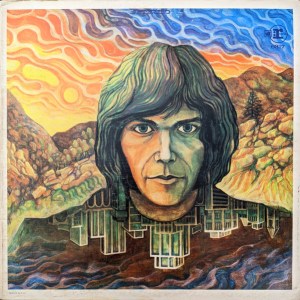
- Neil’s solo debut returns to the site for the first time in years, here with KILLER Shootout Winning Triple Plus (A+++) sound or close to it throughout this early pressing
- Impossibly quiet vinyl for any early Neil Young album, especially this one – it’s rare to find his first release with the original cover in such lovely audiophile playing condition
- Both sides are rich, full and Tubey Magical with a big bottom end and excellent resolution
- Surely one of Neil’s toughest to find with top quality sound – and only these early pressings have the potential to sound as good as this one does
- “…a flowing tributary from the over-all Springfield river of twangs, breathless vocals and slim yet stout instrumentation. Especially vivid is Young’s sense of melancholy and the ingenious clusters of images he employs in his lyrics (printed in full).” – Rolling Stone
This vintage Reprise pressing has the kind of Tubey Magical Midrange that modern pressings cannot BEGIN to reproduce. Folks, that sound is gone and it sure isn’t showing any sign of coming back.
Having done this for so long, we understand and appreciate that rich, full, solid, Tubey Magical sound is key to the presentation of this primarily vocal music. We rate these qualities higher than others we might be listening for (e.g., bass definition, soundstage, depth, etc.). The music is not so much about the details in the recording, but rather in trying to recreate a solid, palpable, real Neil Young singing live in your listening room. The better copies have an uncanny way of doing just that.
If you exclusively play modern repressings of older recordings (this one is now 55 years old), I can say without fear of contradiction that you have never heard this kind of sound on vinyl. Old records have it — not often, and certainly not always — but less than one out of 100 new records do, if our experience with the hundreds we’ve played can serve as a guide.
What The Best Sides Of Neil Young’s Debut Have To Offer Is Not Hard To Hear
- The biggest, most immediate staging in the largest acoustic space
- The most Tubey Magic, without which you have almost nothing. CDs give you clean and clear. Only the best vintage vinyl pressings offer the kind of Tubey Magic that was on the tapes in 1969
- Tight, note-like, rich, full-bodied bass, with the correct amount of weight down low
- Natural tonality in the midrange — with all the instruments having the correct timbre
- Transparency and resolution, critical to hearing into the three-dimensional studio space
No doubt there’s more but we hope that should do for now. Playing the record is the only way to hear all of the qualities we discuss above, and playing the best pressings against a pile of other copies under rigorously controlled conditions is the only way to find a pressing that sounds as good as this one does.
A Quick Overview
The sound of the typical pressing leaves a lot to be desired. You get copies where Neil’s voice is so forward that it quickly becomes fatiguing and unpleasant. Many later pressings are just the opposite — Neil’s voice is so muffled he’s practically underwater, probably because those pressings are made from copy tapes of compromised fidelity.
It’s the rare copy that puts him in the right place, and even then there are still plenty of ways in which a copy can fall short of the best. But this one handily won our shootout. It towered over practically all of what we played.
What We’re Listening For On Neil Young
- Energy for starters. What could be more important than the life of the music?
- Then: presence and immediacy. The vocals aren’t “back there” somewhere, lost in the mix. They’re front and center where any recording engineer worth his salt would put them.
- The Big Sound comes next — wall to wall, lots of depth, huge space, three-dimensionality, all that sort of thing.
- Then transient information — fast, clear, sharp attacks, not the smear and thickness so common to these LPs.
- Tight punchy bass — which ties in with good transient information, also the issue of frequency extension further down.
- Next: transparency — the quality that allows you to hear deep into the soundfield, showing you the space and air around all the instruments.
- Extend the top and bottom and voila, you have The Real Thing — an honest to goodness Hot Stamper.
Side One
The Emperor of Wyoming
The Loner
If I Could Have Her Tonight
I’ve Been Waiting for You
The Old Laughing Lady
Side Two
String Quartet from Whiskey Boot Hill
Here We Are in the Years
What Did You Do to My Life?
I’ve Loved Her So Long
The Last Trip to Tulsa
Rolling Stone Rave Review
By Gary Von Tersch / April 5, 1969
This album by Neil Young (formerly of the Buffalo Springfield) and various friends is a flowing tributary from the over-all Springfield river of twangs, breathless vocals and slim yet stout instrumentation. Especially vivid is Young’s sense of melancholy and the ingenious clusters of images he employs in his lyrics (printed in full). In particular, one could very easily view this disc as an extension of Young’s work on the Buffalo Springfield Again album, especially his compositions “Expecting to Fly” and the gaping “Broken Arrow.” which closes the album.
This solo disc opens with “The Emperor of Wyoming,” an instrumental which sets the tone musically for the side in a high-flying yet whining sort of way. It has that definite Springfieldian touch to it like wind between rocks or the people you see in dreams.
“The Loner” is a contemporary lament that features a nice blending of Neil’s guitar with strings in non-obtrusive fashion, allowing Young’s balanced ice-pick vocal to chip effectively at the listener. The stance and imagery are much the same as in the earlier “Expecting to Fly.”
The next two selections are pieces of the same puzzle. “If I Could Have Her Tonight” is a slow, crystal-like effort. It features a heavy drum line, Byrds-like guitar and mellow lyrics that all together add up to that unique sense of melancholy yet joy in melancholy which the Springfield captured so well and which Young just continues doing. Like standing in all four corners of the night. “I’ve Been Waiting for You” is an extension of the theme, with a tinkly piano and organ.
The side ends with a longish song entitled “The Old Laughing Lady” that is so close to, yet so far apart from, Young’s earlier song “Broken Arrow.” A quivering piano and a halting string section move around and around the melody line, here peeking between his words, there showing sky between his phrasings. The two pieces also have a series of mood/tone changes between verses — the strings, for instance, get increasingly lusher and fuller in “Laughing Lady.” The fade-out piano chord here is similar to the heartbeat fade-out on the earlier piece.
The main difference between the two can be tersely put: the latter piece is tighter, more mature and has more of the quiet explosion to it that Young obviously intends.
The second side opens with a diminutive Jack Nitzsche piece entitled “String Quarter From Whiskey Boot Hill.” It is a slow, deliberate ethereal introduction to Neil’s vocal on “Here We Are in the Years.” Musically the piece is string-dominated and very lush and full with Neil’s voice incising between — the scraping fade-out says it all.
“The Last Trip to Tulsa” closes the album. It is nine minutes long and is the most stylistic, anti-Springfield piece on the album. Here we have only Young’s chameleon voice and guitar — no strings, drums or piano. It proceeds to build from verse to verse — the vocal gets wider, the guitar more abandoned, more wanton. An innovative close to, in many ways, a delightful reprise of that Springfield sound done a new way.
The Story Behind the Mix
The album was released on January 22, 1969. The first release used the Haeco-CSG encoding system. This technology was intended to make stereo records compatible with mono record players, but had the unfortunate side effect of degrading the sound. Young was unhappy with the first release. “The first mix was awful”, he was reported as saying in Cash Box of September 6, 1969. “I was trying to bury my voice, because I didn’t like the way it sounded.”
The album was therefore remixed (as announced in Rolling Stone issue 47, from December 13), and re-released without Haeco-CSG processing. The words “Neil Young” were added to the album cover after what was left of the original stock had been used up, so copies of both mixes exist in the original sleeve. Copies of the original mix are now rare and sought-after, because many Neil Young fans believe that the remix diminished the songs, especially “Here We Are in the Years”.