More of the Music of The Byrds
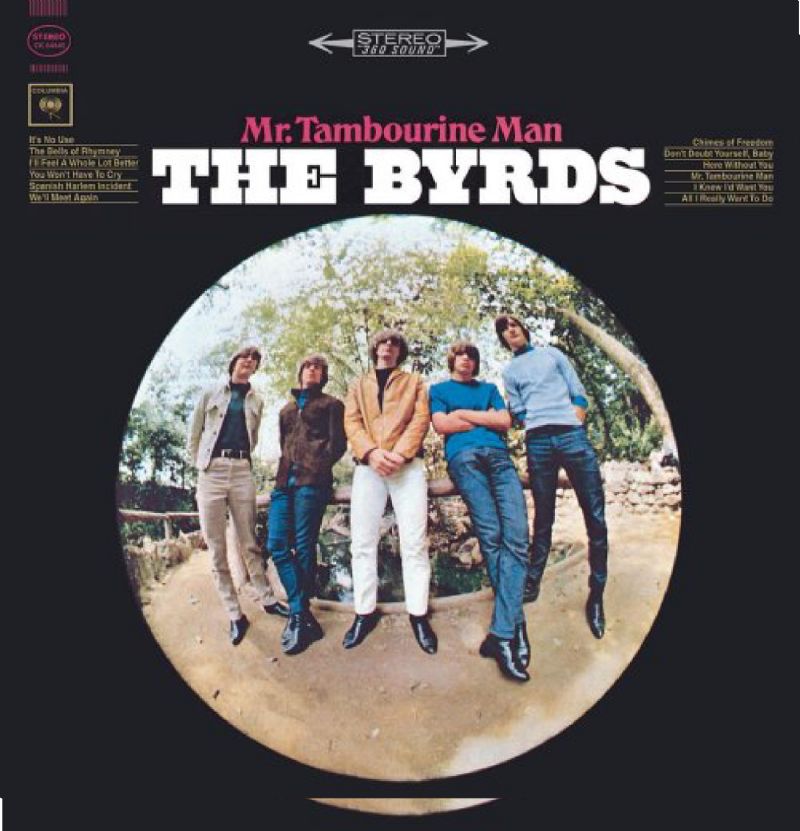
- With KILLER Shootout Winning Triple Plus (A+++) sound or close to it from start to finish, this Stereo 360 pressing is guaranteed to blow the doors off any other Mr. Tambourine Man you’ve heard
- Lively, balanced and vibrant, with boatloads of the Tubey Magical richness these recordings need in order to work
- Listen to how amazingly breathy Jim (later Roger) McGuinn’s vocals are – his vocals are key to the best sounding Byrds records
- 5 stars: “One of the greatest debuts in the history of rock … nothing less than a significant step in the evolution of rock & roll itself, demonstrating that intelligent lyrical content could be wedded to compelling electric guitar riffs and a solid backbeat.”
- If you’re a fan of the Byrds, this is a Classic from 1965 that belongs in your collection.
- The complete list of titles from 1965 that we’ve reviewed to date can be found here.
Want to hear exactly what I’m talking about? Play Chimes of Freedom, one of the best sounding tracks on side two, if not THE best. Listen to how breathy Jim (later Roger) McGuinn’s vocals are. Byrds records almost never sound like that.
I Knew I’d Want You is another one that sounds amazingly Tubey Magical on the best pressings.
By the time you get to track two on side one you’re hearing one of my favorite Byrds song of all time: I’ll Feel A Whole Lot Better. It’s energetic and very present on this copy.
Notice that Gene Clark’s vocals usually sound better than Roger McGuinn’s. For some reason they tend to brighten up McGuinn’s vocals, and the last thing you ever want to do with a Byrds recording is make it brighter.
But having said that, most of the reissues are too thin and bright compared to the best originals.
What The Best Sides Of Mr. Tambourine Man Have To Offer Is Not Hard To Hear
- The biggest, most immediate staging in the largest acoustic space
- The most Tubey Magic, without which you have almost nothing. CDs give you clean and clear. Only the best vintage vinyl pressings offer the kind of Tubey Magic that was on the tapes in 1965
- Tight, note-like, rich, full-bodied bass, with the correct amount of weight down low
- Natural tonality in the midrange — with all the instruments having the correct timbre
- Transparency and resolution, critical to hearing into the three-dimensional studio space
No doubt there’s more but we hope that should do for now. Playing the record is the only way to hear all of the qualities we discuss above, and playing the best pressings against a pile of other copies under rigorously controlled conditions is the only way to find a pressing that sounds as good as this one does.
What We’re Listening For On Mr. Tambourine Man
- Energy for starters. What could be more important than the life of the music?
- Then: presence and immediacy. The vocals aren’t “back there” somewhere, lost in the mix. They’re front and center where any recording engineer worth his salt would put them.
- The Big Sound comes next — wall to wall, lots of depth, huge space, three-dimensionality, all that sort of thing.
- Then transient information — fast, clear, sharp attacks, not the smear and thickness so common to these LPs.
- Tight punchy bass — which ties in with good transient information, also the issue of frequency extension further down.
- Next: transparency — the quality that allows you to hear deep into the soundfield, showing you the space and air around all the instruments.
- Extend the top and bottom and voila, you have The Real Thing — an honest to goodness Hot Stamper.
Mono Vinyl
None of the Columbia monos we’ve played have ever done much for us. Congested and compressed, with no real top, who in his right mind could possibly tolerate that kind of sound on modern equipment?
Although, to be fair, we’ve stopped buying them, so there may actually be a good copy or two out there in used record land that we haven’t heard. In our defense, who really has the time to play records with so little potential for good sound?
A Tough Record to Play
Mr. Tambourine Man is a difficult record to reproduce. Do not attempt to play it using anything other than the highest quality equipment.
Unless your system is firing on all cylinders, even our hottest Hot Stamper copies — the Super Hot and White Hot pressings with the biggest, most dynamic, clearest, and least distorted sound — can have problems. Your system should be thoroughly warmed up, your electricity should be clean and cooking, you’ve got to be using the right room treatments, and we also highly recommend using a demagnetizer such as the Walker Talisman on the record, your cables (power, interconnect and speaker) as well as the individual drivers of your speakers.
This is a record that’s going to demand a lot from the listener, and we want to make sure that you feel you’re up to the challenge. If you don’t mind putting in a little hard work, here’s a record that will reward your time and effort many times over, and probably teach you a thing or two about tweaking your gear in the process (especially your VTA adjustment, just to pick an obvious area many audiophiles neglect).
Side One
Mr. Tambourine Man
I’ll Feel a Whole Lot Better
Spanish Harlem Incident
You Won’t Have to Cry
Here Without You
The Bells of Rhymney
Side Two
All I Really Want to Do
I Knew I’d Want You
It’s No Use
Don’t Doubt Yourself, Babe
Chimes of Freedom
We’ll Meet Again
AMG 5 Star Rave Review
One of the greatest debuts in the history of rock, Mr. Tambourine Man was nothing less than a significant step in the evolution of rock & roll itself, demonstrating that intelligent lyrical content could be wedded to compelling electric guitar riffs and a solid backbeat. It was also the album that was most responsible for establishing folk-rock as a popular phenomenon, its most alluring traits being Roger McGuinn’s immediately distinctive 12-string Rickenbacker jangle and the band’s beautiful harmonies.