More of the Music of Leonard Cohen
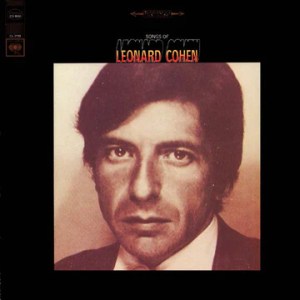
- With incredible Nearly Triple Plus (A++ to A+++) grades on both sides, this Stereo 360 copy of Cohen’s debut LP is practically as good as we have ever heard, right up there with our Shootout Winner
- Intimate, breathy vocals are key to the better copies such as this one, and that of course goes for practically every singer-songwriter album we offer
- Some of the man’s most memorable songs, including “Suzanne,” “Sisters of Mercy,” “So Long, Marianne” and “Hey, That’s No Way to Say Goodbye”
- Problems in the vinyl are sometimes the nature of the beast with these vintage LPs, but once you hear just how superb sounding this copy is, you might be inclined, as we were, to stop counting ticks and pops and just be swept away by the music
- 5 stars: “The ten songs on Songs of Leonard Cohen were certainly beautifully constructed, artful in a way few (if any) other lyricists would approach for some time, but what’s most striking about these songs isn’t Cohen’s technique, superb as it is, so much as his portraits of a world dominated by love and lust, rage and need, compassion and betrayal…few musicians have ever created a more remarkable or enduring debut.”
Get ready for some serious goosebumps! If this copy of Songs Of Leonard Cohen doesn’t give you chills, I don’t know what will.
We’ve played a ton of 360s and Red Labels, and copies that sound as good as this one are clearly the exception and not the rule.
The Red Label pressings from the 70s can be quite good if you know which are the good stampers and which to avoid, information that the average audiophile record lover would have a hard time coming by on his own.
Having done this for so long, we understand and appreciate that rich, full, solid, Tubey Magical sound is key to the presentation of this primarily vocal music. We rate these qualities higher than others we might be listening for (e.g., bass definition, soundstage, depth, etc.).
Hot Stamper sound is rarely about the details of a given recording. In the case of this album, more than anything else a Hot Stamper must succeed at recreating a solid, palpable, believable Leonard Cohen singing live in your listening room. The better copies have an uncanny way of doing just that.
If you exclusively play modern repressings of vintage recordings, I can say without fear of contradiction that you have never heard this kind of sound on vinyl. Old records have it — not often, and certainly not always — but less than one out of 100 new records do, if our experience with the hundreds we’ve played over the years can serve as a guide.
What The Best Sides Of Songs of Leonard Cohen Have To Offer Is Not Hard to Hear
- The biggest, most immediate staging in the largest acoustic space
- The most Tubey Magic, without which you have almost nothing. CDs give you clean and clear. Only the best vintage vinyl pressings offer the kind of Tubey Magic that was on the tapes in 1967
- Tight, note-like, rich, full-bodied bass, with the correct amount of weight down low
- Natural tonality in the midrange — with all the instruments having the correct timbre
- Transparency and resolution, critical to hearing into the three-dimensional studio space
No doubt there’s more but we hope that should do for now. Playing the record is the only way to hear all of the qualities we discuss above, and playing the best pressings against a pile of other copies under rigorously controlled conditions is the only way to find a pressing that sounds as good as this one does.
Shootout Criteria
What are sonic qualities by which a record — any record — should be judged? Pretty much the ones we discuss in most of our Hot Stamper listings: energy, vocal presence, frequency extension (on both ends), transparency, spaciousness, harmonic textures (freedom from smear is key), rhythmic drive, tonal correctness, fullness, richness, three-dimensionality, and on and on down the list.
When we can get a number of these qualities to come together on the side we’re playing, we provisionally give it a ballpark Hot Stamper grade, a grade that is often revised during the shootout as we hear what the other copies are doing, both good and bad.
Once we’ve been through all the side ones, we play the best of the best against each other and arrive at a winner for that side. Other copies from earlier in the shootout will frequently have their grades raised or lowered based on how they sounded compared to the eventual shootout winner. If we’re not sure about any pressing, perhaps because we played it early on in the shootout before we had learned what to listen for, we take the time to play it again.
Repeat the process for side two and the shootout is officially over. All that’s left is to see how the sides of each pressing match up.
It may not be rocket science, but it’s a science of a kind, one with strict protocols that we’ve developed over the course of many years to insure that the results we arrive at are as accurate as we can make them.
The result of all our work speaks for itself, on this very record in fact. We guarantee you have never heard this music sound better than it does on our Hot Stamper pressing — or your money back.
What We’re Listening For On Leonard Cohen’s Albums
This copy has the kind of sound we look for in a top quality folk rock record:
Immediacy in the vocals — so many copies are veiled and distant.
Natural tonal balance — most copies are at least slightly brighter or darker than ideal; ones with the right balance are the exception, not the rule.
Good solid weight so the bass sounds full and powerful.
Spaciousness — the better copies have wonderful studio ambience and space.
And last but not least, transparency, the quality of being able to see into the studio, where there is plenty of musical information to be revealed in this sophisticated recording.
Here is a more comprehensive breakdown of what we were listening for when evaluating Songs Of Leonard Cohen.
Clarity and Presence
Many copies are veiled in the midrange, partly because they may have shortcomings up top, but also because they suffer from blurry, smeary mids and upper mids.
With a real Hot Stamper pressing the sound is totally involving, and so is the music. You hear the breath in the voices, the pick on the strings of the guitars — these are the things that allow us to suspend our disbelief, to forget it’s a recording we’re listening to and not living, breathing musicians.
Top End Extension
Most copies of this album have no extreme highs, which causes the guitar harmonics to be blunted and dull. Without extreme highs the percussion can’t extend up and away from the other elements. Consequently these elements end up fighting for space in the midrange and getting lost in the mix.
Transparency
Although this quality is related to the above two, it’s not as important overall as the one below, but it sure is nice to have. When you can really “see” into the mix, it’s much easier to pick out each and every instrument in order to gain more insight into the arrangement and the recording of the material.
Seeing into the mix is a way of seeing into the mind of the artist. To hear the hottest copies was to appreciate even more the talents of all the musicians and producers involved, not to mention the engineers.
Side One
Suzanne
Master Song
Winter Lady
The Stranger Song
Sisters of Mercy
Side Two
So Long, Marianne
Hey, That’s No Way to Say Goodbye
Stories of the Street
Teachers
One of Us Cannot Be Wrong
Rave Reviews
Critics have been far kinder to the album since its release, with many considering it a highlight in the Cohen canon.
Mark Deming of AllMusic states, “The ten songs on Songs of Leonard Cohen were certainly beautifully constructed, artful in a way few (if any) other lyricists would approach for some time, but what’s most striking about these songs isn’t Cohen’s technique, superb as it is, so much as his portraits of a world dominated by love and lust, rage and need, compassion and betrayal…few musicians have ever created a more remarkable or enduring debut.”
Writing in Mojo in 2012, Sylvie Simmons called the LP “brilliant,” adding that it “sounded like nothing of its time – of any time really – fresh and ancient, cryptic and intimate.”
Brian Howe of Pitchfork declares, “1968’s Songs of Leonard Cohen contains many of his most essential songs – ‘Suzanne,’ ‘Master Song,’ “Stranger Song,’ ‘Sisters of Mercy,’ ‘So Long, Marianne’ – and establishes the themes and stylistic tics he would pursue relentlessly over the ensuing decades.”
In 2007, Tim Nelson of BBC Music called the collection “the absolute must-have classic.”
Amazon.com deems the album “stunning.”
In a 2014 Rolling Stone readers poll ranking the top ten Leonard Cohen songs, “Suzanne” came in at #2 while “So Long, Marianne” came in at #6.
“Stranger Song”, “Sisters of Mercy”, and “Winter Lady” were included on the soundtrack of Robert Altman’s 1971 film McCabe & Mrs. Miller.