More of The Band
More Roots Rock LPs
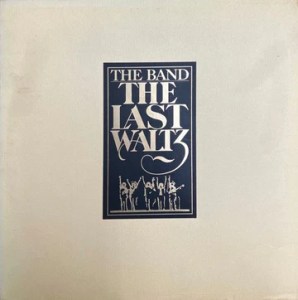
- The Last Waltz is back on the site for only the second time in about a year, here with roughly Nearly Triple Plus (A++ to A+++) sound on all SIX sides of these vintage Palm Tree pressings – just shy of our Shootout Winner (sides two and three actually won the shootout)
- These sides are rich, dynamic and natural sounding, with low end weight, midrange smoothness and powerful, punchy bass
- Features an A-list of brilliant artists, including Van Morrison, Ringo Star, Joni Mitchell, and Muddy Waters, just to name a few, and it’s surely the reason that this record is so hard to find and so expensive when you do find it
- Problems in the vinyl are sometimes the nature of the beast with these Classic Rock records – there simply is no way around them if the superior sound of vintage analog is important to you
- 4 stars: “It’s the Band’s ‘special guests’ who really make this set stand out — Muddy Waters’ ferocious version of ‘Mannish Boy’ would have been a wonder from a man half his age, Van Morrison sounds positively joyous on ‘Caravan,’ Neil Young and Joni Mitchell do well for their Canadian brethren, and Bob Dylan’s closing set finds him in admirably loose and rollicking form.”
- If you’re a fan of The Band, and what audiophile wouldn’t be?, this triple album from 1978 belongs in your collection
These vintage Warner Brothers pressings have the kind of Tubey Magical Midrange that modern records rarely even BEGIN to reproduce. Folks, that sound is gone and it sure isn’t showing signs of coming back. If you love hearing INTO a recording, actually being able to “see” the performers, and feeling as if you are listening live to The Band, these are the records for you. It’s what vintage all analog recordings are known for — this sound.
If you exclusively play modern repressings of vintage recordings, I can say without fear of contradiction that you have never heard this kind of sound on vinyl. Old records have it — not often, and certainly not always — but maybe one out of a hundred new records do, and those are some pretty long odds.
What The Best Sides Of The Last Waltz Have To Offer Is Not Hard To Hear
- The biggest, most immediate staging in the largest acoustic space
- The most Tubey Magic, without which you have almost nothing. CDs give you clean and clear. Only the best vintage vinyl pressings offer the kind of Tubey Magic that was on the tapes in 1978
- Tight, note-like, rich, full-bodied bass, with the correct amount of weight down low
- Natural tonality in the midrange — with all the instruments having the correct timbre
- Transparency and resolution, critical to hearing into the three-dimensional space of the arena
No doubt there’s more but we hope that should do for now. Playing these records is the only way to hear all of the qualities we discuss above, and playing the best pressings against a pile of other copies under rigorously controlled conditions is the only way to find pressing that sound as good as these three do.
Size and Space
One of the qualities that we don’t talk about on the site nearly enough is the SIZE of the record’s presentation. Some copies of the album just sound small — they don’t extend all the way to the outside edges of the speakers, and they don’t seem to take up all the space from the floor to the ceiling. In addition, the sound can often be recessed, with a lack of presence and immediacy in the center.
Other copies — my notes for these copies often read “BIG and BOLD” — create a huge soundfield, with the music positively jumping out of the speakers. They’re not brighter, they’re not more aggressive, they’re not hyped-up in any way, they’re just bigger and clearer.
And most of the time those very special pressings just plain rock harder. When you hear a copy that does all that — a copy like this one — it’s an entirely different listening experience.
What We’re Listening For On The Last Waltz
- Energy for starters. What could be more important than the life of the music?
- The Big Sound comes next — wall to wall, lots of depth, huge space, three-dimensionality, all that sort of thing.
- Then transient information — fast, clear, sharp attacks for the guitars, horns and drums, not the smear and thickness common to most LPs.
- Tight, note-like bass with clear fingering — which ties in with good transient information, as well as the issue of frequency extension further down.
- Next: transparency — the quality that allows you to hear deep into the soundfield, showing you the space and air around all the players.
- Then: presence and immediacy. The vocals aren’t “back there” somewhere, way behind the speakers. They’re front and center where any recording engineer worth his salt would have put them.
- Extend the top and bottom and voila, you have The Real Thing — an honest to goodness Hot Stamper.
Side One
Theme from The Last Waltz
Up on Cripple Creek
Who Do You Love?
Helpless
Stage Fright
Side Two
Coyote
Dry Your Eyes
It Makes No Difference
Such a Night
Side Three
The Night They Drove Old Dixie Down
Mystery Train
Mannish Boy
Further on Up the Road
Side Four
The Shape I’m In
Down South in New Orleans
Ophelia
Tura Lura Lural (That’s An Irish Lullaby)
Caravan
Side Five
Life Is a Carnival
Baby, Let Me Follow You Down
“I Don’t Believe You
“Forever Young
Baby, Let Me Follow You Down (Reprise)
I Shall Be Released
Side Six
The Well
Evangeline
Out of the Blue
The Weight
The Last Waltz Refrain
Theme from The Last Waltz
AMG 4 Star Review
As a film, The Last Waltz was a triumph — one of the first (and still one of the few) rock concert documentaries that was directed by a filmmaker who understood both the look and the sound of rock & roll, and executed with enough technical craft to capture all the nooks and crannies of a great live show.
But as an album, The Last Waltz soundtrack had to compete with the Band’s earlier live album, Rock of Ages, with which it bears a certain superficial resemblance — both found the group trying to create something grander than the standard-issue live double, and both featured the group beefed up by additional musicians. While Rock of Ages found the Band swinging along with the help of a horn section arranged by Allen Toussaint, The Last Waltz boasts a horn section (using Toussaint’s earlier arrangements on a few cuts) and more than a baker’s dozen guest stars, ranging from old cohorts Ronnie Hawkins and Bob Dylan to contemporaries Joni Mitchell, Neil Young, and Van Morrison.
The Band are in fine if not exceptional form here; on most cuts, they don’t sound quite as fiery as they did on Rock of Ages, though their performances are never less than expert, and the high points are dazzling, especially an impassioned version of “It Makes No Difference” and blazing readings of “Up on Cripple Creek” and “The Night They Drove Old Dixie Down” (Levon Helm has made no secret that he felt breaking up the Band was a bad idea, and here it sounds if he was determined to prove how much they still had to offer).
Ultimately, it’s the Band’s “special guests” who really make this set stand out — Muddy Waters’ ferocious version of “Mannish Boy” would have been a wonder from a man half his age, Van Morrison sounds positively joyous on “Caravan,” Neil Young and Joni Mitchell do well for their Canadian brethren, and Bob Dylan’s closing set finds him in admirably loose and rollicking form. (One question remains — what exactly is Neil Diamond doing here?)