More Gram Parsons
More Country and Country Rock
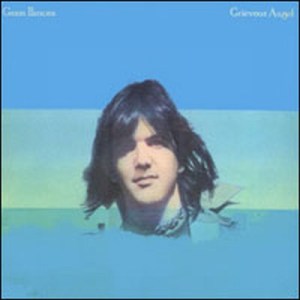
- With outstanding Double Plus (A++) grades throughout, this vintage Reprise pressing of Parson’s country rock classic is doing just about everything right
- The sound here is rich, full and Tubey Magical with plenty of presence and none of the harshness that plagues most copies
- It’s tough (and getting tougher) to find clean early pressings of this album, which is why only a handful of copies have hit the site in the last few years
- 5 stars: “… one would be hard pressed to name an artist who made an album this strong only a few weeks before their death — or at any time of their life, for that matter.”
It’s tough to find clean early pressings of this album, let alone copies that have excellent sound and quiet surfaces on both sides. We just had our first big shootout for this album in a number of years and found a lot to like about this pressing. The sound here is big, rich and open with excellent clarity and transparency. Gram’s voice sounds just right here, as does Emmylou Harris’s. Most copies have some grit and edge that really hurts the uptempo numbers, but this copy remains smooth and sweet enough to work throughout.
The music on this record is some of the finest Parsons ever laid to wax. There never was a true “solo” Gram Parsons record and Grievous Angel is full of wonderful collaborations, especially with Emmylou Harris, whose nuanced vocal performance perfectly compliments Parsons on nearly every song. Though The Gilded Palace of Sin and Sweetheart of the Rodeo may be Parsons’ most influential LPs, he never made another record quite as personal and effortlessly understated as Grievous Angel.
This vintage Reprise pressing has the kind of Tubey Magical Midrange that modern records can barely BEGIN to reproduce. Folks, that sound is gone and it sure isn’t showing signs of coming back. If you love hearing INTO a recording, actually being able to “see” the performers, and feeling as if you are sitting in the studio with the band, this is the record for you. It’s what vintage all analog recordings are known for — this sound.
If you exclusively play modern repressings of vintage recordings, I can say without fear of contradiction that you have never heard this kind of sound on vinyl. Old records have it — not often, and certainly not always — but maybe one out of a hundred new records do, and those are some pretty long odds.
What The Best Sides Of Grievous Angel Have To Offer Is Not Hard To Hear
- The biggest, most immediate staging in the largest acoustic space
- The most Tubey Magic, without which you have almost nothing. CDs give you clean and clear. Only the best vintage vinyl pressings offer the kind of Tubey Magic that was on the tapes in 1974
- Tight, note-like, rich, full-bodied bass, with the correct amount of weight down low
- Natural tonality in the midrange — with all the instruments having the correct timbre
- Transparency and resolution, critical to hearing into the three-dimensional studio space
No doubt there’s more but we hope that should do for now. Playing the record is the only way to hear all of the qualities we discuss above, and playing the best pressings against a pile of other copies under rigorously controlled conditions is the only way to find a pressing that sounds as good as this one does.
What We’re Listening For On Grievous Angel
- Energy for starters. What could be more important than the life of the music?
- Then: presence and immediacy. The vocals aren’t “back there” somewhere, lost in the mix. They’re front and center where any recording engineer worth his salt would put them.
- The Big Sound comes next — wall to wall, lots of depth, huge space, three-dimensionality, all that sort of thing.
- Then transient information — fast, clear, sharp attacks, not the smear and thickness so common to these LPs.
- Tight punchy bass — which ties in with good transient information, also the issue of frequency extension further down.
- Next: transparency — the quality that allows you to hear deep into the soundfield, showing you the space and air around all the instruments.
- Extend the top and bottom and voila, you have The Real Thing — an honest to goodness Hot Stamper.
TRACK LISTING
Side One
Return of the Grievous Angel
Hearts on Fire
I Can’t Dance
Brass Buttons
$1000 Wedding
Side Two
Medley
Cash on the Barrelhead
Hickory Wind
Love Hurts
Ooh Las Vegas
In My Hour of Darkness
AMG 5 Star Rave Review
Gram Parsons fondness for drugs and high living are said to have been catching up with him while he was recording Grievous Angel, and sadly he wouldn’t live long enough to see it reach record stores, dying from a drug overdose in the fall of 1973. This album is a less ambitious and unified set than his solo debut, but that’s to say that G.P. was a great album while Grievous Angel was instead a very, very good one. Much of the same band that played on his solo debut were brought back for this set, and they perform with the same effortless grace and authority (especially guitarist James Burton and fiddler Byron Berline).
If Parsons was slowing down a bit as a songwriter, he still had plenty of gems on hand from more productive days, such as “Brass Buttons” and “Hickory Wind (which wasn’t really recorded live in Northern Quebec; that’s just Gram and the band ripping it up live in the studio, with a handful of friends whooping it up to create honky-tonk atmosphere). He also proved to be a shrewd judge of other folks material as always; Tom T. Hall’s “I Can’t Dance” is a strong barroom rocker, and everyone seems to be having a great time on The Louvin Brothers’s “Cash on the Barrelhead.”
As a vocal duo, Parsons and Emmylou Harris only improved on this set, turning in a version of “Love Hurts” so quietly impassioned and delicately beautiful that it’s enough to make you forget Roy Orbison ever recorded it. And while he didn’t plan on it, Parsons could hardly have picked a better closing gesture than “In My Hour of Darkness.” Grievous Angel may not have been the finest work of his career, but one would be hard pressed to name an artist who made an album this strong only a few weeks before their death — or at any time of their life, for that matter.