More Bob Marley
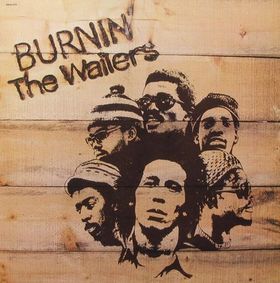
-
- Burnin’ returns to the site after more than 6 years, with STUNNING Shootout Winning Triple Plus (A+++) sound or close to it throughout
- Bigger and bolder, with more bass, more energy, and more of that “you-are-there-immediacy” of VINTAGE ANALOG that set the best pressings apart from reissues, CDs, and whatever else you care to name
- Features some of the band’s most legendary releases, including Get Up, Stand Up and I Shot The Sheriff
- 5 stars: “… [these] songs illuminated the desperation of poor Jamaican life, but they also looked forward to religious salvation, their themes accentuated by the compelling rhythms and the alternating vocals of the three singers.”
Two killer sides for this Island pressing. We’ve been auditioning quite a few Bob Marley records lately and this is one of the better sounding recordings he ever made.
This is widely regarded as one of the most essential reggae albums ever recorded. There are two big hits here — Get Up, Stand Up and I Shot The Sheriff — but there’s plenty of other great songs as well.
We’re always searching for more copies, but it takes time to acquire enough for a good shootout. Bob Marley vinyl tends to get snatched up pretty quickly no matter where you are, probably because he’s one of those artists who seems to endear himself to each new generation of music lovers. You can see teenagers wearing Bob Marley shirts in just about every part of the world to this day, so it’s no wonder that his records don’t sit in the bins for long.
This vintage British Island pressing has the kind of Tubey Magical Midrange that modern records can barely BEGIN to reproduce. Folks, that sound is gone and it sure isn’t showing signs of coming back. If you love hearing INTO a recording, actually being able to “see” the performers, and feeling as if you are sitting in the studio with the band, this is the record for you. It’s what vintage all analog recordings are known for — this sound.
If you exclusively play modern repressings of vintage recordings, I can say without fear of contradiction that you have never heard this kind of sound on vinyl. Old records have it — not often, and certainly not always — but maybe one out of a hundred new records do, and those are some pretty long odds.
What Amazing Sides Such as These Have to Offer Is Not Hard to Hear
- The biggest, most immediate staging in the largest acoustic space
- The most Tubey Magic, without which you have almost nothing. CDs give you clean and clear. Only the best vintage vinyl pressings offer the kind of Tubey Magic that was on the tapes in 1973
- Tight, note-like, rich, full-bodied bass, with the correct amount of weight down low
- Natural tonality in the midrange — with all the instruments having the correct timbre
- Transparency and resolution, critical to hearing into the three-dimensional studio space
No doubt there’s more but we hope that should do for now. Playing the record is the only way to hear all of the qualities we discuss above, and playing the best pressings against a pile of other copies under rigorously controlled conditions is the only way to find a pressing that sounds as good as this one does.
What We’re Listening For on Burnin’
- Energy for starters. What could be more important than the life of the music?
- Then: presence and immediacy. The vocals aren’t “back there” somewhere, lost in the mix. They’re front and center where any recording engineer worth his salt would put them.
- The Big Sound comes next — wall to wall, lots of depth, huge space, three-dimensionality, all that sort of thing.
- Then transient information — fast, clear, sharp attacks, not the smear and thickness so common to these LPs.
- Tight punchy bass — which ties in with good transient information, also the issue of frequency extension further down.
- Next: transparency — the quality that allows you to hear deep into the soundfield, showing you the space and air around all the instruments.
- Extend the top and bottom and voila, you have The Real Thing — an honest to goodness Hot Stamper.
Vinyl Condition
Mint Minus Minus is about as quiet as any vintage pressing will play, and since only the right vintage pressings have any hope of sounding good on this album, that will most often be the playing condition of the copies we sell. (The copies that are even a bit noisier get listed on the site are seriously reduced prices or traded back in to the local record stores we shop at.)
Those of you looking for quiet vinyl will have to settle for the sound of other pressings and Heavy Vinyl reissues, purchased elsewhere of course as we have no interest in selling records that don’t have the vintage analog magic of these wonderful recordings.
If you want to make the trade-off between bad sound and quiet surfaces with whatever Heavy Vinyl pressing might be available, well, that’s certainly your prerogative, but we can’t imagine losing what’s good about this music — the size, the energy, the presence, the clarity, the weight — just to hear it with less background noise.
TRACK LISTING
Side One
Get Up, Stand Up
Hallelujah Time
I Shot the Sheriff
Burnin’ and Lootin’
Put It On
Side Two
Small Axe
Pass It On
Duppy Conqueror
One Foundation
Rasta Man Chant
AMG 5 Star Rave Review
The confrontational nature of the group’s message is apparent immediately in the opening track, “Get Up, Stand Up,” as stirring a song as any that emerged from the American Civil Rights movement a decade before. The Wailers are explicit in their call to violence, a complete reversal from their own 1960s “Simmer Down” philosophy. Here, on “Burnin’ and Lootin’,” they take issue with fellow Jamaican Jimmy Cliff’s song of the previous year, “Many Rivers to Cross,” asking impatiently, “How many rivers do we have to cross/Before we can talk to the boss?”
“I Shot the Sheriff,” the album’s most celebrated song, which became a number one hit in the hands of Eric Clapton in 1974, claims self-defense, admits consequences (“If I am guilty I will pay”), and emphasizes the isolated nature of the killing (“I didn’t shoot no deputy”), but its central image is violent. Such songs illuminated the desperation of poor Jamaican life, but they also looked forward to religious salvation, their themes accentuated by the compelling rhythms and the alternating vocals of the three singers. Bob Marley was a first among equals, of course, and after this album his partners, Peter Tosh and Bunny Wailer, quit the group, which thereafter was renamed Bob Marley and the Wailers.