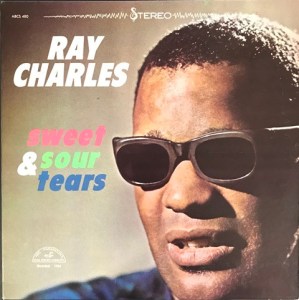
- You’ll find stunning Triple Plus (A+++) sound or close to it on both sides of this Shootout Winning 1964 pressing – exceptionally QUIET vinyl for a vintage Ray Charles record (!)
- This stereo pressing is the only way to hear these classic songs sound rich, powerful and free from coloration
- A concept album filled with an eclectic collection of themed music, this release showcases Charles’ innovative approach to recording
- “…One is almost tempted to think that Charles was toying with audience expectations by mixing unabashedly sentimental slow tunes with the far more bluesy, satisfying, and upbeat numbers, such as his surprisingly brassy, punchy treatment of “Cry Me a River.”
This ’60s LP has the kind of Tubey Magical Midrange that modern pressings cannot BEGIN to reproduce. Folks, that sound is gone and it sure isn’t showing any sign of coming back.
Having done this for so long, we understand and appreciate that rich, full, solid, Tubey Magical sound is key to the presentation of this primarily vocal music. We rate these qualities higher than others we might be listening for (e.g., bass definition, soundstage, depth, etc.). The music is not so much about the details in the recording, but rather in trying to recreate a solid, palpable, real Ray Charles singing live in your listening room. The best copies have an uncanny way of doing just that.
If you exclusively play modern repressings of older recordings (this one is now 54 years old), I can say without fear of contradiction that you have never heard this kind of sound on vinyl. Old records have it — not often, and certainly not always — but less than one out of 100 new records do, if our experience with the hundreds we’ve played can serve as a guide.
What Shootout Winning sides such as these have to offer is not hard to hear:
- Some of the biggest, most immediate staging, occupying an especially large acoustic space
- More Tubey Magic, without which you have almost nothing. CDs give you clean and clear. Only the best vintage vinyl pressings offer the kind of Tubey Magic that was on the tapes in 1964
- Tight, note-like, rich, full-bodied bass, with the correct amount of weight down low
- Natural tonality in the midrange — with Ray as well as all the singers in his group sounding like people
- Transparency and resolution, critical to hearing into the three-dimensional studio space
No doubt there’s more but we hope that should do for now. Playing the record is the only way to hear all of the above.
What to Listen For (WTLF)
Copies with rich lower mids did the best in our shootout, assuming they weren’t veiled or smeary of course. So many things can go wrong on a record! We know, we’ve heard them all.
Top end extension is critical to the sound of the best copies. Lots of old records (and new ones) have no real top end; consequently the studio or stage will be missing much of its natural ambience and space, and instruments will lack their full complement of harmonic information.
Tube smear is common to pressings from every era and this is no exception. The copies that tend to do the best in a shootout will have the least (or none), yet are full-bodied, tubey and rich.
Best Practices
If you have five or ten copies of a record and play them over and over against each other, the process itself teaches you what’s right and what’s wrong with the sound of the album. Once your ears are completely tuned to what the best pressings do well that the others do not do as well, using a few specific passages of music, it will quickly become obvious how well any given pressing reproduces those passages.
The process is simple enough. First you go deep into the sound. There you find something special, something you can’t find on most copies. Now, with the hard-won knowledge of precisely what to listen for, you are perfectly positioned to critique any and all pressings that come your way.
TRACK LISTING
Side One
Cry
Guess I’ll Hang My Tears Out To Dry
A Tear Fell
No One To Cry To
You’ve Go Me Crying Again
After My Laughter Came Tears
Side Two
Teardrops From My Eyes
Don’t Cry, Baby
Cry Me A River
Baby, Don’t You Cry
Willow, Weep For Me
I Cried For You
AMG Review
One of a series of ultra-loose concept albums Ray Charles cut in the ’60s, this one is dedicated entirely to songs with titles or lyrical references to crying and tears. It’s an excuse for Charles to choose his usual varied menu of upbeat jumpers, slow countrified weepers, and proudly saccharine pop standards.
…One is almost tempted to think that Charles was toying with audience expectations by mixing unabashedly sentimental slow tunes with the far more bluesy, satisfying, and upbeat numbers, such as “Don’t Cry, Baby” and “Baby, Don’t You Cry,” as well as his surprisingly brassy, punchy treatment of “Cry Me a River.”