 Skeptical Thinking Is Critical to Achieving Better Sound
Let me be clear: conventional wisdom applied to collecting higher quality vintage vinyl pressings will be right more often than it is wrong. If it were the other way around, it would not be wisdom, it would be folly.
The person who applies the kind of advice you see described below will surely end up with a decent collection of records, records which will no doubt be better sounding than if he were buying records randomly.
As we said, conventional wisdom generally gets more records right than wrong. More right than wrong, yes, but plenty wrong just the same. That is the subject of this commentary.
Mr. edgewear does us a huge favor by laying out a great many of the most popular tenets of record collecting advice in the two posts below. (I probably found his post on the Steve Hoffman forum discussion of Hot Stampers. It goes on for days.)
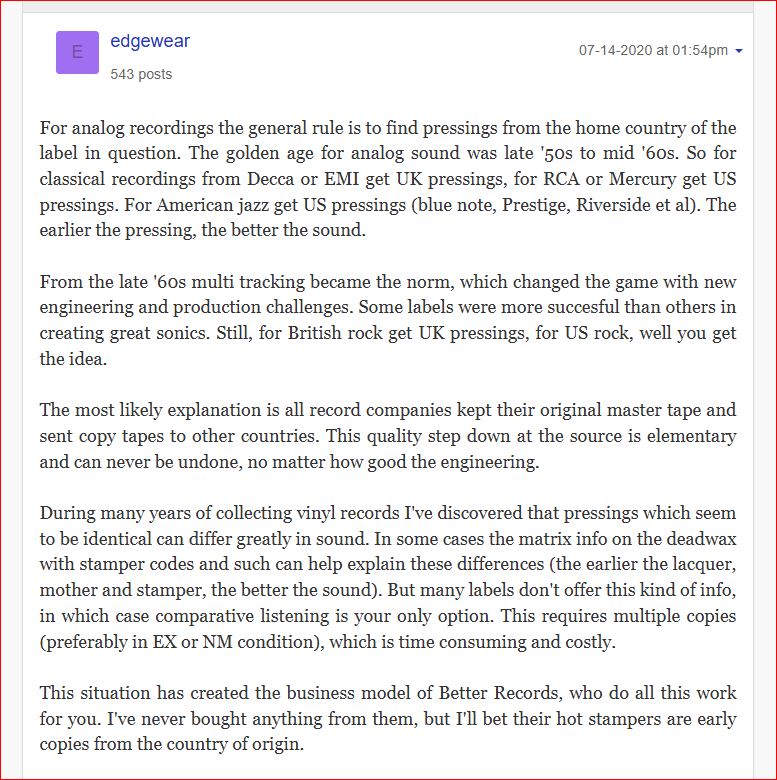
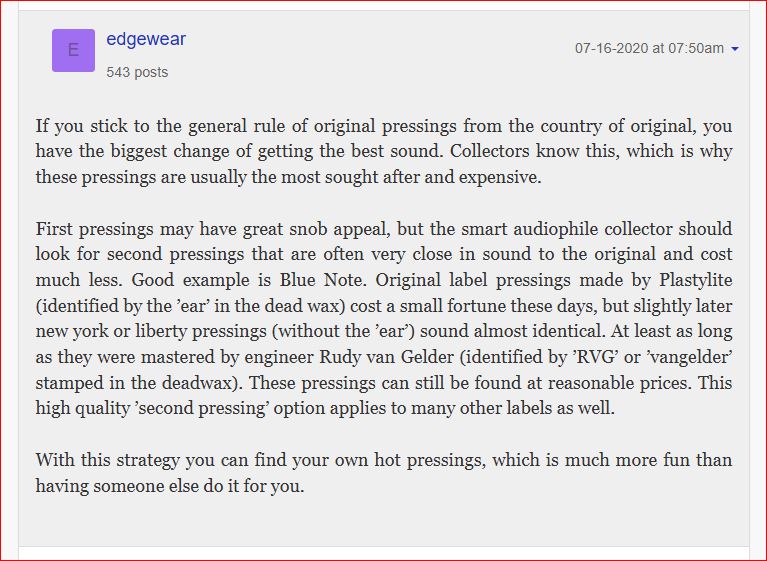
I plan to follow up on some of these assertions in greater detail. (Please note that “assertions” is the most accurate description of the information Mr. edgewear provides, as there is simply no effort made to provide evidence of any kind to back up his pronouncements, the standard operating procedure for the internet.)
Let’s look closer at some of the most likely results if someone were to follow the advice offered above.
The Inherent Problem
Conventional wisdom offers no method or approach for improving one’s chances of finding the best sounding pressing of any specific title.
We grant that it can certainly be of some general help.
However, for a great many titles it will be of no use at all.
It works in favor of some artists’ records and against those of others artists, and offers no way of knowing which artists fit into which of those two categories. For some artists the conventional wisdom is mostly true. For others it is as wrong as wrong can be.
For example, it advises those looking for top quality sound to buy original pressings of The Beatles records, even though few of them sound as good as the right* reissues. (More on that subject here.)
A better term for “few“ would be “practically none.“
We often talk about rules of thumb here on the blog, mostly to point out how much trouble they can cause when applied to areas in which they are too crude to be of service.
Yes, it’s true, the 1S shaded dog pressing will often be the best sounding, but not always.
Will the original Island Pink Label pressing be the best sounding? (That depends.)
Are the original Blue Notes the best sounding? (Maybe yes, maybe no.)