More Letters from Customers and Critics Alike
What follows is an excerpt from a very old letter (circa 2005) in which the writer attempted to make the case that spending lots of money on records is foolish when a dollar buys a perfectly good record at a thrift store and provides the listener with exactly the same music and decent enough sound.
We think this is silly and, with a few rough calculations, along with a heavy dose of self-promotion and not a little bullying, we set out to prove that the average record is practically worthless. Prepare to confront our exercise in sophistry.
(Yes, we are well aware that our reasoning is specious, but it’s no more specious than anybody else’s reasoning about records if I may say so.)
Jason, our letter writer, points out this fact:
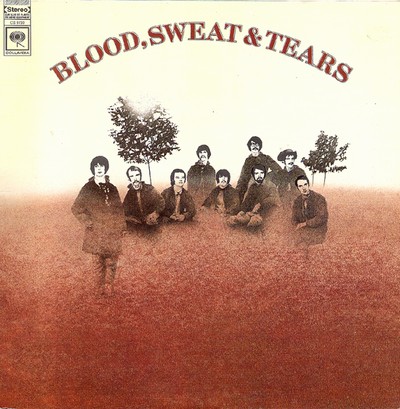
Your records are a poor value in terms of investment. Until you convince the whole LP community that your HOT-STAMPER choices are the pinnacle of sound a buyer will never be able to re-sell B S & T for $300. Even if they swear it is the best sounding copy in the world.
We replied as follows:
If records are about money, then buying them at a thrift store for a buck apiece and getting something halfway decent makes perfect sense. As the Brits say, “that’s value for money.” If we sell you a Hot Stamper for, say, $500, can it really be five hundred times better?
The Math
I would argue that here the math is actually on our side. The average pressing is so close to worthless sonically that I would say that it isn’t even worth the one dollar Jason might pay for it in a thrift store. I might value it somewhere in the vicinity of a penny or two. Really? Yes indeed.
Assuming it’s a record I know well, I probably know just how wonderful the record can really sound, and what that wonderful sound does to communicate the most important thing of all: the musical value.
A copy that doesn’t do that — allow the music to come alive — has almost no value. It’s not zero, but it’s close to zero. Let’s assign it a nominal value. We’ll call it a penny.
What Have You Got to Lose?
You see, when I play a mediocre copy, I know what I’ve lost.
Jason can’t know that. All he knows is what he hears coming from his mediocre equipment as his mediocre LP is playing. To him it sounds fine. To me it sounds like hell. (Hell is in fact the place where they make you listen to bad sounding records all day.)