Hot Stamper Pressings of Live Recordings Available Now
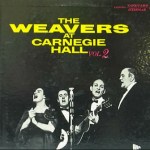
We recently did a shootout for this famous Weavers album. These are just a few of the things we had to say about our shootout winner in the notes:
“Tubey and 3D and weighty”…”very full and detailed vox”…”sweet and tubey and present”…”so much space and bass.” Both of these sides are rich and full, Tubey Magical, and tonally correct from top to bottom. The sound is big and open, with the performers front and center (as well as left and right).
Our notes for the early red label mono pressing we played noted that it was “crude, congested and awful.” There are plenty of mono pressings on Vanguard with excellent sound, but this is not one of them.
Here is an extract from the stamper sheet showing the sonic notes and the stamper numbers of the mono pressing we played.

Crude and congested vocals? On a Weavers record? What could be worse?
We didn’t even bother to play side two. Why waste any more time on such an awful sounding record?
When the voice is wrong, you my friend have yourself a completely worthless piece of vinyl. (Other titles that get the voice wrong and therefore should be avoided by audiophiles of all stripes can be found here.)
The world is full of old records that just sound like old records. We’ve suffered through them by the tens of thousands. (Yes, you read that right. We play thousands of records every year, and we’ve been doing it for more than two decades . They add up!)
Our website, as well as this blog, are devoted to helping audiophiles find pressings that don’t sound anything like the millions of run-of-the-mill LPs that were stamped out with little regard for sound quality for more than seven decades.
Even a million dollar stereo can’t make the average record sound good, and the more accurate and revealing the system, the more limited and lifeless the average record will show itself to be.
Most Collections Are Full of Junk LPs
The big record collections I have run into are always full of these mediocrities. They look nice I suppose, sitting there on the shelf, saying “Look at me, there are so many of us! What a music lover my owner must be.”
But most records really aren’t all that lovable, are they?
Most records simply don’t get played — at least by audiophiles — for the obvious but unspoken reason that the sound quality of the recording or pressings or both was never very good, certainly not good enough to allow the music to work its magic and motivate the listener to devote the time needed to understand the music (and sound!) through multiple plays.
The above assumes a fact that may not be in evidence: that the music under discussion has any real magic in the first place. There are thousands of records whose music has never appealed to me, in spite of how exceptional the sound quality may have been. Here are about 500. I’m sure I would have no trouble coming up with ten times that number if I really put my mind to it.
And why would anyone care what I like or don’t like in the first place? Music is very personal. There is simply no explaining or justifying why one piece of music can take hold of you completely and another leaves you feeling nothing at all. My guess is that a majority of the records pictured below got played once or twice and filed away, never to be heard from again.
Maybe it’s a good way for some music lovers to keep track of the records they’ve played over the years. The most likely reason many of these records sit on the shelf is because the owner doesn’t know what else to do with them.
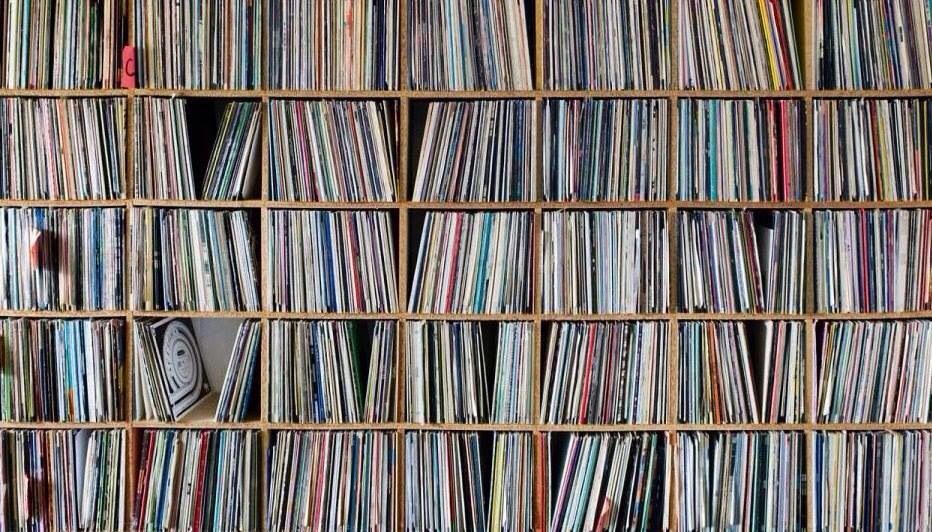
Only an old school audio system can hide the faults of most of the pressings you see in this picture, assuming they have not been carefully curated, which strikes me as a fairly safe bet.
Wrapping It Up
In summary, the mono pressings of this Weavers album are hopeless.
For albums that actually can sound sound good in mono, so good they often end up winning our shootouts, click here.
If you see this album in mono at a garage sale, don’t even waste a buck on it. Not even a quarter. It’s just not worth the vinyl it’s pressed on. The Weavers sing beautifully, but you would never know it by playing the mono pressing of The Weavers At Carnegie Hall, Vol. 2.
And isn’t that the reason we audiophiles go to such lengths to find high quality pressings of these legendary recordings, in order, at least in this case, to hear The Weavers sing beautifully?
AMG 4 1/2 Star Review
By April 1, 1960, when they recorded their fifth Vanguard album (which was their third live disc and second to be recorded at Carnegie Hall), the Weavers had overcome the loss of Pete Seeger and fully integrated his replacement, Erik Darling, who proved a banjo virtuoso and exuberant humorist (listen to his kazoo solo on “Bill Bailey Come Home”).
They had an excellent act, mixing old favorites dating back to the days of the Almanac Singers (“The Sinking of the Reuben James”) and newer songs that would become standards of the folk boom (“Last Night I Had the Strangest Dream”). And, at least at this point, they seemed to be riding the crest of that boom, which they had inspired with their 1955 Carnegie Hall show, recorded for their first Vanguard album, The Weavers at Carnegie Hall (1957), which belatedly jumped into the album charts a couple of months after this album became their chart debut at the start of 1961.
In retrospect, however, the cannily titled Vol. 2 (you’d think it was more from the first concert, wouldn’t you?) represented the peak of the Weavers’ comeback; in 60s terms, with their bow ties and tuxedos, they seemed like something from an earlier time compared to the collegiate earnestness of the Kingston Trio and the political seriousness of Peter, Paul and Mary (who debuted the following year) — and, of course, they were. But with The Weavers at Carnegie Hall, Vol. 2 however briefly, they finally exorcised the ghost of Seeger and demonstrated that they were a valid and popular act on their own.
Further Reading