More Jazz Recordings of Interest
More Jazz Recordings Featuring the Saxophone
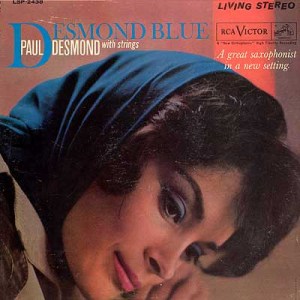
- Paul Desmond’s phenomenal 1962 release returns to the site for the first time in years, here with two INSANELY GOOD Shootout Winning Triple Plus (A+++) sides
- These are just a few of the things we had to say about this amazing copy in our notes: “lots of space and detail and texture”…”super rich and open”…”sax up front and breathy”…”huge and tubey and weighty”…”textured and detailed”…”sweet and rich and present”
- This is vintage Sixties Living Stereo sound at its best – big, rich and Tubey Magical like you will not believe
- A “highly innovative and meticulously crafted work,” this collection is brimming with delightful jazz classics, including “My Funny Valentine,” “I’ve Got You Under My Skin,” and “Body and Soul”
- 4 stars: “… lush, reflective, thought-provoking, and soul-stirring. This work is quite a plus for any listener and especially those who consider themselves avid fans of Paul Desmond.”
Need a refresher course in Tubey Magic after playing too many modern recordings or remasterings? These original Living Stereo pressings are overflowing with it. Rich, smooth, sweet, full of ambience, dead-on correct tonality — everything that we listen for in a great record is here.
No recordings will ever be made that sound like this again, and no CD will ever capture what is in the grooves of this record. There is, of course, a CD of this album, quite a few of them I would guess, but those of us with a good turntable couldn’t care less.
This original stereo pressing has the kind of Tubey Magical Midrange that modern records can barely BEGIN to reproduce. Folks, that sound is gone and it sure isn’t showing signs of coming back. If you love hearing INTO a recording, actually being able to “see” the performers, and feeling as if you are sitting in the studio with the band, this is the record for you. It’s what vintage all analog recordings are known for — this sound.
If you exclusively play modern repressings of vintage recordings, I can say without fear of contradiction that you have never heard this kind of sound on vinyl. Old records have it — not often, and certainly not always — but maybe one out of a hundred new records do, and those are some pretty long odds.
What The Best Sides Of Desmond Blue Have To Offer Is Not Hard To Hear
- The biggest, most immediate staging in the largest acoustic space
- The most Tubey Magic, without which you have almost nothing. CDs give you clean and clear. Only the best vintage vinyl pressings offer the kind of Tubey Magic that was on the tapes in 1962
- Tight, note-like, rich, full-bodied bass, with the correct amount of weight down low
- Natural tonality in the midrange — with all the instruments having the correct timbre
- Transparency and resolution, critical to hearing into the three-dimensional studio space
No doubt there’s more but we hope that should do for now. Playing the record is the only way to hear all of the qualities we discuss above, and playing the best pressings against a pile of other copies under rigorously controlled conditions is the only way to find a pressing that sounds as good as this one does.
Copies with rich lower mids and nice extension up top did the best in our shootout, assuming they weren’t veiled or smeary of course. So many things can go wrong on a record. We know, we’ve heard them all.
Top end extension is critical to the sound of the best copies. Lots of old records (and new ones) have no real top end; consequently, the studio or stage will be missing much of its natural air and space, and instruments will lack their full complement of harmonic information.
Tube smear is common to most vintage pressings. The copies that tend to do the best in a shootout will have the least (or none), yet are full-bodied, tubey and rich.
Hi-Fidelity
What do we love about these Living Stereo Hot Stamper pressings? The timbre of every instrument is Hi-Fi in the best sense of the word. The instruments here are reproduced with remarkable fidelity. Now that’s what we at Better Records mean by “Hi-Fi,” not the kind of audiophile phony BS sound that passes for Hi-Fidelity these days. There’s no boosted top, there’s no bloated bottom, there’s no sucked-out midrange. There’s no added digital reverb (Patricia Barber, Diana Krall, et al.). The microphones are not fifty feet away from the musicians (Water Lily) nor are they inches away (Three Blind Mice).
This is Hi-Fidelity for those who recognize the real thing when they hear it. I’m pretty sure our customers do, and whoever picks this one up is guaranteed to get a real kick out of it.
What We’re Listening For On Desmond Blue
- Energy for starters. What could be more important than the life of the music?
- The Big Sound comes next — wall to wall, lots of depth, huge space, three-dimensionality, all that sort of thing.
- Then transient information — fast, clear, sharp attacks, not the smear and thickness so common to these LPs.
- Tight, full-bodied bass — which ties in with good transient information, also the issue of frequency extension further down.
- Next: transparency — the quality that allows you to hear deep into the soundfield, showing you the space and air around all the instruments.
- Extend the top and bottom and voila, you have The Real Thing — an honest to goodness Hot Stamper.
Side One
My Funny Valentine
Desmond Blue
Then I’ll Be Tired Of You
I’ve Got You Under My Skin
Late Lament
Side Two
I Should Care
Like Someone In Love
Ill Wind
Body And Soul
AMG 4 Star Review
As intended, this album presents alto sax specialist Paul Desmond as never featured before, with the backing of a string orchestra…It’s unyielding purpose: to soothe the souls of its listeners. Desmond’s style and tone shine with an alluring quality, and the record is filled with melodies that don’t fail to stimulate the sophisticated jazz listener. Desmond’s melodies are eloquently detailed and charmingly spun in the midst of the string orchestra arranged and conducted by Bob Prince.
The legendary Jim Hall is featured as guest guitarist, playing yet another scintillating role and using his classic comping style. Hall is perhaps the most highly respected of all jazz guitarists for his good taste and witty inventiveness. Desmond has always been most familiar to the jazz public for his sweeping scale passages and his seemingly effortless spontaneity during periods of improvisation, although here he is often featured in a more lyrical ballad style on such romantic tunes as “My Funny Valentine,” “Late Lament,” and “Then I’ll Be Tired of You.”
This album is a highly innovative and meticulously crafted work, reflecting the ongoing success of both Desmond and Hall within the 1960s and the cool jazz period. Both of these musicians spent time working with Dave Brubeck and later lent themselves to many of Antonio Carlos Jobim’s bossa nova projects. The arrangements are extraordinary throughout this collection, including the charming “Valentine,” which begins with a fantastic Elizabethan flavor. The intro sets up the mood to carry Desmond into the first chorus, which then glides into a 20th century style. The tune “I Should Care” is “a shimmering debt to Ibert and one of the most imaginative blendings you will ever hear of strings, reeds, French horn and harp,” according to the liner notes.
The tone of the album: lush, reflective, thought-provoking, and soul-stirring. This work is quite a plus for any listener and especially those who consider themselves avid fans of Paul Desmond.