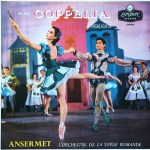
Hot Stamper Pressings of Music Conducted by Ansermet Available Now
[This is a very old commentary so take it for what it’s worth.]
DEMO QUALITY SOUND for this early London Mono pressing.
Side one of this record sounds incredible! The sound is absolutely top notch. Check out the brass — it has the solid weight of the real thing.
This is the kind of record that the mono cartridge owners of the world worship. And for good reason. But you don’t need to have a mono cartridge to hear how good — in fact, how much BETTER — this copy sounds than the stereo pressing.
I found out about mono classical records one day when I got a mono copy of The Power Of The Orchestra, VCS 2659. It sounded better than any stereo recording of that work I had ever heard. All the instruments were so much more solid sounding, so palpable, so free from distortion, that it made me recognize for the first time what the mono record lovers of the world were talking about. That was ten years ago. Since then many high end mono cartridges have come on the market, specifically to bring out that sound.
But I don’t have a mono cartridge, and I sure don’t need one to hear how good this record sounds! Everything is right on the money. And of course with Ansermet, ballet conducter extraordinaire, you can be sure the performance is of the highest calibre. A top recommendation from Better Records.
(Side two is a little thin and bright compared to side one. Side one is the side you might want to demonstrate your stereo with. It’s that good.)
By the way, there’s a good reason why London makes such good mono records. They ran a separate microphone feed into a monophonic tape recorder for their mono recordings, well into the stereo era in fact. Mercury did also, which is why many Mercury monos have excellent sound. RCA, on the other hand, frequently took the three-track master tape and simply mixed it to mono for their mono releases, which explains why a minority of RCA monos have good sound. London knew how to do it right and the results speak for themselves.
This is an older classical/orchestral review.
Most of the older reviews you see are for records that did not go through the shootout process, the revolutionary approach to finding better sounding pressings we developed in the early 2000s and have since turned into a full-time practice for our staff of ten.
We found the records you see in these older listings by cleaning and playing a pressing or two of the album, which we then described and priced based on how good the sound and surfaces were. (For Hot Stamper listings, the sonic grades and vinyl playgrades are listed separately.)
We were often wrong back in those days, something we freely admit.
There is no reason to hide the fact that we know a great deal more now than we used to. Audio equipment and record cleaning technologies have come a long way since those darker days, a subject we discuss here.
100% of the records we offer on our site have been cleaned, then auditioned head to head against a number of other pressings under rigorously controlled conditions. We award the copies in the shootout sonic grades for each of their sides, and then condition check the best sounding ones for surface noise before listing them on the site.
As you may imagine, this approach requires a great deal of time, effort and skill, which requires a highly trained staff. No individual or business without the aid of such a committed group could possibly dig as deep into the sound of records as we have, and it is unlikely that anyone besides us could ever do the work we do, not at scale anyway.
The term “Hot Stampers” gets thrown around a lot these days, but to us it means only one thing: a record that has been through the shootout process and found to be of audiophile quality.
The result of our labor is the hundreds of titles seen here, every one of which is unique and guaranteed to be the best sounding copy of the album you have ever heard, or you get your money back.