More of the Music of Arlo Guthrie
More Hot Stamper Pressings of Classic Debut Albums
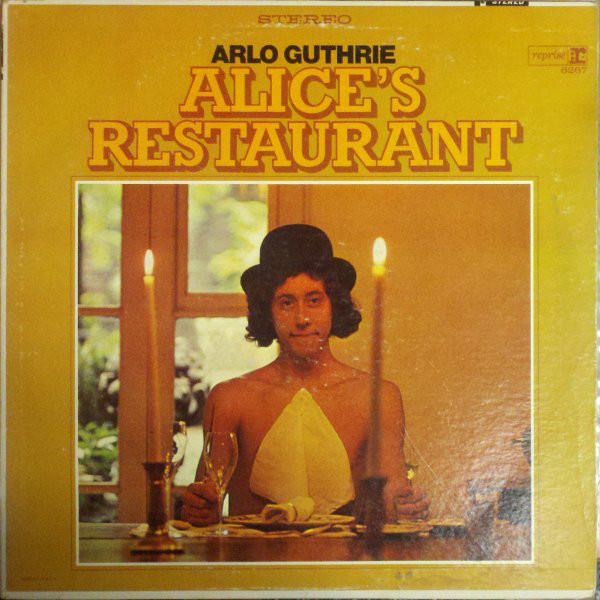
This two-tone Reprise stereo pressings of Arlo Guthrie’s classic debut often do well in our shootouts, but the Tri-Color originals are a step up in class, when and if they can be found with quiet enough surfaces.
The originals win the shootouts, but they need to be mastered and pressed right, and cleaned properly, to beat the best of the second pressings.
The originals tend to have exceptionally Tubey Magical sound and it certainly doesn’t take a pair of golden ears to hear it.
The 18 minute plus title song sounds wonderful – natural, Tubey Magical, and tonally correct, as befits any top quality vintage pressing, especially one with Lee Herschberg handling the engineering duties.
As we never tire of saying:
This vintage pressing has the kind of Tubey Magical Midrange that modern records can barely BEGIN to reproduce. Folks, that sound is gone and it sure isn’t showing signs of coming back. If you love hearing INTO a recording, actually being able to “see” the performers, and feeling as if you are sitting in the studio with the band, this is the record for you. It’s what vintage all analog recordings are known for — this sound.
If you exclusively play modern repressings of vintage recordings, I can say without fear of contradiction that you have never heard this kind of sound on vinyl. Old records have it — not often, and certainly not always — but maybe one out of a hundred new records do, and those are some pretty long odds.

AMG 4 Star Review
Although he’d been a fixture on the East Coast folk circuit for several years, Arlo Guthrie did not release this debut album until mid-1967. A majority of the attention directed at Alice’s Restaurant focuses on the epic 18-plus-minute title track, which sprawled over the entire A-side of the long-player. However, it is the other half-dozen Guthrie compositions that provide an insight into his uniformly outstanding — yet astoundingly overlooked — early sides on Warner Bros.
Although arguably not 100 percent factual, “Alice’s Restaurant Massacree” — which was recorded in front of a live audience — is rooted in a series of real incidents. This decidedly anti-establishment saga of garbage dumps closed on Thanksgiving, good ol’ Officer Obie, as well as Guthrie’s experiences with the draft succeeds not only because of the unusual and outlandish situations that the hero finds himself in; it is also his underdog point of view and sardonic delivery that maximize the effect in the retelling. In terms of artistic merit, the studio side is an equally endowed effort containing six decidedly more traditional folk-rock compositions.