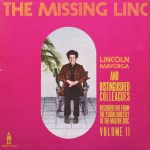
 Hot Stamper Pressings of the Music of Lincoln Mayorga Available Now
When I was selling audio equipment back in the 70s (Audio Research, Fulton speakers), this was a favorite Demo Disc in our store.
With a big speaker like the Fulton J, the bass drum at the end of track two would shake the foundation. At the time I had never heard a record with bass that went anywhere near that deep. (The album came out in 1972. I’m guessing I probably first heard a copy in ’75 or ’76 when I bought my Fultons, which would have been sometime in my early twenties.)
Every bit as amazing to me was the string quartet on side 2. You could actually hear the musicians breathing and turning the pages on their music stands, just as if you were actually in their “living presence.” No recording I had ever owned allowed me to hear that level of natural detail.
This is one of the albums that made me realize how good audio in the home could be.
In a way this was the Audiophile “Sgt. Pepper” of its day, a record that was so much better than anything else you’d ever heard it made you rethink the possibilities.
Our best pressings are probably not very much like others you have heard. Some of those can be aggressive, many of them can be dull and lack the spark of live music, some of them can have wonky bass or be lacking in the lowest octave — they are prey to every fault that befalls other records.
Which shouldn’t be too surprising. Records are records. Pressing variations exist for every album ever made. If you haven’t noticed that yet, start playing multiple copies of the same album while listening carefully and critically.
If your stereo is any good at all, it should not take you long to notice how different one record sounds from another.
Just listen to the reedy texture on the saxophone on “Limehouse Blues” — on the best copies you can really hear the leading edge transients of the brass, so important to the sound of those instruments.
Doug Sax Is The Man
The Mastering Lab was one of the greatest cutting houses to ever master records.
Doug Sax knew how to keep his lathes and amplifiers working at state-of-the-art levels. The sound quality is unsurpassed.
And he did it all with tubes.
He was very proud of his custom-made tube-driven cutting amps, designed by none other than his brother, Sherwood. His amps cut many of my favorite records of all time, including this one, an album that I have been using to test and improve the playback quality of my system for more than forty years.
To this day we get taken to task by some regrettably misguided individuals for criticizing his work on the awful audiophile records he made in the 90s, many of them for Analogue Productions. We stand firmly behind the criticism we made of those albums decades ago. Their sound has not improved with age, nor is it likely to.
Those records from the 90s sound nothing like the records Doug and his crew were making in the 70s.
According to the logic of our critics, if you made great records in the 70s, then you must have been making great records in the 90s, whether your name is Doug Sax, Bernie Grundman, George Marino, Robert Ludwig or any other.
This is a very crude way of understanding the work of these exceptionally talented men.
The fact that this kind of sophistry is taken seriously by grownup adults in the audiophile community is embarrassing. To those of us who have been in the hobby for decades, it comes as no surprise.
Audiophiles have always embraced bad ideas (Half-Speed mastering!) and bad records (like those found here.) Our hobby attracts large numbers of True Believers, and many of them — too many of them — latch onto conventional ideas about records and audio which are attractively convenient and comforting.
Self-evident, convenient and comforting ideas — so beautiful and beguiling — rarely get put to the test. They are a ball some audiophiles have unknowingly chained to themselves.
These superficially attractive ideas do not hold up well to scrutiny. They are mostly assumptions, and we take issue with assumptions when it comes to finding better sounding records.
For those who would like a more thorough explanation of our approach and the heterodox views that result from it, we wrote about it here.
Uniquely among audiophile reviewers, empirical evidence, using large pools of data, all of it acquired scientifically, is at the heart of everything we think we know. And, as we freely admit, we still sometimes get it wrong.
Further Reading