top-test

“The greater the difficulty, the more glory in surmounting it. Skillful pilots gain their reputation from storms and tempests.” – Epictetus

Two Tracks on Teaser and the Firecat Are Key

Hot Stamper Pressings of the Music of Cat Stevens Available Now

Just ran across the following in an old listing. We’re nothing if not consistent here at Better Records!

“And if you are ever tempted to pick up one of those recently remastered versions on heavy vinyl, don’t do it. There is simply no one alive today making records that sound like these good originals. Not to these ears anyway. We may choose to indulge ourselves in the audacity of hope, but reality has to set in sooner or later. After thirty years of trying, the modern mastering engineers of the world have nothing to show for their efforts but a ever-growing pile of failures. The time to call it quits has come and gone. Let’s face facts: when it comes to Teaser and the Firecat, it’s the Real Thing or nothing.”

If you’re looking for an amazing Demo Quality rock recording, you’ve come to the right place.

If you want a timeless classic rock record, it’s here too.

They just don’t know how to make them like this anymore. Those of you waiting for audiophile vinyl reissues with the kind of magic found on these originals will be in your graves long before it ever comes to pass.

Analogue Productions tried and failed — more than once — to produce a good sounding Heavy Vinyl pressing of Tea for the Tillerman.

You can be sure of one thing: there is little chance they would have better luck with Teaser and the Firecat.

Changes IV 

On this song there is a tremendous amount of energy in the grooves. On a copy I had a while back it sounded good to start with, but an intense cleaning regimen made it sound so alive I could hardly believe my ears. Listen to it VERY LOUD (as it was meant to be played) and then notice how quiet the next solo guitar intro is, with lots of space between the notes. Never heard it like that before. That’s when audio is FUN.

It’s always a roller coaster ride around here, as one day the system is cooking, and the next it ain’t, and nobody knows why. But the night that Teaser sounded great is one I will remember for a long time. Those big bass drum thwacks and that high hat being slapped to the point of abuse way out in front of the mix just blew my mind.

Tuesday’s Dead

There is a good-sized group of singers behind Cat Stevens that back him up when he says “whoa” right before the line “Where do you go?”. What often separates the best copies from the also-rans is how clearly those singers can be heard, assuming the tonal balance is correct and there’s plenty of energy in the performances.

The most transparent copies make it easy to appreciate the enthusiasm of the individual singers; they’re practically shouting.

For twenty years Tuesday’s Dead has been one of my favorite tracks for demonstrating what The Big Speaker Sound is all about. Now I think I better understand why. Big speakers are the only way to reproduce the physical size and tremendous energy of the congas (and other drums of course) that play such a big part in driving the rhythmic energy of the song.

In my experience no six inch woofer — or seven, or eight, or ten even — gets the sound of the conga right, from bottom to top, drum to skin. No screen can do it either. It’s simply a sound that large dynamic drivers reproduce well and other speaker designs do not reproduce so well.

Since this is one of my favorite records of all time, a true Desert Island Disc, I would never want to be without a pair of big speakers to play it, because those are the kinds of speakers that play it well.


(more…)

Two Minutes that Shook My World – “But I Might Die Tonight”

After building our new studio a few years ago, we soon found out we had a whole host of problems.

We needed to work on electrical issues. We needed to work on our room treatments. We needed to work on speaker placement.

We initially thought the room was doing everything right, because our Go To setup disc, Bob and Ray, sounded super spacious and clear, bigger and more lively than we’d ever heard it. That’s what a 12 foot high ceiling can do for a large group of musicians playing live in a huge studio, in 1959, on an All Tube Chain Living Stereo recording. The sound just soared.

But Cat Stevens wasn’t sounding right, and if Cat Stevens isn’t sounding right, we knew we had a huge problem.

Some stereos play some kinds of records well and others not so well. Our stereo has to play every kind of record well because we sell every kind of record there is. You name the kind of music, we probably sell it.

And if we offer it for sale, we had to have played it and liked the sound, because no record makes it to our site without being auditioned and found to have excellent sound.

But I Might Die Tonight

The one song we played over and over again, easily a hundred times or more, was But I Might Die Tonight, the leadoff track for side two. It’s short, less than two minutes long, but a lot happens in those two minutes. More importantly, getting everything that happens in those two minutes to sound not just right, but as good as you have ever heard it, turned out to be a tall order indeed.

I could write for days about what to listen for in the song, but for now let me just point the reader to one of the most difficult parts to reproduce.

At about 50 seconds into the track, Cat repeats the first verse:

I don’t want to work away
Doing just what they all say
Work hard boy and you’ll find
One day you’ll have a job like mine, job like mine, a job like mine

Only this time he now has a multi-tracked harmony vocal singing along with him, his own of course, and he himself is also singing the lead part louder and more passionately. Getting the regular vocal, call it the “lower part,” to be in balance with the multi-tracked backing vocal, call it the “higher part,” turned out to be the key to getting the bottom, middle and top of the midrange right.

When doing this kind of critical listening we play our records very loud. Live Performance level loud. As loud as Cat could sing, that’s how loud it should be when he is singing his loudest toward the end of the song for the final “But I might die tonight!” If he is going to sing loudly, I want my stereo to be able to reproduce him singing as loud as he is actually singing on the record.

No compression.

No distortion.

All the energy.

Yes, that’s the way I want to hear it!

The last fifteen seconds or so of the song has the pianist (Cat himself) banging out some heavy chords on the piano. If you have your levels right it should sound like there is a real piano at the back of the room and that someone is really banging on it, a powerful coda perfectly fitting for such an emotionally stirring song.

(more…)

Lincoln Mayorga Volume 3 – Listen for Strained and Blary Brass

Hot Stamper Pressings of Direct-to-Disc Recordings Available Now

Most copies of this album are slightly thin and slightly bright.

They give the impression of being clear and clean, but some of the louder brass passages start to get strained and blary, or glary if you like.

The good copies are rich and full.  The sound is balanced from top to bottom.

The sound is smooth, which allows you to play the album all the way through at good loud levels without fatigue.

On the best pressings, the trumpets, trombones, tubas, tambourines, and drums all have the true tonality and the vibrancy of the real thing. The reason this record was such a big hit in its day is because the recording engineers were able to capture that sound better than anybody else around [not really, but that’s what it seemed like at the time].

That’s also the reason this is a Must Own record today — the sound and the music hold up.

Just listen to that amazing brass choir on Oh Lord, I’m On My Way. It just doesn’t get any better than that. If ever there was a Demo Disc for Brass, this is one!

I used to think the Tower label copies were not as good — that the later pressings were pressed better. Now I know that it doesn’t matter what era the pressing is from: the tonal balance is the key to the best sound.

(more…)

Huge, Powerful Choruses Like These Are a Thrill

Hot Stamper Pressings with Huge Choruses Available Now

This is one of the rare pop/rock albums that actually has actual, measurable, serious dynamic contrasts in its levels as it moves from the verses to the choruses of many songs . The second track on side two, Demon Lover, is a perfect example. Not only are the choruses noticeably louder than the verses, but later on in the song the choruses get REALLY LOUD, louder than the choruses of 99 out of 100 rock/pop records we audition. It sometimes takes a record like this to open your ears to how compressed practically everything else you own is.

The sad fact of the matter is that most mixes for rock and pop recordings are much too safe. The engineers believe that the mixes have to be designed to be played on the average (read: crap) stereo.

We like when music gets loud. It gets loud in live performance. Why shouldn’t some of that energy make it to the record? It does of course, especially in classical music, but all too rarely even then.

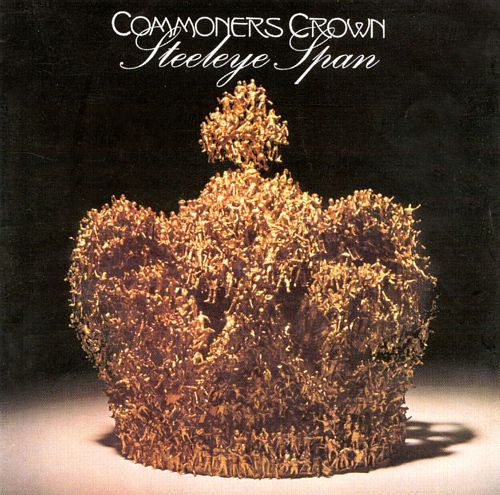
We happened to do the shootout for Thick as a Brick the same week as Commoner’s Crown, and let us tell you, those are two records with shockingly real dynamics in the grooves of the best copies. If you like your music loud — which is just another way of saying you like it to sound LIVE — then the better copies of either album are guaranteed to blow your mind with their dynamic energy and power.

(more…)

What I Couldn’t Hear on My 90s Tube System

Hot Stamper Pressings of Contemporary Jazz Albums Available Now

I have a very long history with Bells Are Ringing, dating back to the 90s. My friend Robert Pincus first turned me on to the CD, which, happily for all concerned, was mastered beautifully and comes highly recommended if you want to work on your digital playback or other non-vinyl aspects of your system such as your room, electricity, speaker placement and such like. (More recommended CDs here.)

Back in the day we often used it to test and tweak some of the stereos in my friends’ systems.

Playing the original stereo pressing, all I could hear on my 90s tube system was

  • blurred mids,
  • lack of transient attack,
  • sloppy bass,
  • lack of space and transparency,
  • and plenty of other shortcomings too numerous to mention.

All of which I simply attributed at the time to the limitations of the vintage jazz pressing I owned.

A classic case of me rather foolishly blaming the recording.

I know better now. The record was fine. I just couldn’t reproduce it.

Well, things have certainly changed. I have virtually none of the equipment I had back then, and I hear none of the problems with this copy that I heard back then. This is clearly a different LP, I sold the old one off years ago, but I have to think that much of the change in the sound was a change in cleaning, equipment, setup, tweaks and room treatments, all the stuff we prattle on about endlessly on this blog.

(more…)

Listening For the Spirit and Enthusiasm of the Musicians

Hot Stamper Pressings of Revolver Available Now

The discussion below, brought about by a Hot Stamper shootout we conducted for Revolver quite a number of years ago (2007!), touches on many issues near and dear to us here at Better Records.

Some of the things we learned about Revolver all those years ago are important to our Hot Stamper shootouts to this very day, including, but not limited to:

  • Pressing variations,
  • System upgrades,
  • Dead wax secrets,

and the quality we prize most in a recording:

  • LIFE, or, if you prefer, energy.

At the end of the commentary we of course take the opportunity to bash the MoFi pressing of the album, a regular feature of our Beatles Hot Stamper shootouts. We’re not saying the MoFi Beatles records are bad; in the overall scheme of things they are mostly pretty decent. What we are saying is that, with our help, you can do a helluva lot better.

Our help doesn’t come cheap, as anyone on our mailing list will tell you. You may have to pay a lot, but with us you get what you pay for, and we gladly back up that claim with a 100% money back guarantee for every Hot Stamper pressing we sell.

(more…)

Listening in Depth to Led Zeppelin II

More of the Music of Led Zeppelin

Reviews and Commentaries for Led Zeppelin II

The best copies of Zep II have the kind of rock and roll firepower that’s guaranteed to bring any system to its knees.

That’s what makes it a Top Test Disc.

And if you’re looking for rock and pop albums that are very hard to reproduce, here are some that should fit the bill nicely.

Side One

Whole Lotta Love

This album is unique in one sense: both sides of ZEP II start our with MONSTER ROCK AND ROLL tracks with unbelievable dynamics, energy and bass. Most bands would be lucky to get one song like this on an album. This album has about five!

The middle section with the cymbals and panning instruments is key to the best copies. When it starts they goose the volume — not subtly mind you — and a big room opens up in which everything starts bouncing around, reflecting off the walls of the studio. It’s a cool effect, there’s no denying it.

This is the loudest, most dynamic cut on side one. If it doesn’t knock you out, keep turning up the volume and playing it again until it does.

What Is and What Should Never Be

Amazing presence. Plant is right there!

The Lemon Song

The bass parts always sounded muddy on the sub-gen copies I often found. The definition and note-like quality here is superb and it’s only found on these good originals.

There are real dynamics here — the middle part is at a much lower level than the guitars that follow. This song, like so many on II, is really designed to assault you, to give you the sense that guitars are being broken over your head. That’s the kind of power this track has. It’s also relatively smooth and sweet compared to the rest of the album as a whole.

(more…)

Salvation Is a Tough Test on Honky Chateau

Hot Stamper Pressings of the Music of Elton John Available Now

We award the Four Plus A++++ grade so rarely that we don’t have a graphic for it in our system to use in the grading scale. So the side two here shows up on the chart as A+++, but when you hear this copy you will know why we gave it a fourth plus.


UPDATE 2020

We no longer give out grades of Four Pluses as a matter of policy, but that doesn’t mean we don’t come across records that deserve them from time to time.


When I hear a record with a side this phenomenally good, with the stereo tuned-up and tweaked within an inch of its life to reproduce the album at the highest level I can manage, I will sometimes sit my wife down and play her a track or two. I did it for a Four Plus Deja Vu earlier this year [2016] as a matter of fact, playing Country Girl: Whiskey Boot Hill on side two, with that crazy HUGE organ blasting out of the right speaker — what a thrill!

For this record I played her Salvation, with one huge chorus following another, like powerful waves crashing on the shore, until Elton takes a deep breath and belts out the final, biggest chorus, hitting his peak an octave higher and taking the song to an emotional level neither one of us had ever experienced with it before.

We followed it up with the lovely Mona Lisas and Mad Hatters, and that was about as much Elton John live in my listening room at practically concert hall levels we could take in one sitting.

(more…)

Listening in Depth to Blood, Sweat and Tears

Hot Stamper Pressings of Top 100 Titles Available Now

In my opinion this is the BEST SOUNDING rock record ever made. Played on a BIG SPEAKER SYSTEM, a top Hot Stamper pressing is nothing less than a thrill, the ultimate Demo Disc.

Credit must go to the amazing engineering skills of ROY HALEE. He may not be very consistent (Graceland, Still Crazy After All These Years) but on this album he knocked it out of the park. With the right copy playing on the right stereo, the album has the potential to sound like LIVE MUSIC.

You don’t find that on a record too often, practically never in fact. I put this record at the top of The Best Sounding Rock Records of All Time.

Side One

Variations on a Theme by Erik Satie (1st & 2nd Movements)

The song is always going to be plagued with a certain amount of surface noise. A solo guitar opening on a pop record pressed on Columbia vinyl from the ’60s? A brand new copy would have surface noise, so it’s important to not get too worked up over surfaces that are always going to be problematical.

Smiling Phases
Sometimes in Winter

This shootout taught me a lot about this track. There is a huge amount of bass which is difficult to reproduce; the best copies have note-like, controlled (although prodigious) bass which is a very tough system test.

Having said that, what separates the killer copies from the merely excellent ones is the quality of the flute sound. When you can hear the air going through the flute, and follow the playing throughout the song, you have a superbly transparent copy with all the presence and resolution of the best. If the flute sounds right, Katz’s voice will too. The sound will be Demonstration Quality of the highest order. Want to shoot out two different copies of this album on side one? Easy. Just play this track and see which one gets the flute right.

By the way, we LOVE the version of this song that Sergio Mendes does on Stillness. Eric Katz is a decent singer; the two girls in Brazil ’66 are SUPERB singers. The fact that they are female, that there are two of them and that they can harmonize as beautifully as any two singers you’ve ever heard allows their version of the song to have qualities far beyond the boys in Blood Sweat and Tears. But the BS&T guys make up for it by being REAL JAZZ MUSICIANS. Most of this album is real jazz played by top notch players. No other successful pop album to my knowledge can make that claim. In that sense it’s sui generis. But it’s unique in other ways as well, not just that one.

(more…)

Casino Royale Can Be Amazing on the Right Copy, If You’ve Got the System For It…

Hot Stamper Pressings of the Music of Burt Bacharach Available Now

This is a record that has its share of problems, but if you’ve got the system for it (huge, heavily tweaked, fast, free from obvious colorations and capable of tremendous resolution), the best pressings are sure to impress.

Having heard the best sounding pressings I now understand why this has been such a highly regarded long-term resident of the TAS Superdisc List. The best copies are SUPERDISCS… while the average copy of this album is anything but. Who could take such harsh, grainy, thin, veiled, compressed sound seriously? What was Harry Pearson smokin’?

I can honestly and truthfully say that until we discovered the Hot Stampers for this album, I never thought this record deserved the praise Harry heaped upon it. Now I do. I once was blind but now I see, or something like that.

And by the way, does his copy sound as good as this one? Let’s face it: the late Harry Pearson was simply not the kind of guy who would sit down with five or ten copies and shoot them out.

When you listen to the average pressing of Casino Royale, you get the feeling that you’re hearing a standard-issue, boxy, lightweight, blary ’60s soundtrack. Perhaps you hear some promise in the recording, but it’s a promise that’s unfulfilled by the record on your turntable. This copy will completely redefine what you know about the sound of this music.

The space is big and the sound relatively rich (although the sound does vary quite a bit from track to track). The vocals have notably less hardness than most and the orchestra is not as brash as it can be on so many of the copies we audition. Huge amounts of Tubey Magic as well, which is key to the best sounding copies, and critical to The Look of Love.

The sound needs weight, warmth and tubes or you might as well be playing a CD.

(more…)