Tom’s Audiophile Notebook

“A lifelong practice to return to”

New to the Blog? Start Here

Allow me to share a story Ryan Holiday at the Daily Stoic tells that may have some relevance to those of you who are seriously committed to improving the sound quality of the records you play.

Ryan writes:

When Junius Rusticus handed the future emperor of Rome a book, it came with an implication. A true philosopher—a true leader—Rusticus insisted, could not be satisfied just getting the gist of something. They had to understand it inside and out.

None of the lessons that Marcus Aurelius took from Epictetus—the book Rusticus gave him in his mid-twenties—would have been possible without first listening to this lesson. He not only inhaled the book, he clearly went over it over and over until it seeped into his very soul. That’s why Meditations is filled with quotes from it. That’s why Marcus Aurelius, the most powerful man in the world, managed to stay sane, despite the inherent insanity of his position.

Maybe you’ve read Epictetus. Maybe you’ve been meaning to. But chances are, you haven’t treated it like Marcus did, like Rusticus expected, like Epictetus deserves.

(more…)

Old Tapes, New Tapes, You Know We’ve Heard Our Share

Skeptical Thinking Is Key to Finding Better Sounding Records

I ran into a comment I had made more than twenty years ago about a Hot Stamper jazz reissue from the 70s that, at the time, we thought sounded better than any other version. The original pressing of the record would have come out in the fifties. We wrote:

The master tapes were about fifteen years old when this record was mastered.  Compare that to a current cutting which would be made from approximately fifty year old tapes.”

Perhaps that explains it.

Or maybe it doesn’t. Whether it explains it or not, when you get right down to it, it’s nothing but guesswork.

It has no predictive value.

If, like most people, you enjoy having your biases confirmed, then by all means, whatever reasons work for you are fine by us.

(more…)

Answers to Some of Your Hot Stamper Questions

More Straight Answers to Your Hot Stamper Questions

We discuss a number of subjects with our letter writer below, including what we think of The Beatles’ records in mono, our grading system, how we clean our records and various and sundry other aspects of the business we run. These are the kinds of questions we get regularly and are more than happy to answer.

Hey Tom, 

First off, I got to say, congratulations on a great concept. Also, congrats on having the balls to charge what these albums are worth.

Thanks. You hit the nail right on the head — we charge what the pressings are worth. They are often incredible sounding records of some of the greatest music ever recorded. We should know; we played them, something that no other record dealers on the face of the earth can say. To those of us who do the listening, as well as our Better Records customers, they are priceless.

Like any business, we charge what the market will bear, and it seems people are willing to pay a lot for these records, although less for some than they used to — some of our records now sell for half or even less than what we were getting two or three or five years ago.

That said, the top copies have held their prices pretty well over the years and have often gone up substantially. It’s the second tier and third tier titles and the Super Hots that have tended to fall in price. That’s where the real “bargains” are these days.

Like all of our Hot Stamper pressings, even the cheapest of them (starting at $25!) are guaranteed to be better sounding than any pressing you own or have ever heard, or your money back.

OK – I spent a fortune on my system. Including acoustic design, the best of everything – speakers, turntable, preamp, amps – you get it. The whole set up probably cost me over $600k.

Wow. I don’t have $600k in my system, but I do have about $600k worth of labor in it (!) You can read all about our stereo here.

I am a crazy fanatic – audio perfection is something that really moves me.

Me too. I wrote about it in a commentary that describes how I fell in love with a record that gave me the reason I needed to get deep into audio.

(more…)

Can a Pile of Different Pressings All Sound the Same?

Skeptical Thinking Is Critical to Making Progress 

There are certain things we can stipulate as all but impossible. Nobody who says they can levitate should be taken seriously.

But are there aspects of audio reproduction that you’re not familiar with?

Are there stereos that reproduce music at a much higher level than any with which you are familiar?

Are there ways to make your stereo sound better than the ones you know of?

Are there record pressings that sound better than the ones you’ve heard?

The reason I ask is this: There is never been a case in which a person contacted me and told me that they had played a pile of copies of a particular album and that they all sounded the same.

(more…)

Three Ideas to Better Understand the Mysteries of Records

More Entries from Tom’s Audiophile Notebook

We think that sitting down to play a Hot Stamper pressing — one you find yourself through the shootout process, or one we find for you — is the only way to appreciate its superior sound quality.

A great sounding LP, played on a top quality system, is an immersive experience hard to recreate with anything other than a properly-pressed, properly-mastered vintage vinyl LP.

For those who want to dig deeper into the mysteries of vinyl, consider the three commentaries we’ve linked below:

The uses and abuses of rules of thumb

Some audiophiles use the following rules of thumb when targeting higher quality rock and pop records:

If it’s an English band, get the UK import pressing. If it’s an American band, the master tapes should be here in this country, so the original domestic pressing will be the best.

As rules of thumb the ones above are not actually all that bad. Most of the time they will turn out to be correct. They’re just wrong so often (Led Zeppelin, The Beatles, Peter Gabriel, The Eagles, Black Sabbath, etc.) that you must be very careful how stringently you rely on them.

Many audiophiles will never bother to test them, since such tests require money and time, often in very large amounts. He will more than likely be content to leave his prejudices intact rather than seek out disconfirming evidence. (Just ask John.)

(more…)

Music Is Always More Important than Sound

More Entries from Tom’s Audiophile Notebook

It has to be.

You can find Demo Disc quality records all over the site, but what if you are not interested in demonstrating your equipment and just want to play the music you love?

And what if the music you love wasn’t recorded all that well?

What if the music you love is on the third Band album, Stage Fright, a notoriously problematic recording?

You buy the best sounding version you can find and put up with the sonic limitations because the music is always more important than the sound.

(My wife toured with the band Asia in Europe one year, a tour to celebrate their Number One debut album. It happens to be one of the worst sounding records I have ever played, but that didn’t stop people from loving the music. Why would it?)

(more…)

Finally, Off to the Races

Our Guide to Record Collecting for Audiophiles

UPDATE 2026

Just ran into an old commentary from 2004 (!)  that I had somehow managed to save all these years. The reason I can date it that specifically is because I mention both The Disc Doctor record cleaning fluid and Hot Stampers.

We discovered the Disc Doctor record cleaning fluid in the late-90s, so when we started doing shootouts in 2004, all we had to clean records was The Disc Doctor and a VPI 16.5. By 2007 we had the Odyssey machine and were using the Prelude Record Cleaning System. The combination of those two helped to raise our level of playback a level or two.

We were finally off to the races.

The backstory to the the commentary below would have had something to do with a review I read for the new Heavy Vinyl pressing of Deja Vu from Classic Records. (For those who love the music — and that should mean pretty much everybody reading this blog — here is what a top quality Deja Vu sounds like. In a word, amazing.)

What the commentary below makes clear is that we had a pretty good handle on record pressing variations a number of years before the Hot Stamper thing really took off. It wasn’t long before finding Hot Stamper pressings would take over the business, 2007 or so, and by 2011 we were selling nothing but. They were clearly the best sounding pressings we had ever heard, and we found them using the shootout methods we’d developed over the previous ten years or so.


DATELINE 2004

As those of you who have been reading my stuff for a while know, the last thing you can do is rely on the label to tell you if a record has good sound. This same reviewer mentions how his two original Atlantic pressings have the same label, but somehow sound different (!), as if this makes no sense.

(more…)

Eat Your Spinach

Hot Stamper Pressings of the Music of Miles Davis Available Now

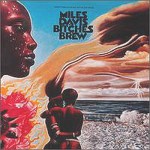
I recently wrote about Bitches Brew. A few excerpts:

The staff may or may not like these kinds of records, but I sure don’t. To be honest, Bitches Brew fits just fine into a section I like to call “albums I can live without.” The world is full of them.

Music is deeply personal. If you don’t feel the need to like what other people like, you and I should get along just fine.

This is music for those who want to be challenged. That’s as true today as it was 50+ years ago when the record came out.

still don’t care for it though. In my defense, allow me to fall back on the wisdom of de gustibus non est disputandum.

A fellow left me this comment:

Really enjoyed this piece on ‘Bitches Brew’, your take on the album’s density, texture, and restless energy was a great read. It’s fascinating how Miles managed to create something that still feels both challenging and endlessly rewarding all these years later. I especially appreciated the way you framed its impact beyond just jazz, because that’s exactly why the album keeps drawing people back in. I also run a small blog with a few articles about Miles Davis, I hope you’ll take a look, I’d appreciate it.

I thought that it deserved a reply and came up with this one:

Dear Sir,

The records we sell must stand the test of time. Can we say that Bitches Brew stands the test of time? In some ways, yes, absolutely. People are still writing about it. People are still buying it.

But is anybody sitting in a room, by himself, facing two speakers with the lights down low, and actually able to enjoy the music enough to get through all four sides of it? Let me put it as nicely as possible: the most likely answer would be “not many.”

We’re looking for customers who will pay hundreds of dollars for an album. One album. They typically do so with the understanding that they will want to play such an album over and over again. Maybe even become obsessed with  it.

(more…)

What Do You Get When You Buy a Record from Analogue Productions?

Skeptical Thinking Will Help You Identify Records with Better Sound

Chad Kassem, the man who founded Analogue Productions sometime in the 90s,  claims that all his pressings are superior to those of his competitors, as well as all previous reissues, and — gasp! — even the originals, or perhaps it would be better to say especially the originals.

In doing so he makes claims that can be tested. Our commentary today will look at how he came to believe in the superiority of his product. Naturally we disagree with him about the quality of his records, and have been doing so since the early-90s.

But don’t these disagreements just boil down to one opinion differing with another, our opinion versus his?

As a matter of fact, no. It turns out there are ways to run experiments which are guaranteed to identify the record pressings that actually do have better sound. We at Better Records have spent more than twenty years developing and refining a great many of these methods. Given the necessary resources, these methods are sure to produce reliable data.

This is data backed by evidence. Testable data. Data derived from experiments that may not eliminate the value of opinions, but removes them from the position they occupy most often in the world of audio, front and center, and relegates them to the margins where they are more appropriate.

So let’s get back to the question we asked above: What do you get when you buy a record on the Analogue Productions label?

In the simplest terms, you get a record that meets with Chad’s approval.

Since Chad appears — at least to me — to have no critical listening skills to speak of, he must instead rely on the assurances of the engineers who work for him. Yes, they tell him, they succeeded in making him a record of the very highest quality. There are no conflicts of interest they say. We all love music and are just interested in making the best record we can. Unsurprisingly, we made he best version ever.

Their professional opinions are then backed up by those that review and sell these very same records.

Everyone operating in this circular chain gets paid to agree that Chad’s records are indeed of the highest quality, exactly what one would expect to hear frmo those who know how they were made. (Confirmation bias — hearing what you expect to hear — is surely the most powerful weapon in the arsenal of those who make and market audiophile records.)

(more…)

Nobody Like Us Existed in the Record World of the 90s

Hot Stamper Pressings of Contemporary Jazz Albums Available Now

A newer customer wrote to me years ago about the amazing sounding Hot Stamper pressing of Way Out West that we’d sent him. He noted that his AP Heavy Vinyl pressing was “quite decent,” a characterization we found distressing.

Here is his original letter, along with some of what we wrote back. Newer comments and links have also been added.


As for your 1992 Analogue Productions Heavy Vinyl remaster, I honestly don’t know how anyone can listen to a record with sound like that and consider it acceptable, or, in your words, “quite decent.” I went into the long story of the album in this commentary.

Some things have changed since I wrote that screed many years ago. For example, we don’t find the sound of the OJC pressing of the album acceptable these days, a subject I plan to address before too long [and have yet to do].

The bottom line is this:

The Hot Stamper pressing of Way Out West you have now in your possession is the one that allows you to hear what that album is supposed to sound like.

Not the way Chad Kassem likes his records to sound: opaque, bloated, dull, smeary and compressed.

No, your White Hot Stamper has the brilliant sound that Roy DuNann recorded all those years ago, sounding, I believe, the way he wanted it to. This is of course only an opinion, but it is an opinion based on playing dozens of early Contemporary pressings and well as many vintage reissues that actually can beat them. Examples of both can be found here.

But Somebody Needed to Figure It Out, Right?

All that was needed was for some group to come along who could properly clean a batch of vintage pressings, original or otherwise, play them, figure out what the best copies do that the average copy doesn’t, identify that best copy, and send it your way.

(more…)