Jazz Albums We’re Obsessed With

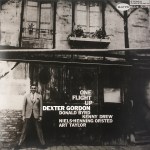
Dexter Gordon Knocked Us Out Back in 2007

Hot Stamper Pressings of Blue Note Albums Available Now

UPDATE 2026

In 2007 we had a low opinion of both the Blue Note label and the work of Rudy Van Gelder, but that changed over the decades as we auditioned more and more of his amazing recordings, many of them reissues of one kind or another.

(Some text has been altered, mostly the overuse of capitalization.) Our latest review for One Flight Up can be found here.


Our 2007 Commentary

This Blue Note LP is without a doubt one of the best sounding jazz records we’ve ever heard. We were auditioning a bunch of jazz records today (4/25/07), and when the needle hit the grooves on this one we were absolutely blown away.

I can’t think of one jazz record we’ve ever played here at Better Records with this kind of whomp. Everything here is so rich and full — nothing like a typical Blue Note album.

(more…)

This Is Why We Love Rudy Van Gelder’s Recordings from the 70s

Hot Stamper Pressings of Recordings by Rudy Van Gelder Available Now

The really good RVG jazz pressings of All the Kings Horses sound shockingly close to live music — uncompressed, present, full of energy, with the instruments clearly located and surrounded by the natural space of the studio.

As our stereo has gotten better, and we’ve found better pressings and learned how to clean them better, his “you-are-there” live jazz sound has begun to impress us more and more.

Obviously the credit must go to Rudy Van Gelder for recording and mastering the album so well.

Contrary to what you may have read, the early-70s were a good time for Van Gelder.

All the King’s Horses from 1973 is an amazing Demo Disc for a large group jazz ensemble, especially when played on big speakers at loud levels.

But it only sounds good on the copies that it sounds good on, on the pressings that were mastered, pressed and cleaned right, a fact that has eluded most jazz vinyl aficionados interested in good sound since the advent of the LP.

But not us. We’ve played the very special pressings that prove the album can sound amazing.

The best early pressings are spacious and full of life, with virtually no distortion. Of special note, our shootout winning copy had amazingly articulate bass which brought out the undeniable funkiness of the music in a way that no other copy did.

(more…)

Basic Miles – Our Four Plus Shootout Winner

Hot Stamper Pressings of the Music of Miles Davis Available Now

In 2018 we awarded this copy’s side two of Basic Miles our very special Four Plus (A++++) grade, which is strictly limited to pressings (really, individual sides of pressings) that take a recording to a level we’ve never experienced before, a level we had no idea could even exist.

We estimate that less than one per cent of the Hot Stamper pressings we come across in our shootouts earn this grade. As I write this there is not a single other record on the site that earned that grade on either side. You can’t get much more rare than that.


UPDATE 2026

  • Our lengthy commentary entitled outliers and out-of-this-world sound talks about how rare these kinds of pressings are and how we go about finding them.
  • We no longer give Four Pluses out as a matter of policy, but that doesn’t mean we don’t come across records that deserve them from time to time.
  • Nowadays we most often place them under the general heading of breakthrough pressings. These are records that, out of the blue, revealed to us sound of such high quality that it changes our appreciation of the recording itself.
  • We found ourselves asking “Who knew?” Perhaps a better question might have been “How high is up?”

Kind of Blue

Want to know how good our Hot Stamper Kind of Blue pressings sound? Listen to this very record. If you play the tracks that were recorded in 1958, the year before Kind of Blue, you will hear practically the same lineup of musicians.

That means Stella By Starlight and Little Melonae on side one, and Green Dolphin Street and Fran-Dance (Put Your Little Foot Right Out) on side two. We’re talking Bill Evans, John Coltrane and Cannonball Adderley in their prime, 1958, with top 1958 sound to match.

The nine-minute-plus Green Dolphin Street that opens side two is nothing short of amazing, some of the coolest jazz you will ever hear, on any record, at any price.

(more…)

Pros and Cons of this Copy of Swings in High Stereo

Hot Stamper Pressings of Large Group Jazz Recordings Available Now

Side One

Big and spacious, yet clear, dynamic and energetic. The brass is never “blary” the way it can be on so many Big Band or Dance Band records from the 50s and 60s. (Basie’s Roulette records tend to have a bad case of blary brass as a rule.)

Sharp transients and mostly correct tonality and timbres, powerful brass — practically everything you want in a Hot Stamper is here!

The stage is exceptionally wide on this copy.

Listen to the top end on track two — man, that is some natural sound!

This side could use a bit more weight so we feel a grade of Super Hot (A++) gets it right.

(more…)

Listening in Depth to Heavy Weather

Hot Stamper Pressings of the Music of Weather Report Available Now

Heavy Weather has some of the biggest, boldest sound we’ve ever heard.

It’s clearly a big speaker Demo Disc. Play this one as loud as you can. The louder you play it, the better it will sound.

The commentary below contains track-by-track advice on what to listen for when auditioning the album.

Side One

Birdland

Not an easy track to get right; there’s so much upper midrange and high frequency information to deal with. If the synthesizers and horns are too much, the effect is exciting but won’t wear well. Too much 6k is the problem on most copies, along with not enough above 10. That is a deadly combination.

A Remark You Made

Such an original composition. This is the band at their unconventional, uncommercial best.

(more…)

Which Art Pepper Today Is Better: Phil DeLancie Digital or George Horn Analog?

Hot Stamper Pressings of the Music of Art Pepper Available Now

UPDATE 2024

This commentary was written in 2010 or thereabouts.

There is new information about the album as of 2024, which can be found here.


We’d wanted to do Art Pepper Today for more than a decade, but the original Galaxy pressings were just too thick and dark to earn anything approaching a top sonic grade. Thirty years ago on a very different system I had one and liked it a lot, but there was no way I could get past the opaque sound I was now hearing on the more than half-dozen originals piled in front of me.

So, almost in desperation we tried an OJC reissue from the ’90s. You know, the ones that all the audiophiles on the web will tell you to steer clear of because it has been mastered by Phil DeLancie and might be sourced from digital tapes.

Or digitally remastered, or somehow was infected with something digital somehow.

Well, immediately the sound opened up dramatically, with presence, space, clarity and top end extension we simply could not hear on the originals. Moreover, the good news was that the richness and solidity of the originals was every bit as good. Some of the originals were less murky and veiled than others, so we culled the worst of them for trade and put the rest into the shootout with all the OJCs we could get our hands on.

Now, it’s indisputable that Phil DeLancie is credited on the jacket, but I see George Horn‘s writing in the dead wax of the actual record, so I really have no way of knowing whether in fact Mr Delancie had anything to do with the copies I was auditioning. They don’t sound digital to me, they’re just like other good George Horn-mastered records I’ve heard from this period.

And of course we here at Better Records never put much stock in what record jackets say; in our experience, the commentary on the jackets rarely has much to do with the sound of the records inside them.

And, one more surprise awaited us as we were plowing through our pile of copies.

When we got to side two we found that the sound of the Galaxy originals was often competitive with the best of the OJCs. Which means that there’s a good probability that some of the original pressings I tossed for having bad sound on side one had very good, perhaps even shootout winning sound, on side two.

This is a lesson I hope to take to heart in the future. I know very well that the sound of side one is independent of side two, but somehow in this case I let my prejudice against the first side color my thinking about the second.

Of all the people who should know better…

(more…)

The Strings on this Album Are a Tough Test

jobimthecomposerHot Stamper Pressings of the Music of Antonio Carlos Jobim Available Now

Credit engineer Phil Ramone for correctly capturing the sound of every instrument here: the guitars, piano, flutes, strings, drums, percussion instruments — everything has the natural timbre of the real thing.

I used to think this recording erred on the bright side, but not the Hot Stamper copies. They are tonally right on the money.

When the balance lacks lower midrange, the sound can get lean, which causes the strings to seem brighter than they really are, a not uncommon problem with some of the pressings we heard.

We had quite a batch of these to play, including imports, originals, reissues (all stereo), and one lone mono, which was so ridiculously bad sounding we tossed it right out of the competition and into the trade pile.

For those of you playing along at home, we are not going to be much help to you here in finding your own Hot Stampers. Every version had strengths and weaknesses and all are represented in the three listings we are putting up today.

The sound of this side one blew our minds — no other copy could touch it. So open and airy, yet with real weight to the piano and a clear and strong bass line, this copy did EVERYTHING right.

The strings are very much part of the ensemble on this album, and getting good string tone, with just the right rosiny texture, the least amount of smear, freedom from shrillness or hardness — this is not easy to do. 

Side two was quite good at A+ to A++, but we found other copies that bested it, including one Triple Plus that was in a league of its own. Even so, this copy on side two would be hard to beat without a number of carefully cleaned pressings to choose from. 

Here are some records we’ve discovered that are good for testing string tone and texture.

Here are some records we’ve discovered that are good for testing midrange tonality.

(more…)

The Dreadful Sound of the Heavy Vinyl Reissues Doug Sax Mastered in the 90s

Hot Stamper Pressings of the Music of Sonny Rollins Available Now

Longstanding customers know that we have been relentlessly critical of so-called “audiophile” LPs for years, especially in the case of these Analogue Productions releases from back in the early-90s. A well-known reviewer loved them, I hated them, and he and I haven’t seen eye to eye on much since.


(Old) Newflash!

Just dug up part of my old commentary discussing the faults with the original series that Doug Sax cut for Acoustic Sounds. Check it out.

In the listing for the OJC pressing of Way Out West we wrote:

Guaranteed better than any 33 rpm 180 gram version ever made, or your money back! (Of course I’m referring to a certain pressing from the early 90s mastered by Doug Sax, which is a textbook example of murky, tubby, flabby sound. Too many bad tubes in the chain? Who knows?

This OJC version also has its problems, but at least the shortcomings of the OJC are tolerable. Who can sit through a pressing that’s so thick and lifeless it communicates none of the player’s love for the music they’re making?

If you have midrangy transistor equipment, go with the 180 gram version (at twice the price).

If you have good equipment, go with this one.


UPDATE 2015

We are no longer fans of the OJC of Way Out West, and would never sell a record that sounds the way even the best copies do as a Hot Stamper. It’s not hopeless the way the Heavy Vinyl pressing is, but it’s not very good either. It’s yet another example of a record we was wrong about.

Live and learn, right?


(more…)

Turned Up Good and Loud, Carnavalito Is Glorious

Records that Must Be Turned Up Good and Loud to Sound Their Best

UPDATE 2024

The commentary about Carnavalito you see below was written in 2016. With the 12 foot high ceiling in our new, bigger and quite a bit more spacious studio, I’ll bet this album sounds even more mind-blowing than it did back then.

Ken Perry mastered all the best early pressings — accept no substitutes.

Here in 2024 we’ve just done the shootout again, our first since 2016.

Sky Islands is not an easy record to find as it didn’t sell particularly well, but those of you who treasure the music of Weather Report or Return to Forever or The Mahavishnu Orchestra the way we do here at Better Record (or, to be clear, some of us do) will find much to like here.

Finding customers for music most audiophiles have never heard of, let alone heard, has always been the trick with well recorded, mostly unknown releases such as Sky Islands.

Which means that this is a woefully underrated album that should be more popular with audiophiles.

It’s also one of those difficult-to-reproduce records that I credit with helping me make real progress in audio (along with a great many others.).


Carnavalito is a track that really comes alive when you crank up the volume. I played it full blast on two different occasions for audiophile friends of mine just to show them what happens when a big speaker system meets a recording with absolutely amazing audiophile quality sound — big and bold, wall to wall and then some!

(more…)

God Bless the Child Has Some of Don Sebesky’s Best Arrangements

Hot Stamper Pressings of the Music of Kenny Burrell Available Now

This is one of our favorite orchestra-backed jazz records here at Better Records. A few others off the top of my head would be Wes Montgomery’s California Dreaming (1966, also Sebesky-arranged), Grover Washington’s All the King’s Horses (1973) and Deodato’s Prelude (also 1973, with brilliant arrangements by the man himself).

On a killer copy like this the sound is out of this world. Rich and full, open and transparent, this one defeated all comers in our shootout, taking the Top Prize for sound and earning all Three Pluses.

What’s especially notable is how well recorded the orchestra’s string sections are.

They have just the right amount of texture and immediacy without being forced or shrill. They’re also very well integrated into the mix. I wouldn’t have expected RVG to pull it off so well — I’ve heard other CTI records where the recording quality of the orchestration was abominable — but here it works as well as on any album I know.

[Or maybe I just had a bad pressing of a very good recording!]

Both sides impressed us with their deep, wide soundstaging and full extension on both the top and the bottom.

The bass is deep and defined; the tonality of the guitar and its overall harmonic richness are right on the money.

The piano has the weight and heft of the real thing.

This kind of warm, rich, Tubey Magical analog sound is gone forever. You might have to go all the way back to 1971 to find it!

Watch out for some of the later pressings, even the later ones still mastered by Rudy Van Gelder. A case in point:

VAN GELDER in the dead wax is no guarantee of high quality sound, on any record.

Side one of this original pressing with later stampers was bright and side two opaque. This pressing was not awful, or even mediocre — the reissues without VAN GELDER in the dead wax would most likely be much worse sounding, we stopped buying them years ago — but at 1.5+ we would say these grades point to the sound is good, not great.

The only way to guarantee higher quality sound is to put the album through a shootout with a good-sized pile of cleaned pressings and find the one that sounds the best using the rigorous testing methodologies we recommend. For this kind of work to be meaningful and reproducible, top quality playback is a must.

There is of course a way to avoid doing all that work and spending all the kind of money it takes to acquire piles of pressings — most of which you will eventually have no use for — and that’s to buy a Hot Stamper copy of the album from us.

The Music

The high point for side one is clearly the first track. It’s got a Midnight Blue relaxed groove going on, the kind that Kenny Burrell seems to be able to bring to any session he plays on. Or maybe it’s the rhythms Ray Barretto works out in the songs that make them so relaxed and swinging at the same time.

Side two is magical from start to finish. The two extended songs, both more than eight minutes in length, leave plenty of room for the band — and the orchestra! — to stretch out.

(more…)