Live and Learn

Here we discuss the records we think we got, uh, wrong.

It’s not really a problem for us though. We feel no need to cover up our mistakes. Recognizing and correcting previous errors is how we’ve managed to learn so much about records that no one else seems to know.

Gaining knowledge — in any field, not just record collecting or music reproduction — is always slow, incremental and riddled with errors and bad judgments.

A common misperception among those visiting the site is that we think we know it all. Nothing could be further from the truth. We learn something new about records with practically every shootout.

By playing the records grouped here, under rigorously controlled conditions, on top quality equipment, we found out just how much better or worse they are than are we thought.

In 2008 We Had a Lot More R&D Ahead of Us

Hot Stamper Pressings of the Music of Led Zeppelin Available Now

A classic example of live and learn. In 2008 we had simply not done our homework properly.

Keep in mind that I had been an audiophile for at least 33 years by that date, and a professional audiophile record dealer for 21. Had a pretty nice rig back then too. However, in all those years, I and my staff had never been able to crack the code for Zep III.

Sure, by 2008 we had auditioned plenty of the pressings that we thought were the most likely to sound good: the original and later domestic pressings, the early and later British LPs, some early and later German pressings, maybe a Japanese import or two. In other words, the usual suspects.

We already knew how bad sounding the Classic Records Heavy Vinyl was; no need to put that in a shootout. It earned an “F” right out of the gate for its bright and harsh sound.

The result? We were roughly in the same position as most serious record collecting audiophiles, if not actually in a better one: who do you know that has played at least ten different pressings of Led Zeppelin III, or any other album for that matter?

We had auditioned a number pressings of the album and thought we knew enough about the sound to pick a winner. We thought the best original British Plum and Orange label pressings had the goods that no other copies could or would have. (Years later we would get hold of another one, clean it up and put it in a shootout.)

But of course, like most audiophiles who judge records with an insufficiently large sample size, we turned out to be  mistaken.

Logic simply hadn’t worked.

None of the originals would end up winning another shootout once we’d discovered the right reissues.

(more…)

Getting Who’s Next Exactly Backwards

Hot Stamper Pressings of the Music of The Who Available Now

A classic case of live and learn.

What follows is the commentary for the Canadian One Sided Half-Speed that we had auditioned around 2000. It came in a regular jacket, not the one you see pictured, and was part of a big overstock batch I had gotten my hands on a number of years before.

Getting It Exactly Backwards

Half of this record is Half-Speed Mastered! There’s an interesting story behind this album. Those of you who’ve been collecting audiophile records for a long time may remember that Who’s Next was released as an MCA Masterphile Half-Speed Mastered pressing produced in Canada. I remember liking it back in the day, which had to be 15 years ago at least. But they are very rare and I haven’t played one in many years.

I ran into some sealed Canadian pressings of Who’s Next, and when I cracked one open to play it I noted it had Masterphile written in the deadwax on one side. Apparently they had made so few Masterphile pressings that the metal work was still useable and they decided to press some “regular” records with one of the stampers.

And I remember I used to tell people that the good side, side one, was the Masterphile side. Then three or four years ago [circa 2000], I had occasion to play the record. Lo and behold, side one was bright and phony, and side two was rich and sweet, like the good Track Label pressings! I had gotten it exactly backwards.

(more…)

We Was Wrong about Our Best Black Label Copy Back in the Day

Hot Stamper Pressings of Pop and Jazz Vocals Available Now

UPDATE 2025

Turns out the Black Label early pressings actually are the best sounding. In 2025 we discovered we were wrong when we said we were wrong back in 2015.

And as far as we can tell, unlike anyone reviewing records for audiophiles writing (or speaking) these days, we have no problem admitting to it. Admitting to our mistakes is significant for many reasons, but the two that immediately come to mind are these:

  • It is a hallmark of progress in audio. Assuming your new findings are true, you are better at your job than you used to be.
  • More importantly, it is the secret of our success. How can you learn anything when you already know it all?

We write about how regular shootouts are and always will be the best way to improve the sound quality of your collection.

What we don’t say much about is how any music-loving audiophile could ever find the time to do this work. Where would the time come from to do multiple shootouts over many years, or the time to find the records, or the money it takes to buy them these days, when ever record ever pressed seems to command a collector price.

God knows we’re no angels in this regard. We do it for the simple reason that it’s our job to do shootouts year in and year out for the same records again and again. There will never be a time when everyone who wants a better sounding Abbey Road already has a good-enough sounding Abbey Road. The best copies are never short of buyers. The prices may change but the demand only goes in one direction: up.

We are not in the position of having a choice and choosing to do the right thing.

Applying the lesson of Adam Smith’s invisible hand, we are set up to do what needs to be done in order to run a business devoted to pleasing our customers. Millions of other business owners could say exactly the same. If for some reason their businesses aren’t set up properly, or run properly, or don’t offer goods at a price their customers are willing to pay, as day folllows night they will surely not be in business for long.

(more…)

Today’s Bad Heavy Vinyl Pressing Is… Aqualung!

Hot Stamper Pressings of the Music of Jethro Tull Available Now

An audiophile hall of shame pressing and another Classic Records rock LP badly mastered for the benefit of audiophiles looking for easy answers and quick fixes.

By the time the guitars at the end of the title track fade out you will be ready to take your heavy vinyl Classic Record pressing and ceremoniously drop it in a trashcan. (Actually, the best use for it is to demonstrate to your skeptical audiophile friends that no heavy vinyl pressing can begin to compete with a Hot Stamper from Better Records. Not in a million years.)

We Was Wrong on All Counts

Over the course of the last 25 years we was wrong three ways from Sunday about our down-and-out friend Aqualung here.

We originally liked the MoFi from the early 80s. Wrong. Proof positive that in the early 80s I didn’t have good reproduction or know much about records — but I sure thought I did!

When the DCC 180g came along in 1997 we liked that one better. Wrong again. It didn’t have MoFi’s usual midrange suckout and sloppy bass, but it was bad in so many other ways that it is hard for me to believe I ever liked it. But I did, to some degree anyway.

Back then I was a DCC believer, a mistake I would come to recognize once a few more years had passed. See here and here.

And a few years back I was briefly enamored with some original British imports. Wrong for the third time.

After playing more than two dozen pressings of Aqualung in our recent [circa 2010] shootout, it’s pretty clear that the right early Reprise pressings KILL any and all contenders. Forget all the Green Label Chrysalis pressings. Forget the reissues. Forget the imports. It’s original domestic Reprise or nothing when it comes to Aqualung.
(more…)

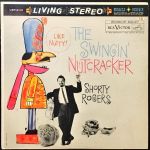
The Not So Swingin’ Nutcracker in Living Stereo

Hot Stamper Pressings of Living Stereo Recordings Available Now

UPDATE 2026

We wrote the commentary you see below about 15 years ago.

We liked the record back then just fine. However, we recently got another couple of copies in and they sounded OK, not great, but what really had aged badly was the music, which was corny and, worst of all, contra the album’s title, definitely did not swing. Don’t waste your money on this one the way we did.

There are many jazz pressings we’ve discovered with audiophile quality sound and enjoyable music, but we reluctantly had to admit that this title should no longer be considered one of them. Live and learn, right?

We hope we can be forgiven for our mistaken bias in favor of a Golden Age title with a cool vintage cover. (And it wouldn’t be the first time.)

Another source of mistaken thinking: The Swingin’ Nutcracker came out in 1960, a year known for a great many other exceptionally good sounding titles produced during the Golden Age of vacuum tube recording. After playing so many wonderful recordings on that label, from that era, we were primed to like it regardless of whatever shortcomings it might have had.

This is why we recommend audiophiles pull titles off their massive shelves and give them a spin from time to time. Some records have simply not stood the test of time as well as others. Some will be better than we remember, some worse.

A wall full of records, most of which have not been played in years, even decades, is not a record collection worthy of the name. It’s better understood as a pile of vinyl that has been doing nobody any good for a very long time and, according to Newton’s Laws of Motion, will continue doing nothing for nobody forever.

(more…)

Look Around on Speakers Corner Heavy Vinyl

Hot Stamper Pressings of the Music of Sergio Mendes Available Now

UPDATE 2026

This commentary, about how wrong I was about the Look Around album on Speakers Corner, was written shortly after that pressing came out in the early 2000s.

My foolishness is a textbook case of live and learn. One thing I can tell you for certain is that, although I didn’t know it, I sure had a lot to learn back in those days.

2007 was the year that the penny finally dropped and we finally gained a better understanding of what was going on with the sound of the modern Heavy Vinyl reissue.

Practically everything we would do in audio from that point onward would take us down a very different path than the one we had unknowingly been on. We saw the light, and there was simply never going to be a way to unsee it.


Our Old Review

We were fairly impressed with the Speakers Corner pressing of this album when it came out on Heavy Vinyl in 2001.

Since then we have learned a thing or two. Their version is decent, not bad, but by no stretch of the imagination can it compete with any Hot Stamper pressing found on our site.

(more…)

The Bloated Cello Sound Some Find Appealing

Hot Stamper Pressings of the Music of Claude Debussy Available Now

UPDATE 2026

We made a crack about the Starker Mercury recordings below which we gernerally no longer agree with, although I am sure there are some pressings which have bloated sound. Those are the ones that don’t win shootouts.


On this pressing we were a bit surprised at how natural the cello sounded — more like the real instrument and less like the typical recording of it. 

Normally when recording the cello, the microphones are placed fairly close to the instrument. This often results in what’s known as the “proximity effect,” which simply describes a boost in the lower frequencies relative to the more linear response of the microphone when placed at a distance.

The famous Starker cello recordings on Mercury — you know the ones, the originals and even the reissues sell for hundreds and hundreds of dollars — suffer from this effect, which audiophiles seem to prefer. (The Mercury heavy vinyl reissues, at least the ones I’ve played, were ridiculously fat and bloated in the bottom.)

Audiophiles did not seem to mind much, judging by the apparently strong sales and the rave reviews I read. Bass shy systems, and that means most of the systems owned by audiophiles, probably benefited from the bass boost.

Systems with lots of large woofers — at least in our case — would of course make the sound of these pressings positively unbearable. That indeed was our experience.

(more…)

Time Out Is a Classic Case of Live and Learn

Hot Stamper Pressings of the Music of Dave Brubeck Available Now

When we did a shootout for this album way back in October of 2007, we took the opportunity to play the Classic Records 200 gram pressing. Maybe we got a bad one, who knows, but that record did not sound remotely as good as the real thing. (6 eye or 360, both can be quite good. Skip the Red Label ’70s reissues.)

The piano sounded thin and hard, which was quite unexpected given the fact that we used to consider the Classic LP one of their few winners and actually recommended it. Another example of we was wrong.

As we said in our shootout: “We dropped the needle on the Classic reissue to see how it stacked up against a serious pressing. Suffice it to say, the real Time Out magic isn’t going to be found on any heavy vinyl reissue!”

If I were in charge of the TAS Super Disc List, I would not have put this record on it.

(more…)

Are You a Soundphile? I Used to Be One

Hot Stamper Classical and Orchestral Pressings Available Now

UPDATE 2026

About 30 years ago I got hold of a Japanese pressing of Marriner conducting Haydn’s Toy Symphony and Mozart’s Eine Kleine Nachtmusik and was blown away by the absolutely phenomenal quality of the Haydn. Listing the record for sale, I raved:

DEMO QUALITY SOUND! This is the best sounding Toy Symphony you will ever hear!

…all the little toys that play along with the music just JUMP out of the speakers. The recording is so transparent and the toys are so well miked it’s like hearing the work for the first time, or live.

Now we know definitively that this is clearly not true, assuming yoy have one of our Hot Stamper pressings of the EMI original. They are better in every way than the Japanese pressing, which is the one purporting to have audiophile sound.

If this sounds familiar to you, I’m guessing this is not your first visit to the blog or our site. There is almost always a vintage pressing with superior sound when compared to the audiophile pressings made from the same recording.

The problem is: You just don’t know which vintage pressing will have superior sound. Maybe they all will. Maybe none of the copies you own will. There is one, but how do you find it?

In order to get that answer, you have to know how to do carefully controlled shootouts, and not just once, but more often than not a number of them over a period of years. Whatever answer you may come up will most likely be provisional, not definitve, because that’s the only way the process of discovery can work when applying scientific methodologies to the solution of a problem like “which pressings sound best on record X?”.

We did the shootout in 2022 and found out that the best of the original EMI pressings are quite a bit better, a classic case of live and learn, as well as one of the hundreds of breakthrough discoveries we’ve made over the years. That’s what happens when you are in the business of playing records and then selling the best of them to audiophiles looking for superior sound.

I believe I had at least one or two UK EMI pressings to play against the Japanese ones, but all the details of how I came to this conclusion — a proto-shootout, carried out long before I knew how to do a real one — are lost to the mists of time.

Keep in mind that my stereo was dramatically less revealing back then. Also I had not learned how to clean records properly. Those two facts, combined with the underdeveloped listening skills that go with them, helped me to arrive at the wrong conclusion.

No, the Japanese pressing, specifically targeted to audiophiles, or “soundphiles” if you like, is not superior to a properly mastered and pressed UK LP.

If you have more than a handful of Japanese pressings in your collection, you can be sure that there is still plenty of room for improvement in your audio system.

(more…)

Are the Strauss Waltzes on the TAS List Any Good?

UPDATE 2026

The original, favorable review for this album you see further down is from at least ten years ago and probably more like fifteen.

When we revisited the copies we had of this title more recently, we felt the sound was badly lacking in many ways, with no real extension up top nor much weight to the bottom, the very definition of boxy sound.

Many of the vintage classical records we audition these days have sound that we liked well enough in the past but now no longer meet our standards.

Those pressings might sound fine on an old school stereo (or its modern equivalent), but we have something very different to play our records on, courtesy of the many revolutionary changes in audio that have dramatically altered the quality of analog playback over the last twenty five years.

We much prefer Boskovsky’s performances for Decca for waltzes and the like, by Strauss or anyone else.

TAS List Thoughts

We wanted to like the record, it’s on the TAS List for cryin’ out loud, shouldn’t it at least be pretty good?

It very well may be amazingly good, we can’t say it is or it isn’t. In order to be more sure of our opinion, we would need a great deal more data to back it up. We would need to have a large number of copies on hand, clean them all and play them in order to make it possible to find the killer stamper that may be hiding in the pile, assuming one might be.

(more…)