Notes on an Audiophile LP

It’s Official – The Audiophile World Has Lost Its Mind

Hot Stamper Pressings of the Music of Black Sabbath Available Now
A little more than a year ago, back in June of 2023, we reviewed The Cars first album Rhino released on Heavy Vinyl. Here is our review.

We didn’t see the point in pulling our punches — when a record sounds as bad as that Cars album, somebody should stand up and say so, so we did.

We said it was possibly the worst version of the album ever made, its only competition being the Nautilus pressing from 1980, one of those bottom-of-the-barrel I-hope-we-all-learned-our-lesson Half-Speeds from back in the salad days of the remastered audiophile record craze.

(Yes, I admit I bought plenty of that crap back then, and I can’t even say for sure that I could tell how awful the remastered Nautilus pressing sounded. I believed what I was told — that the original pressings needed the ministrations of some guys with a lathe who thought they knew more than the engineers at Sterling when it came to cutting good sounding records. I must have been completely clueless to believe any of it, and now that I look back on those days, it’s obvious I was.)
But enough about me. Let’s talk about the hack who cut this godawful record. If you will allow me to quote myself from my Cars review:

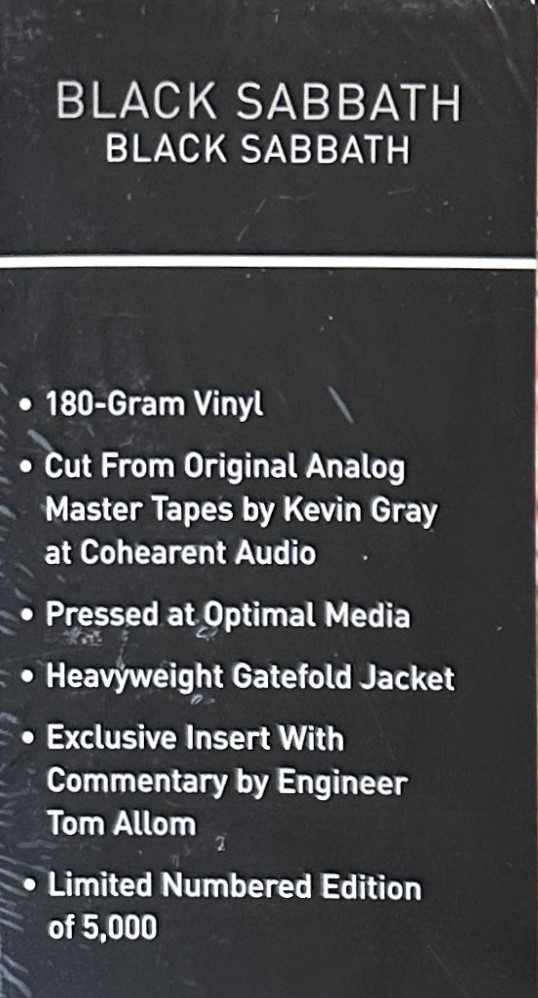
Kevin Gray has struck again. He’s a modern one-man demolition crew, taking exceptionally well recorded analog albums and turning them into the vinyl equivalent of CDs, and bad CDs at that.

What we heard on side one of the new Black Sabbath remaster can be seen from our notes as reproduced below.

  • Nasal, upper midrange boost
  • No real space
  • Hard and smeary
  • Sizzly rain intro
  • Vocals are very present in a harsh and unpleasant way

(more…)

So at 45 RPM – One Side Bad, Another Awful, What’s a Mother to Do?

Hot Stamper Pressings of the Music of Peter Gabriel Available Now

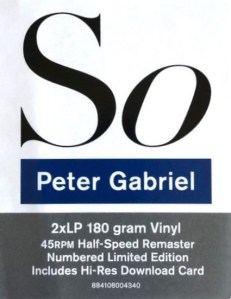
In 2016 a version of So came out using this currently popular vinyl format:

2 180g discs / 45 RPM / Deluxe, Numbered, Limited Edition /Half Speed mastered

As of this writing, there are 15 copies on Discogs, the cheapest of them starting at $139.77.

Sounds like it must be pretty good for that kind of money!

This So release was mastered by a fellow named Matt Colton, who has been doing this kind of work for a very long time, judging by the fact that he has 3,775 technical credits under his name on Discogs.

That did not stop this particular 2 LP set from being one of the worst sounding albums we have played in quite a while.

Let’s take a closer look at the specifics. We played sides one and four of the two-disc, four-sided album. That was more than enough to evaluate the sound quality.

(more…)

Let It Be on Heavy Vinyl – The Gong Rings Once More

Hot Stamper Pressings of Let It Be Available Now

At the end of a shootout for Let It Be back in June of 2014, we decided to see how the 2012 Digitally Remastered Heavy Vinyl pressing would hold up against the 12 (yes, twelve!) British copies we had just critically auditioned.

Having evaluated the two best copies on side two, we felt we knew exactly what separated the killer copies (White Hot) from the next tier down (Super Hot). Armed with just how good the recording could sound fresh in our minds, we threw on the new pressing. We worked on the VTA adjustment for the thicker record for a couple of minutes to get the sound balanced and as resolving as possible, and after a few waves of the Talisman we were soon hearing the grungy guitar intro of I’ve Got a Feeling.

My scribbled first notes: not bad!

Sure, there’s only a fraction of the space and three-dimensionality of the real British pressings, but the bass seemed to be there, the energy seemed decent enough, the tonality was good if a bit smooth and dark. All in all not a bad Beatles record.

Then we played One After 909 and the sound just fell off a cliff. It was so lifeless and compressed! The parts of the song that get loud on the regular pressings never get loud on the new one. The live-in-the-studio Beatles’ rock energy had somehow disappeared.

We couldn’t take more than a minute or two of the song. It was just too frustrating and irritating. What the hell did they do to make this record sound this way? We had no idea.

Didn’t matter. It was game over. The gong from The Gong Show had rung. The record had to go.

We had played twelve British copies, all with stampers that we knew to be good on side two. Two or three of those copies did not merit a Hot Stamper sonic grade. Nothing new there, happens all the time.

Yet even the worst copy we played of the twelve had more jump factor, more life and more dynamic energy than the new Heavy Vinyl pressing.

Which means that there’s a very good chance that any copy you pick up on British vinyl will be better sounding — maybe not a 100% chance but easily a 90+% chance. Which makes buying the new Heavy Vinyl LP, not to mention playing it, pointless unless…

Unless you are more of a record collector than an audiophile or music lover. And if you are one of those guys, you are definitely on the wrong blog, unless…

Unless you are here to repent and swear off the error of your ways.

(more…)

Jimmy Page’s Houses of the Holy Needed Tubes and Didn’t Get Them

Hot Stamper Pressings of the Music of Led Zeppelin Available Now

We did not care for the newly remastered version of Houses of the Holy. It badly lacks the kind of mastering that Robert Ludwig brought to the sound, and by that we mean lots of lovely tubes in the mastering chain.

What tube equipment he used and how he used it is something we have been researching for years now, but rather than go down that rabbit hole, let’s just say the Tubey Magic that is all over the original cuttings of the album is hard to find on the new one, and that means it’s missing a quality that makes Houses of the Holy one of the most luscious audiophile listening experiences one can have, even for those of us who long ago gave up on tube equipment for the home.

The notes for side one, track one (The Song Remains the Same) and track three (Over the Hills and Far Away), read:

(more…)

MoFi Proves Once Again It Has No Idea How to Make a Good Record

Hot Stamper Pressings of the Music of Women Who Rock Available Now

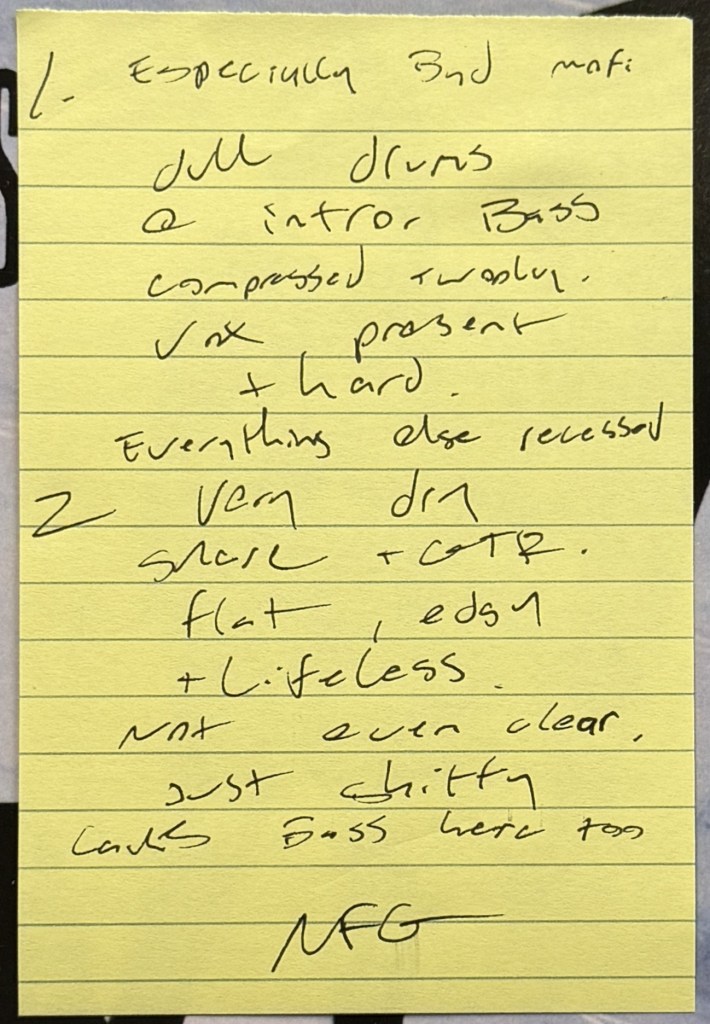
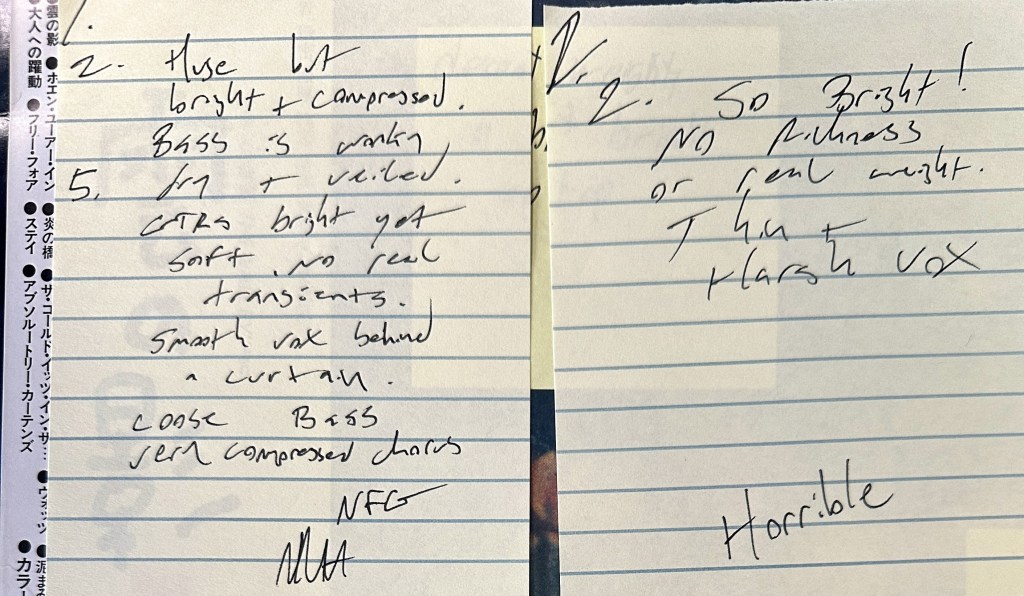
We recently auditioned the Mobile Fidelity pressing of Learning to Crawl and wrote down our impressions as the record was playing that you see below.

We try to be very specific about the strengths and weaknesses of the records we play, which is why we reproduce our notes — in this case for audiophile records — whenever possible. (There are plenty of shootout notes for vintage pressings on the blog as well.)

The title at the top of our post-it sets the stage for what you are about to read: the specific faults of an “especially bad MoFi.”

Do they make any other kind? Well, sometimes, to be sure, but the good ones are few and far between.

It must be hard to make a record sound this bad, but if anyone can do it, Mobile Fidelity has proven that they are the men and women for the job. Let’s get down to brass tacks.

Side One

Dull drums at intro.
Bass compressed and wooly.
Vocal present and hard.
Everything else recessed.

Side Two

Very dry snare and guitar.
Flat, edgy and lifeless.
Not even clear.
Just shitty.
Lacks bass here too.

Consensus

NFG.

This one definitely belongs in the Mobile Fidelity hall of shame (along with 66 of their other titles). My CD sounds better.

To aid you in understanding just how lost the buyers of these audiophile records are these days — and who am I to talk? — we reproduce the five most recent reviews from Discogs as of 5/2026 below.

(more…)

We Drop the Needle on Another Sad Excuse for an Audiophile Pressing

More on the Subject of Half-Speed Mastering

This is an A&M Audiophile Sampler, made in Canada and pressed on Japanese vinyl .

There is a bit of a story behind this title. It’s not the kind of record we normally would buy, or even bother to play truth be told.

A customer had emailed us saying it sounded great. It was cheap so we grabbed one for fun. Our notes read:

  • Sucked out middle
  • Clean and hard (maybe like a CD?)
  • This sucks

Hard to imagine one of our customers liked the sound of this pressing, but I assure you that one of them did, so make of that what you will.

(more…)

Obscured By Cloudy Japanese Vinyl

Hot Stamper Pressings of the Music of Pink Floyd Available Now

When I was just getting up to speed in audio and exploring the world of music available on vinyl in the 70s, many of the stereo stores I frequented carried Japanese pressings. They were widely believed to have superior sound relative to their domestic counterparts — in this case, the mass-produced pressings I would see at the Tower Records right across from the Sports Arena in my hometown of San Diego. I went there at least once a week, probably more like two or three times.

Tower was far and away the best place to go record shopping in those days. The store was huge and they had dramatically more stock than Licorice Pizza or The Wherehouse.

They also had a separate section for Half-Speed mastered pressings from a number of labels, which of course was the first place in the store I would visit, digging through the bins to see what new remastered titles may have been produced for audiophiles searching for the ultimate in sound quality.

Of course, I identified as just such a person. In terms of sound quality, and with the extremely limited knowledge I had acquired at the time, I believed I set a high standard for the sound of the records I bought. I was willing — eager even, you could even say excited — to pay whatever premium price I had to for a record that was sure to deliver superior sound quality. To me, in the late 70s, that meant two things: direct to disc recordings, and Half-Speed mastered pressings.

(There was a another category of records that did not fall into the above two, best exemplified by American Grammaphone and the Fresh Aire series, but the less said about those schlocky releases the better, other than to point out that some of their titles are TAS list carryovers from HP’s time running the Super Disc list, specifically Fresh Aire 2 and 3, both best avoided.)

And, like any other open-minded individual, when it came to Japanese vinyl I was willing to give a few a spin.

However, the more of them I bought, the more clear it became to me that even the best of them sounded mediocre (veiled, smeary and dubby from second generation tapes) and more often than not they were just plain awful. (Second generation tape issues being the main problem, of course, with the additional insult of poor tonality, the result of being mastered using wacky equalization, typically with added brightness where none was needed.)

Pink Floyd

The notes for the Pink Floyd album you see below, Obscured by Clouds, were written sometime in March of 2025 as part of the shootout we conducted for the album.

If we assume it would be an audiophile who would be attracted to this pressing, perhaps for its quieter playing surfaces, perhaps operating under the assumption that the Japanese engineers mastering the record would be more likely to do a better job as well, then what we have here is a textbook case of an audiophile bullshit pressing.

One that sounds nothing like the album is supposed to, based on having played a number of exceptionally good sounding copies, all British and all on the Green Harvest label, mastered from good tapes, sometimes by the legendary Harry T. Moss. We feel we are more than qualified to make these judgments. If we can’t make them, nobody can.

Discogs allows us to glean some information regarding the desirability of this Japanese reissue with the record buying public currently in the market for Pink Floyd vinyl who register on their site.

(more…)

Stan Ricker’s Fingers Are All Over these Paintings

Hot Stamper Pressings of Jazz Guitar Recordings Available Now

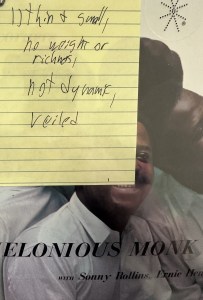
We have been planning on doing a shootout for this Earl Klugh’s 1977 Blue Note release, Finger Paintings, for more than a year, and over that time we were fortunate enough to pick up a MoFi pressing of the album locally for the very reasonable price of ten bucks. (The price tag on the jacket is visible at the bottom of this post.)

The notes for our 2025 Shootout Winner included phrases such as “huge, weighty and punchy, ” along with “natural, rich and sweet.” Most copies may not have those qualities, but the best ones sure do.

Contrast that with the Mobile Fidelity pressing that Stan Ricker mastered in 1980. It was one of their biggest early sellers, and one that they no doubt felt had such good sound that it would be sure to sell at triple the price of the regular Mobile Fidelity pressing!

WTF you say? Yes, it would be released in 1981 in a box (not a box set!) as a Numbered, Limited Edition, Ultra High Quality Record (UHQR) at the retail price of $50. $178 in 2026 dollars, if you can believe that records used to cost that kind of dough (cough).

OK, that’s all well and good, but this is supposed to be a blog for audiophiles, so forget all that history stuff and just tell us what the record sounds like.

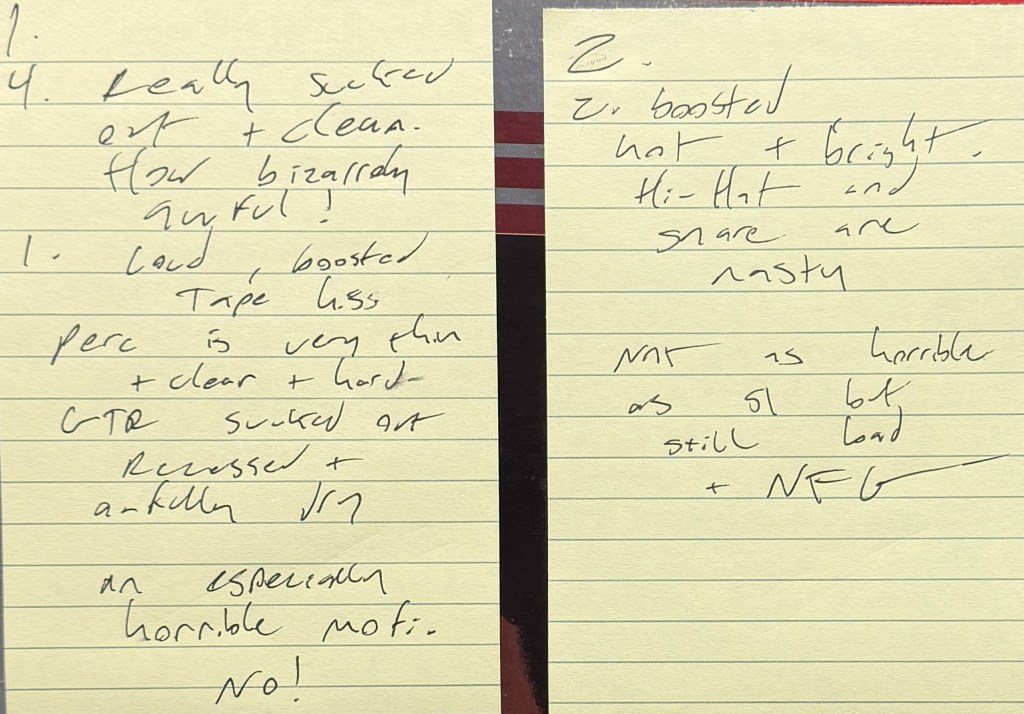
Fair enough. After having played a big batch of standard issue pressings and getting to know the sound of the record well, feast your eyes on the notes we took.

This MoFi may actually set a new standard for screwing up a perfectly good sounding record. (I was going to say tape but I have never heard the tape and have no idea what it sounds like. John Golden (JG) at Kendun cut the originals. Maybe he was able to somehow make a silk purse out of a sow’s ear. The possibility exists.)

Side One

Track Four

  • Really sucked out and clean
  • How bizarrely awful!

(more…)

Turning Master Tapes into Mud Pies – The Magic of the Electric Recording Company

Hot Stamper Pressings of Psychedelic Rock Recordings Available Now

UPDATE 2026

This commentary originally came out in 2023 I believe. The comments section at the end is a bit of a hoot. Man, there sure are some real wackos in the world of audio.


““It’s magical what they’re doing, recreating these old records,” Fremer said as he swapped out more Electric Recording discs.”

Swapped them out? Anyone with an ounce of respect for Love’s music would have tossed them into the nearest trash bin.

We did a shootout for Love’s Forever Changes earlier this year, and it was our good luck to get hold of a copy of the Electric Recording Company’s pressing of the album in order to see how it would fare against our Gold Label Stereo original LPs.

As you can see from the notes, to say that we could hardly believe what we were hearing clearly understates the depth of our befuddlement.

We simply have no context for a record that sounds as bad as this record sounds. We’ve never heard anything like it, and we’ve played a lot of records in the 37 years we’ve been in business. After critically auditioning thousands upon thousands of pressings in our shootouts, all day every day for the last twenty years, we’ve worn out scores of cartridges and even our Triplanar tonearm.

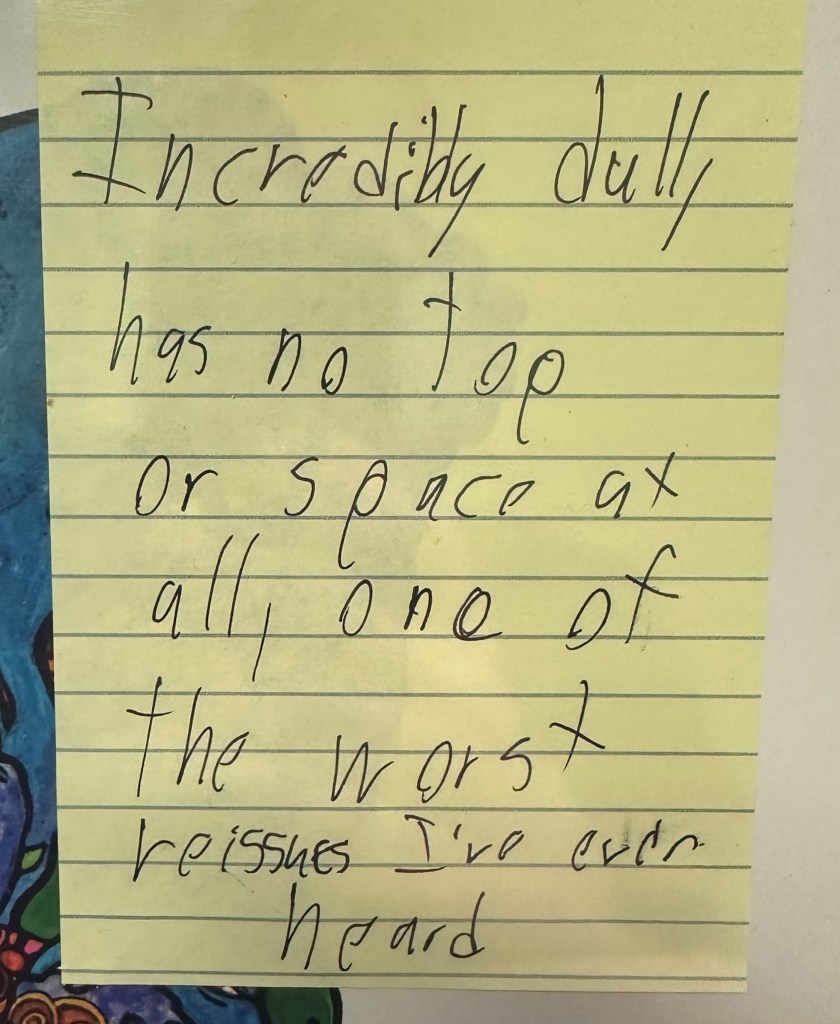
But this is new ground for us. A quick recap:

  • Incredibly dull,
  • Has no top or space at all,
  • One of the worst reissues I’ve ever heard.

You get the picture. What more needs be said? Last year I wrote the following:

Pete Hutchison of The Electric Recording Company makes some of the worst sounding records I have ever played in my life.

If you play me one of his awful records, and don’t tell me who made it, I can judge the record on its merits, the way we judge all records. We test records blindly for precisely this reason. We let the record tell us how well it was made, what it does right and wrong relative to other pressings of the same album, comparing apples to apples.

His records tell me he loves the sound of the murkiest, muddiest vintage tube equipment ever made, and wants every record he produces to have that sound.

In my book that is an egregious case of My-Fi, not Hi-Fi. We wrote about it here.

It’s astonishing to me that anyone takes this guy seriously.

In the Washington Post video, we did a little comparison on camera for two pressings of Quiet Kenny, a record I will have more to say about in Part Two of this commentary. Here is Geoff Edgers’ description in the article of how it all went down.

(more…)

Cat Stevens Part 2 – Is This the Truest Tillerman of Them All?

If you haven’t read Part 1 of this story, please click here.

Back to our real story. I listened to my good original pressing. I call it White Hot at least!

Then I put the new pressing on the table, set the SDS for 45 RPM, and got the volume just right. I proceeded to carefully adjust the VTA by ear, going up and down with the arm until the sound was right, which is simply standard operating procedure for every record we audition.

These are my actual notes for But I Might Die Tonight.

This is what I heard as the song worked its way through the various sections, in real time.  The first thing I heard at the start was Zero Tubey Magic for the first verse. One of the last things I heard at the end was No Real Space. Space is what you hear at the end for the big piano and drums finish.

Let’s take it line by line. First up:

Zero Tubey Magic

I didn’t hear much Tubey Magic on the new pressing. The best early pressings — domestic A&M Browns, Pink or Sunray UK Islands — often have simply phenomenal amounts of the stuff. It’s a hallmark of the recording.

If a new pressing comes along without it, that’s a problem. I guess that George Marino‘s cutting system at Sterling could probably do some things well, but it sure doesn’t seem to be able get the sound of tubes right. His 33 RPM cutting had no Tubey Magic, and this one has no Tubey Magic.

If I had hired him to cut a record for me and it came out sounding like this, I would find somebody else to cut records for me.

He’s dead now, rest in peace. I would doubt that anyone at Sterling has a better cutting system, and therefore no one should expect any records that have been mastered there to sound very good.

Vocal Is Clear, Clean and Dry

This is the sound you sometimes get with modern, super-clean transistor cutting equipment. It’s low distortion, like a CD is low distortion. We don’t think we should have to put up with dry vocals on records when the good pressings we have been playing all our lives have noticeably richer vocals.

Not rich like Dream With Dean, nothing is that rich, but rich and full-bodied the way the good pressings of this album always make them sound.

(more…)