Audiophile Vinyl

“I find myself just wanting to go back to a Hot Stamper regardless of the artist or genre.”

Hot Stamper Pressings of Jazz Piano Recordings Available Now

One of our good customers had this to say about some Hot Stampers he purchased recently:

Gotta tip my cap to you folks. You have been blowing my mind with some amazing sound. Disc after disc. To the point where I am now having a love-hate relationship with my hot stampers due to the fact they’ve practically rendered the bulk of my 200+ record collection considerably less enjoyable to listen to.

Every time I listen to a ‘modern’ reissue now, even the good ones, I don’t necessarily dislike it—many of them are great—but they’re not the same and I find myself just wanting to go back to a hot stamper regardless of the artist or genre.

All I want is that sound. I can’t get enough of it.

I’ve got some incredible reissues too. From music matters jazz to Impex 1-steps. Lucky enough to even have a couple MMJ on their SRX vinyl as well. And boy is that quiet. Almost digital, it’s creepy. And it is great sound by today’s ‘normal’ standards.

But now that I’ve heard what kind of mind-blowing sound is actually possible, well, these are not that.

Close—and better than MANY of the alternatives—but no cigar.
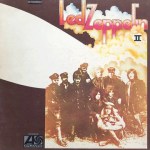
The Zep II is incredible. Easily the best sounding album I now own and the crown jewel of my collection. And so quiet too. Especially compared to my other 2 RL hot mix copies I got while I was in hot pursuit of the holy grail. I love that you guys conservatively grade everything. More often than not I’ve been impressed by how much more quiet the records are than I expect them to be. As I mentioned previously this was a huge splurge for me and not something I’ll be able to do often, but now having heard it many times over it’s unequivocally worth every penny.

It occurred to me while listening to it the other night that you guys aren’t selling records. You’re selling time machines. I now possess a near infinitely-reusable ticket to go to a Led Zeppelin concert literally any time I feel like it. And I wasn’t even born yet when that was actually possible. Still trying to wrap my head around that. Could easily say the same for my Dark Side hot stamper as well.

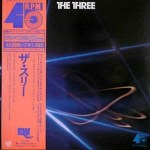
Almost equally as exiting was to take a flier on the 45 rpm copy of The Three you all put on offer a couple weeks ago. I had never heard of the album or Joe Sample at all for that matter. I’ve since listened to the track Funky Blues easily 20+ times since I got it, to the point where I’m forcing myself to curtail my listening frequency before I cause groove damage.

This might just be my new favorite song. And it’s easily catapulted to one of my top 10 favorite albums.

The first time I heard Shelly Manne whack that snare a few seconds into the song I nearly dropped my drink. Then he did it again a few measures later and I knew I was in for a real treat. The piano is just haunting. Even the bass is unreal. I’ll stop here because I’m sure you don’t need me to tell you, but thank you for this one, this is something special as well.

I love it so much I have an ask. Any chance you guys have a low grade hot stamper copy of the 33 rpm version kicking around after your last shootout? After spending 400 on the 45 I can’t justify a second copy for hundreds of dollars but I’m dying to hear the rest of the album now. I’d pull the trigger on even your lowest grade most affordable copy if you have one, just to hear the last 2 tracks. And possibly take a little wear and tear off the poor grooves of my 45 at the same time!

Anyway I’ve rambled on enough for one evening (no Zep pun intended) but did want to be sure to express my sincere gratitude for your services. You all have well-earned another loyal customer at this point. Appreciate you indulging me and look forward to many more hot stampers to come!

Best,
Carter

Carter,

Thank you very much for taking the time to write about your experiences with three of the very special records we’ve sent you. Those are amazingly good records, no question about it.

And it seems you have discovered through those three pressings what our Hot Stampers have in such abundance, and what modern records are mostly missing to their all-but-fatal detriment.

We don’t go out of our way to use many technical terms here on the blog, but since there is one that perfectly fits the quality you describe, we will look the other way and just break our longstanding rule and put it out there, simply because it has a special something that we feel perfectly describes the aspect of the sound you are hearing but not quite able to put your finger on.

The phrase you are most likely looking for is je ne sais quoi.

As the dictionary has it, there is without a doubt an appealing quality to our records that cannot be adequately described or expressed.

The appealing quality of our Hot Stamper pressings is born of many factors, most of which we do not understand.

But here’s one: our records are cleaned in such a way that the mysterious quality you speak of is brought out to an exceptional — I might go so far as to say unparalleled — degree. No other cleaning regimen of which we are aware can do what The Prelude System can do for maximum JNSQ Factor (if I may take the liberty of abbreviating the term. Easier to type that way, to be honest).

We talk about all the things we are listening for when comparing records — various aspects of the bass reproduction, the amount of midrange presence, spaciousness, etc., etc., and we write down what we are hearing in all those areas on our notes, some of which we share with our readers right here on the blog.

If you’ve ever done one of these multi-record shootouts, you know it helps to focus on the details of the recording as you listen and scribble away at your notes. It gives you something to do while the music is impressing the hell out of your eardrums and sending endorphins surging deep into your brain matter.

But what is the final grade going to be? Do you simply add up all the factors and weigh them appropriately to come up with the overall grade you then award the record? What about the JNSQ factor? How much of that goes into the final grade?

It’s really not that complicated. The best sides do everything right. The next best sides do almost everything right, falling short in one area or another, which means they typically earn grades of 2.5+, and on down the line to the Supers and those with lesser grades.

The JNSQ Factor doesn’t really seem to make that much of a difference because all the particulars are there in the sound and they all add up to a fabulous listening experience, the kind you described in your letter.

But all of the above talk about grading misses the point entirely.

The JNSQ factor is the thing that vintage pressings have in spades and modern pressings are mostly missing. They are the mysterious, unnameable heart and soul of vintage vinyl. They are the main reason your new records don’t feel right even when they mostly sound right.

How it came to be that mass-produced records from 50 to 75 years ago often have all the magic of the music encoded in their grooves and new records rarely do is a mystery no one seems to be able to answer. We certainly can’t.

But we know it when we hear it.

And if we hear it, there must be something to it, and if there is something to it, that thing is going to need a name.

Je ne sais quoi works as well as any other, so we’ll go with that one for now if it’s all the same to you.

(more…)

Sonny Rollins Plus 4 – Defending the Indefensible

Hot Stamper Pressings of the Music of Sonny Rollins Available Now

UPDATE 2026

We reviewed this album in 2014 or thereabouts. It came out in 2007, proving that Chad had learned nothing about the sound of jazz during the previous 13 years after having made his first foray into bad Heavy Vinyl.

Almost twenty years later has anything changed? Not to our ears it hasn’t.

In point of fact, the releases of his records and plenty of others’ we’ve auditioned over the last few years are every bit as bad or worse.

When you’re making a lot of money doing it the way you’ve always done it, why would you ever want to change?

To make a better sounding product? Yeah, that’s a good one. How do you improve on perfection?


I cannot recall hearing a more ridiculously thick, opaque and unnatural sounding pair of audiophile records than this 45 RPM Analogue Productions Heavy Vinyl release, and I’ve heard a ton of them. 

Surely someone must have noticed how awful these records sound.

So, being an enterprising sort, with a few idle moments to spare, I did a google search. To my surprise it came up pretty much empty. Sure, dealers are selling it, every last one of the bigger mail-order types.

But how is it that no reviewer has taken it to task for its oh-so-obvious shortcomings?

And no one on any forum seems to have anything bad to say about it either. How could that be?

We don’t feel it’s incumbent upon us to defend the sound of these pressings. We think that for the most part they are awful and want nothing to do with them.

But don’t those who DO think these remastered pressings sound good — the audiophile reviewers and the forum posters specifically — have at least some obligation to point out to the rest of the audiophile community that at least one of them is spectacularly bad, as is surely the case here.

Is it herd mentality? Is it that they don’t want to rock the boat? They can’t say something bad about even one of these Heavy Vinyl pressings because that might reflect badly on all of them?

(more…)

Sorry, This Is Just Not Our Sound and Never Will Be

coltranegiant45x

Hot Stamper Pressings of the Music of John Coltrane Available Now

The sound of the 45 RPM 2 disc version of Giant Steps cut by Bernie Grundman did not exactly tickle our fancy.

It sounded thick, dull, and entirely too smooth.

It reminded us of the awful Deja Vu Bernie remastered years ago for Classic Records.

As is the case with so many of the Heavy Vinyl reissues released these days, the studio ambience you hear on these pressings is a pitiful fraction of the ambience the real pressings have encoded in their grooves.

Real pressings like, you know, the ones mass-produced by Atlantic, original and reissue alike. What’s Bernie’s excuse?

(more…)

50 Years Later and What, If Anything, Has Changed?

Audiophile Quality Pressings of Orchestral Music Available Now

In 1975 Klavier licensed and reissued some well-regarded EMI recordings with mastereing by one of our favorite mastering engineers, Doug Sax. They were to be produced here in the states for the domestic audiophile market.

I wrote a long piece many years ago about how ridiculously bad these records sounded. You can find it here.

I just happened to look up the album today to find out what year it had come out (1975) and discovered that back in 2015, when I first wrote about the record, I had somehow ignored the fact that not all the pressings were produced the same way. There was a special version made for a company called Eastern Pacific Sounds, no doubt serving the Asian audiophile market. It differed in ways that will be familiar to the audiophiles of today, even though it came out 50 years ago.

Single Step processing was used for this “Limited Edition” release. The stamper was made from the first generation master and not more than 1,000 were pressed from each stamper. This process allows all records to be of “test pressing” quality. Klavier records are used by many manufacturers and audio specialty shops for demonstrating their equipment.

For the Klavier release of Offenbach Overtures with Fremaux, our current favorite, they managed to produce even fewer pressings per stamper:

Single Step processing was used for this “Limited Edition” release. The stamper was made from the first generation master and not more than 500 were pressed from each stamper. This process allows all records to be of “test pressing” quality.

The problem with this way of thinking about records has always been a lack of evidence to support any of the supposed gains in sound or pressing quality. As with so much of audio and records, no doubt confirmation bias is at the heart of the problem

We did some testing ourselves years ago for the 45 RPM “Very Limited Edition” of Rumours, in which we demonstrated fairly conclusively that no two records sound the same, no matter how few you press from a stamper. (You can read all about it here.)

We discussed the conventional wisdom of buying promos so that you can get “test pressing” quality or something close to it. This also has proven to be of little value.

And now we have “one-step” pressings, some of which have been reviewed on this blog, either by me, Robert Brook or my customers. (This might be a good place to start to learn more about their sound quality, which, as far as we can tell, is consistently dismal.)

(more…)

So at 45 RPM – One Side Bad, Another Awful, What’s a Mother to Do?

Hot Stamper Pressings of the Music of Peter Gabriel Available Now

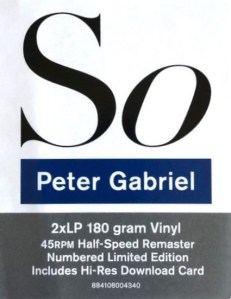
In 2016 a version of So came out using this currently popular vinyl format:

2 180g discs / 45 RPM / Deluxe, Numbered, Limited Edition /Half Speed mastered

As of this writing, there are 15 copies on Discogs, the cheapest of them starting at $139.77.

Sounds like it must be pretty good for that kind of money!

This So release was mastered by a fellow named Matt Colton, who has been doing this kind of work for a very long time, judging by the fact that he has 3,775 technical credits under his name on Discogs.

That did not stop this particular 2 LP set from being one of the worst sounding albums we have played in quite a while.

Let’s take a closer look at the specifics. We played sides one and four of the two-disc, four-sided album. That was more than enough to evaluate the sound quality.

(more…)

Does It Seem to You That This Guy Knows Much About Dark Side of the Moon?

Hot Stamper Pressings of the Music of Pink Floyd Available Now

It doesn’t to me, but I admit to some bias when it comes to Dark Side of the Moon. I must have played more than a hundred different pressings over the last forty-odd years.

Year after year I was sure I understood exactly which copies had the best sound, and again and again I was proved wrong. (To be clear, I proved myself wrong. Shootouts have a way of doing that.)

We only found out what the best sounding versions were about five or six years ago [make that ten]. We did that by doing shootout after shootout with every version we could lay our hands on, starting around 2005. We even did a shootout for two different Mobile Fidelity pressings many years ago, which we think makes for some good reading to this day.

It’s especially good reading for those who don’t appreciate how dramatic pressing variations can be for even quality controlled limited editions. The comparison of the two MoFi’s centers around the idea that midrange tonality is by far the most important quality to listen for on Dark Side, and that, surprisingly to some audiophiles, but obviously not to us, there are MoFi pressings with a correct midrange and there are some without.

Is this fellow listening for midrange tonality? If you watch the video and he says he is, then you can let me know!  And if not, you can ask him in the comments why he wasn’t. Maybe he just likes the chiming clocks and the deep bass of the heartbeat.

(more…)

Are You a Soundphile? I Used to Be One

Hot Stamper Classical and Orchestral Pressings Available Now

UPDATE 2026

About 30 years ago I got hold of a Japanese pressing of Marriner conducting Haydn’s Toy Symphony and Mozart’s Eine Kleine Nachtmusik and was blown away by the absolutely phenomenal quality of the Haydn. Listing the record for sale, I raved:

DEMO QUALITY SOUND! This is the best sounding Toy Symphony you will ever hear!

…all the little toys that play along with the music just JUMP out of the speakers. The recording is so transparent and the toys are so well miked it’s like hearing the work for the first time, or live.

Now we know definitively that this is clearly not true, assuming yoy have one of our Hot Stamper pressings of the EMI original. They are better in every way than the Japanese pressing, which is the one purporting to have audiophile sound.

If this sounds familiar to you, I’m guessing this is not your first visit to the blog or our site. There is almost always a vintage pressing with superior sound when compared to the audiophile pressings made from the same recording.

The problem is: You just don’t know which vintage pressing will have superior sound. Maybe they all will. Maybe none of the copies you own will. There is one, but how do you find it?

In order to get that answer, you have to know how to do carefully controlled shootouts, and not just once, but more often than not a number of them over a period of years. Whatever answer you may come up will most likely be provisional, not definitve, because that’s the only way the process of discovery can work when applying scientific methodologies to the solution of a problem like “which pressings sound best on record X?”.

We did the shootout in 2022 and found out that the best of the original EMI pressings are quite a bit better, a classic case of live and learn, as well as one of the hundreds of breakthrough discoveries we’ve made over the years. That’s what happens when you are in the business of playing records and then selling the best of them to audiophiles looking for superior sound.

I believe I had at least one or two UK EMI pressings to play against the Japanese ones, but all the details of how I came to this conclusion — a proto-shootout, carried out long before I knew how to do a real one — are lost to the mists of time.

Keep in mind that my stereo was dramatically less revealing back then. Also I had not learned how to clean records properly. Those two facts, combined with the underdeveloped listening skills that go with them, helped me to arrive at the wrong conclusion.

No, the Japanese pressing, specifically targeted to audiophiles, or “soundphiles” if you like, is not superior to a properly mastered and pressed UK LP.

If you have more than a handful of Japanese pressings in your collection, you can be sure that there is still plenty of room for improvement in your audio system.

(more…)

Letter of the Week – “…never heard the details in the guitars and cymbals and keyboards like this.”

Pink Floyd Hot Stamper Pressings Available Now

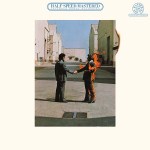
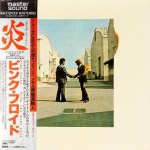
One of our best customers, Roger, received his $150 Hot Stamper [those were the days!] ’Wish You Were Here’ and went straight to work comparing it with the various other pressings he owned: two different CBS Half Speeds. The not-so-shocking results are presented in detail below.

Hi Tom,

I received your Pink Floyd ‘Wish You Were Here’ Hot Stamper and compared it to my CBS Half-Speed (I found a bunch of these Half-Speeds in a bargain bin years ago and did a shootout to select the best one) and the pressing that I considered the best, the Japanese Mastersound Half-Speed, for which I paid dearly.

Drum roll, please while Vanna hands me the sealed envelope………… and the winner is: Surprise — the Hot Stamper!

And it wasn’t even close.

Once I heard the center-of-the-earth bass on the Hot Stamper ‘Shine On You Crazy Diamond’, it was all over. I was amazed at how bright the CBS was, transparent yes, but bright and no bass and no body to the saxophones and voices. The Mastersound was better-balanced in that the highs were tamed, but no real dynamics and the bass was flabby.

I have heard this record hundreds of times, but never heard the details in the guitars and cymbals and keyboards like this.

And did I mention the huge, huge soundstage with a wall of sound like that of other Pink Floyd records? Nice job as usual.

Roger,

Thanks for verifying the accuracy of our Hot Stamper claims once again. The decent sounding Half Speed Mastered records, CBS and otherwise, can be counted pretty easily on one’s fingers. We could debunk them all day long if we wanted to (and had ten times the staff). It doesn’t take long to hear how anemic the sound is compared to The Real Thing, the real thing being, of course, a vintage pressing.

The copy you bought was rated A Plus on both sides, two full sonic grades below the best, so you can imagine how good those copies sound. But since neither you nor I are made out of money, for $150 you now own a copy that will trounce anything you throw at it, especially if what you throw at it is an audiophile pressing.

Those moribund LPs belong on Ebay where all the Technics turntable owners of the world can find them in order to complete their — let’s be honest — silly and ultimately pointless audiophile collections.

Modern equipment shows half-speed foolishness for what it is. You heard it, we heard it, and slowly but surely we are spreading the word to the rest of the audiophile community.

Thanks again. It’s a big job and we need all the help we can get.

(more…)

Compromised Recordings – If It’s About the Music, the Choice Is Clear

Skeptical Thinking Is Key to Finding Better Sounding Records

UPDATE 2026

This commentary was written circa 2006. The Hot Stamper world was very different in those days. A few dozen had been done starting in 2004, and probably not nearly as well as they should have been, truth be told.

This was unexplored territory, a new world. At the time we had no way of knowing how much there was to learn and how much time and effort would go into learning it.

Thousands of shootouts later we have a pretty firm grip on how to go about finding the best sounding pressings of the greatest music ever pressed on vinyl. Those recordings, with sound that is dramatically superior to those that have come along since, are why this blog exists. (The blog also allows me to promote 100+ personal favorites that I think should be more popular with my fellow audiophiles.)


Our Story, Circa 2006

Years ago one of our good customers wrote to tell us how much he liked his Century Direct to Disc recording of the Glenn Miller big band, one of the few truly amazing sounding direct discs that offered music actually worth listening to. This was an actively touring big band, not a group of studio cats trying to make a record out of some charts somebody managed to cook up.

And you can read all about the killer copy we discovered a few years back here, complete with our shootout notes. (The notes can also be seen at the bottom of this post.)

Which brought me to the subject of Hot Stampers. (For those new to the idea, here are the short versions of what they are and how one goes about acquiring them.)

Hot Stamper pressings of jazz or popular music are almost always going to be multi-track, tape recordings with plenty of overdubbing and processing, about as far from purist live-in-the-studio performances recorded directly to disc as you can get.

They will invariably suffer a great many compromises, especially when compared to the approach of an audiophile label trying to eliminate all sources of distortion in the pursuit of higher fidelity. In the case of direct to disc recordings, this means the losses that result from the use of analog tape.

But when they do that, they almost always fail.

(more…)

A 45 RPM Audiophile Pressing to Put Them All to Shame

Hot Stamper Pressings of the Music of Prokofiev Available Now

This Japanese 45 RPM remastering of our favorite recording of Prokofiev’s wonderful Lt. Kije Suite has DEMONSTRATION QUALITY SOUND. For starters, there are very few records with dynamics comparable to these. Since this is my favorite performance of all time, I can’t recommend the record any more highly. 

Most of what’s “bad” about a DG recording from 1978 is ameliorated with this pressing. The bass drum (drums?) here must be heard to be believed. We know of no Golden Age recording with as believable a presentation of the instrument as this.

The drum is clearly and precisely located at the back of the stage; even better, it’s as huge and powerful and room-filling as it would have been had you attended the session yourself. That’s our idea of hi-fidelity here at Better Records.

(more…)