Testing Is Key

Experimenting with records is the only way to learn much about them of any real value.

Violin Recordings Are Great for Testing Your Setup

Welcome to Better Records, Home of the Best Sounding Vinyl Ever Made

Yes, violin records are indeed great for testing your front end setup (and, to be honest, every other aspect of your system), but don’t make the mistake I made for the first thirty years I spent in audio.

The mistake I made, over and over again, throughout my formative years, was to blame the bad sound of whatever pressing of an album I happened to own on the actual recording from which it was made.

Robert and I talk about that mental error and lots more in today’s video.

In this discussion, Robert mentions how bad the Beethoven “Kreutzer” Sonata (LSC 2577) can sound on some systems when they are not set up right.

We’ve long promoted the idea that violin recordings are great for tweaking and tuning your front end, something that Robert is well aware of too.

I mention that there are two recordings of the work on Living Stereo and get my facts wrong. LSC 2377 is the earlier recording, LSC 2577 the later (and better sounding).

Then the discussion turns to Frampton Comes Alive, a record that we spent many decades in search of the right pressings. We noted in our listing:

It’s ridiculously hard to find good sound for this record. Most copies are thin, dry and transistory. And it’s time-consuming to clean and play as many copies of this double album as it takes to find enough Hot Stampers to make the endeavor worthwhile. When this album doesn’t have the sonic goods, it’s nobody’s idea of a good time.

A great copy like this one will remind you — we hope — what made everybody so crazy for this music back in the 70s.

And like every audiophile ever born, I blamed the recording for the bad sound of not only this title but all the other records I owned, completely oblivious to the fact that there were well-mastered pressings sitting in the record bins — they just weren’t the ones that were sitting on my record shelves.

I think we did our first shootout for the album in 2016, a mere 40 years after it first came out. I wrote more about the subject of commitment issues we face when trying to track down better sounding pressings of the album we love. You can read about it here.

(more…)

The Diamond Has Many Flaws the Untrained Eye Cannot See

Hot Stamper Pressings of Bass Demo Discs Available Now

The diamond we are discussing here is your stereo. It has many flaws the eye cannot see but the ear can train itself to hear. It’s your job to find them and fix them. (Or not — it’s your stereo. Do with it as you wish.)

Recently we created a game centered on Led Zeppelin II, in which contestants would compare the Robert Ludwig originals to the Jimmy Page-approved remaster (a record we at one time were giving away for free with every vintage pressing we sold).

The bass on those two pressings could not be more different. If you want to compare them for yourself, we would love to know what you think the differences are.

Flaws in the Diamond

Home audio systems tend to have a great many shortcomings. In our case, we’ve spent decades rooting them out and fixing them by regularly tweaking and tuning the system, room, electricity, etc., often right after a shootout when we notice an album doesn’t sound the way it used to, or the way we think it should.

This work has the added benefit of improving one’s critical listening skills.

Bad Test Discs

There are many test discs audiophiles use that turn out to be bad for testing.

(more…)

The Audiophile Skeptics on Testing

Welcome to Better Records, Home to the Best Sounding Vinyl Ever Made

The Audiophile Skeptics – Co-Hosted by Robert Brook

If you’re looking for a different take on the subjects we will be addressing with our new channel, we happily offer them for your viewing edification and pleasure. Click here to be taken to our channel.

If you would like to know more about audio and records, please feel free to ask any questions you may have in the comments section, or send them directly to me at tom@better-records.com. And whatever you do, stay skeptical.


Further Reading

(more…)

360 Original or Red Label Reissue?

Hot Stamper Pressings of the Music of Chicago Available Now

UPDATE 2026

This commentary has to be close to twenty years old by now.


Both can be good. I did the shootout and often tried to guess the label for the copy I was hearing, for fun more than anything else. I have to admit that my batting average was not much better than chance. 

The 360s tend to be a little fuller and smearier, but plenty of red label copies sound that way and some 360s don’t, so trying to match the sound to the label was even more pointless than usual.

When comparing pressings in a shootout it’s too late for the label to have any predictive value.

We’ve already bought the records, cleaned them up and now just want to know what they actually sound like — not which ones might be the best, but which ones are the best.

The time for guessing games has passed. Of course, if we do actually figure out what the right stampers are, this helps us next time around.

(more…)

One Customer’s Story of Listening in Depth and Seeing the Light

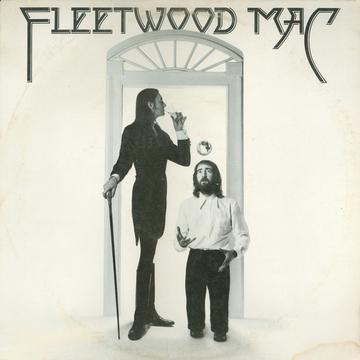
Hot Stamper Pressings of the Music of Fleetwood Mac Available Now

One of our good customers had this to say about a Hot Stamper pressing of Fleetwood Mac’s Self-titled album (1975) he purchased recently:

Hey Tom, 

Sorry to say I will be returning this White Hot Stamper. Did a lot of research before ordering, understand and fully appreciate what you’re doing, seriously sad to not be keeping it. Pretty obviously you are crazy dedicated to this so wanted to fully explain why. Especially since there’s still good odds I would like to try again.

First let me say it was quite the experience unpacking and seeing a cover still in its original shrink wrap. Probably quite a few would consider that alone worth the price. I never even slipped it out of the excellent plastic sleeve you shipped it in, that’s how much instant respect I have for the unbelievably unlikely existence of this thing. It truly is amazing. I bought it for the music not the cover, but still….

The reason I will be returning this is Side 1. Monday Morning was a disappointment, but I really think we are kind of at the mercy of the master here. Warm Ways is a whole lot better, and yes quite a bit better than my copy, with a fair bit more inner detail and palpable presence but overall not much more than I have got from some good 45 or heavy vinyl pressings.

Just so you know, yes I do follow all your suggestions. Warm up, demagnetize, anti-static, all of that and more. Have a demagnetizer much more effective than the Talisman. Been doing all this stuff over 20 years now. Because I hear and appreciate. Cables elevated off the floor. Every wire from the breaker to the speaker been cryo’d. Yes I pulled the wire out of the house, drove it down to Cryo One, had them do it all.

(more…)

Listening For the Spirit and Enthusiasm of the Musicians

Hot Stamper Pressings of the Music of The Beatles Available Now

UPDATE 2026

The discussion below, brought about by a Hot Stamper shootout we conducted for Revolver quite a number of years ago (2007!), touches on many issues near and dear to us here at Better Records.

Some of the things we learned about Revolver all those years ago are important to our Hot Stamper shootouts to this very day, including, but not limited to:

  • Pressing variations,
  • System upgrades,
  • Dead wax secrets,

and the quality we prize most in a recording:

  • LIFE, or, if you prefer, energy.

At the end of the commentary we of course take the opportunity to bash the MoFi pressing of the album, a regular feature of our Beatles Hot Stamper shootouts. We’re not saying the MoFi Beatles records are bad; in the overall scheme of things they are mostly pretty decent. What we are saying is that, with our help, you can do a helluva lot better.

Our help doesn’t come cheap, as anyone on our mailing list will tell you. You may have to pay a lot, but with us you get what you pay for, and we gladly back up that claim with a 100% money back guarantee for every pressing we sell.


The Story of Revolver, Dateline October 2007

(Incidentally, 2007 turns out to have been a milestone year for us here at Better Records.)

White Hot Stampers for Revolver are finally HERE! Let the celebrations begin! Seriously, this is a very special day for us here at Better Records. The Toughest Nut to Crack in the Beatles’ catalog has officially been cracked. Yowza!

(more…)

Revolutions in Audio Can Make a Huge Difference on Problematic Recordings

UPDATE 2026

In 2008 we did our first big shootout for Life Beyond L.A. which allowed us to discover a copy with sound quality we had simply never heard for the album, the kind of sound we had no idea could exist until we finally heard it.

In 2005 we had attempted the same shootout and abandoned it. The difference between the best domestic pressings and the Nautilus Half-Speed were not big enough to justify the price we would have had to charge for the best copies.

We probably owned an exceptionally good sounding pressing of the Nautilus, something we also had no way of knowing at the time, or would have even considered possible, but the main problem we faced in 2005 was inferior record cleaning as well as playback equipment that needed to be more accurate and revealing.

Our ability to do shootouts advanced dramatically from 2005 to 2007. By 2007 everything had changed for us here at Better Records.

Life Beyond L.A. is just one example of a shootout that couldn’t be done in 2005 but ended up being a smashing success in 2008.


Our Commentary from 2008

This White Hot Stamper pressing of Life Beyond L.A. from some years ago had the kind of sound you would never expect to find in the grooves of this album. It was a THRILL to hear it, especially at the volumes at which we were playing the record.

The transparency and openness were off the charts, unmatched by any other copy in our shootout. We’re big fans of this band here at Better Records — we love their take on complex, big production arty rock.

It’s also yet another example of the value of taking part in the myriad revolutions in audio.

If you never want your prized but sonically-challenged records to sound any better than they do right now, this minute, don’t bother to learn how to clean them better, play them back better or improve the acoustics of your room.

(more…)

Put Us to the Test! We Can Tell a Good Record from a Bad One, Digital or No Digital

Skeptical Thinking Is Key to Finding Better Sounding Records

And we don’t need to know anything about how it was made in order to judge it!

For those of you who did not follow this story from a few years back, you may want to catch up here.

Although it’s behind a paywall, you can get a free test drive easily enough.

Now that you are up to date on the overall contours of this mess, here is another one of the many thoughts I have had concerning the revelation that Mobile Fidelity has been secretly sourcing at least some of their masters digitally since 2015.

Back in August of 2022, I wrote what you see below to Geoff Edgers, the reporter who exposed this ridiculous mess. (I toned it down quite a bit. The original version was not suitable for publication.)

Earlier that same year he had visited me at my studio, where I played him the awful Dire Straits first album that MoFi remastered, one of the worst half speeds ever made (review coming, but you can get a good idea of my take on it here).

By August of 2022 he was starting to see just how crazy the world of audiophiles actually is, and the more he learned about some of these people, the crazier they seemed. And he was not wrong about that.

My letter (with a few additions):

Jim Davis (of MoFi) is not one to be trusted and would have loved to cover up this whole thing if he could have figured out how to do it. It got away from him, and as far as I’m concerned, good.

And you heard how shitty their Dire Straits record is. Who cares if it’s digital? The sound is bad. Why bother trying to figure out the reasons this crappy label doesn’t know how to make good records? It’s just a fact. Accept it.

Many of MoFi’s now-exposed records were on Fremer and Esposito’s own lists of the best sounding analog albums.

Of course they were. I defy you to find me two “audiophile experts” who are wrong more often than these guys!

From the article:

One of the reasons they want to excoriate MoFi is for lying,” says Howarth. “The other part that bothers them is that they’ve been listening to digital all along and they’re highly invested in believing that any digital step will destroy their experience. And they’re wrong.

These people who claim they have golden ears and can hear the difference between analog and digital, well, it turns out you couldn’t.

The best ears? Are you kidding me? In their dreams. These guys give every indication that they are virtually devoid of critical listening skills. The evidence supporting this reality has been laid out in this very blog in scores of commentaries over the course of more than twenty years.

(more…)

Can a Pile of Different Pressings All Sound the Same?

Skeptical Thinking Is Critical to Making Progress 

There are certain things we can stipulate as all but impossible. Nobody who says they can levitate should be taken seriously.

But are there aspects of audio reproduction that you’re not familiar with?

Are there stereos that reproduce music at a much higher level than any with which you are familiar?

Are there ways to make your stereo sound better than the ones you know of?

Are there record pressings that sound better than the ones you’ve heard?

The reason I ask is this: There is never been a case in which a person contacted me and told me that they had played a pile of copies of a particular album and that they all sounded the same.

(more…)

Analog Transparency, and that Wonderful Feeling of Being There

 Hot Stamper Pressings of the Music of Neil Young Available Now

UPDATE 2026

Click on the link to see what we would typically have to say about a vintage After the Gold Rush. ATGR is a record, by the way, that we almost never have in stock.

As you might imagine, the right early pressings are tough to find in clean condition and gettng tougher by the day.

I suppose that’s the main reason audiophiles and music lovers buy these ridiculously bad sounding reissues — at least they’re new and quiet. Our advice is to buy the CD. It will have better sound and cost a lot less than a remastered pressing on Heavy Vinyl.


For our review of the Heavy Vinyl After the Gold Rush we noted:

Cleverly the engineers responsible for this remaster seem to have managed to reproduce the sound of a dead studio on a record that wasn’t recorded in one.

This pressing has no real space or ambience. Now the album sounds like it was recorded in a heavily baffled studio, but we know that’s not what happened, because the originals of After the Gold Rush, like most of Neil’s other albums from the era, are clear, open and spacious.

In other words, they are transparent. You can easily hear into the record all the way to the back of the studio.

You hear all the space surrounding the players.

Modern records, like the recent [well, 2009] After the Gold Rush are almost always opaque and airless. We can’t stand that sound. In fact it drives us crazy.

(more…)