
Robert Brook has a blog which he calls
A GUIDE FOR THE DEDICATED ANALOG AUDIOPHILE
Below you will find a link to the shootout Robert recently conducted for Thelonious Monk’s amazing Brilliant Corners album on OJC.
Robert Brook has a blog which he calls
A GUIDE FOR THE DEDICATED ANALOG AUDIOPHILE
Below you will find a link to the shootout Robert recently conducted for Thelonious Monk’s amazing Brilliant Corners album on OJC.
 Hot Stamper Pressings of Aja Available Now
Go ahead, take a guess.
If you guessed the Cisco LP from 2007, one of the worst sounding versions of the album ever pressed, you win a prize!
When I go searching the web to find out something about a record, occasionally I come across something I had no idea existed.
Look what I found today: a survey of various pressings of Aja!
Aja is an album I think I know pretty well. I’ve been playing it since the day it came out in 1977 and still listen to it regularly.
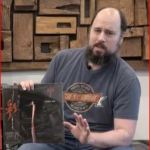
Play the video and tell me if you think you are learning anything useful from the guy. Does he seem to understand much about the sound of the pressings he is reviewing?
I didn’t think so. If you know much about records you should be appalled at the nonsense coming out of this guy’s mouth. This video will no doubt garner many ten of thousands of hits, but that is to be expected.
Phony record gurus like this guy — as opposed to authentic record gurus like us — have found a home in every corner of the web, spewing out bad advice for those foolish enough to take it.
 Hot Stamper Pressings of the Music of Black Sabbath Available Now
A little more than a year ago, back in June of 2023, we reviewed The Cars first album Rhino released on Heavy Vinyl. Here is our review.
We didn’t see the point in pulling our punches — when a record sounds as bad as that Cars album, somebody should stand up and say so, so we did.
We said it was possibly the worst version of the album ever made, its only competition being the Nautilus pressing from 1980, one of those bottom-of-the-barrel I-hope-we-all-learned-our-lesson Half-Speeds from back in the salad days of the remastered audiophile record craze.
 (Yes, I admit I bought plenty of that crap back then, and I can’t even say for sure that I could tell how awful the remastered Nautilus pressing sounded. I believed what I was told — that the original pressings needed the ministrations of some guys with a lathe who thought they knew more than the engineers at Sterling when it came to cutting good sounding records. I must have been completely clueless to believe any of it, and now that I look back on those days, it’s obvious I was.)
But enough about me. Let’s talk about the hack who cut this godawful record. If you will allow me to quote myself from my Cars review:
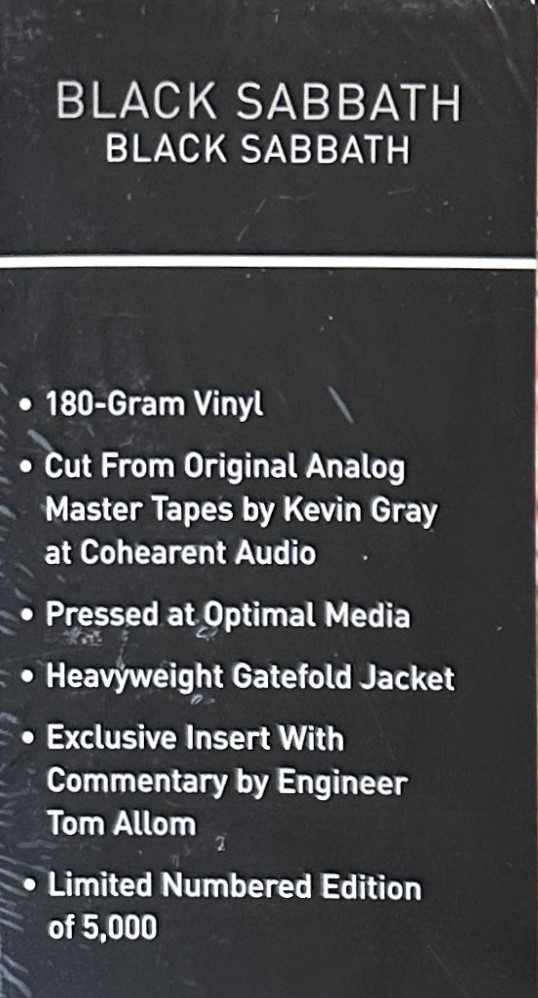
Kevin Gray has struck again. He’s a modern one-man demolition crew, taking exceptionally well recorded analog albums and turning them into the vinyl equivalent of CDs, and bad CDs at that.
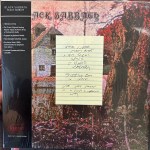
What we heard on side one of the new Black Sabbath remaster can be seen from our notes as reproduced below.
 Record Collecting for Audiophiles from A to Z
Allow me to respond to a comment left by a fellow named Ian Malone.
It was left in the comments section for the interview Steve Westman did with me.
He wrote:
Quite happy for you to promote your business Tom, but surely you are a better person than doing it in this way. I know that other people in the industry have said unkind things about you but you can rise above these insults.
My response:
I never say that the people making these modern records, as well as those reviewing them, are malicious or evil. I say they make or review bad sounding records and are simply misguided and, more than anything else, incompetent.
 Am I being unkind? If Michael Bay makes one bad movie after another, are we unkind to point that out? I don’t know whether or not he is a bad person, but I do know that he is a bad filmmaker, and gets called out regularly for putting out a bad product.
Everyone understands that this is a matter of taste. If you always wished The Beatles albums had more bass, more compression and a smoother tonal balance overall, you can buy the new Heavy Vinyl pressings and get the sound you prefer on every title The Beatles ever released.
However, I hope you know that the sound I have just described does not exist on the master tapes.
UPDATE 2026
I would amend the above statement to say “that the sound I have just described is very unlikely to exist on the master tapes,” since all of the pressings of The Beatles’ music that we think sound more correct do not have that sound. Where that “more correct” sound came from is a matter of speculation, but we sure know it when we hear it, as do our customers. More on that subject here.
I have no way of actually knowing that for a fact, but since no mastering engineer before 2014 had ever put that sound on an actual record, I think we can safely say that the evidence supports the idea that a completely “new sound” was specifically created for The Beatles when their catalog was remastered early in this century. [1]

Hot Stamper Pressings of the Music of Pink Floyd Available Now
It doesn’t to me, but I admit to some bias when it comes to Dark Side of the Moon. I must have played more than a hundred different pressings over the last forty-odd years.
Year after year I was sure I understood exactly which copies had the best sound, and again and again I was proved wrong. (To be clear, I proved myself wrong. Shootouts have a way of doing that.)
We only found out what the best sounding versions were about five or six years ago [make that ten]. We did that by doing shootout after shootout with every version we could lay our hands on, starting around 2005. We even did a shootout for two different Mobile Fidelity pressings many years ago, which we think makes for some good reading to this day.
It’s especially good reading for those who don’t appreciate how dramatic pressing variations can be for even quality controlled limited editions. The comparison of the two MoFi’s centers around the idea that midrange tonality is by far the most important quality to listen for on Dark Side, and that, surprisingly to some audiophiles, but obviously not to us, there are MoFi pressings with a correct midrange and there are some without.
Is this fellow listening for midrange tonality? If you watch the video and he says he is, then you can let me know! And if not, you can ask him in the comments why he wasn’t. Maybe he just likes the chiming clocks and the deep bass of the heartbeat.
 Skeptical Thinking Is Key to Finding Better Sounding Records
And we don’t need to know anything about how it was made in order to judge it!
For those of you who did not follow this story from a few years back, you may want to catch up here.
Although it’s behind a paywall, you can get a free test drive easily enough.
Now that you are up to date on the overall contours of this mess, here is another one of the many thoughts I have had concerning the revelation that Mobile Fidelity has been secretly sourcing at least some of their masters digitally since 2015.
Back in August of 2022, I wrote what you see below to Geoff Edgers, the reporter who exposed this ridiculous mess. (I toned it down quite a bit. The original version was not suitable for publication.)
Earlier that same year he had visited me at my studio, where I played him the awful Dire Straits first album that MoFi remastered, one of the worst half speeds ever made (review coming, but you can get a good idea of my take on it here).
 By August of 2022 he was starting to see just how crazy the world of audiophiles actually is, and the more he learned about some of these people, the crazier they seemed. And he was not wrong about that.
My letter (with a few additions):
Jim Davis (of MoFi) is not one to be trusted and would have loved to cover up this whole thing if he could have figured out how to do it. It got away from him, and as far as I’m concerned, good.
And you heard how shitty their Dire Straits record is. Who cares if it’s digital? The sound is bad. Why bother trying to figure out the reasons this crappy label doesn’t know how to make good records? It’s just a fact. Accept it.
Many of MoFi’s now-exposed records were on Fremer and Esposito’s own lists of the best sounding analog albums.
Of course they were. I defy you to find me two “audiophile experts” who are wrong more often than these guys!
From the article:
One of the reasons they want to excoriate MoFi is for lying,” says Howarth. “The other part that bothers them is that they’ve been listening to digital all along and they’re highly invested in believing that any digital step will destroy their experience. And they’re wrong.
These people who claim they have golden ears and can hear the difference between analog and digital, well, it turns out you couldn’t.
The best ears? Are you kidding me? In their dreams. These guys give every indication that they are virtually devoid of critical listening skills. The evidence supporting this reality has been laid out in this very blog in scores of commentaries over the course of more than twenty years.
 Hot Stamper Pressings of the Music of Billy Joel Available Now
Sonic Grade:
Side One: F / Side Two: C+
The Impex (Cisco) 180 gram remastering of 52nd Street was cut by Kevin Gray, under the direction of Robert Pincus (aka Mr Record), at the now defunct AcousTech Mastering in Camarillo. We noted the following in a recent review for a much superior (how could it not be?) Hot Stamper pressing:
Side one is a joke (not much ambience, resolution, energy, etc.) but side two is actually quite good. Side two fixes the biggest problem with the album: hard, honky vocals.
In his review appearing in The Absolute Sound, Neil Gader plucks two songs out of the album’s nine as especially worthy of praise. Oddly enough they’re both on side two. If I didn’t know the album as well as I do, I might wonder why.
In our review we went on to say:
But at a cost. It still sounds like a modern record, with not much in the way of space, transparency, richness, resolution and the like. You know, all that ANALOG stuff that old dinosaurs like us like our records to have.
For those of you who have thirty three dollars to spend, you could do a lot worse on side two. Side one is pretty bad and you would have a hard time doing worse.
Allow me to now quote Mr. Gader from The Absolute Sound, October 2011, Issue 216, Pg. 129
The Impex 180-gram remastering by Kevin Gray is superb. It replaces the spongy timing and dull top of the original Columbia LP with expansive space and sharp details. Its vivid and brightened treble is welcome compared to the warm but smothered original. Listen for Joel’s doubled harmonies, the pennywhistle in “Rosalinda’s Eyes,” and the burning horn section in “Half a Mile Away,” and you’ll hear what a difference a great remastering makes.
Mr. Gader has a bad original pressing, and like most reviewers he makes the mistake of assuming that other originals, and probably all the originals, perforce sound like his. Speaking from experience, they most assuredly do not. We will not be addressing his specific complaints in this commentary for one simple reason.
Nothing in his review describes the sound of the best copies.
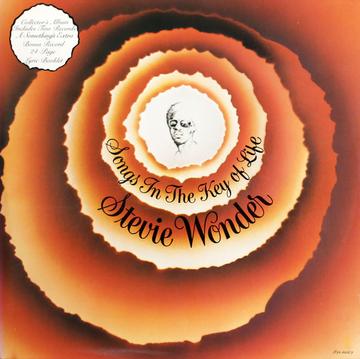
Hot Stamper Pressings of the Music of Stevie Wonder Available Now
UPDATE 2026
This commentary was written more than ten years ago and probably updated a bit here and there since then.
Fremer is here as reliably mistaken as ever about the sound of the records he reviews, in this case Songs in the Key of Life, but even worse, he thinks he knows things about master tapes and the qualities of specific recordings that he can’t possibly know. We simply wanted to call him out for the pernicious ideas he’s made a career out of spreading.
These ideas may comfort the mid-fi crowd who accept the mediocrities produced by this guy and all those who compete with him, but they will positively impede the progress of any audiophile who wants to reach the highest levels of playback in the home.
I’ve just gone to Fremer’s website to make sure the quote below is accurate, and everything you need to see is still up and as misguided as ever.
Some audiophiles never learn, and a great deal of this blog is devoted to helping audiophiles avoid the errors this reviewer and others like him have been making for decades. In the mid-90s I wrote my first commentary about the awful audiophile records this person had raved about in his review in one of the audiophile rags.
In the years since it seems that nothing has changed. Bad sounding audiophile pressings make up the bulk of this person’s favorable reviews to this day. Here are 157 of them.
How it is possible to spend so much time doing something, yet learn so little in the process? It is frankly beyond me.
I put the question to you again:
Is this a well-engineered album?
The first question that comes to mind is:
How on Earth could anyone possibly know such a thing?

Hot Stamper Pressings of Orchestral Spectaculars Available Now
UPDATE 2026
I wrote this commentary about ten years ago if memory serves. Since then we have done a number of shootouts for Slaughter on Tenth Avenue and have never failed to be impressed with the sound and the music.
Many of Arthur Fiedler‘s recordings are favorites of ours. We may even have a few on the site at the moment. All of them are guaranteed to satisfy.
This copy of from many years ago was so good on side two it practically left me speechless.
I wondered: How is this title not on the TAS List?
Why is it not one of the most sought-after recordings in the RCA canon?
Beats the hell out of me.
But wait just one minute. Until a month ago I surely had no idea how good this record could sound, so how can I criticize others for not appreciating a record I had never taken the time to evaluate myself?
Which more than anything else prompts the question — why is no one exploring, discovering and then bringing to light the exceptional qualities of these wonderful vintage recordings (besides your humble writer and his staff, of course)?
HP has passed on. Who today is fit to carry his mantle into the coming world of audio?
Looking around I find very few prospects. None in fact.
But then again, I’m not looking very hard. I could care less what any of these people have to say about the sound quality of the records they play.
They all seem to like records that don’t sound very good to us, so why put any faith in their reviews for other records?
Reviewer malpractice? We’ve been writing about it since 1994..
When You’re Just Getting Started in Audio…
Mine is typically “what an idiot!“
But then I might step back and, taking a moment to reflect, recognize that I myself have written seriously mistaken reviews back in the days when my equipment was inferior. I have to recognize that could have been me, and maybe not all that long ago.
Here’s one from the mid-90s, about twenty years after I had purchased a pair of rather large floor standing speakers and a number of highly-rated, very expensive hi-fidelity components to drive them.
But all that hardware and all that money could not tell me how awful sounding some records were, and there are plenty more from my past.
In fact, there are so many that we thought they deserved their own special category here on the blog, under the heading dubious sounding records I once liked.
The explanation for all the nonsense one reads on the web could not be simpler or more obvious.
The lo-fi to mid-fi crowd doesn’t know what it’s missing and telling them doesn’t do them (or you) any good because they are not where they need to be yet. They are not where you are — they are where they are. And that just happens to be the same place you were at some point in your journey.
They are in the hole you used to be in. The difference is you managed to climb out of that hole. They’re still in it.
Keep in Mind