Audiophile Pressings

Sonny Rollins Plus 4 – Defending the Indefensible

Hot Stamper Pressings of the Music of Sonny Rollins Available Now

UPDATE 2026

We reviewed this album in 2014 or thereabouts. It came out in 2007, proving that Chad had learned nothing about the sound of jazz during the previous 13 years after having made his first foray into bad Heavy Vinyl.

Almost twenty years later has anything changed? Not to our ears it hasn’t.

In point of fact, the releases of his records and plenty of others’ we’ve auditioned over the last few years are every bit as bad or worse.

When you’re making a lot of money doing it the way you’ve always done it, why would you ever want to change?

To make a better sounding product? Yeah, that’s a good one. How do you improve on perfection?


I cannot recall hearing a more ridiculously thick, opaque and unnatural sounding pair of audiophile records than this 45 RPM Analogue Productions Heavy Vinyl release, and I’ve heard a ton of them. 

Surely someone must have noticed how awful these records sound.

So, being an enterprising sort, with a few idle moments to spare, I did a google search. To my surprise it came up pretty much empty. Sure, dealers are selling it, every last one of the bigger mail-order types.

But how is it that no reviewer has taken it to task for its oh-so-obvious shortcomings?

And no one on any forum seems to have anything bad to say about it either. How could that be?

We don’t feel it’s incumbent upon us to defend the sound of these pressings. We think that for the most part they are awful and want nothing to do with them.

But don’t those who DO think these remastered pressings sound good — the audiophile reviewers and the forum posters specifically — have at least some obligation to point out to the rest of the audiophile community that at least one of them is spectacularly bad, as is surely the case here.

Is it herd mentality? Is it that they don’t want to rock the boat? They can’t say something bad about even one of these Heavy Vinyl pressings because that might reflect badly on all of them?

(more…)

Allow Us to Make the Case that Even CDs Have Better Sound than Classic’s Vinyl

brahmvioli_1903_debunk

Hot Stamper Classical and Orchestral Pressings Available Now

The Classic reissue of LSC 1903 is a disaster: shrill, smeary and profoundly unmusical.

In these four words we can describe the sound of the average Classic Records Living Stereo pressing.

The best Heifetz records on Classic were, if memory serves, LSC 2734 (Glazunov), LSC 2603 (Bruch) and LSC 2769 (Rozsa).

They aren’t nearly as offensive as the others, and one is actually quite good. If you can pick one up for ten or twenty bucks, you might get your money’s worth depending, I suppose, on how critically you listen to your classical records.

The CDs are better for all I know. That’s probably the first place to go, considering Classic’s generally poor track record.

(more…)

Guess Which Pressing of Aja This Guy Likes the Best.

Hot Stamper Pressings of Aja Available Now

Go ahead, take a guess.

If you guessed the Cisco LP from 2007, one of the worst sounding versions of the album ever pressed, you win a prize!

When I go searching the web to find out something about a record, occasionally I come across something I had no idea existed.

Look what I found today: a survey of various pressings of Aja!

Aja is an album I think I know pretty well. I’ve been playing it since the day it came out in 1977 and still listen to it regularly.

Play the video and tell me if you think you are learning anything useful from the guy. Does he seem to understand much about the sound of the pressings he is reviewing?

I didn’t think so. If you know much about records you should be appalled at the nonsense coming out of this guy’s mouth. This video will no doubt garner many ten of thousands of hits, but that is to be expected.

Phony record gurus like this guy —  as opposed to authentic record gurus like us — have found a home in every corner of the web, spewing out bad advice for those foolish enough to take it.

(more…)

Blow-Up Soundtrack on Heavy Vinyl

Hot Stamper Pressings of Top Quality Jazz Albums Available Now

Years ago, probably sometime in 2002 when this remastered record was released, we wrote the following:

TOP RECOMMENDATION from Better Records. What an amazing discovery! I can’t take credit for it, the credit belongs to Four Men with Beards.

Herbie Hancock manages to get a lot of different jazz artists to play some of the most interesting jazz I’ve ever heard. I have no idea who all is playing but each of the different songs involved different players playing in different groupings: sometimes it’s guitar and organ, sometimes it’s saxophone-led quartet; it pretty much runs the gamut of jazz. And the amazing thing is every track is great. And the sound is great.

If you want a jazz primer that introduces you to the different ways jazz groups are arranged, I can hardly think of a better record.

(more…)

Sorry, This Is Just Not Our Sound and Never Will Be

coltranegiant45x

Hot Stamper Pressings of the Music of John Coltrane Available Now

The sound of the 45 RPM 2 disc version of Giant Steps cut by Bernie Grundman did not exactly tickle our fancy.

It sounded thick, dull, and entirely too smooth.

It reminded us of the awful Deja Vu Bernie remastered years ago for Classic Records.

As is the case with so many of the Heavy Vinyl reissues released these days, the studio ambience you hear on these pressings is a pitiful fraction of the ambience the real pressings have encoded in their grooves.

Real pressings like, you know, the ones mass-produced by Atlantic, original and reissue alike. What’s Bernie’s excuse?

(more…)

50 Years Later and What, If Anything, Has Changed?

Audiophile Quality Pressings of Orchestral Music Available Now

In 1975 Klavier licensed and reissued some well-regarded EMI recordings with mastereing by one of our favorite mastering engineers, Doug Sax. They were to be produced here in the states for the domestic audiophile market.

I wrote a long piece many years ago about how ridiculously bad these records sounded. You can find it here.

I just happened to look up the album today to find out what year it had come out (1975) and discovered that back in 2015, when I first wrote about the record, I had somehow ignored the fact that not all the pressings were produced the same way. There was a special version made for a company called Eastern Pacific Sounds, no doubt serving the Asian audiophile market. It differed in ways that will be familiar to the audiophiles of today, even though it came out 50 years ago.

Single Step processing was used for this “Limited Edition” release. The stamper was made from the first generation master and not more than 1,000 were pressed from each stamper. This process allows all records to be of “test pressing” quality. Klavier records are used by many manufacturers and audio specialty shops for demonstrating their equipment.

For the Klavier release of Offenbach Overtures with Fremaux, our current favorite, they managed to produce even fewer pressings per stamper:

Single Step processing was used for this “Limited Edition” release. The stamper was made from the first generation master and not more than 500 were pressed from each stamper. This process allows all records to be of “test pressing” quality.

The problem with this way of thinking about records has always been a lack of evidence to support any of the supposed gains in sound or pressing quality. As with so much of audio and records, no doubt confirmation bias is at the heart of the problem

We did some testing ourselves years ago for the 45 RPM “Very Limited Edition” of Rumours, in which we demonstrated fairly conclusively that no two records sound the same, no matter how few you press from a stamper. (You can read all about it here.)

We discussed the conventional wisdom of buying promos so that you can get “test pressing” quality or something close to it. This also has proven to be of little value.

And now we have “one-step” pressings, some of which have been reviewed on this blog, either by me, Robert Brook or my customers. (This might be a good place to start to learn more about their sound quality, which, as far as we can tell, is consistently dismal.)

(more…)

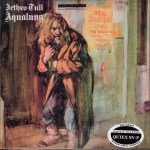
Today’s Bad Heavy Vinyl Pressing Is… Aqualung!

Hot Stamper Pressings of the Music of Jethro Tull Available Now

An audiophile hall of shame pressing and another Classic Records rock LP badly mastered for the benefit of audiophiles looking for easy answers and quick fixes.

By the time the guitars at the end of the title track fade out you will be ready to take your heavy vinyl Classic Record pressing and ceremoniously drop it in a trashcan. (Actually, the best use for it is to demonstrate to your skeptical audiophile friends that no heavy vinyl pressing can begin to compete with a Hot Stamper from Better Records. Not in a million years.)

We Was Wrong on All Counts

Over the course of the last 25 years we was wrong three ways from Sunday about our down-and-out friend Aqualung here.

We originally liked the MoFi from the early 80s. Wrong. Proof positive that in the early 80s I didn’t have good reproduction or know much about records — but I sure thought I did!

When the DCC 180g came along in 1997 we liked that one better. Wrong again. It didn’t have MoFi’s usual midrange suckout and sloppy bass, but it was bad in so many other ways that it is hard for me to believe I ever liked it. But I did, to some degree anyway.

Back then I was a DCC believer, a mistake I would come to recognize once a few more years had passed. See here and here.

And a few years back I was briefly enamored with some original British imports. Wrong for the third time.

After playing more than two dozen pressings of Aqualung in our recent [circa 2010] shootout, it’s pretty clear that the right early Reprise pressings KILL any and all contenders. Forget all the Green Label Chrysalis pressings. Forget the reissues. Forget the imports. It’s original domestic Reprise or nothing when it comes to Aqualung.
(more…)

It’s Official – The Audiophile World Has Lost Its Mind

Hot Stamper Pressings of the Music of Black Sabbath Available Now

A little more than a year ago, back in June of 2023, we reviewed The Cars first album Rhino released on Heavy Vinyl. Here is our review.

We didn’t see the point in pulling our punches — when a record sounds as bad as that Cars album, somebody should stand up and say so, so we did.

We said it was possibly the worst version of the album ever made, its only competition being the Nautilus pressing from 1980, one of those bottom-of-the-barrel I-hope-we-all-learned-our-lesson Half-Speeds from back in the salad days of the remastered audiophile record craze.

(Yes, I admit I bought plenty of that crap back then, and I can’t even say for sure that I could tell how awful the remastered Nautilus pressing sounded. I believed what I was told — that the original pressings needed the ministrations of some guys with a lathe who thought they knew more than the engineers at Sterling when it came to cutting good sounding records. I must have been completely clueless to believe any of it, and now that I look back on those days, it’s obvious I was.)

But enough about me. Let’s talk about the hack who cut this godawful record. If you will allow me to quote myself from my Cars review:

Kevin Gray has struck again. He’s a modern one-man demolition crew, taking exceptionally well recorded analog albums and turning them into the vinyl equivalent of CDs, and bad CDs at that.

What we heard on side one of the new Black Sabbath remaster can be seen from our notes as reproduced below.

  • Nasal, upper midrange boost
  • No real space
  • Hard and smeary
  • Sizzly rain intro
  • Vocals are very present in a harsh and unpleasant way

(more…)

Another Fine Entry for Our Heavy Vinyl Hall of Shame

Hot Stamper Pressings of Orchestral Spectaculars Available Now

UPDATE 2026

It just so happens that I had the time to listen to this work from start to finish twice just last night, 2/11/2026. Saw it performed live just a few months back at Atlanta Symphony Hall.

This wonderful work never gets old.  Next time we do a shootout for the performance we like with Muti on EMI I hope you will see your way to picking up a copy. You won’t regret it.


The Classic Records repressings of Pictures at an Exhibition — whether at 33, 45, or any other speed, on one disc or four –are all godawful sounding.

(Yes, we have auditioned both versions, for as long as we could stand them, which wasn’t long as the sound was painfully bad. The details can be found below.)

Everything that was bad about the worst original Shaded Dog pressings not only hasn’t been fixed, it’s been made even worse!

Yes, we admit to having played a good pressing of LSC 2201 in 2024, but there are just too many bad pressings of the album to bother doing a shootout for it. It’s hard to justify the cost when so few have the sound we are looking for.

The shrillness, the hardness, the sourness, the loss of texture to the strings, the phony boosted deep bass — this is the kind of sound that makes my head hurt and my skin crawl. After a minute or two of listening to sound this bad I’ve had it.

And can you believe that HP put this miserable remastered pressing on his TAS Super Disc List? Sad but true.

(more…)

How to Make All Your Records Sound Like MoFi’s – For Free!

Hot Stamper Pressings of the Music of The Doors Available Now

The Doors debut album is yet another obvious example of MoFi’s predilection for a sucked-out midrange.

Scooping out the middle of the midrange has the effect of creating an artificial sense of depth where none had ever been.

Play any original Bruce Botnick engineered album by Love or The Doors and you will notice immediately that the vocals are front and center.

When the DCC Doors first album was released on vinyl, we noted that the vocals were finally back where they belonged. After having lived with the MoFi for so many years, we’d almost forgotten.

And now of course we can’t tolerate the smear and opacity of the DCC. We like to think we’re simply setting higher standards these days.

The midrange suckout effect is easily reproducible in your very own listening room.

Pull your speakers farther out into the room, and also farther apart, and you can get that MoFi sound on every record you play. I’ve been hearing it in the systems that audiophiles — who made the mistake of inviting me into their homes — we’re proud of for decades.

Once you know what that effect sounds like, and have done the work to fix it in your own system, it takes mere moments to recognize it in any other system.

Fixing a problem is practically the only way to hear what actually is a problem.

(more…)