Record Mysteries

Perhaps you can explain these record mysteries. We sure can’t.

What Good Is Knowing that 2-1B/2-1G Wins Shootouts?

Hot Stamper Pressings of the Music of Neil Young Available Now

Especially considering the fact that the best copy (3/3) with those stampers earned significantly better grades than the worst copy with those stampers (1.5/1.5)*.

Does anyone have a practical way to get around the confusing and exasperating reality that one set of stampers can sound great and the same or a similar set of stampers can sound not much better than passable? Take a spin and see where the wheel of fortune stops.

To be honest, we can’t say there is a practical way to get around these mysteries, but we do know of an impractical one. We’ve been practicing and refining the impractical one we came up with twenty years ago and, according to our customers, it works like gangbusters.

Turns out that all you have to do  is just play lots and lots of different copies of albums and they will tell you how they sound.

In the case of the record you see below, the copies with the best stampers and the copies with some of the worst stampers had the same stampers.
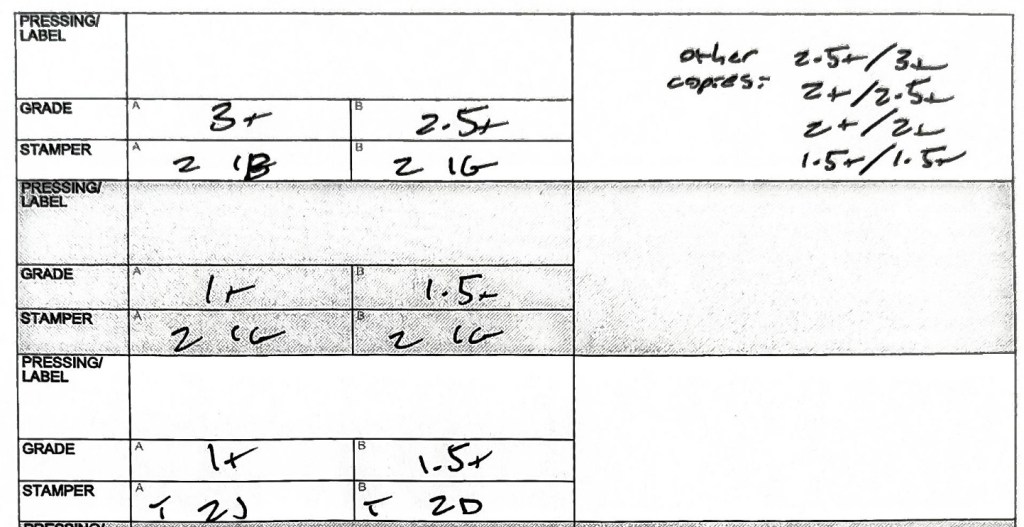
Here is the full stamper sheet for a shootout we did recently.

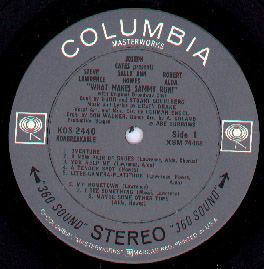
Note that the album you see pictured is not the record we did this particular shootout for.

We are not revealing what mystery title had these stampers and earned these grades for the simple reason that we rarely if ever give out the specific information that identifies the best sounding pressing of any album.

As I’m sure you can understand, we want you to buy the copy with the Hottest Stampers from us, not find one on your own! We’re happy to be somewhat helpful, but naturally we find it necessary to draw the line somewhere, and giving out “the shootout winning stampers” are where we choose to draw it.
(more…)

So Many Columbia Classical LPs Are Bad Sounding – Why Is That?

Hot Stamper Pressings of Vintage Columbia Albums Available Now

UPDATE 2026

This commentary was written in 2005 or thereabouts. Still holds up though.


Columbia classical recordings have a tendency to be shrill, upper-midrangy, glary and hard sounding.

The upper mids are usually nasally and pinched; the strings and brass will screech and blare at you in the worst possible way.

If Columbia’s goal was to drive the classical music lover with high-fidelity equipment screaming from the room, more often than not they succeeded brilliantly. Occasionally they failed.

Some of those pressings we call Hot Stampers, but not many.

Columbia Rock and Jazz

When I play Columbia recordings from the 50s and 60s of Brubeck, Ellington, Miles and other jazz giants, what strikes me is how natural, warm and sweet the sound is. I was playing an old mono Ellington record recently and when the clarinet solo came in, it almost took my breath away. The sound of the instrument was that real. This from a mid-’50s run-of-the-mill Columbia pressing. Those guys (the engineers and the musicians) knew what they were doing.

Sometimes when I read about the extraordinary lengths modern engineers go to in order to use the highest quality audiophile equipment: custom microphones, tape recorders, wire, and the like, it makes me wonder how so many of the best sounding recordings in the world managed to be made without any of that stuff.

RCA didn’t need it for their Living Stereos.

Decca didn’t need it.

Contemporary Records managed to record the best sounding jazz records without it.

How did all those great sounding records get made with such bad equipment?

I guess we’ll never know.

(more…)

Have You Ever Noticed that Sometimes the Highs Come Back on Some Pressings?

More of the music of Sergei Rachmaninoff (1873-1943)

This side one is interesting., I would say that it starts out Super Hot (A++) and within a few minutes becomes White Hot (A+++). The piano is a bit veiled at the start, but within a relatively short period of time that subtle loss of transparency disappears and the piano is RIGHT THERE.

This is not unusual in our experience.

The first track on many records can sound dull, and by the second track the highs come back and the tonality is right from top to bottom. Who knows why?

We speculate that the vinyl did not have time to fully heat up the edge of the record, but that’s speculation, something that has almost no value in our (yours and mine) quest for better sounding records. 1A, 1B, first off the stamper, who gives a flying you-know-what. You have to play the record to know how it sounds.

The rest is BS, proffered mostly by those who are simply too lazy (or busy; some folks do have real jobs!) to do the work of cleaning and playing multiple copies of an album in order to have the evidence they need to support their opinions.

We much prefer real knowledge supported by real evidence, not the other kind.

(more…)

Which Is More Important – The Label or the Stamper Numbers?

Hot Stamper Pressings Featuring the Violin Available Now
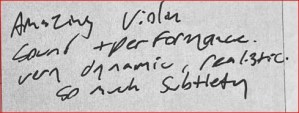
In this case, since the label is different but the stampers are the same, it’s the label that tells you how good your pressing may — heavy accent on the may — sound.

Lately we’ve been having exceptionally good luck with the early label pressings of many of the London violin concerto records we’ve done shootouts for, especially those performed by Ruggiero Ricci.

However, the notes you see below do not belong to the wonderful Sibelius record pictured here.

They belong to another London record. We give out lots of bad stampers on this blog, but almost never do we give out the good ones. (When we do give out the best stampers, we usually keep the title a mystery, as is the case of the record here. To see the other titles whose Shootout Winning stampers have been revealed, please click here. The list to date is short but not to worry, more are on their way.)

The amazingly good sounding pressing on the early label took the recording to another level. Our shootout notes read:

  • Amazing violin sound and performance.
  • Very dynamic and realistic.
  • So much subtlety.

Scroll down to see out Key Takeaways from this shootout.

(more…)

WW, LW, JW? Which Stampers Sound the Best?

Hot Stamper Pressings of Rock and Pop Albums Available Now

UPDATE 2026

In 2005 we acquired more than a dozen sealed copies of a popular Warner Bros. title, how I don’t remember. (For now we are keeping that title, and even the band that recorded it, a mystery. It might have been The Doobie Brothers, but then again, it might not.)


Our story goes like this:

Knowing that no two of these pressings would sound exactly the same, we decided to crack them open, clean them up and play them.

2005 was very early in the development of Hot Stamper Shootouts. By 2007 we were much better at them, and not coincidentally, that is also the year we decided that Heavy Vinyl pressings were just not good enough for us to bother selling.

All three of the major stamper prefixes for Warners were represented in the various matrix numbers: WW, JW and LW. Once we started to play them it quickly became clear that most copies of this record just do not sound very good.

The typical copy is hard, midrangy, opaque, dull and badly lacks Tubey Magic.

Only one of the prefixes — WW, JW, LW — actually has any hope of sounding good, and surprisingly it’s not the one I would have expected it to be. Live and learn, right?


We liked either JW or WW back in 2005, I don’t remember which, but the evidence we compiled over the ensuing twenty years contradicted that finding.

Live and learn is right, because since the dark days of 2005, we have done this shootout many times, at least five by my count, and it turns out that the stampers we tend to like are exactly the ones we tend to like in general for Warner Bros.

Here is the full stamper sheet from a shootout we did not long ago laying out the stampers we like for this mystery title: LW, with low numbers.

(more…)

Symphonie Fantastique – Three Mastering Options

Hot Stamper Pressings of the Music of Berlioz Available Now
UPDATE 2026

Years ago we played a reissue of the title you see pictured which prompted us to make some observations and ask some questions about the approach the mastering engineer might have taken.


And this one comes complete with the bonus 7″ entitled “Berlioz Takes a Trip,” in which Bernstein explores the work “with musical illustrations by the New York Philharmonic.”

Clocking in at around 45 minutes, Symphonie Fantastique is a difficult work to fit onto a single LP,  which means that the mastering engineer has three options when cutting the record:

  1. Compress the dynamics,
  2. Lower the level, or
  3. Filter the deep bass.

On this side two it seems that none of those approaches were taken by the engineer who cut this record in the early 80s — there’s plenty of bass, as well as powerful dynamics, and the levels seem fine.

How he do it? Who knows? Like so much in the world of records, it’s a mystery.

(more…)

What Exactly Does Van Gelder Stamped in the Deadwax Tell You?

Hot Stamper Pressings of CTI Titles Available Now
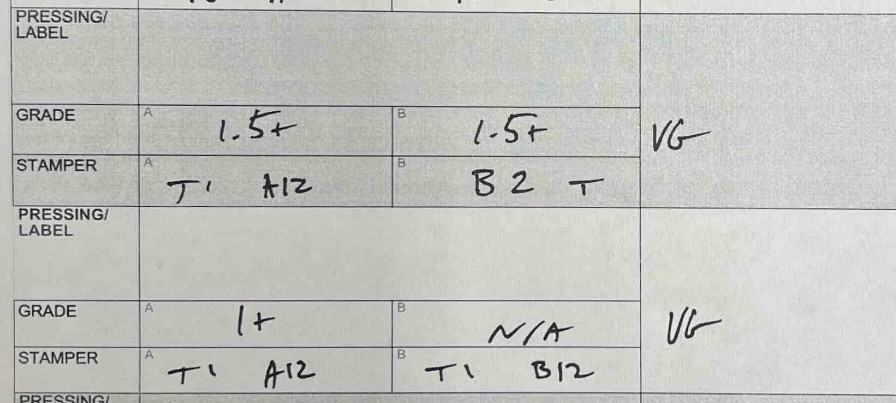
The section of the stamper sheet we wrote up after our most recent shootout belongs to George Benson’s White Rabbit album, the one released by CTI in 1972.

We think these stampers illustrate an important reality regarding the variability of record pressings, and it’s one that we run into on regularly during shootouts.

Keep in mind that the notes you see were made without the listener knowing what the stamper numbers were for the copy being evaluated.

Some relevant facts:

  • Rudy Van Gelder cut all the original domestic pressings for the album that we played in our shootout since those are the only ones we know of to have the potential for Hot Stamper sound. (Hint: forget the reissues, imports, etc.)

(more…)

Is It Hard for You to Imagine Similar Stampers Sounding So Different?

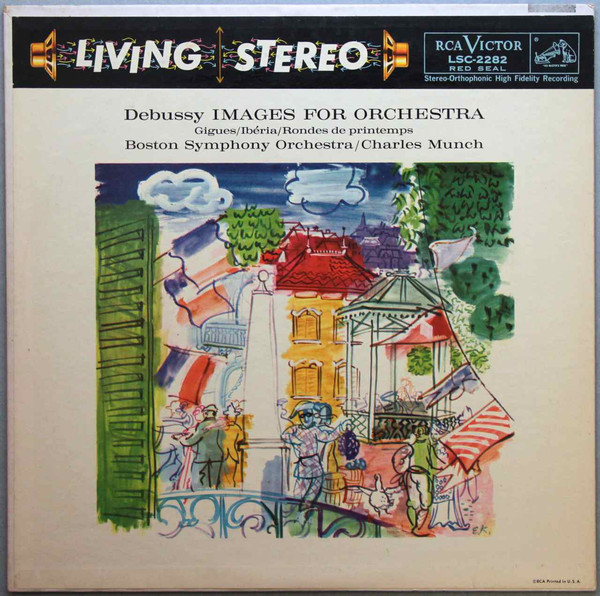
Hot Stamper Pressings of Living Stereo Recordings Available Now

Subtitle: it’s also hard to imagine that space and time are two aspects of the same reality, spacetime, but that’s why we employ rigorous scientific methods to test our theories and — in some cases — prove ourselves wrong.

We here at Better Records like testing records. We want to know if the predictions we make about the titles we play are accurate, which is simply to say, do they match the data derived from our blinded shootouts?

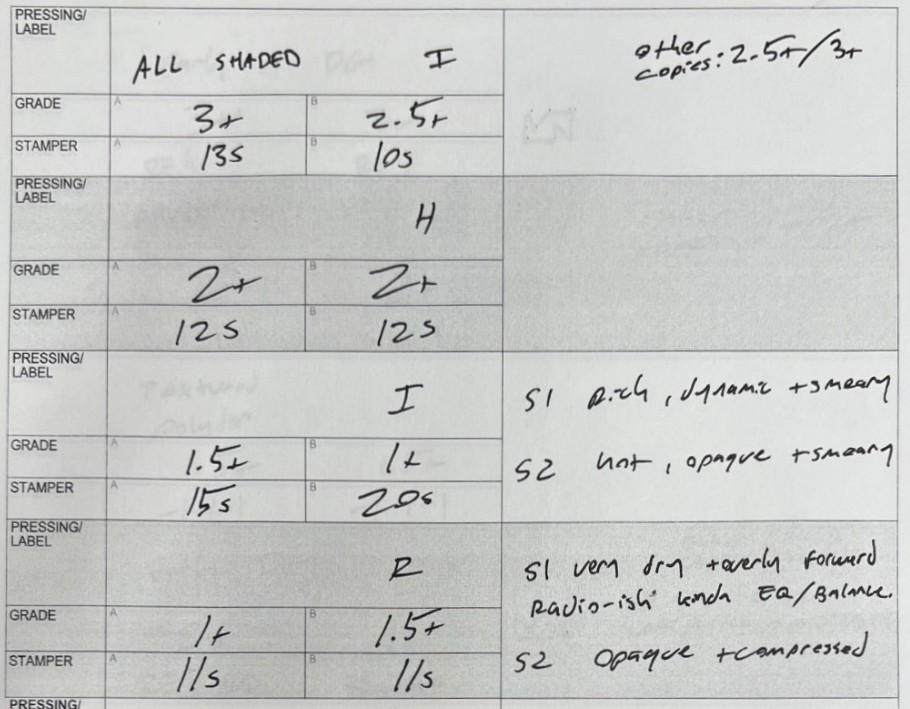
In the case of the stampers for this mystery title, it turns out that whatever intuitions we may have had going in would have been no help at all. Who could possibly predict that, for sound quality on side one, 13s would substantially beat 12s, 12s would beat 15s, and that 15s would beat 11s.

(more…)

One of Our Best Sounding Pressings of Revolver Lacked Space for Some Reason

Hot Stamper Pressings of Revolver Available Now

On side one we played I’m Only Sleeping first, followed by Taxman.

On side two we started with And Your Bird Can Sing, followed by Good Day Sunshine.

You may notice that there seems to be a pattern in the way we pick which songs of each side to do first.

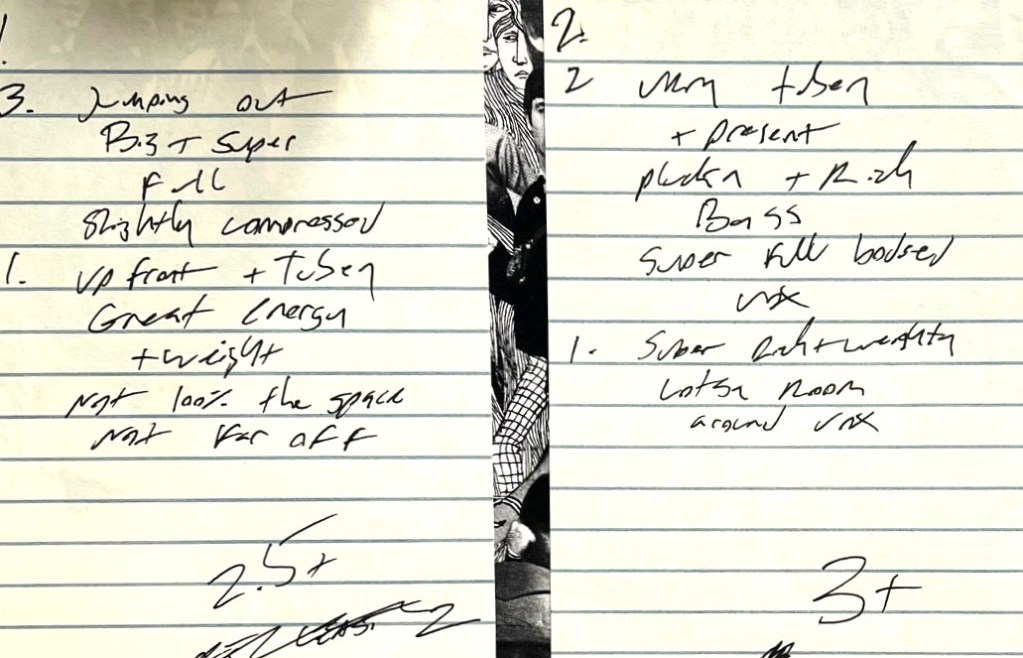
As you can see from the notes, side two of our most recent White Hot stamper Shootout Winner was doing everything right.

The second track was very tubey and present. Good Day Sunshine, the first track, was super rich and weighty, with lots of room around the vox. (I hope you can read our writing. If you can’t, just email me and I will try to find the time to transcribe the rest of the text.)

However, we had a side one that was slightly better than the side one you see here.

The Second Round

When we played the two best copies back to back, side two of this copy came out on top, earning a grade of 3+, but the side one of another pressing showed us there was even more space in the recording than we noticed the first time around.

(more…)

How Do the Early Pressings of this Mozart Piano Concerto Album Sound?

Hot Stamper Pressings of the Music of Mozart Available Now

About fifteen years ago (2010) we played an original pressing of this title that we really liked. It’s the one with the rare cover you see pictured, and might have actually been the first one we had ever found in audiophile playing condition. We had a devil of a time finding more copies, but we were convinced that the early pressings were clearly the best.

More recently we were able to acquire quite a variety of different pressings for an upcoming shootout and were fortunate to be able to include one of the stereo originals for the first time in many years.

We started out with high hopes, but once the early pressing began to play, our hopes were dashed fairly quickly.

Our notes for the original pressing read:

  • Overly rich and weighty
  • Dynamics/life are gone.
  • Side two has one of the most boomy sounding pianos I’ve ever heard.

In other words, it just sounded like an old record, and not a very good one at that. The world is full of them.

Only an old school audio system can hide the faults of a pressing such as this one. The world is full of those too, even though they might comprise all the latest and most expensive components.

Were we wrong years ago? Hard to say. That copy from many years ago is gone.

Three things we always keep in mind when a pressing doesn’t sound the way we remember it did, or think it should:

(more…)