Skeptical Thinking Is Key to Finding Better Sounding Records
UPDATE 2026
This commentary was written circa 2006. The Hot Stamper world was very different in those days. A few dozen had been done starting in 2004, and probably not nearly as well as they should have been, truth be told.
This was unexplored territory, a new world. At the time we had no way of knowing how much there was to learn and how much time and effort would go into learning it.
Thousands of shootouts later we have a pretty firm grip on how to go about finding the best sounding pressings of the greatest music ever pressed on vinyl. Those recordings, with sound that is dramatically superior to those that have come along since, are why this blog exists. (The blog also allows me to promote 100+ personal favorites that I think should be more popular with my fellow audiophiles.)
 Our Story, Circa 2006
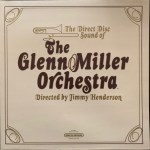
Years ago one of our good customers wrote to tell us how much he liked his Century Direct to Disc recording of the Glenn Miller big band, one of the few truly amazing sounding direct discs that offered music actually worth listening to. This was an actively touring big band, not a group of studio cats trying to make a record out of some charts somebody managed to cook up.
And you can read all about the killer copy we discovered a few years back here, complete with our shootout notes. (The notes can also be seen at the bottom of this post.)
Which brought me to the subject of Hot Stampers. (For those new to the idea, here are the short versions of what they are and how one goes about acquiring them.)
Hot Stamper pressings of jazz or popular music are almost always going to be multi-track, tape recordings with plenty of overdubbing and processing, about as far from purist live-in-the-studio performances recorded directly to disc as you can get.
They will invariably suffer a great many compromises, especially when compared to the approach of an audiophile label trying to eliminate all sources of distortion in the pursuit of higher fidelity. In the case of direct to disc recordings, this means the losses that result from the use of analog tape.
But when they do that, they almost always fail.
How many Direct Discs sound like that Glenn Miller? A dozen at most. The vast majority are just plain awful. I know, I’ve played practically every one ever made. For more than a decade I made a living selling them.
Thankfully that is no longer the case, although we do have a handful of direct discs that we still do shootouts for, such as The Three, Glenn Miller, Straight from the Heart and the odd Sheffield.
It should be telling that the best version of The Three is made from the tape backup for the direct to disc session.
 Compromised Recordings
What we do play in our shootouts day after day are those compromised, mass-produced pressings.
The right Londons and Shaded Dogs. Columbia and Contemporary jazz. Brewer and Shipley. Sergio Mendes. The Beatles. The Doobie Brothers for Pete’s sake!
Why? Because those are the pressings potentially capable of communicating the joy and power of the music. They allow you to forget about the recording and just listen.
You can’t do that very often with the CD of the album. You can’t even do it with most of the vinyl pressings you run into. You certainly can’t do it with the vast majority of 180 gram LPs being made today, not in our experience anyway.
You have to have the right pressing. In simplest terms, more than anything else that’s what a Hot Stamper is: it’s the pressing that came out right.
It’s the one that really lets the music come through, regardless of the manifold compromises that were made along the way.
Doobies – We Make an Exception
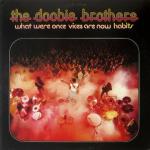
Good example: What Once Were Vices…, a Hot Stamper that had never made it to the site.
UPDATE 2026
Keep in mind that this was back in the day when, along with handfuls of Hot Stamper pressings, we were also selling uncleaned, untested records the way other record dealers were — the way practically all used record dealers do to this day. Glad to be out of that business. I prefer to know if the record I am selling is any good or not, and I would hope that our buyers feel the same way. If they want substandard quality pressings they have plenty to choose from!
A very good customer saw I had an unpriced copy up and wanted to know what it sounded like, how quiet it was and how much it would cost. Normally I just can’t take the time to do the work necessary to answer those questions, to really understand the sound of an unfamiliar title (especially in this case, not being a fan of early era Doobies). It typically requires cleaning and playing lots of copies and listening to them critically, trying to find the tracks that tell the story of the sound. This is very time consuming, as I’m sure you can imagine. But we have to do it; it’s our bread and butter here at Better Records. We just can’t do it NOW, because there are dozens of other albums we’re in the middle of investigating and adding a 25th causes me to be even testier than I usually am.
But for some reason in this case I made an exception to that policy. I guess I was curious about the album, one I hadn’t played in twenty years. The grooves looked good. It was very clean. Already Disc Doctored. Why not throw it on the table?
So I did, and it must have been a good stereo day, the electricity must have been cooking, because it sounded FABULOUS. Much better than I expected. Just right in fact.
So now I had to know how other copies would sound. Maybe they’re all good. Playback technology has come a long way in the last twenty years; maybe the Doobies were making great records all along and I just couldn’t play them right.
Alas, none of the other copies sounded like this one. (The Japanese pressing I had put away for a rainy day shootout got about ten seconds of play before I recognized it had a bad case of spitty, grainy, Japanese-pressing sound. It went right in the trade pile.)
The good one had LIFE. The others sounded fairly dead in comparison. Probably made from a sub-generation EQ’d dub, which is what would be used to master most copies. Sad but true.
Enjoyment
What did I hear on this hot copy? The usual things we talk about around here. I won’t bore you by repeating them. More importantly, much more importantly, is the fact that I found myself really enjoying the music. Really liking the songs. Singing along, (off key of course). Thinking: “Hey, these old Doobie Brothers are pretty talented! This is a good album. I’m really getting into this.”
And this is precisely my point. The right LP will communicate the music so well that you’ll forget about the stereo, you’ll forget about the recording, you’ll just find yourself enjoying the music. The majority of LPs won’t let you do that, audiophile labels included.
Living and Breathing
The best classical recordings of the 50s and 60s, compromised in every imaginable way, are sonically and musically head and shoulders above virtually anything that has come after them. The music lives and breathes on those old LPs. Playing them, you find yourself in the Living Presence of the musicians. You become lost in their performance. Whatever the limitations of the medium, such limitations seem to fade quickly from consciousness. What remains is the rapture of the purely musical experience.
That’s what happens when a good record meets a good turntable. And that includes a good Doobie Brothers record.
We live for records like these. It’s the reason we all get up in the morning and come to work, to find and play good records. It’s what this site is all about — offering the audiophile music lover recordings that provide real musical satisfaction.
It’s hard work — so hard nobody else seems to want to do it — but the payoff makes it all worthwhile. To us anyway. Hope you feel the same. Based on our testimonials I’m glad to see that many of you do.
Further Reading
- New to the Blog? Start here
- Finally, off to the races (audio-wise)
- How can you tell when the conventional wisdom is wrong?
