good-audio-advice

Letter of the Week – “The Nutcracker set I’d previously asked to return is sounding incredible.”

Hot Stamper Pressings of the Music of Tchaikovsky Available Now

One of our good customers had this to say about some Hot Stampers he purchased recently:

Tom, I’ll have a couple of returns for you from recent orders:

Tchaikovsky / The Nutcracker (Complete Ballet)

Surprised to be returning this, but it just doesn’t do much on my system. Sounds like any old good discogs copy, not WHS for me. Cost wouldn’t have been a factor here for a copy that ’sang’ more.

He then bought some new, bigger speakers, because if you are going to play a work like The Nutcracker, you need big speakers if you want it to sound anything like what you would hear in a concert hall.

The good news is with my new speakers + amp setup, the Nutcracker set I’d previously asked to return is sounding incredible. Previously it sounded little different to your average discogs copy, but I can hear now how much body I was missing with the smaller Harbeths. The drums are slammin’, the sweet treble notes are dropping like luminous honey, the field is deep and rich. My only beef is that this performance is a bit ‘fast’, in terms of tempo, but this is by design. So, will hang on to this (which leaves $500 in your pocket).

(more…)

Cartridge Tweaking and Turntable Setup Advice

More Turntable Setup Advice

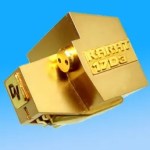
Playing so many records every day means that we wear out our Dynavector 17DX cartridges much more often than most consumers would. They typically last us about three or four months.

This requires us to regularly mount a new cartridge in our Triplanar arm.

Once a new cartridge is broken in (50 hours minimum), we then proceed to carry out the fine setup work required to get it sounding its best. We do that by adjusting the VTA, azimuth and tracking weight for maximum fidelity using recordings we have been playing for decades and know well.

For the longest time our favorite test discs for this purpose have been these three:

  1. Bob and Ray Throw a Stereo Spectacular,
  2. Tea for the Tillerman, and
  3. Led Zeppelin II.

To be honest, I was the only guy on the listening panel using Bob and Ray. I have played that record at least 500 times, perhaps 1000, and would be lost without it.

Our listening guys — much younger and not nearly as interested in correctly reproducing The Song of the Volga Boatmen as I was — preferred numbers two and three, and of course those work fine too. In fact, when setting up our new studio, I came to realize Bob and Ray were not enough to get the room right, a subject I wrote about here.

We are in the process of making some lists (more lists! You can never have too many!) for records we’ve found to be good for testing, tweaking and tuning your system, your room and your front end setup, among other things. You may want to check them out.

These are the records that challenged me and helped me to achieve more progress in audio. If you are serious about improving your playback, these are some of the best records we know of to help get you to the next level.

(more…)

The Planets – Proper VTA Adjustment Is Critical

More of the music of Gustav Holst

Accurate VTA adjustment for classical records is critical to their reproduction. If you do not have an arm that allows you to easily adjust its VTA, then you will just have to do it the hard way (which normally means loosening a set screw and moving the arm up and down until you get lucky with the right height).

Yes, it may be time consuming, it may even be a major pain in the ass, but there is no question in my mind that you will hear a dramatic improvement in the sound of your classical records once you have learned to precisely adjust the VTA for each and every one of them. We heard the improvement on this record, and do pretty much on all the classical LPs we play. All records really.

VTA is not a corner you should be cutting.

Its careful adjustment is critical. Of course, so are anti-skate, azimuth and tracking weight. The links below have a fair amount of advice on turntable setup which might be worth checking out.

By The Way

If you want a good sounding pressing of The Planets, our favorite by far is Previn’s reading on EMI from 1974.

(more…)

Let’s Face It – Some Truly Great Records Are Almost Always Noisy

Hot Stamper Pressings of the Music of Paul McCartney Available Now

Some records are consistently too noisy to keep in stock no matter how good they sound. McCartney’s first album is one of them.

Copies of McCartney’s first can rarely be found on the site, but if there are any copies available, they are most likely in our section for records with condition issues, which contains about 30% of all the Hot Stamper pressings active on the site at any one time.

Hot Stampers are almost exclusively vintage vinyl pressings — “old records” you might say — and old records, even after a good cleaning, are rarely quiet. (We lay out the particulars of our grading system here.)

One of our customers noted that the Hot Stamper we sent him of McCartney’s first album was a bit noisier than he would have liked. We replied:

As for surface issues, we wish we could find them quiet, but that is simply not an option, especially considering how dynamic the recording is. In the listing we noted:

(more…)

How We Test Equipment Like the Townshend Seismic Platform

Basic Audio Advice — These Are the Fundamentals of Good Sound

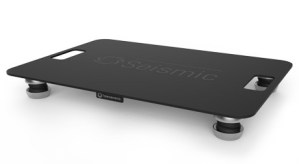
A few years back I discovered something wonderful about the Seismic Sink I was using under my turntable to control vibration.

In our experience, vibration control is one of the most important revolutionary advancements in audio of the last twenty years or so.

We sell the Seismic Sink and this is what I wrote to a customer who recently bought one:

Play your most complex test discs, the ones that are the hardest to get to sound right. Classical is the toughest test if you have some, but Pet Sounds is tough too. [I knew he was a fan and had a good copy of the album.]

Listen to one or two for a good while, at least 20-30 minutes, to know exactly what you are hearing on the tracks you know are the most difficult to get to sound right, the ones with the most problems.

Put the sink under the table. (You can also put it under your receiver, that works great too.)

Then play those tracks again.

Go back and forth a few times.

It should be pretty obvious what is going on.

Then read Robert Brook’s post.

Here is a very special tip.

The sound changes depending on how the seismic sink is “loaded.”

This means two things:

Where the weights are sitting on the sink.

    • For my integrated amp I have it all the way to the front of the sink. Sounds clearly better that way.
    • For the turntable, I have it weighted down with thin but heavy steel plates, about one quarter inch thick, about 4 inches by 8 inches. You can get them at Home Depot and similar places.

(more…)

Letter of the Week – “These records are all making clear that I need bigger speakers. Much bigger. Twice the size.”

Hot Stamper Pressings of the Music of Cat Stevens Available Now

One of our good customers had this to say about some Hot Stampers he purchased recently:

Goddamit Tom, these records are all making clear that I need bigger speakers. Much bigger. Twice the size. In a bigger room, with treatments. Your stuff makes the path forward very clear. They need the dynamics I’m sure you’re getting. I can hear what is missing.

I don’t know if that’s a good thing, since I was generally unaware of this previously, and can’t afford that level of upgrade for a while.

We’re talking a few years out to buy a house (we’re in an apartment on the corner of the building over a garage, so no neighbor noise problems but the room is only 15×14.5 with average height ceilings) and some big upgrades.

Dear Sir,

You and I seem to be on the same page. The vast majority of audiophiles never get to the higher levels because of all the compromises they make in their rooms, speakers, wires and everything else. They end up with a collection of crap heavy vinyl because their systems don’t let them hear what is really going on with the best vintage pressings.

Call it a breakthrough of a sort. The long road ahead is an expensive one, but I’ve always been of the belief that the money you spend on audio — if you do it right — rewards you a hundred times over in listening pleasure, and it does so for as long as you live, which I hope is many more decades, at least.

These are records that need to be played loud. Until you have a bigger room and bigger speakers, they are not going to be easy to get to sound right.

I ended up building a playback studio that is 17 by 22 with a 12 foot high ceiling, a concrete slab floor and six inch thick double drywall for walls, and dedicated electrical circuits, but it took a lot of work to get it to sound right.

Oddly enough, what made the biggest difference was getting the electricity right: computers and cleaning machines on isolation transformers, stuff unplugged, stuff left plugged in that made the sound better, lights hooked up to batteries rather than plugged in to the main circuits, etc.  Night and day better that way. (More on unplugging here.)

This work is not hard for me, I’ve been doing it for decades, but you have one advantage over everyone else: you have good sounding records to test with.

You have Hot Stampers! The records are correct. If they sound wrong, it’s not their fault. They are not the problem. (more…)

Our Playback System – And Why You Shouldn’t Care

Advice to Help You Make More Audio Progress

Below you will find a list of most of the equipment we have been using over the last twenty years or so to carry out our Hot Stamper pressing evaluations, or “shootouts” as we like to call them.

Naturally the reality of the 80/20 Rule comes into play here — 80% (probably more like 90 or 95%, truth be told) of the sound is what you do with your audio system, 20% (or 10 or 5%) of the sound is the result of the components you own.

We like to say it’s not about the audio you have, it’s about the audio you do: how you set up your system, what you’ve done to treat your room, how good your electricity is and all the rest of it.

  • Our VPI Aries (original, not the latest model) with 
  • Super Platter (no longer made) and
  • TTWeights Carbon Fiber Platter (a big upgrade, no longer made).
  • VPI Synchronous Drive System (as of 2016 now sitting on a Townshend Seismic Sink).
  • Triplanar tonearm.
  • Dynavector 17dx.
  • Aurios (no longer made), which sit on a
  • Townshend Seismic Sink (another big upgrade).
  • EAR 324p phono stage
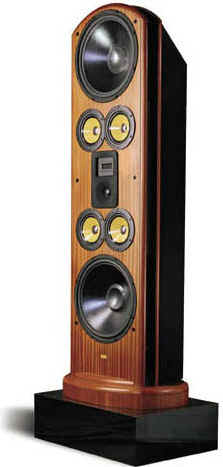
  • We love our modified Legacy Focus speakers. Even more now that they have much improved high frequency extension courtesy of Townshend Super Tweeters.
  • Mix in extensive room treatments, aided inestimably by three pairs of Hallographs (as we like to say, there is practically no Hi-Fi without them), more than thirty years of experience and endless hours of experimentation and you have a system that can separate the winners from the losers like nobody’s business.
  • Exactly like nobody’s business, because nobody does it in this business but us. Having heard hundreds of systems over the years, it’s an open question as to whether anyone else could do what we do even if they tried.

(more…)

Focus Is the Hidden Driver of Excellence

More on Developing Your Critical Listening Skills

Every day Delanceyplace sends me email book excerpts, and the one that came today struck me as particularly relevant to the devilishly difficult audio hobby many of us have been engaged in for most of our adult lives. Some of their excerpts are seen below. (Italics added by me.)

I myself wrote a commentary back in 2006 about the 10,000 hour rule, which I have linked below delanceyplace’s piece, along with other commentaries I think you might enjoy.


Focus: The Hidden Driver of Excellence by Daniel Goleman.

“The ‘10,000-hour rule’ — that this level of practice holds the secret to great success in any field — has become sacrosanct gospel, echoed on websites and recited as litany in high-performance workshops. The problem: it’s only half true.

“If you are a duffer at golf, say, and make the same mistakes every time you try a certain swing or putt, 10,000 hours of practicing that error will not improve your game. You’ll still be a duffer, albeit an older one.

“No less an expert than Anders Ericsson, the Florida State University psychologist whose research on expertise spawned the 10,000-hour rule of thumb, told me, “You don’t get benefits from mechanical repetition, but by adjusting your execution over and over to get closer to your goal” .

“Apart from sports like basketball or football that favor physical traits such as height and body size, says Ericsson, almost anyone can achieve the highest levels of performance with smart practice. …
“Ericsson argues that the secret of winning is ‘deliberate practice,’ where an expert coach takes you through well-designed training over months or years, and you give it your full concentration.

“Hours and hours of practice are necessary for great performance, but not sufficient.

How experts in any domain pay attention while practicing makes a crucial difference.

For instance, in his much-cited study of violinists — the one that showed the top tier had practiced more than 10,000 hours — Ericsson found the experts did so with full concentration on improving a particular aspect of their performance that a master teacher identified.

Smart practice always includes a feedback loop that lets you recognize errors and correct them — which is why dancers use mirrors. Ideally that feedback comes from someone with an expert eye and so every world-class sports champion has a coach. If you practice without such feedback, you don’t get to the top ranks.

“The feedback matters and the concentration does, too — not just the hours. …

(more…)

Carlos Santana Knows: Louder Is Better

santasanta_1401s

Hot Stamper Pressings of the Music of Santana Available Now

The commentary below refers to an experience I had playing the album on my Legacy Whisper speakers in the late-90s.

This album needs to be played loud. I mean really loud. Years ago I used to demonstrate how important it was to have the level up good and high on the song Waiting.

Back in the mid-90s, I had somehow lucked into my first shockingly good Hot Stamper copy.

As a demonstration of what the Legacy Whisper system and its 8 fifteen inch woofer/midrange drivers could do, I would play the first minute or so of the track at a pretty good level. There’s lots of ambience, there’s a couple of guys who shout things out from way back in the studio, there’s a substantial amount of deep bass, and the whole recording has a natural smooth quality to it, which is precisely what allows you to play it at loud volumes.

Then I would turn it up a notch, say about 2-3 DB. I would announce to my friends that this is probably louder than you will ever play this record, but listen to what happens when you do. The soundstage gets wider and deeper, all those guys that shout can be heard more clearly, you start to really feel that deep bass, and when the song gets going, it really gets going. The energy of the music would jump to another level.

Then I would turn it up another 3 DB or so. At this point I would say that “this is how loud it should be played.” All the effects I mentioned earlier would become even more pronounced — wider, deeper, more clear, more powerful. The record was actually starting to sound like live music in my living room.

But of course, I was showing off a system that few could afford and that nobody in his right mind would put out in the middle of his living room. You would need a custom sound room, and a big one at that, to fit such a massive speaker and be able to turn it up.

But I was a bachelor at the time, and my live-in girlfriend at the time knew that she would have to go before the stereo did.

Unboosted

It was pointed out to me one day that the reason this record can be played loud is that, unlike most popular recordings, this album has a natural, unboosted top end, which means that the louder you play it, the more real it sounds. You can’t do that with most records. Many records have a top end that’s boosted to sound good at lower volumes. Not so with the first album by Santana. [For more records with the kind of vintage smooth sound we find so appealing, click here.]

(more…)

In the Market for New Speakers? – Will They Handle the Size and Energy of Take It Easy?

Hot Stamper Pressings of the Music of The Eagles Available Now

Take one of our killer Hot Stamper pressings with you when you go shopping for speakers. The speaker that gets the POWER and ENERGY of this music right is the one you want.

This record will separate the men from the boys thirty seconds into Take It Easy.

It will be glaringly obvious who’s got the piston power and who doesn’t.  

With big bass and huge scope, this may become your favorite disc for showing your friends just what analog is really capable of. No CD ever sounded like one of our killer Hot Stamper pressings.

When the big chorus comes in on Take It Easy — one of the toughest tests for side one — you will be amazed by how energetic and downright GLORIOUS these boys can sound. Believe us when we tell you, it’s the rare copy that can pass that test.

Choruses Are Key

The richness, sweetness and freedom from artificiality is most apparent on Breakfast in America where you most always hear it on a pop record: in the biggest, loudest, densest, climactic choruses.

We set the playback volume so that the loudest parts of the record are as huge and powerful as they can possibly grow to be without crossing the line into distortion or congestion.

On some records, Dark Side of the Moon comes instantly to mind, the guitar solos on Money are the loudest thing on the record. On Breakfast in America the sax toward the end of The Logical Song is the biggest and loudest element in the mix, louder even than Roger Hodgson’s near-hysterical multi-track screaming “Who I am” about three quarters of the way through the track.

Those are clearly exceptions though. Usually it’s the final chorus that gets bigger and louder than anything else.

(more…)