*YouTube

The Music Must Command Your Attention

More Youtube Videos from The Skeptical Audiophiles

The Audiophile Skeptics – Co-Hosted by Robert Brook

Why play records at lifelike levels? Why play music sitting in a darkened room all by yourself, free from distractions, with nothing to do but listen?

Because it’s the best, if not the only way to achieve the deepest possible emotional and intellectual connection with the music you play. I’ve been listening to my records that way for fifty years and I highly recommend it.

Robert and I discuss the inexpressible joy that comes from a good recording reproduced at the highest levels of fidelity we can manage. (In my case it was Heart Like a Wheel, an album I fell in love with in 1974 and regularly listen to still. I’ve written about it quite a bit over the years. Here is a good place to start.)

Robert mentions Stravinsky’s Rite of Spring. Having seen it performed live, it was an unforgettable experience for him, as orchestral concerts tend to be. It is music that we also know well.

To know what that means for at least the two audiophiles you see pictured below — two guys who have worked hard to build systems that are capable of playing records of the highest fidelity — please watch the video.

If you’re looking for a different take on the subjects we will be addressing with our new channel, we are happy to offer them for your viewing pleasure. We hope you will find them edifying as well.

(more…)

Violin Recordings Are Great for Testing Your Setup

Welcome to Better Records, Home of the Best Sounding Vinyl Ever Made

Yes, violin records are indeed great for testing your front end setup (and, to be honest, every other aspect of your system), but don’t make the mistake I made for the first thirty years I spent in audio.

The mistake I made, over and over again, throughout my formative years, was to blame the bad sound of whatever pressing of an album I happened to own on the actual recording from which it was made.

Robert and I talk about that mental error and lots more in today’s video.

In this discussion, Robert mentions how bad the Beethoven “Kreutzer” Sonata (LSC 2577) can sound on some systems when they are not set up right.

We’ve long promoted the idea that violin recordings are great for tweaking and tuning your front end, something that Robert is well aware of too.

I mention that there are two recordings of the work on Living Stereo and get my facts wrong. LSC 2377 is the earlier recording, LSC 2577 the later (and better sounding).

Then the discussion turns to Frampton Comes Alive, a record that we spent many decades in search of the right pressings. We noted in our listing:

It’s ridiculously hard to find good sound for this record. Most copies are thin, dry and transistory. And it’s time-consuming to clean and play as many copies of this double album as it takes to find enough Hot Stampers to make the endeavor worthwhile. When this album doesn’t have the sonic goods, it’s nobody’s idea of a good time.

A great copy like this one will remind you — we hope — what made everybody so crazy for this music back in the 70s.

And like every audiophile ever born, I blamed the recording for the bad sound of not only this title but all the other records I owned, completely oblivious to the fact that there were well-mastered pressings sitting in the record bins — they just weren’t the ones that were sitting on my record shelves.

I think we did our first shootout for the album in 2016, a mere 40 years after it first came out. I wrote more about the subject of commitment issues we face when trying to track down better sounding pressings of the album we love. You can read about it here.

(more…)

The Audiophile Skeptics on Testing

Welcome to Better Records, Home to the Best Sounding Vinyl Ever Made

The Audiophile Skeptics – Co-Hosted by Robert Brook

If you’re looking for a different take on the subjects we will be addressing with our new channel, we happily offer them for your viewing edification and pleasure. Click here to be taken to our channel.

If you would like to know more about audio and records, please feel free to ask any questions you may have in the comments section, or send them directly to me at tom@better-records.com. And whatever you do, stay skeptical.


Further Reading

(more…)

Robert Brook Has a Story to Tell on The Audiophile Skeptics

More Youtube Videos from The Audiophile Skeptics

Robert Brook and I have now started a YouTube channel whose purpose is to help audiophiles gain a better understanding of analog records and the many difficulties one encounters when playing them. Here I speak from experience, as does Robert.

We felt that it would be worthwhile to briefly talk about our backstories, so that viewers could appreciate why we choose to call ourselves “Skeptical Audiophiles” in the first place. This is Episode 2. Episode 1 can be found here.

If you’re looking for a different take on the subjects we will be addressing with our new channel, we happily offer them for your viewing pleasure.

If you would like to know more about audio and records, please feel free to ask any questions you have in the comments section, or send them directly to me at tom@better-records.com. (The blog has hundreds of letters — from customers and critics alike — you may enjoy reading as well.)

One of the more popular pieces Robert has written recently was entitled: The biggest misconception about modern audiophile records. We feel it is well worth reading.

Robert’s Approach

Robert has methodically and carefully — one might even say scientifically — approached the various problems he’s encountered in this hobby by doing the following:

(more…)

The Audiophile Skeptics on YouTube

More Youtube Videos from The Skeptical Audiophiles

The Audiophile Skeptics – Co-Hosted by Robert Brook

Robert and I have now started a YouTube channel. Its purpose is to help audiophiles gain a better understanding of the mysteries of the analog record and the difficulties one encounters when playing them. Here I speak from experience, as does Robert. Hence the maiden voyage of our new channel!

We felt that it would be worthwhile to briefly talk about our backstories, so that viewers could see why we chose to call ourselves “The Audiophile Skeptics” in the first place.

Speaking for myself, I hope to encourage audiophiles to be more skeptical of the claims made by the huge numbers of audio experts who have popped up on Youtube, seemingly out of nowhere.

It’s as if there had been some kind of big bang in the audio universe. Vast numbers of these channels have exploded onto the scene, all positively overflowing with record and audio advice. Where on earth have so many accomplished, knowledgeable experts been hiding all these years?

When I see the claims made by these individuals, rarely do they comport with my years of experience in the world of audio. With these videos I hope to be able to explain what I mean by that in greater detail. (The blog you are now on has a commentaries discussing every aspect of records and audio that I could come up with, all of it informed by actually playing lots of records and working at improving my stereo, starting all the way back in the early 70s.)

(more…)

Robert Brook Shoots Out Brilliant Corners

Robert Brook has a blog which he calls
A GUIDE FOR THE DEDICATED ANALOG AUDIOPHILE

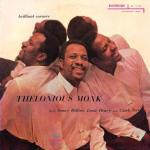
Below you will find a link to the shootout Robert recently conducted for Thelonious Monk’s amazing Brilliant Corners album on OJC.

(more…)

Robert Brook’s Guide to Legrand Jazz on Impex

Robert Brook has a blog which he calls
A GUIDE FOR THE DEDICATED ANALOG AUDIOPHILE

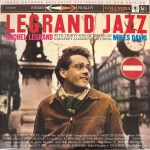
Robert tries to remain positive when choosing the words that would best describe the award winning Impex release of Legrand Jazz. In the end he goes with the spoken word over the written one.

Years ago I wrote about how important the Legrand Jazz album was for me in my growth as a critical listener. It’s yet another example of an album that helped make me a better audiophile by showing me the errors of my tweaking and tuning ways.

Let’s watch the video and see what Robert has learned about Impex’s recent release.

Legrand Jazz (featuring Miles Davis) – the 2019 IMPEX Double 45 rpm

Michael Fremer gives the Impex pressings an 11 for sound. He writes (emphasis added):

“This IMPEX reissue is sourced from an “analog mix-down transfer of the original 1958 work tape by Mark Wilder at Battery Studios” and cut by Chris Bellman and Bob Donnelly at Bernie Grundman Mastering on Grundman’s all-tube mastering system. I have a clean, original 6-Eye pressing that this superbly pressed reissue betters in every way. This will make both your stereo and your heart sing. Some of the greatest jazz musicians of that or any era wailing and clearly having a Legrand time. Limited to 3000 copies. Don’t miss it!”

Who are you going to believe, the Self-Appointed Vinyl Experts of the World and Bestowers of Prestigious Audio Awards (awards which you may have never heard of; I sure hadn’t), or some guy who’s just dedicated to being an Analog Audiophile and knows a good record when he hears one? (Or doesn’t hear one, as the case may be.)

Like Robert, I tried being kinder and gentler, but it didn’t take. I may resolve to try harder in 2024 2026. Then again, I may not. If we’re nicer to the people currently making Heavy Vinyl records, aren’t we running the risk, to cop a line from the late, great P.J. O’Rourke, of encouraging them?

(more…)

Our Filmed Tapestry Shootout Was a Real Shocker

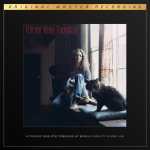
The Washington Post article that Geoff Edgers wrote includes a video of a little shootout we did for Tapestry, using, without my knowledge, the MoFi One-Step, a Hot Stamper pressing, and a current, modern, standard reissue of the album. Could I spot the Hot Stamper without knowing what record was playing?

First up (and of course unbeknownst to me), the MoFi. My impressions from the video:

That’s probably tonally correct for this record. It’s just missing everything that’s good about this record, which is a meaty, rich piano. And the vocal sounds very dry. There’s no Tubey Magic. It’s tonally correct. If you were playing me a CD right now, I wouldn’t be able to tell you weren’t. 

Next up, the cheap ($20?), current reissue:

Piano’s better.

Voice is better!

Richer and smoother.

That’s what this is supposed to sound like.

Her voice sounds mostly correct.

This might not be a particularly good record. If I played a real one for you, you might just say, oh, my God, there’s so much more.

But this is not a wrong record. It’s not awful. It’s doing something… I don’t know if I would say most things right. I’ll just say something right.

At least the person understands what she’s supposed to sound like.

Then the Hot Stamper (a Super Hot copy as it turns out):

She sounds pretty right on this copy.

I think there’s more space.

You hear more space, more three-dimensional space.

The piano: there’s more richness to the tone of the various notes that she’s playing.

I would probably pick this one.

Geoff sums it all up as follows:

So we have a winner, and I couldn’t fool the Hot Stamper king.

Without knowing what he was listening to, he chose the hot stamper of Tapestry.

If he still had it, that copy would be sold for about $400 on the Better Records website.


(more…)

The Search for the Perfect Sound Wins the 2023 Excellence in Audio Digital Storytelling Award

Winner: 2023 Excellence in Audio Digital Storytelling, Use of Audio Storytelling

Apparently readers could not get enough of this old man and his big speakers.

For the story behind the story, and the award it has now won, please click on this link.

The Washington Post talks more about the project:

In “The search for the perfect sound,” arts reporter Geoff Edgers explores the boom in vinyl record sales and the often contentious world of extreme audiophiles through an immersive mix of video, interactive audio and narrative reporting. This multimedia feature revealed the characters behind this growing subculture, from audio elites hunting down rare pressings to populists sharing their hobby with their community.

Edgers had rocked the audiophile world earlier in the year with his reporting on a record company scandal. Through more than two dozen interviews and over a year of reporting; original photography and video; and interactive audio, this project took both newcomers and experts into the debates and technicalities of this growing market — and captured the artistry that make fans so passionate to begin with.

To open the story, Edgers and video journalist CJ Russo joined the controversial audio entrepreneur Tom Port during one of his “shootouts,” sessions in which Port listens to many pressings of the same record to find the best-sounding version.

How could we re-create this scene for readers? Nothing could match the experience of sitting in front of one of these deluxe sound systems.

With the help of contacts in the music world, the team designed the next best thing. Edgers and audio producer Bishop Sand traveled to Brooklyn with a binaural microphone and a stereo microphone to record the same tracks, the Miles Davis Quintet’s “Oleo” and Neil Young’s “Out on the Weekend,” playing once as a digital file and once on vinyl through Jonathan Weiss’s $363,000 Oswalds Mill Audio speakers. Sand matched the loudness of the recordings postproduction.

The team embedded those tracks as audio quizzes in the story, challenging readers to listen and guess which version was the digital file and which was the vinyl track. After meeting the characters who organize their lives around the search for the perfect sound, readers could get a taste of the difference for themselves.

Robert Brook and I Discuss His Revolver Shootout on Youtube

Robert Brook has a blog which he calls
A GUIDE FOR THE DEDICATED ANALOG AUDIOPHILE

He has now started a youtube channel and he invited me to talk about records for about an hour or so.

Please to enjoy.

Quick tip: set the playback speed at 1.25, 1.5 or 1.75, the conversation will still be intelligible and a lot shorter!

https://www.youtube.com/watch?v=vf7ja6gdqbk&t=54s