Audiophile Vinyl

Carnival of the Animals on Klavier Is Another Doug Sax-Mastered Disaster

Hot Stamper Pressings of the Music of Saint-Saens Available Now

Yet another murky, smeary audiophile piece of vinyl trash from the mastering lathe of the formerly brilliant Doug Sax. He used to cut the best sounding records in the world. (Exhibit A: this one.)

Then he started working for perhaps the worst record label of all time and to my knowledge never cut a good sounding record again.

This record may be on the TAS Super Disc list, but we don’t think it belongs there. Instead, it belongs on the bad TAS list that we created specifically for these far-from-super records.

To be fair, the real EMI is on there as well, ASD 2753. However, including the Klavier on the list brings into doubt the compentence of whoever is curating it these days.

This Klavier pressing, along with all the Classic Records titles, as well as other modern reissues, renders the advice found there all but useless. Is anyone calling attention to all the bad sounding records that have lately been recommended by The Absolute Sound? I think we might just be the only ones. If you know of any others, please email me at tom@better-records.com.

Doug Sax

For those of us who remember the consistently superb work Doug Sax was doing in the 70s, we sadly note that he passed away in 2015. I was honored to have met him a few years before then at a Chopin concert with Lincoln Mayorga performing on the piano. (Impressively performing, I might add. He played the complete Chopin Preludes from memory, all 24 of them.)

Both he and Lincoln were gentlemen and artists of the highest caliber. Needless to say, I hope this awful sounding Klavier is not the kind of record that he would want to be remembered by.

On this record, in Doug’s defense it should be noted that he had only second generation tapes to work with, which is neither here nor there as these pressings are not worth the dime’s worth of vinyl used to make them and should never have seen the light of day.

Can this dubby, smeary sound possibly be what EMI engineer Stuart Eltham was after?

Hard to believe. We’ve played plenty of his recordings and we cannot ever remember any of the non-audiophile pressings having this kind of sound.

But isn’t that just the way? The mainstream labels mass produce the good sounding pressings and the audiophile labels produce the limited edition junk.

Now there’s a rule of thumb you might want to keep in mind, especially if you’ve made the mistake of buying any of the Heavy Vinyl pressings we reviewed in 2024 and 2025, a parade of horribles that defy understanding.

Actually, if we understand that there is a need for vinyl product for the lo- to mid-fi record collector market, it makes perfect sense. That’s what Klavier was in the business of producing, and now everybody wants in on the action, hence the proliferation of crap Heavy Vinyl pressings coming to market, practically every one even worse sounding than the last.

(more…)

Suite Espanola – How Do the Remastered Pressings Sound?

Decca and London Hot Stamper Pressings Available Now

In 2011 we made the (usually pointless) effort to compare a London pressing to the 180 gram Speakers Corner reissue which we were carrying at the time. We noted simply that the Heavy Vinyl pressing “was a joke next to this copy.”

I wish I could tell you in what way it was a joke — we try to be specific about the shortcomings of these records, which is why we publish our notes for some of them — but the old notes are long gone.

Naturally, we don’t have the reissue to play this time around. Still, we are confident that the results of any comparison would be the same.

Mark Lehman in the Absolute Sound gave the ORG Heavy Vinyl remastering Five Stars, having this to say about the sound:

ORG’s 45rpm remastering is terrific (as indeed are all of the ORG vinyl reissues I’ve heard). Comparison with the late- 60s London LP on which the Suite first appeared reveals sharpened and clarified attacks and articulations, more tightly focused individual strands, fuller and warmer string choirs, more resonant brass, more pillowy air around flutes, clarinets, and oboes, and more nuance and opulence in the orchestral blends.

The total effect is to make Albeniz’s composition even more sweeping, rhapsodic, richly hued, evocative, and involving—and that’s saying something, considering how good the sonics are on this recording’s first incarnation.

If only any of this were true!

We readily admit we have never played the ORG pressing and have no plans to, but when has a Heavy Vinyl pressing ever had any of the qualities described above, let alone in such abundance?

Never in our experience, and our experience extends to more than four hundred of them.

Enough Already

Enough about records we’ve never played. Let’s discuss some of the pressings of this very recording that we actually have played, it being a favorite of ours for which we have done a number of shootouts.

The Super Analogue remaster from the 90s was awful. I would give it an F if I were grading it today.

The Speakers Corner pressing earned a B grade from us, which makes it one of the better releases on that label. I would guess that one or two out of ten would rate a B. I don’t know of any record of theirs that rates a grade higher than B.

Using letter grades, our grading system of White Hot, Super Hot and Hot would translate to something like A Plus, A and A Minus.

Which means that there is no Heavy Vinyl pressing, from any era, on any label, that should be able to beat any Hot Stamper pressing on our site, and we back that up with a 100% money back guarantee.


UPDATE 2024

Stop the presses and hold your horses.

As of 2024 we actually know of more than one Shootout Winning title pressed on modern Heavy Vinyl. You can read about one of them here.

There is another one as well and we will be writing about that one soon.

We now return you to our old commentary.

(more…)

The Three on Inner City – By Far the Best Way to Get All Six Tracks

More of the Music of The Three

  • A Demo Disc quality Inner City pressing of this wonderful recording with INCREDIBLE Shootout Winning Triple Plus (A+++) sound or close to it from start to finish
  • The transients are uncannily lifelike – listen for the powerful kinetic energy produced when Shelly whacks the hell out of his cymbals
  • My favorite Piano Trio Jazz Album of All Time; every one of those six tracks is brilliantly arranged and performed
  • 4 stars: “One of Joe Sample’s finest sessions as a leader” – with Shelly Manne and Ray Brown, we would say it’s clearly his finest session, as a leader or simply as the piano player in a killer trio

If you want to hear the full six tunes recorded by The Three at that famous Hollywood session (which ran all day and long into the night, 4 AM to be exact), these 33 RPM pressings are the best way to go. The music is so good that I personally would not want to live without the complete album. The Three is, in fact, my favorite Piano Trio Jazz Album of All Time; every one of those six tracks is brilliantly arranged and performed (if you have the right takes of course; more about that later).

More On The Subject Of Energy

This is a quality no one seems to be writing about, other than us of course, but what could possibly be more important? On this record, the more energetic copies took the players’ performances to a level beyond all expectations. It is positively shocking how lively and dynamic the best copies of this record are. I know of no other recording with this combination of sonic and musical energy. It is sui generis, in a league of its own.

Both sides are so transparent you can hear Shelly Manne vocalizing as he’s playing the drums. The drum solo on side two is killer here. So full of energy and so dynamic. Why aren’t more drum kits recorded this well? Check out the pictures inside the fold-open cover to see all the mics that were used on the drums. That’s where that wall-to-wall, floor-to-ceiling sound comes from.

The transients are uncannily lifelike, conveying the huge amounts of kinetic energy produced when Shelly whacks the hell out of his cymbals.

Ne Plus Ultra Piano Trio

This record is made from the “backup” tape for the session. East Wind released two versions of the famous direct to disc version at 33 RPM, and for those of you who bother to read the commentary, you know that take one of that pressing presents a completely different performance of the music than the one found on the Inner City on offer here.

There was a time when the best copies of a recording like this would go directly into my collection. If I wanted to impress someone, audiophile or otherwise, with the You-Are-There illusion that only Big Speakers in a dedicated room playing a live recording can create, this would be up near the top of the list. There is practically nothing like it on vinyl in my experience.

This is without a doubt my favorite piano trio record of all time. Joe Sample, Shelly Manne, and Ray Brown only made one album together, this one, recorded direct to disc right here in Los Angeles for Eastwind in the Seventies. Joe Sample for once in his life found himself in a real Class A trio, and happily for jazz fans around the world, he rose to the occasion. Actually, it was more like an epiphany, as this is the one piano trio album I put in a class by itself. All three of The Three are giving us the best they’ve got on that November day in 1975.

When it comes to small combo piano jazz, there is none better.

(more…)

The Wall Sounds Terrible on these “Audiophile” Rip-offs

Hot Stamper Pressings of the Music of Pink Floyd Available Now

This Japanese import is one of the dullest, muddiest, worst sounding copies of The Wall we have ever played. It is clearly made from a second generation tape (or worse!).

Is it the worst version of the album ever made? Hard to imagine it would have much competition.

And somehow this pressing, or one very much like it, ended up as on the TAS Super Disc List. I would hope that the copy Harry played sounded a whole lot better than this one.

The version on the TAS Super Disc list is EMI 4814, which I believe is the British original. Conventional wisdom? Is The Absolute Sound capable of any other?

And the CBS Half-Speed is every bit the mudfest that the Half-Speed is.
How is it that the worst sounding pressings are so often marketed to audiophiles as superior to their mass-produced counterparts? In our experience, more often than not they are just plain awful, inferior in every way but one: surface quality.

And the knock on these CBS Half-Speeds is that they are made from the same vinyl CBS used to press all their other records.

I remember buying them back in the late-70s at Tower Records. They were only $12.99 when Mobile Fidelity pressings were $17.99, garnering a premium price because they were pressed in Japan. Fool that I was, I bought plenty of both, not to mention those made by Nautilus, Direct Disk Labs and plenty of others too painful to think about.

Dear audiophiles, stop collecting crappy audiophile pressings with quiet vinyl and just switch to CD already. You’ll be getting better sound and saving yourself a lot of money to boot. You simply cannot defend analog with this kind of junk.

(more…)

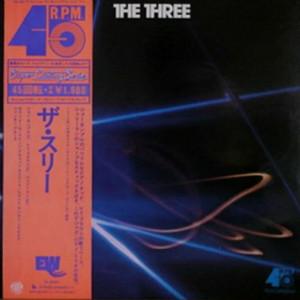
The Three at 45 RPM Has Energy Like No Recording We’ve Ever Heard

Hot Stamper Pressings Featuring Shelly Manne Available Now

When it comes to blockbuster sound that jumps out of the speakers, the wind is at your back with The Three because this is one seriously well-recorded album. If this record doesn’t wake up your stereo, nothing will.

We call it a “blockbuster” because it does not sound very much like a jazz trio performing in a club or some such venue.

But where is the harm in that? It’s not trying to.

What it’s trying to be is huge and powerful in your home. Everything has been carefully and artificially placed in the soundfield. Shelly Manne’s cymbals are placed as far left and as far right as possible on the “stage,” making him the longest-armed drummer to have ever sat behind a kit.

The drum solo on side two is full of energy and so dynamic. Why aren’t more drum kits recorded this well?

Check out the pictures inside the fold-open cover to see all the mics that were used on the drums. That’s where that wall-to-wall, floor-to-ceiling sound comes from.

It’s a phenomenal big speaker jazz Demo Disc.

Play this one as loud as you can. The louder you play it, the better it sounds.

Speaking of Energy

The transients found on this recording are uncannily lifelike. Listen for the huge amounts of kinetic energy produced when Shelly whacks the hell out of his cymbals.

This is a quality no one seems to be writing about, other than us of course, but what could possibly be more important? On this record, the more energetic copies took the players’ performances to a level beyond all expectations. It is positively shocking how lively and dynamic the best copies of this record are.

I know of no other jazz recording with this combination of sonic and musical energy.

(more…)

On Discovered Again, Does It Sound Like the Snare Is Wrapped in a Towel on Your Copy?

Hot Stamper Pressings of Direct-to-Disc Recordings Available Now

The bulk of this commentary was written in 2008 and is based on the shootout we had just done, our first for the album. It has been amended a number of times since.

I bought my first copy of Discovered Again in 1976 upon its release. I was a big fan of the label at the time. The Missing Linc had been a revelation to me years before in terms of how good music could sound in the home (or apartment as the case may be). I wrote a bit about it here.

I credit that amazing record as well as Discovered Again as fundamentally important in helping me advance in this devilishly difficult hobby of ours. Back in those dark days of the 70s, although I was completely clueless at the time about pretty much everything having to do with vinyl and equipment, I can take some solace in the fact that everybody else was every bit as clueless as I was too.

This blog is dedicated to sharing some of what I’ve learned — with the unflagging help of my staff of course — about records and audio over the last fifty years.


The sound quality of the typical pressing of Discovered Again leaves much to be desired.

Two areas are especially lacking as a rule: the top end tends to be rolled off, and there is a noticeable lack of presence, which can easily be heard in the drum sound.

The snare sounds like it’s covered with a towel on most copies of this album.

How does that even happen?

Who knows? Even though the mastering is fixed at the live event, there are many other variables which no doubt affect the sound. The album is cut on two different lathes — M (Master) and S (Slave), and pressed in two different countries: Japan and Germany. Many mothers were pulled from the acetates and many, many stampers made from those mothers. (I saw one stamper marked number 15!)

Bottom line? You got to play ’em to know how they sound, just like any other pressing. If no two records sound the same, it follows that no two audiophile records sound the same, a fact that became clear early on in the listening.

Of course not many audiophiles are in a position to shootout six copies of Discovered Again, and I’m not sure most people would have the patience to do it. Here at Better Records we have a whole system set up to do that, so we waited until we had a pile of them, got them all cleaned up, and off to the races we went.

What Else to Listen For

Listen to the harmonics around the cymbals and bells on Git Along Little Dogies — on the best copies you can really hear the transients of the cymbals and percussion, so important to the actual sound of those instruments. (More records that are good for testing percussion can be found here.)

The stand-up acoustic bass is amazingly well recorded on this album; it’s so rich and full-bodied. You will have a hard time finding a string bass that sounds better.

Track after track, the sound is surprisingly open and airy. Dave’s keyboards throughout have wonderful presence; on the best copies they really jump out of the speakers. (A good test for midrange presence.)

(more…)

Lincoln Mayorga – The Missing Linc

More of the Music of Lincoln Mayorga

  • With two STUNNING Shootout Winning Triple Plus (A+++) sides, this Sheffield Direct to Disc recording is certainly as good a copy as we have ever heard
  • Guaranteed to be dramatically richer, fuller and more Tubey Magical than any other copy you have heard, with especially punchy drums and rosiny-textured strings
  • The bass on side one extends all the way into whomp land for that big bass drum at the end of “Limehouse Blues” – what a sound!
  • The top end is key to the better pressings too – lots of string harmonics and bells and other high frequency stuff gets lost on most pressings, but not this one, it’s all there on this pressing
  • The audiophile “Sgt. Pepper” of its day, a record that was so much better than anything else you’d ever heard it made you rethink the possibilities (and they did the same thing with Volume III two years later)
  • If you’re a Sheffield Labs fan, and what audiophile wouldn’t be?, this title from 1972 is clearly one of their best
  • If you’re a fan of big drums in a big room, with jump out of the speakers sound, this is the album for you.

This is definitely not your typical Sheffield pressing. Some of them are aggressive, many of them are dull and lack the spark of live music, some of them have wonky bass or are lacking in the lowest octave — they are prey to every fault that befalls other pressings.

Which shouldn’t be too surprising. Records are records. Pressing variations exist for every album ever made. If you haven’t noticed that yet, start playing multiple copies of the same album while listening carefully and critically.

Just listen to the texture on the saxophone on “Limehouse Blues” — you can really hear the leading edge transients of the brass that are so important to the sound of those instruments. Track after track, the sound gets surprisingly more open and airy. The harpsichord has such great presence it jumps out of the speakers. 

I was selling audio equipment (Audio Research, Fulton speakers) back in the ’70s and this was a favorite demo disc in our store. The bass drum at the end of track two would shake the foundation with a big speaker like the Fulton J.

Every bit as amazing to me was the string quartet on side 2. You could actually hear the musicians breathing and turning the pages on their music stands, just as if you were actually in their “living presence.”

This is one of the albums that made me realize how good audio in the home could really be. In a way this was the Audiophile “Sgt. Pepper” of its day, a record that was so much better than anything else you’d ever heard it made you rethink the possibilities.

(more…)

Letter of the Week – “I can’t listen to 99 percent of my audiophile or Japanese pressings…”

Hot Stamper Pressings of Jazz Rock Fusion Albums Available Now

One of our good customers had this to say about some Hot Stampers he purchased recently:

Hey Tom, 

Now, meaning in the past year…

I can’t listen to 99 percent of my audiophile or Japanese pressings… 

I hear how wrong they sound…

I, of course, have since replaced just about all and 999 out of 1000 sound better than the average copy.

Why did I think a Japanese pressing was better? My god, all my Crusader Japan pressings next to plain old original releases nooooo comparison.

Btw, can’t believe your customers don’t want Southern Comfort, Crusaders 1 and Crusaders 2… all are unreal powerful double LPs.. and many in their catalogue almost equal to those… Crusaders: the best of the best.

Regards
Andy

Andy, we tried to do shootouts for some of their records a few years back and were underwhelmed by the sound, the music, or both.  I’m afraid you will have to do your own shootouts for now.

And of course we’ve long been of the opinion that Japanese pressings mostly suck. Maybe one out of fifty is great, and those odds do not make them an attractive proposition for audiophiles.

You know what we know: vintage pressings — when you find good ones — will beat anything and everything you can throw at them.

(more…)

Our Guide to Legrand Jazz on Impex

Hot Stamper Pressings of 30th St. Recordings Available Now

Years ago I wrote about how important the Legrand Jazz album was in my growth as a critical listener.

It’s yet another example of an album that helped make me a better audiophile by showing me the error of my tweaking and tuning ways.

Now there is a new pressing of it. Well, new to us anyway. (We readily admit to being behind the times and make no apologies for it. With records like these, we often find ourselves wondering why we bother.) Two new pressings in fact. One on a single disc at 33 RPM as of 2017, and one mastered at 45 RPM on 2 LPs as of 2019, still in print and available for $59.99.

Production details can be found at the end of this review, along with some favorable comments, some from none other than Steve Hoffman himself.

But first let’s hear from the personification of the well-meaning audiophile reviewer, Michael Fremer. He gives the Impex pressings an 11 for sound. He writes (emphasis added):

“This IMPEX reissue is sourced from an “analog mix-down transfer of the original 1958 work tape by Mark Wilder at Battery Studios” and cut by Chris Bellman and Bob Donnelly at Bernie Grundman Mastering on Grundman’s all-tube mastering system. I have a clean, original 6-Eye pressing that this superbly pressed reissue betters in every way. This will make both your stereo and your heart sing. Some of the greatest jazz musicians of that or any era wailing and clearly having a Legrand time. Limited to 3000 copies. Don’t miss it!”

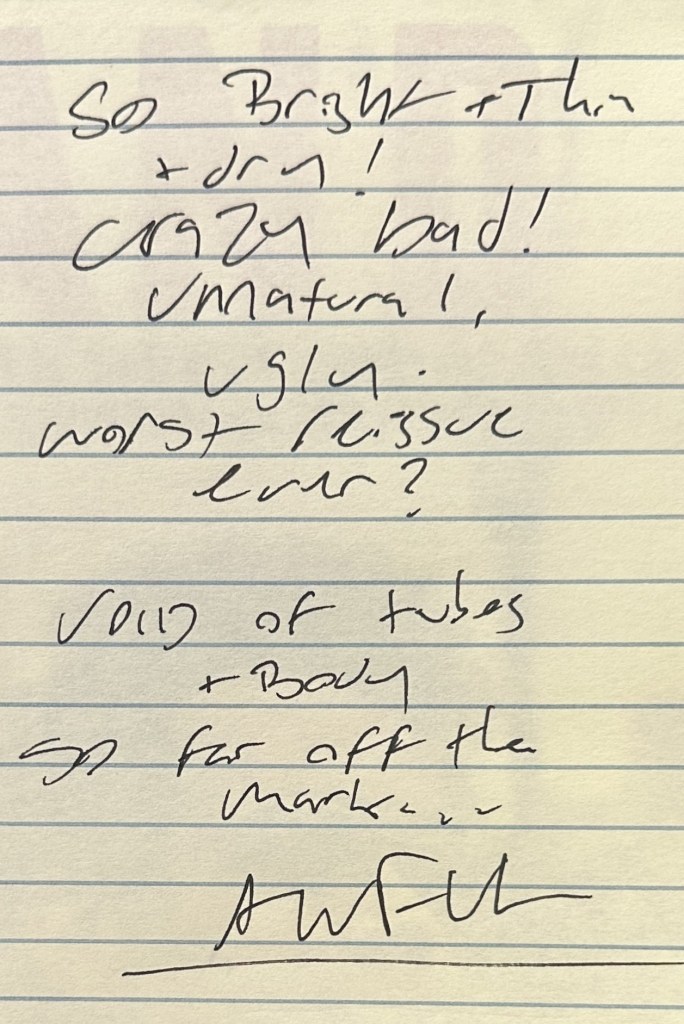
Our notes (for those who have trouble reading our scratch)

  • So bright and thin and dry.
  • Crazy bad!
  • Unnatural, ugly.
  • Worst reissue ever?
  • Void of tubes and body.
  • So far off the mark.
  • Awful.

(more…)

Glenn Miller Orchestra – The Direct Disc Sound of…

  • An original pressing of a Great American Gramophone Company direct-to-disc recording with STUNNING Shootout Winning Triple Plus (A+++) sound or close to it throughout
  • Here are just a few of the things we had to say about this incredible copy in our notes: “tubey and 3D and breathy”…”huge and lively”…”powerful orchestra”…”jumping out of the speakers”…”very rich and present”
  • Great energy, but the sound is relaxed and Tubey sweet at the same time, never squawky, with plenty of extension on both ends – that’s analog for ya!
  • This is no sleepy over-the-hill Sheffield Direct-to-Disc (referring to the later Harry James titles, not the excellent first one) – these guys are the real deal and they play their hearts out on this live-in-the-studio recording
  • Note that side two did not have all the space but it was so punchy and 3-D that it was easy to award it 2.5+. The copy that beat had all the same qualities and more space, sounding like side one of this copy.

One of the all time GREAT Direct to Disc recordings. For sound and music, this one is hard to beat. And the vinyl is as quiet as any you will find.

We went a bit overboard years ago when we wrote, “I don’t think you can find a better sounding big band record on the planet.” Well, we’ve heard plenty of amazing big band albums in the course of our Hot Stamper shootouts for the last five or ten years, albums by the likes of Basie, Zoot Sims, Ellington, Shorty Rogers, Ted Heath and others.

Not to mention the fact that the shockingly good Sauter-Finegan track “Song of the Volga Boatman” from the LP Memories Of Goodman and Miller is played regularly around these parts for cartridge setup and tuning, as well as general tweaking.

But that should take nothing away from this superb recording, made at the famously good-sounding Capitol Records Studio A, with none other than Wally Heider doing the mix and Ken Perry manning the lathe.

We also noted that, “It absolutely murders all the Sheffield big band records, which sound like they were made by old tired men sorely in need of their naps. Way past their prime anyway”, which is mostly true.

The Glenn Miller Orchestra heard here was an actively touring band. They know this material inside and out, they clearly love it, and they’re used to playing the hell out of it practically every night.

If you like the tunes that Glenn Miller made famous — “String of Pearls,” “In The Mood,” “Tuxedo Junction” — you will have a very hard time finding them performed with more gusto, or recorded with anything approaching this kind of fidelity.

(more…)