Audiophile Vinyl

Jazz Impressions of Black Orpheus Is a Bloated Mess at 45 RPM from Hoffman, Gray and Kassem

Hot Stamper Pressings of Jazz Piano Recordings Available Now

We played an amazing Hot stamper copy that got the bottom end on this album as right as we’ve ever heard. The contribution of the bass player was clear and correctly balanced in the mix, which we soon learned to appreciate was fundamentally important to the rhythmic drive of the music.

The bass was so tight and note-like you could see right into the soundstage and practically picture Monte Budwig plucking and bowing away.

This is precisely where the 45 RPM pressing goes off the rails.

The bloated, much-too-heavy and poorly-defined bass of the Heavy Vinyl remaster makes a mess of the Brazilian and African rhythms inherent in the music. If you own that $50 waste of money, believe me, you will not be tapping your foot to Cast Your Fate to the Wind or Manha de Carnival.

Our rule of thumb: he better the system, the more second-rate Hoffman’s remastered records will sound when they aren’t just terrible.

Is this the worst version of the album ever made? That’s hard to say.

But it is the worst sounding version of the album we’ve ever played, and that should be good enough for any audiophile contemplating spending money on this kind of trash. Take our advice and don’t do it.
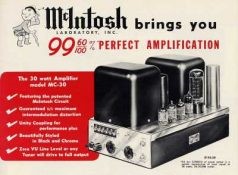
If you like the sound of old McIntosh tube equipment like the Mac 30s shown here, a sound Steve Hoffman apparently cannot get enough of, these remastered records have your name all over them.

We don’t sell junk like this, but every other audiophile record dealer does, because most of the current group of mastering engineers making records for audiophiles have somehow gotten into their heads that this is the way records should sound.

We’ve been telling them they are wrong about that for years now, that good records have never sounded this way, but the collectors and audiophiles of the world keep buying their wares, so why should they listen to us?

If you want to know what a properly-mastered, properly-pressed copy sounds like, we put the last one up in 2023.
(more…)

Letter of the Week – “I haven’t felt better listening to an album in decades.”

More of the Music of The Rolling Stones

One of our good customers had this to say about some Hot Stampers he purchased recently:

Hey Tom,  

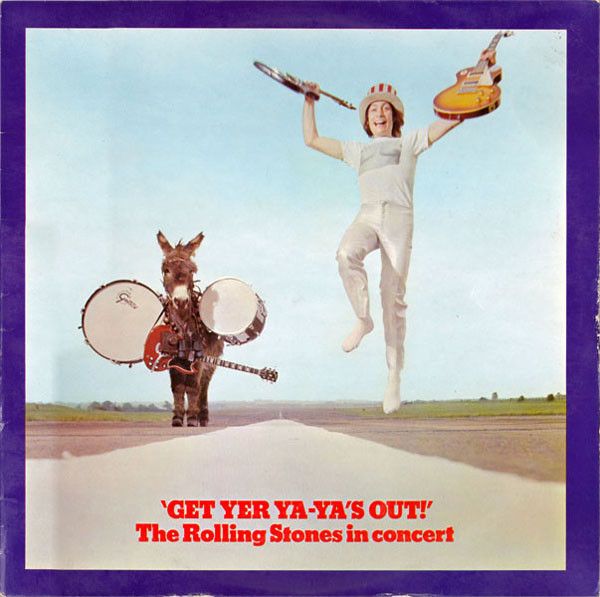
Just a quick note to thank you for the extraordinary copy of “Get Yer Ya-Ya’s Out.” I won’t enumerate all the remarkable qualities of the pressing since you know them well. I’ll just say that I haven’t felt better listening to an album in decades. What a remarkable experience.

By the way, since I bought this as a birthday present for my brother please let me know if another copy of equal or better quality becomes available. You know how this copy made my Londons and Japanese pressing sound. (more…)

Lincoln Mayorga and Distinguished Colleagues Implore You to Turn Up Your Volume

Hot Stamper Pressings of Direct-to-Disc Recordings Available Now

S9 is hands down one of the best examples of a recording that only really comes to life when you have your volume up good and loud.

One obvious reason that our turn up your volume test makes a good test is that the louder the problem, the harder it is to ignore.

There’s not much ambience to be found in their somewhat dead sounding studio, and very little high frequency boost to any instrument in the mix, which means at moderate levels this record sounds flat and lifeless.

(You could say it has that in common with most Heavy Vinyl pressings these days, assuming you wanted to take a cheap shot at those records, which, to be honest, I don’t mind doing. They suck; why pretend otherwise?)

But turn it up and man, the sound really starts jumpin’ out of the speakers, without becoming phony or hyped-up. In fact, it actually sounds more NATURAL and REAL at louder levels.  

A Quick and Easy Test

Play the record at normal levels and pick out any instrument — snare, toms, sax, bass — anything you like.

Now turn it up a notch and see if the timbre of that instrument isn’t more correct.

Add another click of volume and listen again.

I think you will see that with each increase in volume, the tonality of each instrument you hear becomes more accurate. The insturments are sounding more real than they did at lower levels.

This record would sound right at something very close to, if not actual, LIVE levels, assuming you have the system and the room that can manage it. (more…)

Classic Records 45 RPM Recut – This Is Your Idea of a Great Firebird?

Hot Stamper Pressings of the Music of Igor Stravinsky Available Now

Many years ago, a customer alerted me to a review Wayne Garcia wrote about various VPI platters and the rim drive, and this is what I wrote back to him:

Steve, after starting to read Wayne’s take on the platters, I came across this:

That mind-blowing epiphany that I hadn’t quite reached with the Rim Drive/Super Platter happened within seconds after I lowered the stylus onto the “Infernal Dance” episode of Stravinsky’s Firebird (45 rpm single-sided Classic Records reissue of the incomparable Dorati/LSO Mercury Living Presence recording).

That is one of my half-dozen or so favorite orchestral recordings, and I have played it countless times.

This is why I have so little faith in reviewers. I played that very record not two weeks ago (04/2010) against a good original and the recut was at best passable in comparison. If a reviewer cannot hear such an obvious difference in quality, why believe anything he has to say?

The reason we say that no reviewer can be trusted is that you cannot find a reviewer who does not say good things about demonstrably mediocre and even just plain awful records. It’s the only real evidence we have for their credibility, and the evidence is almost always damning.

I want a reviewer who knows better than to play such an underwhelming pressing and then waste my time telling me about it. He should tell us what a good record sounds like with this equipment mod. Then I might give more credence to what he has to say.

Reviewer malpractice? We’ve been writing about it for more than 25 years.

P.S.

This is one of the Classic Records titles on Harry Pearson’s TAS List of Super Discs(!)

P.P.S.

Allow me to quote a writer with his own website devoted to explaining and judging classical recordings of all kinds. His initials are A.S. for those of you who have been to his site.

Classic Records Reissues (both 33 and 45 RPM) – These are, by far, the best sounding Mercury pressings. Unfortunately, only six records were ever released by Classic. Three of them (Ravel, Prokofiev and Stravinsky) are among the very finest sounding records ever made by anyone. Every audiophile (with a turntable) should have these “big three”.

Obviously we could not disagree more. I’ve played all six of the Classic Mercury’s. The Chabrier, Ravel and Prokofiev titles are actually even worse than the Stravinsky we reviewed.

This same reviewer raved about a record we thought had godawful sound, Romantic Russia on MoFi, a label that never met an orchestral string section it didn’t think needed brightening.

Find me a Mobile Fidelity classical record with that little SR/2 in the dead wax that does not have bright string tone. I have yet to hear one.

What is it with audiophile record reviewers? They seem to be taken in by the most unnatural sounding pressings. The world is full of wonderful vintage pressings that have no such problems. If you are an audiophile who feels himself qualified to write about records, shouldn’t you at least be able to hear the difference between a phony audiophile pressing and the vintage pressings it supposedly improved?

(more…)

An Insult to Aaron Copland on Reference Records

Hot Stamper Pressings of Orchestral Music Available Now

Yet another Reference Record we’ve reviewed and found wanting.

In all the years I was selling audiophile records, one of the labels whose appeal made no sense to me whatsoever (along with their long-forgotten TAS list brethren, American Gramaphone and Telarc) was Reference Records.

Back then, when I would hear one of their orchestral or classical recordings, I was always left thinking, “Why do audiophiles like these records?”

I was confused, because at that time, back in the 80s, I had simply not developed the listening skills that today make it so easy to recognize the faults of their recordings.

I made the mistake of thinking that other audiophiles with more advanced equipment and more refined listening skills must be hearing something I was not.

I had trouble putting my finger on what I didn’t like about them, but now, having worked full time (and then some!) for more than twenty years to develop better critical listening skills, the shortcomings of their records, or, to be more accurate, the shortcomings of this particular copy of this particular title, took no time at all to work out.

My transcribed notes for RR-22:

  • Lean tonality
  • No real weight
  • No Tubey Magic
  • Blurry imaging when loud
  • No real depth
  • Bright tonal balance

Is this the sound you are looking for in an audiophile record?

Shouldn’t you be looking for audiophile quality sound?

Well, you sure won’t find it here.

On our current playback system, this Reference Record is nothing but a joke, a joke played on a much-too-credulous audiophile public by the ridiculously inept and misguided engineers and producers who worked for Reference Records.

This is a reference for something? For what?

As I wrote about another one of their awful releases, if this is your idea of a reference record, you are in real trouble.

It would be hard to imagine that anyone who has ever heard a good vintage classical recording — here are some of our favorites — could ever confuse this piece of audiophile trash with actual hi-fidelity orchestral sound.

(more…)

Shelly Manne – The Manne We Love

More of the Music of Shelly Manne

  • The Manne We Love makes its Hot Stamper debut with solid Double Plus (A++) sound or BETTER throughout this original Japanese-pressed Eastworld LP
  • Both of these direct-to-disc sides are simply more spacious, transparent and dynamic than most others we played
  • The sonics are superb – airy and open, with a solid bottom end – the depth and definition are out of this world

(more…)

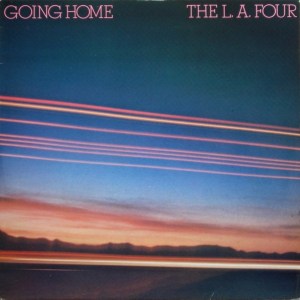
The L.A. 4 / Going Home

  • A vintage East Wind 33 RPM Japanese import pressing with outstanding sound from start to finish
  • A top album in both rarity and demand – you’d be hard pressed to find another copy with this kind of transparency, clarity, presence, and sound (assuming you could find one)
  • This is one of the best sounding copies with all 7 tracks we have ever played
  • This 33 RPM version features all seven of the original tracks – “Greensleeves” and “Django” were omitted from the shorter 45 RPM pressing
  • Lee Herschberg recorded these sessions direct to disc – he’s the guy behind the most amazing piano trio recording I have ever heard, a little album called The Three
  • The star of this record is Shelly Manne, who really plays up a storm

(more…)

Eiji Kitamura – Swing Sessions

More Eiji Kitamura

More Direct-to-Disc Recordings

  • This rare Japanese import LP boasts incredible DEMO DISC sound 
  • The music here is wonderful – if you’re a fan of clarinet-led swing jazz, you’ll have a hard time finding a better record than this
  • “This album was recorded by the direct-to-disc recording method, to capture the natural reverberation of 1,200 seat concert hall. Various kinds of recording equipment were brought in parts to the backstage of the hall for the recording then reassembled and adjusted. Two whole days were spent adjusting all the equipment.”
  • If you’re a lazz fan — of swing or otherwise — this title from 1978 is surely a Must Own
  • The complete list of titles from 1978 that we’ve reviewed to date can be found here

(more…)

Our Take on the MoFi 45 Brothers In Arms

Hot Stamper Pressings of the Music of Dire Straits Available Now

We have never bothered to play their remaster, along with some other Heavy Vinyl reissues we think have very little chance of actually sounding good to us.

I found out recently that the MoFi is now on the TAS Super Disc list. You can find it along with the domestic — yes, you read that right — domestic pressing of the first album.

Now just how hard of hearing do you have to be to think that the domestic pressing of Dire Straits’ first album is a Super Disc? A nice record, sure, but nice records aren’t really Super Discs, are they?

Not when there are UK pressings that trounce it. We should know, we’ve played them by the dozens. How the writers for The Absolute Sound can be this far off the mark is a question we cannot begin to answer.

The most obvious answer — and therefore the most likely one — is reviewer malpractice.

What else could it be?

What We Think We Know

We have written quite a number of reviews and commentaries for the first album and we encourage you to read some of them.

Speaking of Super Discs, the good British pressings are so good we put them on our Top Ten Most Tubey Magical Rock and Pop Recordings List. No domestic pressing we have ever played would qualify as anything other than a minimally-acceptable Hot Stamper.

We would never bother to put such a pressing in a shootout, when even the average run-of-the-mill UK copy is better.


We Get Letters

A few years ago we received this email from a customer.

“How would you compare the Brothers in Arms SHS to the Mobile Fidelity 45 rpm copy?”

Dear Sir,

We have never bothered to play their remaster, and why would we? Every MoFi pressing made by the current regime has had major sound problems when compared head to head with the “real” records we sell, and it’s simply not worth our time to find out exactly what is wrong with the sound of any of these new reissues, theirs included.

[I will be reviewing their unbelievably awful Dire Straits first album on 45 one of these days. Rarely have I heard such a good recording, a brilliant recording, turned into such a piece of crap. Robert Brook didn’t like it either.]

However, we have been known to make an exception to that rule from time to time. Recently we did so in the case of the Tea for the Tillerman George Marino cut at 45 RPM for Analogue Productions.

(more…)

The Power of the Orchestra – Remastered by the Brain Trust at Chesky

Hot Stamper Pressings of Pictures at an Exhibition Available Now

Sonic Grade: F

Lifeless, compressed and thin sounding, here you will find practically none of the weight and whomp that turn the best Living Stereo pressings into the powerful listening experiences we know them to be.

We know that because we’ve played them by the hundreds on big speakers at loud levels.

It’s clean and transparent, I’ll give it that, which is no doubt why so many audiophiles have been fooled into thinking it actually sounds better than the original.

But of course there is no original. There are thousands of them, and they all sound different. (A concept we embraced many years ago and have never found any reason to doubt.)

The commentary reproduced below, from way back when, discusses a pair of records that proves our case in the clearest possible way.

We sold a 2-pack of Hot Stamper pressings, one with a good side one and one with a good side two. Why? Because the other sides were terrible! If you have a bad original, perhaps the Chesky will be better.

Our advice is not to own a bad original, or this poorly-mastered Chesky reissue, but instead we advise that you make the effort to find a good original, or two or three, as many as it takes to get two good sides.

(more…)