Month: July 2025

Our Four Plus Abbey Road Shootout Winner

Hot Stamper Pressings of Abbey Road Available Now

UPDATE 2026

This listing is from many years ago, possibly as early as 2010.

  • Our lengthy commentary entitled outliers and out-of-this-world sound talks about how rare these kinds of pressings are and how we go about finding them.
  • We no longer give Four Pluses out as a matter of policy, but that doesn’t mean we don’t come across records that deserve them from time to time.
  • Nowadays we most often place them under the general heading of breakthrough pressings. These are records that, out of nowhere, to the surprise of the listening panel, revealed to us sound of such high quality that it fundamentally changed our appreciation of the recording itself.
  • Breakthroughs often come about because the conventional wisdom we had been relying on up to that time turned out to be wrong. Regardless of how many original UK pressings of Abbey Road we might have cleaned and played, we would never have found one that sounds as good as this pressing does, simply because none of the originals ever came close to winning a shootout, and it’s very unlikely that one ever would.

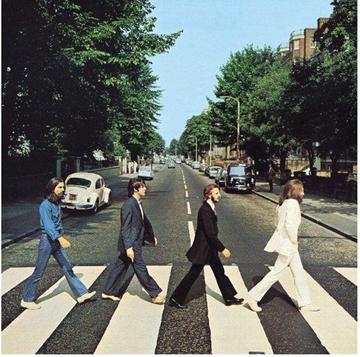
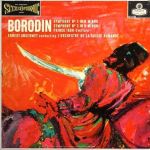
An exceptional copy of The Beatles’ last and arguably greatest album with THE BEST SIDE TWO WE HAVE EVER HEARD — QUADRUPLE PLUS (A++++)!

If you’ve heard the disastrous new pressing, then you know how important it is to play a real, vintage, analog pressing. A copy this good might just give you a new appreciation for one of the Greatest Rock Albums of All Time.  A permanent member of the Better Records Top 100, and a Desert Island Disc if ever there was one.

Abbey Road checks off a number of important boxes for us here at Better Records. Here are three for starters:

The blog you are on now as well as our website are both devoted to very special records such as these.

Abbey Road is the very definition of a big speaker album. The better pressings have the kind of ENERGY in their grooves that are sure to leave most audiophile systems begging for mercy.

This is one of the The Beatles’ many audio challenges that await you. If you don’t have a system designed to play records with this kind of sonic power, don’t expect to hear them the way the band, Geoff Emerick, George Martin and everyone else involved in the production wanted you to.

It’s clear that The Beatles albums informed not only my taste in music, but the actual stereo I play that music on. It’s what progress in audio is all about. I’ve had large scale dynamic speakers for close to five decades, precisely in order to play demanding recordings such as Abbey Road, an album I fell in love with “all those years ago.”

(more…)

Wagner / Excerpts from Operas / Dorati

More of the Music of Richard Wagner

  • With two solid Double Plus (A++) sides or close to them, we guarantee you’ve never heard this underrated Wagner album sound remotely as good as it does here
  • It’s also fairly quiet at the high end Mint Minus Minus, a grade that even our most well-cared-for vintage classical titles have trouble playing at
  • Mercury is one of the few labels that can bring to life the power of the orchestra that Wagner’s music demands, and the engineers (Robert Eberenz, et al) do not disappoint (particularly on side two)
  • One of the better Watford Town Hall recordings (The Firebird would be another one), this album was recorded in 1959 and it fully captures the magic of the venue as only an All Tube Recording / Mastering Chain from that era can (also particularly on side two)
  • If you’re a fan of orchestral showpieces such as these, this Mercury recording from 1960 belongs in your collection.

(more…)

Why are the First Pressings of this Title the Worst Sounding?

Hot Stamper Pressings of Recordings by Decca Available Now
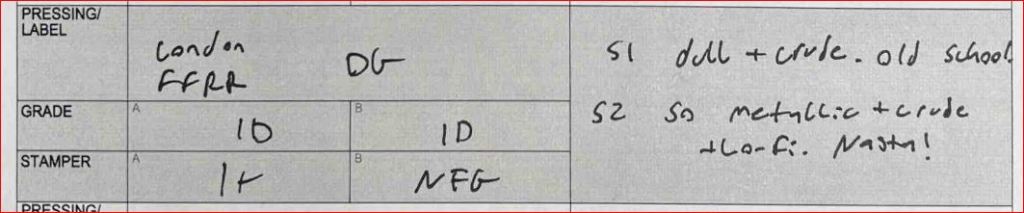
The record you see pictured is not the record we are discussing in this posting. The stamper numbers you see below belong to a different album.

We’ve lately been giving out much more stamper information than we used to, but for now we are keeping this title close to the vest.

We happen to know the best stampers for this album, but somehow a copy with the “bad” stampers ended up in our shootout. It did about as badly as they usually do.

Of course, the person sitting in the listening chair had no idea that a copy with the worst stampers was playing. The jackets and labels of this pressing are identical to the copies with the good stampers.

He simply heard what the recording actually sounds like when it’s mastered badly and registered his complaints.

Side One

  • Dull and crude. Old school.
  • 1+

Side Two

  • So metallic and crude and lo-fi. Nasty!
  • NFG

Apparently Mr. D, real name: Jack Law, did a piss-poor job mastering this album. Another engineer would come along sooner or later and master the record right, so right that it became one of our favorite Demo Discs for sound and performance.

How did this pig’s ear eventually manage to become a silk purse?

Simple. It was always a great recording, it just needed to be mastered right, and whoever got the job to remaster it knocked it out of the park the first time through.

(more…)

The Who – Tommy

More of the Music of The Who

  • Superb sound throughout this vintage UK import copy, with all FOUR sides earning solid Double Plus (A++) grades or BETTER
  • Side three and side four were sonically very close to our Shootout Winner – you will be shocked at how big and powerful the sound is
  • Both of these early Black Label British Track pressings have the rich, spacious, Tubey Magical sound that has the power to immerse you in the story of a deaf, dumb and blind boy named Tommy
  • Top 100, and clearly our pick for the best sounding album The Who ever made – when you play a copy that sounds as good as this one we think you’ll have no problem seeing our point
  • Marks in the vinyl are sometimes the nature of the beast with these Classic Rock records – there simply is no way around them if the superior sound of vintage analog is important to you
  • 4 1/2 stars: “…Townshend’s ability to construct a lengthy conceptual narrative brought new possibilities to rock music.”
  • This is a Must Own Who Classic from 1969 that belongs in every right-thinking audiophile’s collection
  • It’s our pick for the band’s best sounding album. Roughly 150 other listings for the Best Recording by an Artist or Group can be found here

I know of no other Who album with such consistently good sound — song to song, not copy to copy, of course. Just about every song on here can sound wonderful on the right pressing. If you’re lucky enough to get a Hot Stamper copy, you’re going to be blown away by the Tubey Magical guitars, the rock-solid bottom end, the jumpin’-out-of-the-speakers presence and dynamics, and the silky vocals and top end.

Usually the best we can give you for The Who is “big and rockin,” but on Tommy, we can give you 60s analog magic that will all but disappear in the decades to follow.

Acoustic guitar reproduction is key to this recording, and on the better copies the harmonic coherency, the richness, the body and the phenomenal amounts of Tubey Magic can be heard in every strum.

(more…)

These Records Helped Us Dramatically Improve Our Playback

Some of the Most Important Albums We Employed to Tune, Tweak and Improve Our Stereo, Room, Table Setup, Electrical Quality and More

The records on this list (limited to rock and pop for the most part but we’re working on adding in the classical and jazz) all have one thing in common: I made practical use of them to improve my equipment, room treatments, table setup, electrical quality and whatever else that I could think of that might result in higher quality playback.

Were it not for my desire — obsession may be the better word, and it’s certainly a better operating principle — to get the wonderful music on these albums to improve with each passing year, Hot Stamper pressings would be at most a niche part of my collection. Worse, and a thought some may find too unpleasant to contemplate, Hot Stampers might have then accounted for only a small part of Better Records’ business.

By the mid-2000s when we started down this road for real, the stereo needed to evolve dramatically. It needed to become much more revealing and truthful than any system I had ever heard if we were going to carry out Hot Stamper shootouts all day.

The best of the best Hot Stamper pressings are often like needles in haystacks. No one in his right mind would go to all that trouble for music that was not emotionally powerful enough to be, for all intents and purposes, practically irresistible.

If you have records you can’t wait to play every time you make a change to your equipment, room, setup, etc., you know what I am talking about.

I favor large scale dynamic speakers because they are the only ones that seem capable of reproducing the demanding recordings you see listed below.

There is no question that the artists that made these albums, in concert with remarkably talented producers and engineers, sweated every detail of these exceptional recordings. For the last five decades I (now we) have been doing all we could to get these wonderful records to sound their best.

We know how good they can sound on systems that have what it takes to play them, because these are the records we used to test, tune and tweak the new studio we built.

The more of that kind of work you do — on your system, room and electricity — the more progress you will make in this hobby. With each improvement, these are the very recordings that will sound bigger and bolder than you ever imagined.

They are the most difficult-to-reproduce albums we know of. Difficult records are the ones that will help you make more real, demonstrable progress in this hobby than any others.

Again and again it was meeting the challenge of reproducing recordings such as these that allowed us to get to the next level, and the next one, and the one after that, and they can do the same for you.

The Top Two

By far the two most helpful records for testing over the last two decades were Tea for the Tillerman (going all the way back to 1984) and Bob and Ray Throw a Stereo Spectacular. We wrote about their uniquely valuable contributions to our audio progress in this commentary.

Led Zeppelin II is probably the main record our current listening panel uses to dial-in the Dynavector 17Dx cartridges we mount three or four times a year so that every record is always  being played with a relatively fresh cartridge. (We are dealers for Dynavector and would love to get you one to try.)

The records below in bold have been especially important for our work. They tend to be the titles that we played while tweaking and tuning the system, trying to solve one problem or another that we thought we heard when playing them. There should be quite a number of commentaries on the blog for each of them.

Also, at the bottom you will notice that more and more jazz and classical records are being added to the list as time permits.

Rock, Pop, etc.

    • 10cc / The Original Soundtrack
    • 10cc / Deceptive Bends
    • 801 / Live
    • Ambrosia / Self-titled

(more…)

Steely Dan / The Royal Scam

  • A Royal Scam like you’ve never heard, with seriously good grades from first note to last
  • This pressing of The Dan’s hard-rockin’ classic from 1976 has the right sound for this music – rich and meaty, with powerful rhythmic energy
  • 5 stars: “Drummer Bernard ‘Pretty’ Purdie lashes out the rolling grooves on most of the nine tracks, establishing the album’s anxious feel, and Larry Carlton’s jaw-dropping guitar work provides a running commentary to Fagen’s strangulated vocals… These are not the sort of Steely Dan songs favored by smooth-jazz stations.”
  • Steely Dan’s fifth release is a Must Own album from 1976, Every one of the first 6 albums belongs in any audiophile quality Rock and Pop music collection worthy of the name.

The best copies of Steely Dan’s brilliant effort from 1976 — so different from the album before, Katy Lied, as well as the album to follow, Aja — manage to combine richness and smoothness with transparency and clarity, a tough combination to find on The Royal Scam. (more…)

The Three on Inner City – By Far the Best Way to Get All Six Tracks

More of the Music of The Three

  • A Demo Disc quality Inner City pressing of this wonderful recording with INCREDIBLE Shootout Winning Triple Plus (A+++) sound or close to it from start to finish
  • The transients are uncannily lifelike – listen for the powerful kinetic energy produced when Shelly whacks the hell out of his cymbals
  • My favorite Piano Trio Jazz Album of All Time; every one of those six tracks is brilliantly arranged and performed
  • 4 stars: “One of Joe Sample’s finest sessions as a leader” – with Shelly Manne and Ray Brown, we would say it’s clearly his finest session, as a leader or simply as the piano player in a killer trio

If you want to hear the full six tunes recorded by The Three at that famous Hollywood session (which ran all day and long into the night, 4 AM to be exact), these 33 RPM pressings are the best way to go. The music is so good that I personally would not want to live without the complete album. The Three is, in fact, my favorite Piano Trio Jazz Album of All Time; every one of those six tracks is brilliantly arranged and performed (if you have the right takes of course; more about that later).

More On The Subject Of Energy

This is a quality no one seems to be writing about, other than us of course, but what could possibly be more important? On this record, the more energetic copies took the players’ performances to a level beyond all expectations. It is positively shocking how lively and dynamic the best copies of this record are. I know of no other recording with this combination of sonic and musical energy. It is sui generis, in a league of its own.

Both sides are so transparent you can hear Shelly Manne vocalizing as he’s playing the drums. The drum solo on side two is killer here. So full of energy and so dynamic. Why aren’t more drum kits recorded this well? Check out the pictures inside the fold-open cover to see all the mics that were used on the drums. That’s where that wall-to-wall, floor-to-ceiling sound comes from.

The transients are uncannily lifelike, conveying the huge amounts of kinetic energy produced when Shelly whacks the hell out of his cymbals.

Ne Plus Ultra Piano Trio

This record is made from the “backup” tape for the session. East Wind released two versions of the famous direct to disc version at 33 RPM, and for those of you who bother to read the commentary, you know that take one of that pressing presents a completely different performance of the music than the one found on the Inner City on offer here.

There was a time when the best copies of a recording like this would go directly into my collection. If I wanted to impress someone, audiophile or otherwise, with the You-Are-There illusion that only Big Speakers in a dedicated room playing a live recording can create, this would be up near the top of the list. There is practically nothing like it on vinyl in my experience.

This is without a doubt my favorite piano trio record of all time. Joe Sample, Shelly Manne, and Ray Brown only made one album together, this one, recorded direct to disc right here in Los Angeles for Eastwind in the Seventies. Joe Sample for once in his life found himself in a real Class A trio, and happily for jazz fans around the world, he rose to the occasion. Actually, it was more like an epiphany, as this is the one piano trio album I put in a class by itself. All three of The Three are giving us the best they’ve got on that November day in 1975.

When it comes to small combo piano jazz, there is none better.

(more…)

Boz Scaggs – Silk Degrees

More Blue-Eyed Soul

  • Solid Double Plus (A++) sound brings Boz’s very well recorded Masterpiece of Soulful Pop to life on this vintage Columbia pressing
  • Both of these sides are punchy, open and clear, with the kind of big bass and rhythmic energy so critical to this music
  • This copy brings out of the mix the solid, weighty piano that’s missing from the CBS Half-Speed and 90% of the reissues
  • 5 stars: “[Scaggs] hit the R&B charts in a big way with the addictive, sly ‘Lowdown’… and expressed his love of smooth soul music almost as well on the appealing ‘What Can I Say.'”

There is excellent sound on the better-recorded tracks, which I’m happy to say are most of them. And why not? This band is basically Toto with Boz Scaggs singing lead. David Paich wrote most of the songs and most of the Toto band (which didn’t exist yet, of course) is in the house. (No Lukather, but the guitarists on hand manage to pull it off without him.) Check out the legendary Jeff Porcaro’s twin hi-hats on “Lowdown,” one per channel, energizing the rhythm of the song big time.

One of the main qualities separating the winners from the also-rans on this title is the quality of the bass. This is rhythmic music, first and foremost. David Hungate just kills on this album; he’s giving a master class on rock and roll bass on practically every track.

And, for us audiophiles, the good news is the bass is very well recorded — big, punchy and well upfront in the mix. The bad news is that only the best copies show you the note-like, clear, rich bass that must be on the master tape. Vague and smeary bottom end is the rule, not the exception, and it’s a veritable crime against well-recorded sophisticated pop such as this.

(more…)

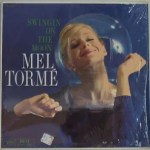
Verve Released this Awful Sounding Mel Torme Album in 1960

Hot Stamper Pressings of Pop and Jazz Vocal Recordings Available Now

Smeary and dry. As far as we can tell, based on the sound of this copy, Swingin’ on the Moon is not an album worthy of a Hot Stamper shootout. If we hear a better one down the road, we would certainly be open to the possibility.

If you want a better sounding moon-themed album, Sinatra made a very good one.

This particular Mel Torme album came out in 1960, along with a great many wonderful titles from the Golden Age of vacuum tube recording. Although we love the cover, this unfortunately doesn’t happen to be one of the better releases from that year.

We play mediocre-to-bad sounding pressings so that you don’t have to, a public service from your record-loving friends at Better Records.

You can find this one in our hall of shame, along with others that — in our opinion — are best avoided by audiophiles looking for hi-fidelity sound. Some of the records on the list may have passable sonics, but we found the music less than compelling.  These are also records you can safely avoid.

We also have an audiophile record hall of shame for records that were marketed to audiophiles for their putatively superior sound. If you’ve spent any time on this blog at all, you know that these records are some of the worst sounding pressings we have ever had the displeasure to play.

(more…)

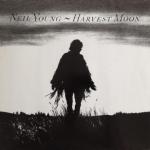
I’m Starting to Get a Bad Feeling About Record Store Day

Hot Stamper Pressings of the Music of Neil Young Available Now
For some reason, don’t ask me why, they keep hiring Chris Bellman to make Heavy Vinyl reissues of Neil Young’s albums, even though he has shown again and again that he has no idea what these recordings are supposed to sould like.

So far he’s ruined After the Gold Rush and Neil Young’s Greatest Hits, and there may be others he’s remastered to death, but no copies of those have come our way so we really don’t know, or care to know, to be honest.

If this is your idea of analog, you are most likely in the wrong hobby and should consider finding a different one. At the very least you are wasting your time and money on worthless crap vinyl pressings put out by the legion of Heavy Vinyl Grifters who emerge from the bowels of the earth on Record Store Day, targeting their rip-off LPs at the low- to mid-fi vinyl collector types who have yet to figure out what a giant scam the whole thing is.

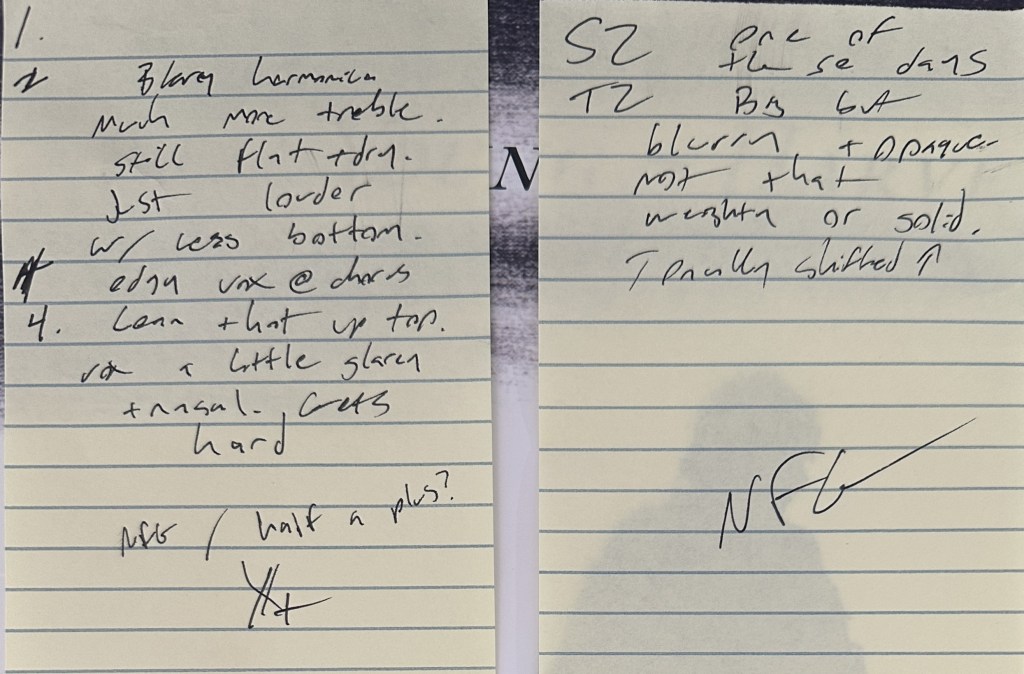
These records have virtually no redeeming features, none that we could find anyway. Allow us to catalog the shortcomings of the three sides that comprise the 2017 Record Store Day release of Harvest Moon.

For the first time in five years we had finally been able to do a shootout for the imports we like, so we knew exactly how good the best pressings could sound. Long story short, they sure don’t sound like this!

Side One

Track Two (From Hank to Hendrix)

  • Blary harmonica
  • Much more treble
  • Still flat and dry
  • Just louder with less bottom
  • Edgy vocals in the chorus

(more…)