too-smooth-modern

Whether made by DCC, Analogue Productions or any other label, starting at some point in the mid-’90s many remastered audiophile pressings started to have a tonality problem that we found insufferable right from the get-go: they are just too damn smooth.

The bulk of the heavy vinyl reissues we’ve played, in addition to being too smooth, suffer from numerous other shortcomings that rob the music of its life and energy.

Thick, opaque, veiled, recessed and lacking in ambience, this is what we hear on one modern remastered record after another. It may be someone’s idea of “analog,” but it sure isn’t ours.

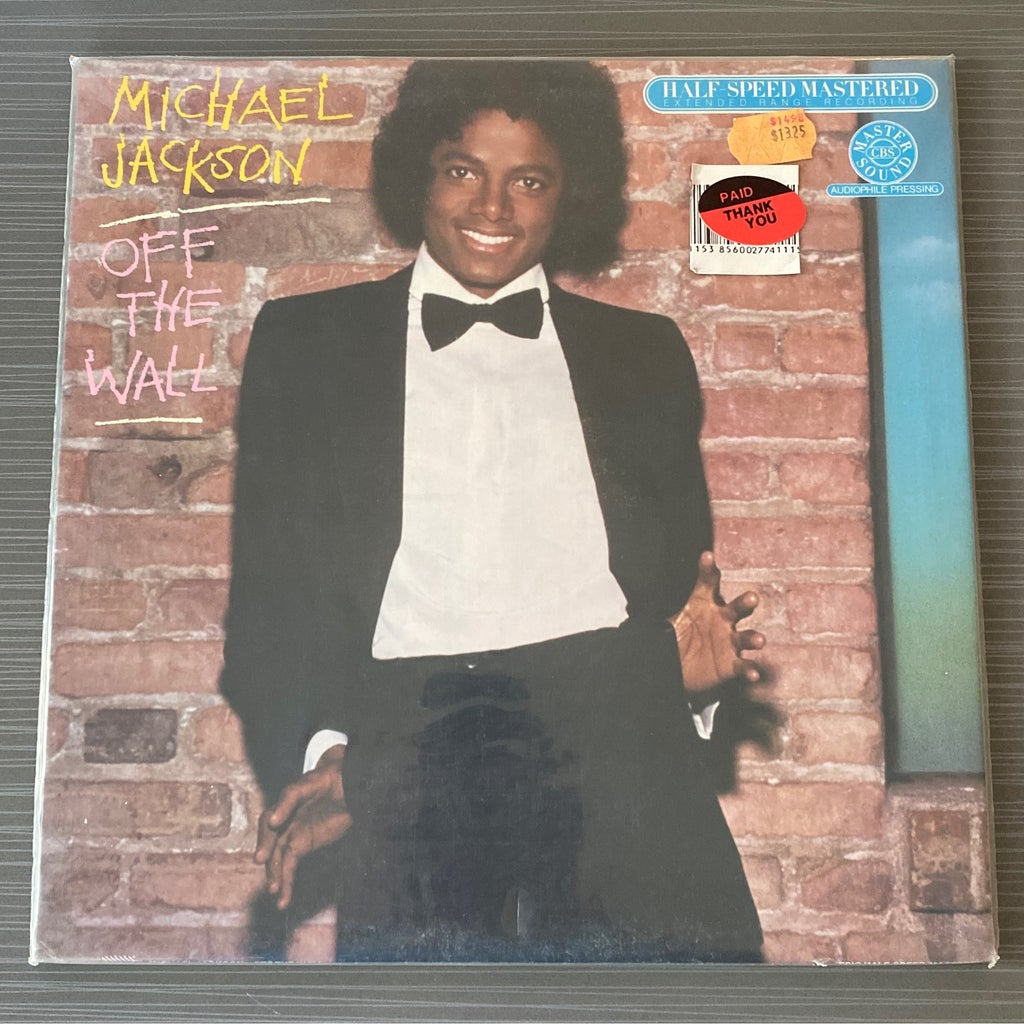
The CBS Half-Speed of Off the Wall Is a Joke

Hot Stamper Pressing of the Music of Michael Jackson Available Now

Sonic Grade: F

Pure MUD. No top end whatsoever!

I remember when we audiophiles looked down our noses at CBS Half-Speeds because they weren’t pressed in Japan and sold at a notable discount to the offerings of Mobile Fidelity and their competitors.

But we were so desperate back then for top quality pressings that we bought them anyway!

Are audiophiles any less desperate today? They seem pretty desperate to me. They approach these new Heavy Vinyl records naively instead of skeptically, assuming they will be better sounding in exactly the same way I assumed the Half Speeds I was buying forty years ago would be better sounding.

The more things change…

If you are buying these modern pressings, take the advice of some of our customers and stop throwing your money away on Heavy Vinyl and Half-Speed masters.

At the very least let us send you a Hot Stamper pressing — of any album you choose — that can show you what is wrong with your copy. And if for some reason you disagree that our record sounds better than yours, we will happily give you all your money back and wish you the best.

(more…)

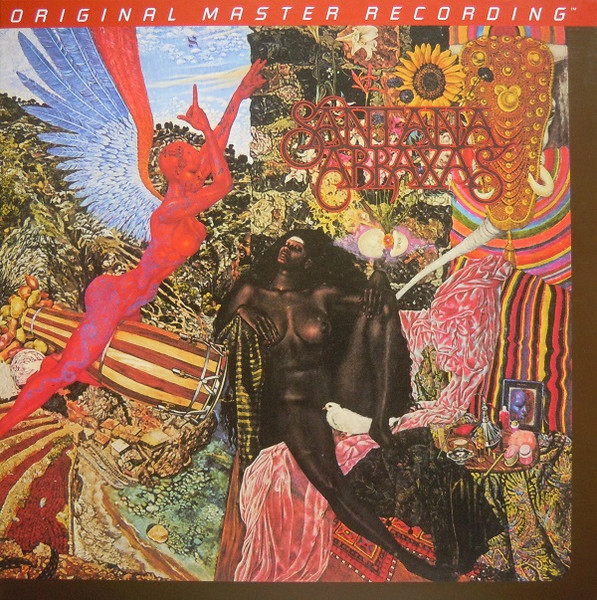
With Abraxas, MoFi Manages to Disgrace Itself Even Further

Hot Stamper Pressings of the Music of Santana Available Now

The remastered Abraxas never got past the first elimination round; it had to have been one of the worst half-speeds I have ever heard. Dead, dead, dead as a doornail.

Is it the worst version of the album ever made? Hard to imagine it would have much competition.

Santana’s first album on MoFi is a record we admit to having liked a bit when it first came out. Since then we have changed our minds. It’s just too damn compressed and lifeless. The Whomp Factor on this pressing is Zero. Since whomp is critical to the sound of Santana’s music, it’s Game Over for us. The review below is exactly what we wrote at the time the record came in. We tried to like it, but it’s clear to us now that we tried to like it too hard. Please accept our apologies.

I noted in my old blog: “But now I would have to say that the MoFi LP is far too lifeless to be acceptable to anyone, even those with the worst kinds of audiophile BS systems.”

(more…)

Sgt. Peppers on Heavy Vinyl – The Reviewers from 1982 Blow It Again

beatlessgtHot Stamper Pressings of the Music of The Beatles Available Now

You might agree with some reviewers that EMI’s engineers did a pretty good job with the new Sgt. Pepper.

In the March 2013 issue of Stereophile, Art Dudley weighed in, finding little to fault on this title but being less impressed with most of the others in the new box set.

His reference disc? The MoFi UHQR. Gadzooks!

Oh, and he also has some old mono pressings and a domestic Let It Be. Now there’s a man who knows his Beatles.

Fanatical? You’re damn right he’s fanatatical. And who can blame him? We’re talkin’ The Beatles for Chrissake!

When I read the reviews by writers such as these I often get the sense that I must’ve fallen through some sort of Audio Time Warp and landed back in 1982.

How is it that our so-called experts appear to have so little understanding of how records are made, how variable the pressings can be, and, more importantly, how critical it is to maintain rigorously controlled conditions when they carry out the comparisons among pressings that they discuss in their reviews.

Here’s the gist of the problem:

Critically comparing LPs is difficult and time-consuming.  It requires highly developed listening skills. Looking back, these are skills that I know I could not possibly have had because I didn’t have a clue as to how to go about acquiring them.

I see no evidence that the audiophile reviewers of today are better at it than I was in 1982, and I was terrible.

Moving on, let’s look at what one well-known reviewer has to say, keeping in mind that he’s using his original British pressing for comparison. I quote at length — without prejudice so to speak — so there can be no misunderstanding. (Emphasis added.)

(more…)

Add Made in Japan to the List of Ridiculously Bad DCC Titles

Hot Stamper Pressings of the Music of Deep Purple Available Now

What a murky mess. The sound is dead as a doornail.

It’s yet another audiophile record hall of shame pressing, a Heavy Vinyl disaster if there ever was one.

Is it the worst version of the album ever made?

That’s hard to say. But it is the worst sounding version of the album we’ve ever played, and that should be good enough for any audiophile contemplating spending money on this kind of trash. Take our advice and don’t do it.

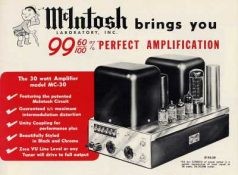
If you like the sound of old McIntosh tube equipment such as the Mac 30s shown here, a sound Steve Hoffman apparently cannot get enough of, DCC is the label for you.

We don’t sell junk like this, but every other audiophile record dealer does, because most of the current group of mastering engineers making records for audiophiles have somehow gotten into their heads that this is the way records should sound.

We’ve been telling them they are wrong about that for years now, that good records have never sounded this way, but the collectors and audiophiles of the world keep buying their wares, so why should they listen to us?

What a Fool Believes

I used to like some of the DCC vinyl titles just fine too. Didn’t play them very often, but I liked what I heard when I did.

Then my stereo got a lot better. Eventually it became obvious to me what was wrong with practically all of the Heavy Vinyl pressings put out by that label. (That story from 1998 gets told in some detail here.)

Heavy Vinyl

The good Heavy Vinyls can be found in this group, along with other Heavy Vinyl pressings we liked or used to like.

The bad Heavy Vinyls can be found in this group. And those in the middle end up in this group.

Audio and record collecting (they go hand in hand) are hard. If you think either one is easy you are very likely not doing it right, but what makes our twin hobbies compelling enough to keep us involved over the course of a lifetime is one simple fact, which is this: Although we know so little at the start, and we have so much to learn, the journey itself into the world of music and sound turns out to be both addictive and a great deal of fun.

(more…)

What to Think When a New Version of Graceland Is Completely Unrecognizable?

Hot Stamper Pressings of the Music of Paul Simon Available Now

Where did this thick, dull, bloated, opaque turd come from?

Having played at least 50-75 copies of the album over the last ten years, I can honestly say I have never heard one that sounded like this new version (maybe some record club copy we picked up by accident did, can’t say it never happened).

Can that possibly be a good thing?

Well, in favor of that proposition, I guess you could say it sounds less like a CD now.

On the other side of the ledger, it now sounds a great deal more like a bad LP.

We listen to piles of pressings of Graceland regularly. We know what the album generally sounds like, the range from bad to good, and we know what qualities the very best copies must have in order to win one of our shootouts.

Above all the one thing Graceland has going for it sonically is CLARITY. It can be open and spacious, tonally correct, with punchy, tight bass and present, breathy vocals. The best of the best copies have all these qualities, but the one quality any good copy must have is clarity, because that’s what’s good about the sound of the record. Without clarity the music doesn’t even work.

The new version has been “fixed.” It got rid of all that pesky grit and grain and CD-like sound from the original digital mix by simply equalizing them away.

Cut the top, cut the upper mids, boost the lower mids and upper bass and voila – now it’s what Graceland would have sounded like had it been all analog from the start, AAA baby!

Or at least analog for those who don’t know what good analog sounds like.

But it never was all analog, and trying to make it sound that way just ruins the one quality that it actually had going for it — clarity.

VTA

You can adjust your VTA and other table settings until you’re blue in the face, you’ll never get this pressing to sound right, and you’ll certainly never get it to sound very much like any Sterling original pressing I’ve ever heard.

The digital spit and grit is still there, under the darker EQ. And now it’s even worse — Simon’s voice has a thick, dull blanket over it, but you can still hear the spit underneath it.

You could probably take the CD and equalize it to sound like this record. But what would be the point?

The Bright Side

Well, perhaps there is a point to this equalization madness.

The CD already exists. It has a sound.

The original record has a sound too, and it’s a fairly common LP in the used bins. You could buy two or three for not that much money and try to find one you like better than the vinyl version you probably already own.

(more…)
The Electric Recording Company Does My Favorite Things No Favors

Hot Stamper Pressings of the Music of John Coltrane Available Now

My Favorite Things happens to be one of our favorite Coltrane records, but we much prefer the stereo pressing of the album. (This is almost always the case when an album has been recorded in stereo, as My Favorite Things was in 1960, later released on Atlantic vinyl in 1961.)

We even tell you what to listen for to help you separate the best pressings from the merely good ones: the piano.

A solid, full-bodied, clear and powerful piano. As we focused on the sound of the instrument, we couldn’t help but notice how brilliant McCoy Tyner is. This may be John Coltrane’s album, but Tyner’s contribution is critically important to the success of My Favorite Things.

The engineering duties were handled by Tom Dowd (whose work you surely know well) and Phil Iehle, who happens to be the man who recorded some of Coltrane’s most iconic albums for Atlantic: Giant Steps (1960) and Coltrane Jazz (also in 1961).

Our last shootout for My Favorite Things was in 2018, not exactly yesterday, but in our defense let me just say that we have done plenty of other Coltrane albums from this period and feel as though we would have no trouble recognizing the sound his engineers were going for.

Unfortunately for those of you who have bought into the idea that the Electric Recording Company produces records with audiophile quality sound, you will find an utterly alien My Favorite Things, one nobody has ever heard before and one that no audiophile should want anything to do with.

Allow us to lay out the specifics of our complaints:

Notes for Side One

  • Big and full but smeary, flat and dull sax
  • No space or depth anywhere
  • Bloated bass
  • A mess

Notes for Side Two

  1. Side two is even worse
  2. Where is the breathy detail of the sax?

Electric Recording Company

We’ve played a few other ERC releases produced by the gentleman who owns The Electric Recording Company, a Mr. Pete Hutchison.

As you no doubt know, we would not be correct in using the term “mastered.” He does no mastering. He does “transferring.” He transfers the tapes to disc and puts them in nice jackets of his own design.

(more…)

Seriously, This is Your Idea of Analog?

Audiophile Quality Pressings of Orchestral Music Available Now

Whether made by Klavier or any other label, starting at some point in the mid-90s, many Heavy Vinyl pressings started to have a shortcoming that nowadays we find insufferable: they are just too damn smooth.

Smeary, thick, dull, opaque, and lacking in ambience, this record has all the hallmarks of the modern Heavy Vinyl reissue.

The sound has many shortcomings because, among other things, the record was mastered by Doug Sax from a copy tape, and not all that well either. (We assume it is made from a copy tape. We honestly have no way of knowing, but that’s what it sounds like it.)

It is yet another murky audiophile piece of trash from the mastering lathe of the formerly brilliant Doug Sax. He used to cut the best sounding records in the world. Then he started working for Analogue Productions and never cut a good record again as far as I know.

On this record, in Doug’s defense it’s only fair to point out that he had dub tapes to work with, which is neither here nor there as these pressings are not worth the dime’s worth of vinyl used to make them.

Maybe the hearing-challenged Chad Kassem wanted this sound — almost all his remastered titles have the same faults as this Klavier — and simply asked that Doug cut it to sound real good like analog spossed to sound in the mind of this kingpin, which meant smooth, fat, thick and smeary.

Yes, this is exactly what some folks think analog should sound like.

Just ask whoever mastered the Beatles records in 2014. Somebody boosted the bass and smoothed out the upper midrange, and I don’t think they did that by accident. They actually thought it was good idea.

Harry Moss obviously would not have agreed, but he’s not around anymore to do the job right.

(more…)

Morph The Cat – Mastered by the Cats from DCC

More of the Music of Steely Dan

Yet another disastrous Heavy Vinyl release with godawful sound, and in this case, equally godawful music, a fitting entry for our audiophile hall of shame.

Hopelessly murky, muddy, opaque, ambience-free sound, and so artificial I honestly cannot make any sense of it.

This is someone’s idea of analog? It sure ain’t mine.

Is this music for robots? That would explain a lot. Audiophile robots, perhaps?

Why do audiophiles waste their money on crap like this?

(more…)

Steppenwolf Gold – Their Great (But Awful Sounding) Hits

Record Collecting for Audiophiles – A Guide to the Fundamentals

There is an interesting story behind how I got my mitts on this particular Heavy Vinyl pressing.

Months ago [now years], a fellow contacted us to buy some of our Hot Stamper pressings.  We sent him one or two, and he soon wrote back to say he was not happy with the sound. We exchanged emails with him for a while, trying to rectify the situation in the hopes that we could get him some records that he would be happy with.

In the middle of all this back and forth, we thought it would be worthwhile knowing what this gentleman thought was a good sounding record, seeing as how ours were not meeting his standards. Our discussion soon crossed over into Heavy Vinyl territory. We asked, “Were there any that he liked the sound of?”  Why yes, there were.

You guessed it. The above-pictured album from Analogue Productions is one he recommended. (There was another he also said we should try, but after playing this one we decided against buying any more records he recommended, for reasons that will soon be evident.)

So we bought a copy. Soon enough we found ourselves playing our newly remastered Heavy Vinyl LP.

Right from the get-go, thick, murky, compressed, lifeless, ambience-free, dead-as-a-doornail sound was now coming out of my speakers. Like sludge from a sewer you might say. The stereo had sounded fine moments before. What the hell was happening?

I quickly grabbed a Super Hot copy of the album off the shelf and put it on the table.

Here was the energy, clarity, presence, space and more that had been missing mere moments ago while the Heavy Vinyl pressing played. Now, coming out my speakers was everything that makes a good vintage pressing such a joy to listen to.

I felt like turning it up and rocking out. The first song is Born to Be Wild. Who doesn’t love to blast Born to Be Wild?

What a difference. Night and Day. Maybe more!

If this Steppenwolf LP isn’t the perfect example of a Pass/Not-Yet record, I can’t imagine what would be.

As I was thinking about the turgid, compressed, veiled, overly smooth but not tonally incorrect sound coming out of my speakers, I thought back about the kinds of stereo systems that can produce that sound on command. They often look like the one you see below.

(more…)

We Owe You a Really Big Apology

Hot Stamper Pressings of the Music of Santana Available Now

Sonic Grade: F

Santana is a record we admit to having liked when it came out back in 2007. Since then we have changed our minds. As embarrassing as it may be, and let’s be clear, this pressing is very embarrassing, We got this one wrong and there is no sense trying to deny it.

It’s just so damn compressed and lifeless.

The whomp factor on this pressing is zero. Since whomp is critical to the sound of Santana’s music, it’s Game Over for us. The review below is exactly what we wrote at the time the record came in.

We tried to like it, but it’s clear to us now that we tried to like it too hard. Please accept our apologies.

I noted in my [now discontinued] blog on the site: “But now I would have to say that the MoFi LP is far too lifeless to be acceptable to anyone, even those with the worst kinds of Audiophile BS systems.”

And I noted that the Abraxas they remastered never got past the first elimination round. It had to have been one of the worst half-speeds I have ever heard. 

We also mentioned a while back (4/29/08, time flies) on our blog how bad the latest crop of MoFi vinyl was, with the heading: “Mobile Fidelity, Ouch.” Please to enjoy:

(more…)