45 RPM Pressings – Reviews and Commentaries

Letter of the Week – “I have many killer jazz records but this might be the best recorded of all of them.”

Hot Stamper Pressings of Jazz Piano Recordings Available Now

One of our good customers had this to say about some Hot Stampers he purchased recently:

Hey Tom, 

Just received the White Hot Stamper copy of “The Three” 45 rpm with Joe Sample, Ray Brown and Shelly Manne.

I have many killer jazz records but this might be the best recorded of all of them.

This is not a record for anyone who doesn’t have world class equipment because the dynamics and transients on the record will be too much for anything less than a very top tier system!

Amazing sound!!!

Brad

Agreed! It’s so good it’s my favorite jazz piano trio recording of all time!

(more…)

Michael Fremer Says You Should Own the Classic 45 of Time Out

Hot Stamper Pressings of the Music of Dave Brubeck Available Now

Michael Fremer spends two hours and ten minutes on his site going through a list of 100 All Analog In Print Reissued Records You Should Own.

On this list is the 45 RPM Bernie Grundman cutting of Time Out. Fremer apparently liked it a whole lot more than we did. We think it is just plain awful.

The MoFi Kind of Blue is on this same list, another pressing that is astonishingly bad, or, at the very least, really, really wrong.

If you’re the kind of person who might want to give Michael Fremer the benefit of the doubt when it comes to All Analog records he thinks sound good, ones he thinks you should own, try either one of them. If you think they sound just fine, you sure don’t need me to tell you that they’re completely and utterly awful.

There might be some decent records on the list, but if it has two massive failures that I just happened to come across in the five minutes I spent watching the video — I have very little tolerance for the sort of amateurishness he displays — I would suspect the winners are few and the losers many.

As a practical rule, if you want good sounding vinyl, you should avoid anything on his list.

And if you do try some and do like them, let me know which ones you think sound good and I will try to get hold of some copies and listen to them for myself.

Here is what we had to say about the Brubeck that Mikey recommends. We called it:

An audiophile hall of shame pressing and another Classic Records jazz LP poorly mastered for the benefit of audiophiles looking for easy answers and quick fixes. Sonic Grade: F.

(more…)

The Best Policy for Any Label that Sells Bad Sounding Records

More of the Music of Stevie Ray Vaughan

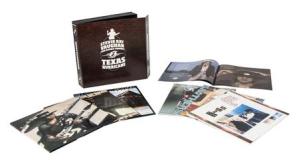
A good customer, initials CF, bought some SRV Hot Stampers from me a while back. He then told me he was going to spend $400 on the AP SRV Box Set in the hopes that the rave reviews from audiophile reviewers were justified.

The complete story of his disappointment can be found here. An excerpt:

What do you do with the Box Set if you find out these reviewers are full of horse pucky and it sounds as awful as our friend CF say it does? Can you send it back to Acoustic Sounds?

Oh, sorry, you can’t.

Within 30 days of purchase, we will accept returns of any physically or audibly defective or damaged item. We do not guarantee that you will like the music or recording quality of a LP or CD, and personal taste does not qualify as a reason for return.
There is a reason they have that policy. They sell bad sounding records.

We have the opposite policy. You can return any record for any reason within 30 days and get 100% of your money back.

We can do that because we sell good sounding records.

PS from CF

Great stuff, love it. Someone’s gotta keep this industry as a whole accountable. It’s like we’re in the dark ages with just a few devoted monks scouring the libraries and preserving the truth of what once was. Hopefully due to your lifetime’s commitment to this we’ll one day see a renaissance of quality, but it’s looking pretty bleak currently.

Ain’t that the truth.


We leave you with this comment from Michael Fremer, a man who apparently cannot get enough of this crap.

With all of the reissues coming from questionable sources or proudly proclaiming their ‘digital-ness’ ala The Beatles Box, we’re fortunate to have labels like Analogue Productions, Mobile Fidelity, ORG, IMPEX, Rhino and the others cutting lacquers from analog tapes. Acoustic Sounds’ Chad Kassem sent this image of the master tape box from Couldn’t Stand the Weather one of the many Stevie Ray Vaughan albums his reissue label is currently readying for release, pressed at his Quality Record Pressings pressing plant in Salina, Kansas. That’s a form of vertical integration we like! I have heard some truly miserable vinyl reissues from labels like Vinyl Lovers and ZYX some of which didn’t even sound like the same music when compared to original pressings. I’ve also heard test pressings of these SRV albums and they will rock your world! So, we are lucky to have these companies that are doing things correctly lavishing vinyl goodies on us all year long. Sometimes we wish they’d stop long enough for us to catch up, but then we come to our senses and say “more please!” even when the shelves are stuffed.

Lucky to Have Analogue Productions Around?

If you think his pressing of Tea for the Tillerman sounds good, it’s a near certainty you will want to be the first on your block to collect all the newly remastered Steely Dan Heavy Vinyls (the first of which has been reviewed here).

The same goes for this pressing of Stand Up. If this is the sound you are looking for, you can be sure Chad will give it to you, good and hard (apologies to H.L. Mencken). Here are some of the other titles of theirs we’ve reviewed:

Do these records sound fine to you? You’re happy with them, are you?

Then you have much to look forward to with the release of the complete Steely Dan LP collection!

These Analogue Productions releases will no doubt share many of the sonic characteristics of the above-mentioned titles.

How could they not? They are guaranteed to sound the way Chad wants them to sound. Chad is the customer, and the customer is always right.

If you’re Bernie Grundman, it might take you seven runs at it until you find that indescribable and elusive “Chad” sound, but you will have to keep at it until you do, assuming you plan on getting paid.

(more…)

The Planets on Pro-Use Japanese Vinyl at 45 RPM Is Just Awful

More of the music of Gustav Holst (1874-1934)

This EMI 45 RPM Japanese Import 2 LP set is considered one of the great Planets by many audiophiles, but it’s not, based on our playing of a copy we had years ago, which means it belongs in our audiophile hall of shame.

The best copies on British or Dutch EMI vinyl are clearly better than this “audiophile” pressing.

What could be less surprising?

This is precisely why we dislike Japanese pressings as a rule — they sound like this audiophile trash.

Our favorite performance of The Planets can be found here.

The Big Picture from a Lifelong Audiophile

You may have seen the following text in another listing, but it bears repeating.

There is nothing new under the sun, and that is especially true when it comes to bad sounding audiophile records. The world is full of them.

There has been one big change from the days when I self-identified as a freshly minted audiophile in the 70s.

Yes, the records being marketed to audiophiles these days may have second- and third-rate sound, but at least now they have good music. That’s progress, right?

The title reviewed above is a good example of the kind of crap we newbie audiophiles used to put up with back in the old days, long before we had anything resembling a clue.

This one clearly belongs on our list of bad audiophile records.

You might be asking: What kind of audio fool was I? to buy a dumbass record like this.

It’s a fair question. Yes, I admit I was foolish enough to buy records like this and expect it to have good music, or at least good sound. Of course it had neither. Practically none of these kinds of records ever did. Sheffield and a few others made some good ones, but most Direct to Disc recordings were crap.

As clueless as I was, even back in the day I could tell that I had just thrown my money away on this lipsticked-pig in a poke.

But I was an audiophile, and like a certain Mr. Mulder, I wanted to believe. These special super-hi-fidelity records were being made for me, for special people like me, because I had expensive equipment and regular records are never going to be good enough to play on my special equipment, right?

To say I was wrong to think about audio that way is obviously an understatement. Over the course of the last forty years, I (and to be fair, my friends and my staff) have been wrong about a lots of things in the worlds of records and audio.

You can read more about many of the things we got wrong under the heading: live and learn.

The good news? Audio progress is real and anyone who goes about doing audio the right way can achieve the equivalent of miracles.

(more…)

We Used to Really Like The Forward Look on UHQR

Audiophile Records with Honest-to-Goodness Top Quality Sound

Hot Stamper Pressings of Live Jazz Recordings Available Now

This is a very old review, probably from 2010 or thereabouts.

Hard to say what we would think of this pressing today, what with our unwavering antipathy to Half Speed mastering. In the case of this record, you can add the consistently poor track record of the so-called UHQR to our list of reasons for suspecting that the quality would not in fact by Ultra High.

You are no doubt aware that the UHQR was recently brought back from the dead by Analogue Productions on a pressing whose packaging is quite a bit more impressive than its sound.

Our Old Review

This is a BRAND NEW UNPLAYED Reference 45 RPM Half-Speed Mastered UHQR LP. They only made 1,000 of these, so sealed or unplayed copies are virtually non-existent.

This is actually one of the best sounding Reference Records. It was recorded in the ’50s on location and has very natural sound. Half-Speed Mastered by Jack Hunt even!

I think the exceptionally natural sound found on this record is the result of two factors:

  1. It’s a live recording, meaning not everything can be controlled and the space is real, not engineered. And,
  2. This is early days in the recording history of Keith Johnson. As time went on he thought his engineering skills were improving, but I see little evidence of that in the results of his labors: the records he’s been making since 1957.

His records are as phony and weird as practically every other audiophile label of the day (M&K, Telarc, Chesky), no doubt the result of these audiophile types thinking they knew a lot more about recording music than turned out to be the case.

Play any vintage pressing from the ’50s to see exactly what they failed to accomplish.

We know of at least two releases on Reference Records with “astoundingly” bad sound.

Both figure prominently on our list of the worst kind of audiophile bullshit records.


Further Reading

If This Is Your Idea of a Reference Record, You Are in Real Trouble

Hot Stamper Pressings of TAS List Super Disc Albums Available Now

An astoundingly bad Sound Show!!

An audiophile hall of shame pressing and a Half-Speed mastered disaster if there ever was one. If this Reference LP isn’t the perfect example of a pass/not-yet record, I can’t imagine what would be. It is just awful.

Mastered by none other than Stan Ricker. RR-7 also appears to still be on Harry Pearson’s TAS List.

My recent notes can be seen below. (The 1 in the upper left hand corner is my abbreviation for side one, which seems to be the worst side of the two here.)

Track two, the Red Norvo selection, is a real mess, highlighting the problems typically caused by Half Speed Mastering, especially at the hands of one of the most notorious “Audiophile” Mastering Engineers of All Time, the late Stan Ricker. Who cut as many bad sounding records as SR/2 himself? No one I can think of comes close.

His records, with few exceptions, suffer from bad bass (probably bloated and poorly defined in this case, my notes don’t say but after playing these records for thirty years I doubt I’m very off with this guess) and phony, boosted highs, which cause the striking of the mallets to be emphasized in an especially unnatural and unpleasant way.

Arthur Lyman had dramatically better sound in the 50s.

How come none of the audiophiles at Reference Records bothered to figure out how he did it?

Can anybody take sound like this seriously?

(more…)

Midnight Sugar on Two 45 RPM Discs

More Jazz Recordings Featuring the Piano

We haven’t played a copy of this record in years, but back in the day we liked it, so let’s call it a “B” with the caveat that the older the review, the more likely we are to have changed our minds.

The following notes were added in 2023. The original review can be seen just below them.

We should point out that the original Japanese pressings are clearly better sounding than any of the Super-Cut Analogue Disks that were pressed at RTI, regardless of the cutting speed.

I remember auditioning the 33 RPM recut that had been done in 1995. I was a big fan of the album in those days, and I had at least one and maybe more than one authentic Japanese pressings of the album in my collection. I still own the Three Blind Mice CDs of a number of titles as well.

It was no contest, the early pressings were obviously better in every way. I was selling heavy vinyl back then, and that’s what I had to sell, so I raved about the sound of the RTI-pressed reissues and sold plenty of them. I never bothered to point out that they were not as good as the originals. They were good and that was pretty much all I was going to say about them.

The authentic Japanese pressings were expensive to buy and very hard to find. Although they were better sounding, anyone buying the new pressings was likely to be happy with them, and that was good enough for the business model of Better Records at the time.

What accounts for the fall-off in sound quality from the earlier pressings to the reissues, remastered in Japan and then pressed at RTI, is anyone’s guess.

Some of that reduction results from the substandard sound that virtually all RTI pressings tend to have, a subject we discussed in some detail in this commentary from years back.

(more…)

Charlie Byrd on Crystal Clear – Dark, Unnatural and Definitely Not My Idea of Good Sound

More Jazz Recordings Featuring the Guitar

This Crystal Clear 45 RPM Direct-to-Disc LP is pressed on white vinyl. Of the couple of copies we played, this one had the best sound.

It had more clarity than the other copy, which sounded even more veiled and smeary than this one.

I sure never liked the sound of this record though.

It’s dark and unnatural to my ears.  It would be best to avoid it if you are looking for audiophile sound.

There are so many other, better Charlie Byrd recordings, why waste your time and money on this one? It’s yet another example of an “audiophile” record with practically nothing in the way of audiophile merit.

Which should not be too surprising. The bulk of the Crystal Clear records we’ve played had third-rate sound and pointless music.

Most of their direct to disc recordings were nothing but audiophile bullshit.

This Charlie Byrd title is the kind of crap we newbie audiophiles used to buy back in the ’70s — typically at stereo stores, or “audio salons” as they are often called now, the ones that are still in business anyway — before we had anything resembling a clue.

(more…)

The Three at 45 RPM – Our Four Plus Copy from 2013

Hot Stamper Pressings of The Three Available Now

We had six (yes, six!) of these 45 RPM pressings (and five Inner City’s and a couple of Eastwind 33’s — it was a big shootout), and this side one had the most ENERGY of any of them. This is a quality no one seems to be writing about, other than us of course, but what could possibly be more important? On this record, it took the performances of the players to a level beyond all expectations.

Our lengthy commentary entitled outliers and out-of-this-world sound talk about how rare these kinds of pressings are and how to go about finding them.

We no longer give Four Pluses out as a matter of policy, but that doesn’t mean we don’t come across records that deserve them from time to time.

This album checks off a number of important boxes for us here at Better Records:

Folks, you are looking at the BEST SOUNDING RECORD we have ever played here at Better Records, and the good news for you dear reader, whether you’re a true believer, a skeptic, or fall somewhere in-between, is that it can be yours. There was a time when a record like this would go directly into my collection. If I wanted to impress someone, audiophile or otherwise, with the you-are-there illusion that only Big Speakers in a dedicated room playing a LIVE recording can create, this would be the clear choice, possibly the only choice. There is simply nothing like it on vinyl in my experience. (more…)

Letter of the Week – “After returning to the 45 RPM there was no enjoyment, so I dropped the needle on the stamper one more time, and then I heard it…”

More of the Music of Kenny Burrell

Reviews and Commentaries for the Music of Kenny Burrell

A good customer had this to say about a recent shootout:

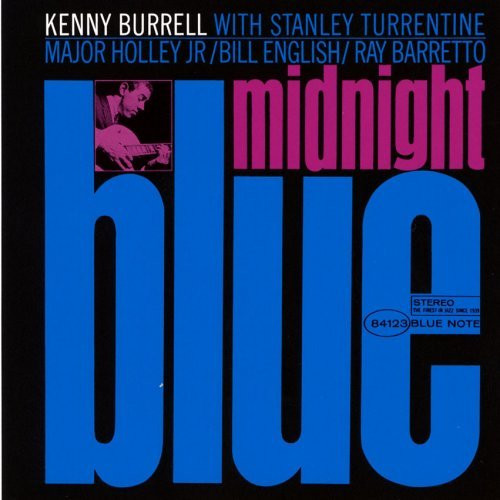
By the way, side 2 of Midnight Blue bested every other copy I played including the 45 RPM Blue Note AP reissue. The 45 RPM is very good. You know that technically it is right, but at the same time it’s missing something.

When I listened to the [Hot] stamper copy you dug up for me I found it a little noisy at first and wasn’t sure if I could live with it. However after returning to the 45 RPM there was no enjoyment, so I dropped the needle on the stamper one more time, and then I heard it…

I know what you mean about these modern reissues “missing something.” No matter how well mastered they may be, they’re almost always missing whatever it is that makes the analog record such a special listening experience. I hear that “analog” sound practically nowhere else outside of the live event (and, of course, the vintage LP). 

Thanks for your letter. 
TP

Our Classic Records Review

Pretty flat and lifeless. You would never understand why audiophiles rave about this recording by listening to the Classic Records pressing.

We played it up against our best, and as expected it was nothing to write home about. Since Rudy has remastered and ruined practically all the Blue Note CDs by now, you will have your work cut out for you if you want to find a good sounding version of Midnight Blue. This sure ain’t one.

Of course we would be more than happy to get you an amazing sounding copy — it’s what we do — but the price will be five to ten times (or more) what the Classic costs. In our opinion it’s money well spent.

Since the Classic conveys very little of what the musicians were up to whilst recording the album, our advice is to cross it off your list of records of interest. It’s thirty bucks down the drain.

(more…)