Top Artists – Jethro Tull

Letters, reviews and commentaries for the music of Jethro Tull.

Is The Pink Label The Hot Ticket for Jethro Tull’s Brilliant Stand Up Album?

Hot Stamper Pressings of the Music of Jethro Tull Available Now

Well, it certainly can be, but sometimes it isn’t, and failing to appreciate that possibility is a classic case of misunderstanding a crucially important fact or two about records. Audiophile analog devotees would do well to keep these facts in mind, especially considering the prices original British pressings are fetching these days.

Simply put: Since no two records sound alike, it follow that the right label doesn’t guarantee the right sound.

A shootout years ago illustrated both of these truths.

We had a number of Pink Island British pressings to play — if you hit enough record stores often enough, in this town anyway, even the rarest pressings are bound to show up in clean condition from time to time — along with Sunrays (aka Pink Rims), later Brits, early Two Tone domestics and plain Brown Label Reprise reissues. All of them can sound good. (We do not waste time with German and Japanese pressings, or any of the later Chrysalis label LPs. Never heard an especially good one.)

What surprised the hell out of us was how bad one of the Pink Label sides sounded. It was shockingly thin and hard, practically unlistenable.

Keep in mind that during our shootouts the listener has no idea which pressing is being played, so imagine hearing such poor reproduction on vinyl and then finding out that such bad sound was coming from a copy that should have been competitive with the best, on the legendary Pink Island label no less. (Of course the other Pinks were all over the map, their sides ranging from good to great.)

Hearing one sound this bad was completely unexpected, but hearing the unexpected is what we do for a living, so I suppose it shouldn’t have been. Having dubious looking reissues and the “wrong” pressings beat the originals and the so-called “right” pressings from the “right” countries is all in a day’s work here at Better Records.

The audiophiles who collect records by label are asking for trouble with Stand Up.

Assuming they want the best sound, that is.

(more…)

Jethro Tull – One of the Worst Releases on DCC (and That’s Saying Something!)

Sonic Grade: F

The DCC pressing is a complete disaster, one of the worst sounding versions of the album ever made.

As bad as the MoFi is, the DCC is even worse. Murky and bloated, to my ear it does almost nothing right, not on vinyl anyway. The DCC Gold CD is better, and it’s certainly nothing to write home about. 

Our Hot Stamper commentary below sorts out the DCC, the Classic Records Heavy Vinyl pressing and the MoFi Half-Speed Mastered LP, as well as British and domestic originals.

We love this album and we’ve played every kind of pressing we could get our hands on. The winner? Read on!

Over the course of the last 25 years we was wrong three ways from Sunday about our down-and-out friend Aqualung here. We originally liked the MoFi.

When the DCC 180g came along we liked that one better, and a few years back I was somewhat enamored with some original British imports.

Our first big shootout disabused us of any notion that the British originals were properly mastered. As we noted in our Hot Stamper commentary, “The original Brits we played were pretty hopeless too: Tubey Magical but midrangy, bass-shy and compressed.”

Another myth bites the dust.

The same is true for Thick As A Brick; the best domestic copies are much more energetic and tonally correct.

Chad Has Served Poor Jethro Tull Most Barbarously

Hot Stamper Pressings of the Music of Jethro Tull Available Now

With a nod to our old friend, John Barleycorn.

We were finally able to get our hands on Analogue Productions’ newly remastered Stand Up, an album we know well, having played the British copies from every era by the score. Our notes for the sound can be seen below.

If ever a record deserved a “no” grade, as in “not acceptable,” this new 45 RPM pressing mastered by Kevin Gray deserves such a grade, because it’s just awful. (This link will take you to a great many more records best avoided by audiophiles in search of better sound. Although we’ve only linked to about 75 pressings here on the blog, it should be noted that the world is full of bad sounding records.)

But let’s put that grade in context. The last time a good sounding version of Stand Up was released, as far as we can tell, was 1989, and that version was the Mobile Fidelity Gold CD. I bought mine soon after it came out. I wasn’t even planning on buying a CD player when the Compact Disc was first invented, but then Mobile Fidelity played a dirty trick on me. Instead of releasing Loggins and Messina’s first album on vinyl, they put it out exclusively on CD as part of their Silver MFCD series.

As a die-hard MoFi fan, that sealed the deal: now I had to buy a CD player. I picked up a cheap Magnavox player, the 1040. I think it ran me less than $100, and played my new Sittin’ In CD, which, as I recall, sounded pretty good. (One of my other early CD purchases was Tumbleweed Connection, the regular label release, and it was dreadful.)

I still own Stand Up on Gold CD, and I still find it superb in every way. (Many of the MFSL Gold CDs from this era are excellent and worth seeking out.)

It sounds nothing like this new vinyl release, and that’s a good thing.

On vinyl, Stand Up has rarely been given the care it deserved. The last version of Stand Up to have sound we would want to listen to was pressed in the UK in the early ’70s. That was close to fifty years ago.

We sold some domestic pressings of the album back in the early 2000s, describing them at the time as made from dub tapes with all the shortcomings that entails, but mastered very well from dub tapes. The best domestic pressings are rich, smooth, tonally correct and natural sounding. They’re too dubby to sell as Hot Stampers, but they are not bad records. Some later Chrysalis pressings are big and open, but often they are too thin and bass-shy for the music to work. We’ve never taken them seriously.

It wasn’t long before we’d eliminated everything but the early UK pressings for our shootouts, and we quickly discovered that the earliest of the UK pressings on the older Island label were not good at all. We wrote about the problem with some originals more than ten years ago.

What was surprising about the shootouts we had done in past years was how disappointing most of the early British pressings we played were. They were flat, lacked energy and just didn’t rock the way they should have.

We learned the hard way that most British Pink label pressings aren’t especially rich, that some are small and recessed, and some are just so smeary, thick and opaque that they frustrate the hell out of you as you’re trying to hear what any of the musicians other than Ian Anderson is doing.

So when a reviewer comes along and says something positive about the new pressing compared to some unidentified original, we appreciate the problem that is at the root of his mistaken judgments:

Here’s the deal: if the goal was to duplicate the original pink label Island sound, this reissue misses that, which is good because this new double 45 reissue is far superior to the original in every possible way.

The tape was in great shape, that’s for sure. Clarity, transparency, high frequency extension and especially transient precision are all far superior to the original. Bass is honest, not hyped up and the mastering delivers full dynamics that are somewhat (but only slightly), compressed on the original. Ian Anderson’s vocals are naturally present as if you are on the other side of the microphone. Most importantly, the overall timbral balance sounds honest and correct. But especially great is the transient clarity on top and bottom.

If you’re fortunate to have an original pink label Island, at first you might think the sound is somewhat “laid back”, but that’s only because the mids and upper mids are not hyped up as they are on the original. That adds some excitement, but it clouds the picture and greatly obscures detail.

If you scroll down to our notes, you will see what we thought of the “laid back” sound this reviewer talks about. (Keep in mind that we first read the above review mere moments ago.)

We think “smaller, thick and stuck in the speakers” may be someone’s idea of “laid back,” but, just so there is no misunderstanding, it’s our idea of “awful.”

None of these are good things. Our Hot Stamper pressings are never small, thick or stuck in the speakers. They’re the records with the opposite of that sound. Our records are big, transparent and open. That’s why we can charge so much money for them and have people scooping them up from our Wednesday mailer the moment they become available.

They deliver the big, bold sound that the brilliant engineer for the album, Andy Johns, was known for. Laid back was not in his vocabulary.

Here is more of what we heard on side one.

Jeffrey Goes to Leicester Square

“Transients are sharp but body is dull. Kinda phony.”

Phony sound is the key here. Messing with the EQ in the mastering benefits some aspects of the sound at the expense of others.

Nothing new there. Audiophile pressings with wacky EQ are the norm. I would be surprised if any common Reprise pressing from back in the day wouldn’t sound more “right,” more tonally correct, more seamless. I’ve played quite a few and I don’t recall ever hearing one sound “phony.”

On side two we played the first two tracks.

(more…)

Audiophile Wire Testing with Jethro Tull and His Friend Aqualung

Hot Stamper Pressings of the Music of Jethro Tull Available Now

… who seems to have a rather nasty bronchial condition…

[This commentary is from 2008 or so I’m guessing. Still holds up though.]

Like Heart’s Little Queen album, Aqualung presents us with a Demo Disc / Test Disc that really puts a stereo through its paces, assuming it’s the kind of stereo that’s designed to play an album like Aqualung.

Not many audiophile systems I’ve run across over the years were capable of reproducing the Big Rock Sound this album requires, but perhaps you have one and would like to use the album to test some of your tweaks and components. I used it to show me how bad sounding some of the audiophile wire I was testing really was.

Here’s what I wrote:

A quick note about some wire testing I was doing a while back. My favorite wire testing record at the time (2007)? None other than Aqualung!

Part One

Here’s why: Big Whomp Factor. Take the whomp out of Aqualung and the music simply doesn’t work, at all. To rock you need whomp, and much of Aqualung wants to rock.

(more…)

Aqualung Is a MoFi Disaster (But Some Folks Refuse to Believe It)

Hot Stamper Pressings of the Music of Jethro Tull Available Now

[This commentary was written about fifteen years ago, perhaps more.]

We noted in our Hot Stamper review for Aqualung that the MoFi is a disaster, with the murky bloated DCC even worse. (We didn’t like the Classic either. It seems we’re hard to please when it comes to Aqualung.) 

But we used to like the MoFi and DCC just fine. What could possibly have changed?

It’s a long story, and a pretty long commentary, which we have excerpted from a customer’s letter, along with our reply. Note that we have edited our original commentary and his letter for the sake of brevity. Now the letter:

To: Tom Port,

As far as “Aqualung” is concerned, I have a Mobile Fidelity issue of this album which sounds great and being pressed on some of the best vinyl in the world by people who are known for their meticulous care with records, I don’t think that there would be much difference at all in the quality of different MoFi pressings of this or any of their records.

The key phrase here is “I don’t think that there would be much difference at all…”.

You see, this is not something to think about, this is something to test. Thinking got this gentleman nowhere; testing might have had the opposite effect.

How About Abbey Road?

And speaking of MoFis all sounding the same, we had a MoFi that we called “the Killer MFSL Abbey Road of All Time” which sold for $500. Our average copy is about $75. Which one do you think sounded better? And how can there be that big of a difference in the sound of one MoFi relative to another?

Don’t ask me; we just play them and price them according to the sound. Those big questions I defer to Joe. He thinks he has the answers.

(more…)

Why Own a Turntable if You’re Going to Play Mediocrities Like These?

Hot Stamper Pressings of Aja Available Now

Hot Stamper Pressings of Blue Available Now

Hot Stamper Pressings of Aqualung Available Now

This commentary was posted in 2007 and amended later with the statement that we would no longer be ordering new Heavy Vinyl titles. The thrill was gone and there was no sign of it ever coming back. It took a while to sell off the inventory, but by 2011 we had eliminated them completely from our site.

As it happens, 2007 turned out to be a milestone year for us here at Better Records.

If you bought any Heavy Vinyl pressing from us, ever, please accept our apologies.

Now is the perfect time to find out just how much a Hot Stamper pressing can do for your musical enjoyment. (You might consider taking the enthusiastic advice of these customers regarding that subject.)


Three of the Top Five sellers this week (8/22/07) at Acoustic Sounds are records we found hard to like: Aja, Aqualung and Blue. Can you really defend the expense and hassle of analog LP playback with records that sound as mediocre as the Rhino pressing of Blue?

Why own a turntable if you’re going to play records like these? I have boxes of CDs that sound more musically involving and I don’t even bother to play those. Why would I take the time to throw on some 180 gram record that sounds worse than a good CD?

If I ever found myself in the position of having to sell mediocrities like the ones you see pictured in order to make a living, I’d be looking for another line of work. The vast majority of these newly-remastered pressings are just not very good.

We Aren’t Walmart and We Definitely Don’t Want to Be Walmart

We leave that distinction to our colleagues at Acoustic Sounds, Elusive Disc and Music Direct (Walmart, Target and Sears perhaps?)

[Yes, Sears existed when I wrote this screed! Time flies.]

They sell anything and everything that some hapless audiophile might wander onto their site and find momentarily attractive, like shiny trinkets dangling from a tree, glittering as brightly as fool’s gold. They know their market and they know where the real money is.

(Hint: it ain’t records, dear reader, it’s equipment. If you haven’t seen one of their thick full-color catalogs lately, count how many pages of equipment you have to wade through at the front before you get to the “recommended recordings.”)


UPDATE

I would amend that to say that it probably is records now. Since 2007 they have become much more popular and profitable. Apparently you can cut the same title 16 different times and audiophiles will just keep buying it. Look at what is happening with reissues of The Beatles’ catalog.


(more…)

Big Speakers, Loud Levels and Plenty of Bass Work Their Magic on Stand Up

Hot Stamper Pressings of the Music of Jethro Tull Available Now

It’s common for pressings of Stand Up to lack bass or highs, and more often than not the copies that we play in our shootouts — shootouts which are strictly limited to import pressings on Island or Chrysalis — lack both.

The bass-shy ones tend to be more transparent and open sounding — of course, that’s the sound you get when you take out the bass.

90-plus percent of all the audiophile stereos I’ve ever heard were bass shy, no doubt for precisely that very reason: less bass equals more detail, more openness and more transparency. Go to any stereo store or audiophile show and notice how bright the sound is. (Yet another good reason not to go to those shows. We stopped decades ago.)

Just what good is a British Classic Rock Record that lacks bass?

It won’t rock, and if it don’t rock, who needs it? You might as well be playing the CD. (The average CD of Stand Up — I have a couple of them — is terrible, but the MoFi Gold CD is superb in all respects.)

The copies that lack extreme highs are often dull and thick, and usually have a smeary, blurry quality to their sound. When you can’t hear into the music, the music itself quickly becomes boring. Most Island pressings suffer from these shortcomings.

If I had to choose, I would take a copy that’s a little dull on top as long as it had a meaty, powerful, full-bodied sound over something that’s thinner and more leaned out. There are many audiophiles who can put up with that sound — I might go so far as to say the vast majority can — but I am not one of them.

(more…)

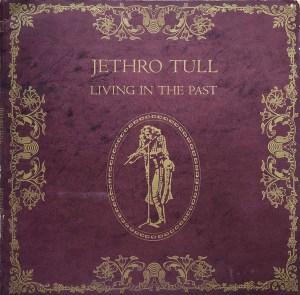
Jethro Tull – Living In The Past

More Jethro Tull

  • A stunning Chrysalis British import double LP set with Triple Plus (A+++) grades or close to them on sides one, two and four and a solid Double Plus (A++) side three
  • You’re gonna love the sound here – clean, clear and full-bodied with great bass and solid midrange presence and energy
  • These are incredibly tough to find with the right sound and surfaces – this is one of the best copies to hit the site in years
  • 4 1/2 stars: “… this collection is seminal and essential to any Tull collection, and the only compilation by the group that is a must-own disc.”
  • Some records are just too consistently noisy for us to offer to our audiophile customers no matter how good they sound. We have a section for records that tend to be noisy, and it can be found here.

This set was very difficult to find with audiophile playing surfaces. Many of the copies we bought — at great expense I might add — were so heavily played and marked up they went right into the trade-in bin. This is one of the few that made the cutoff. Mint Minus Minus and a little noisier is about as quiet a copy as we could find.

If you want to hear how amazing Living In The Past can sound and don’t mind some surface problems, this is the copy to get. If for any reason you are not happy with the sound or condition of the album, we are of course happy to take it back for a full refund, including the domestic return postage.

(more…)

Minstrel In The Gallery Needs Space for the Drums

More of the Music of Jethro Tull

More Records with Specific Advice on What to Listen For

Space is critical to the success of the dense mixes employed in the proggy parts of the recording. The best copies have room for all the instruments to separate themselves out. Just to take one example: the drums are everywhere: higher, lower, in the front, in the back; in short, all over the place, and there’s no doubt in our minds that they were meant to be heard that way, not congested, blurred and smeared together on a single plane as they were on many of the copies we played.

And not thinned out either, which is not so much about space but sure is important on a rock record.

Want to find your own top quality copy?

Consider taking our moderately helpful advice concerning the pressings that tend to win our shootouts.

In our experience, this record sounds best this way:

(more…)

Jethro Tull – Benefit

More Jethro Tull

  • A superb copy of the band’s third studio album, with outstanding Double Plus (A++) sound from start to finish
  • The sound is big and rich, yet still wonderfully clean, clear and open with fantastic energy – you will not believe all the space and ambiance here
  • Huge, rich, tubey and solid, the best track on the album – To Cry You a Song – rocks like you will not believe
  • “Benefit forms the perfect bridge between the rolling, tumbling Tull of old and the tightly braided riffs and prickly lyrics presented by Aqualung.” Record Collector

(more…)