Progress in Audio

It’s not easy to make audio progress — nothing is in fact harder. However, if your approach to audio is clear-headed and evidence-based — in other words, scientific — progress is not only possible, it is virtually guaranteed.

If you play huge numbers of records, and listen to them critically, some of them will teach you things about audio that you cannot learn any other way.

Practically all of our audio philosophy derives from the simple act of trying to get our system to play the greatest recordings of all time with the highest fidelity possible. Every record is a challenge, and every defeat an opportunity to learn something — to see where we may have gone wrong — in order to know more than we did before.

Fighting The Dreaded J Curve

More Entries from Tom’s Audiophile Notebook

That guy you see pictured to the left has spent much of the last forty years wandering around used record stores looking for better records (ahem). 

Before that he wandered around stores selling new records because he didn’t know how good old used records could sound.

In these posts he shares some of the things he’s learned since he started buying records at the age of ten roughly sixty years ago. (First purchase: She Loves You on 45. It’s still in his collection, although it cracked a long time ago and hasn’t seen a turntable in forever.)


Perhaps you suspect the electronics of your system are not as neutral as you thought they were.

So let’s say you get rid of your euphonic tube equipment (vintage or modern, makes no difference, colorations are colorations) and switch over to something that’s less colored.

The sound is now cleaner, cleaner, more present, more alive, more “right there” the way live music is “right there,” not veiled or vague or recessed the way so many stereos (at least in my experience) tend to sound. (Hard to believe, but some audiophiles seem to like that sound.)

But perhaps the sound now lacks richness, because you no longer have the richness your tubes were adding.

Perhaps now the sound is not as smooth as you would like, because it’s not being smoothed over by the smooth-sounding tube equipment you were using.

It’s very possible that the change has caused you to be less less happy with the sound.

Welcome to the J Curve.

You started at one point on the J, you made some changes, and now you find yourself with inferior sound compared to the sound you had before.

You may decide to turn back, to restore the sound you had so that you can enjoy your records the way you did when you had euphonic equipment, tube or transistor.

(more…)

Bob and Ray Were Not Enough – We Needed the Tillerman Too

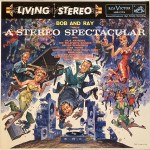
Bob and Ray Throw a Stereo Spectacular is my all time favorite test disc, the one test that every change to the system must pass: by making The Song of the Volga Boatmen sound better.

The danger in making the bulk of your sonic judgments using only one record is that you never want to optimize your system for a single record, only to find out later that it now sounds better but others you play now sound worse.

Here is the story of how I made that mistake long ago (and apparently did not learn my lesson): In 2005, I fell into a exactly this kind of audiophile trap.

The Right Way

So the right way to go about testing and tweaking is to get all your hardest test records out and start playing them, making notes as you tweak and tune your system, setup, room and whatever else you can think of.

This may take a long time, but it is time well spent when you consider that, once you are done, all — or nearly all — of your records will sound better than they did before.

In my review of the 45 RPM Tillerman, I noted the following:

Recently I was able to borrow a copy of the new 45 cutting from a customer who had rather liked it. I would have never spent my own money to hear a record put out on the Analogue Productions label, a label that has an unmitigated string of failures to its name. But for free? Count me in!

The offer of the new 45 could not have been more fortuitous. I had just spent a number of weeks playing a White Hot pink label original UK pressing in an attempt to get our new playback studio sounding right.

We had a lot of problems.

We needed to work on electrical issues.

We needed to work on our room treatments.

We needed to work on speaker placement.

We Repeated Our Mistake

(more…)

When It Comes to Carts and Horses, Which Comes First, and Who Pulls Whom?

Please Consider Taking Some of Our Audio Advice

Robert Brook recently wrote a piece making the case that the cure for audiophile ailments of all kinds — burnout, boredom, etc. — is a high quality stereo system. It is beautifully written and we think well worth your time to read.

Robert walks us through what it has meant to him to have spent so many hours over the years building a high quality stereo system, mostly by describing the musical enjoyment it has brought to him.

What could be better?

We feel the same way. If you build such a system, and play the right records on it, you will experience the music you love in ways more powerful than you could have ever even imagined. Your favorite albums will sound so good that boredom and burnout would be simply inconceivable.

Those of us with top quality systems are confused by the dysfunctional relationship these poor souls have to their stereos and recordings. With a good stereo and good records, it’s hard to see how these psychological states are even possible.

The Heart of the Problem

The problem audiophiles have is one that sits right at the heart of our hobby.

Good stereos are hard to come by.

So the question always comes down to how one should go about building such a beast. There are two schools of thought.

Is the first priority to have properly-pressed, properly-mastered records of well-recorded music in order to get the ball rolling?

Or is it better to make improvements to the stereo first, so that you can then pursue better sounding records and end up with the best of both worlds, a great stereo playing great records?

My Two Cents

Allow me to weigh in. Please consider the following unusual, even goofy, and possibly logically inconsistent, analogy.

Imagine that the place where you can enjoy music is a town not far from where you live.

Because you love music, you must travel there as that is the only place you can enjoy your favorite music to its fullest.

The Horse and the Cart

The horse that draws the cart that you ride into this town is not the right record, it is the right stereo in the right room.

Without the right stereo, you lack the ability to recognize the right record.

Similarly, you lack the ability to appreciate what makes it more right than any other record.

Without the right stereo, you may in fact be trying to optimize the playback of records that are wrong. I did this for decades with my Mobile Fidelity records in the 70s and 80s. I played Heavy Vinyl pressings in the 90s and early 2000s that sounded right to me at the time but no longer do, mainly because our current system evolved over a very long time to be ruthless at revealing their deficiencies and my ears became better at recognizing them.

(more…)

The Pareto Effect in Audio – The 80/20 Rule Is All Too Real


Basic Audio Advice — These Are the Fundamentals of Good Sound

Even thought this commentary was written close to twenty years ago, we proudly stand behind every word.

Ambrosia’s first album does exactly what a good Test Disc should do. It shows you what your system is doing wrong, or poorly, and once you’ve fixed it, or made it better, it shows you that it actually is better, maybe even right, or at least more right than it was before.

We audiophiles need records like this. They make us better listeners, and they force us to become better audio tweakers. Because the amount of tweaking you do with your setup, components, room, electricity and the like is the only thing that can take you to the highest levels of audio.

The unfortunate reality audiophiles must eventually come to grips with in their journey to higher quality sound is that you cannot simply buy equipment that will get you there.

You can only teach yourself, painstakingly, over the course of many, many years, how to tweak and tune your equipment — regardless of its cost or purported quality — in order to reach the highest levels of audio fidelity.

And learning how to tweak and tune your equipment has other, fundamentally more important benefits in addition to its original purpose.

It helps you become a better listener. To notice aspects of the sound — the nuances and subtleties — you’ve been missing in your favorite recordings.

(more…)

Trying to Get at the Truth with Transistors

More Entries from Tom’s Audiophile Notebook

In 2007 we did a shootout for The Four Seasons on RCA and noted the following:

For those of you with better tube gear, the string tone on this record is sublime, with that rosin-on-the-bow quality that tubes seem to bring out in a way virtually nothing else can, at least in my experience.

Our experience since 2007 has changed our view concerning the magical power of tubes to bring out the rosiny texture of bowed stringed instruments.

We have in fact changed our minds completely with respect to that rarely-questioned belief.

It’s a classic case of live and learn, and represents one of the bigger milestones in audio that we marked in 2007, a year that in hindsight turns out to have been the most important in the history of the company.

Everything changed dramatically for the better for us sometime in 2005. That’s when we discovered the transistor equipment we still use to this day.

We found a low-power integrated amp made in the 70s that was vastly superior to our custom-built tube preamp and amp. We had an EAR tube phono stage at that time, which we quite liked.


UPDATE 2025

We recently hooked up our old 834p phono stage in the system and did not like the sound at all.

Things change. Boy do they ever!


In 2007 we auditioned the EAR 324P transistor phono stage and immediately recognized it would take our analog playback to an entirely new level, one we had simply never experienced before and really had never thought could possbily exist.

(more…)

“Robert directly improved my stereo to achieve levels of sonic performance I didn’t think were possible.”

One of our good customers has a blog which he calls

A GUIDE FOR THE DEDICATED ANALOG AUDIOPHILE

Bill, who also happens to be a very good customer of ours, recently had Robert Brook over for a visit to help him tweak and tune his setup.

The changes Robert was able to make to Bill’s system took it to the next level, or maybe even the one that comes after that. There are a lot of levels in audio!

As Bill said, even with a $6k phono stage and other comparably expensive equipment, the sound was still just OK.

Tedious, painstaking setup is the only thing that can make all that fancy equipment sound good, and Robert was the man with the patience to help out a friend who needed some guidance.

The magazines and the websites don’t talk much about these things, but we here at Better Records know that high fidelity sound is simply not possible without learning how to do the work and sweating all the details.

“TRANSFORMED MY SYSTEM from OK to GREAT!”

I only know of three people who followed my audio advice: Robert, Bill and Aaron, all of whom can be seen in the picture below.

For years I’ve been banging on about Legacy speakers, low-power transistor integrated amps, EAR 324p phono stages, Triplanar tonearms, 17dx cartridges, VPI turntables, Super Platters and motor controllers, Townshend Seismic Platforms, Hallographs, suspended cables, clean electricity, and the kind of tuning and tweaking that can take your system beyond where you thought it could go.

Even buying all this stuff used, the resulting system would still end up being a few tens of thousands of dollars. That said, I honestly don’t think you can achieve this level of sound with standard audiophile equipment, the kind you might see in a showroom or advertised on websites, at any price*.

(more…)

When You’re Just Getting Started in Audio, It All Looks So Easy

Presenting another entry in a series of big picture observations about records and audio.

John Salvatier has written a very interesting essay. It’s not short but I think it is well worth the time it will take you to read it.

The parallels to records will be clear to anyone who has spent much time in this hobby, or on this blog for that matter.

Those of us who have run record experiments by the thousands have learned to accept results which regularly defy logic.

All the way back in 2007 we learned an important lesson regarding the vagaries of record pressings: that identical looking LPs can have dramatically different sound quality.

Even two sides of the same record can have quite different sound quality. We know, we’ve played them by the hundreds.

(more…)

Advances in Playback Technology Are More Than Blind Faith

More of the Music of Eric Clapton

In a 2007 commentary for a Hot Stamper pressing of Blind Faith we noted that:

When it finally all comes together for such a famously compromised recording, it’s nothing less than a THRILL. More than anything else, the sound is RIGHT. Like Layla or Surrealistic Pillow, this is no Demo Disc by any stretch of the imagination, but that should hardly keep us from enjoying the music. And now we have the record that lets us do it.

The Playback Technology Umbrella

Why did it take so long? Why does it sound good now, after decades of problems? For the same reason that so many great records are only now revealing their true potential: advances in playback technology.

Audio has finally reached the point where the magic in Blind Faith’s grooves is ready to be set free.

What exactly are we referring to? Why, all the stuff we talk about endlessly around here. These are the things that really do make a difference. They change the fundamentals. They break down the barriers.

You know the drill. Things like better cleaning techniques, top quality front end equipment, Aurios, better electricity, Hallographs and other room treatments, amazing phono stages like the EAR 324p, power cables; the list goes on and on.

If you want records like Blind Faith to sound good, we don’t think it can be done without bringing to bear all of these advanced technologies to the problem at hand, the problem at hand being a recording with its full share of problems and then some.

Without these improvements, why wouldn’t Blind Faith sound as dull and distorted as it always has? The best pressings were made more than thirty years ago [thirty? make that fifty] — they’re no different.

(more…)

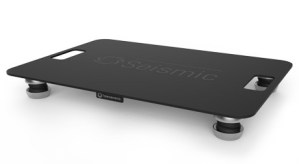
How We Test Equipment Like the Townshend Seismic Platform

Basic Audio Advice — These Are the Fundamentals of Good Sound

UPDATE 2026

You can now buy the seismic sink directly from Townshend at a better price than we could offer.


A few years back I discovered something wonderful about the Seismic Sink I was using under my turntable to control vibration.

In our experience, vibration control is one of the most important revolutionary advancements in audio of the last twenty years or so.

We sell the Seismic Sink and this is what I wrote to a customer who recently bought one:

Play your most complex test discs, the ones that are the hardest to get to sound right. Classical is the toughest test if you have some, but Pet Sounds is tough too. [I knew he was a fan and had a good copy of the album.]

Listen to one or two for a good while, at least 20-30 minutes, to know exactly what you are hearing on the tracks you know are the most difficult to get to sound right, the ones with the most problems.

Put the sink under the table. (You can also put it under your receiver, that works great too.)

Then play those tracks again.

Go back and forth a few times.

It should be pretty obvious what is going on.

Then read Robert Brook’s post.

(more…)

Focus Is the Hidden Driver of Excellence

More on Developing Your Critical Listening Skills

Every day Delanceyplace sends me email book excerpts, and the one that came today struck me as particularly relevant to the devilishly difficult audio hobby many of us have been engaged in for most of our adult lives. Some of their excerpts are seen below. (Italics added by me.)

I myself wrote a commentary back in 2006 about the 10,000 hour rule, which I have linked below delanceyplace’s piece, along with other commentaries I think you might enjoy.


Focus: The Hidden Driver of Excellence by Daniel Goleman.

“The ‘10,000-hour rule’ — that this level of practice holds the secret to great success in any field — has become sacrosanct gospel, echoed on websites and recited as litany in high-performance workshops. The problem: it’s only half true.

“If you are a duffer at golf, say, and make the same mistakes every time you try a certain swing or putt, 10,000 hours of practicing that error will not improve your game. You’ll still be a duffer, albeit an older one.

“No less an expert than Anders Ericsson, the Florida State University psychologist whose research on expertise spawned the 10,000-hour rule of thumb, told me, “You don’t get benefits from mechanical repetition, but by adjusting your execution over and over to get closer to your goal” .

“Apart from sports like basketball or football that favor physical traits such as height and body size, says Ericsson, almost anyone can achieve the highest levels of performance with smart practice. …

“Ericsson argues that the secret of winning is ‘deliberate practice,’ where an expert coach takes you through well-designed training over months or years, and you give it your full concentration.

“Hours and hours of practice are necessary for great performance, but not sufficient.

How experts in any domain pay attention while practicing makes a crucial difference.

For instance, in his much-cited study of violinists — the one that showed the top tier had practiced more than 10,000 hours — Ericsson found the experts did so with full concentration on improving a particular aspect of their performance that a master teacher identified.

Smart practice always includes a feedback loop that lets you recognize errors and correct them — which is why dancers use mirrors. Ideally that feedback comes from someone with an expert eye and so every world-class sports champion has a coach. If you practice without such feedback, you don’t get to the top ranks.

“The feedback matters and the concentration does, too — not just the hours. …

(more…)