Demo Discs for Dynamics

The group of records you see here are some of the most dynamic we’ve had the good fortune to discover.

Our scientific approach to finding the best sounding records has allowed these exceptional pressings to take their place among the best we’ve know of.

One of the many faults we find with modern Heavy Vinyl pressings is that they tend to be noticeably more compressed than the vintage pressings on this list.

Simply Red – Picture Book

More Simply Red

More Debut Albums of Interest

  • This original import pressing of the band’s Masterpiece boasts superb Double Plus (A++) grades on both sides
  • Big, spacious and clear, but also remarkably analog-sounding, with the kind of fullness and richness that’s so rare on records from this era – if you’re a fan of this music, this is the copy for you
  • Even more surprising is how dynamic the best pressings can be — the best are Demo Discs in that respect
  • “Holding Back the Years” was the big hit (#1), but what really sold me on the album was the band’s cover of The Talking Heads’ “Heaven” – not an obvious choice, and a truly inspired one
  • 4 1/2 stars: “The band finds a steady R&B groove reminiscent of ’60s Stax house band the MG’s, and, as with the MG’s, it’s all in the service of a big-voiced soul singer, in this case a British redhead.”
  • If you’re a fan of the band’s, this classic from 1985 belongs in your collection.

Finally, Analog Sound for this wonderful music. The average copy of this album may sound like you’re playing a CD, but not this one. Here is the warmth and richness and depth you didn’t know you could find on Simply Red’s Masterpiece (assuming you were even looking). That flat, opaque, dry CD sound that we all love to hate is nowhere to be found on this pressing.

The domestic pressings can be good, but they sure don’t sound like this killer import.

A recording from 1985 is unlikely to have the Tubey Magic and warmth of an old Columbia. Let’s be serious, the 1980s –- unlike the three decades that preceded them — were not known for the naturalness of their recordings. A few would make our Top 100 list (Let’s Dance springs to mind) but the pool of available candidates is shallow, not wide and deep like that of the decades before, in which so many records sound so good we could not begin to squeeze them into a list limited to merely one hundred. Two hundred would easily make the cut, maybe more.

(more…)

Fleetwood Mac – Rumours (Import)

More Fleetwood Mac

Reviews and Commentaries for Rumours

  • Here is a British import pressing of Fleetwood Mac’s magnum opus with seriously good Double Plus (A++) grades throughout
  • Tubey Magical analog – the sound is open, spacious and transparent, with a huge three-dimensional soundfield
  • A Better Records Top 100 title – when you hear it sound as good as it does here, you’ll know why we’ve long considered Rumours an Audiophile Demo Disc
  • If you own the album on two 45 RPM discs (you know the one), allow us to send you a copy that will beat the pants off that modern mediocrity – this one
  • 5 stars: “Each tune, each phrase regains its raw, immediate emotional power—which is why Rumours touched a nerve upon its 1977 release, and has since transcended its era to be one of the greatest, most compelling pop albums of all time.”
  • A list of Must Own rock from 1977 would have to have this album on it, somethere near the top I would think

When you hear a good copy of Rumours, it’s very easy to understand why this is one of the best-selling pop music albums of all time. Just about everyone knows how great these songs are, but I bet you didn’t know they could sound like this!

It’s tough finding Hot Stamper copies of this album. With over 75 sets of stamper numbers for each side, it’s an extremely taxing project, even for us. (more…)

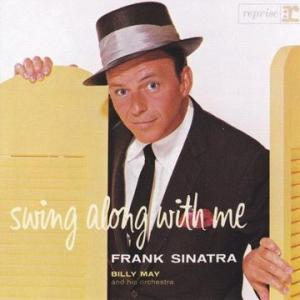
Frank Sinatra / Swing Along With Me – A Top Sinatra Title (You Probably Never Heard Of)

More Frank Sinatra

  • With INCREDIBLE Shootout Winning Triple Plus (A+++) grades or close to them throughout, this original Reprise pressing (only the second copy to hit the site in over three years) is doing practically everything right
  • Both of these vintage stereo sides are superb — rich, smooth and full-bodied with wonderfully present vocals and all of the Tubey Magic that’s missing from most copies
  • This album is very tough to come by in stereo in anything but beat condition, let alone with this kind of sound
  • Such is the trade-off here, with some bad marks on “Falling in Love With Love” and scattered stitches throughout “I Never Knew” and “Don’t Be That Way,” but once you hear how incredible sounding this copy is, you may be inclined, as we were, to stop counting ticks and stitches and just be swept away by the music
  • “Twelve of the most uninhibited Sinatra things ever recorded!”
  • “Recorded with Billy May, Sinatra Swings was Frank Sinatra’s first straight swing album for Reprise Records. In terms of content and approach, the record is remarkably similar to his final Capitol swing effort, Come Swing with Me.”

Also known as Sinatra Swings.

Five for Five in 1961

Of the five records Sinatra released in 1961 (Sinatra’s Swingin’ Session!!!; Come Swing with Me!; Ring-a-Ding-Ding!; Swing Along with Me; and I Remember Tommy), this is clearly one of our favorites. (And by the way, what’s with all the exclamation marks?)

(more…)

The Three / Self-Titled (45 RPM)

More Jazz Recordings Featuring the Piano

  • Amazing sound throughout this Japanese import pressing, with both sides earning KILLER Shootout Winning Triple Plus (A+++) grades or close to them
  • The transients are uncannily lifelike – listen for the powerful kinetic energy produced when Shelly whacks the hell out of his cymbals
  • My favorite piano trio jazz album of all time — every one of the tracks is brilliantly arranged and performed
  • 4 stars: “One of Joe Sample’s finest sessions as a leader” – with Shelly Manne and Ray Brown, we would say it’s clearly his finest session, as a leader or simply as the piano player in a killer trio
  • Some of the other records we’ve discovered with top jazz piano sound can be found here
  • More amazing sounding piano recordings, of every kind of music, can be found here

If you want to hear the full six tunes recorded by The Three at that famous Hollywood session (which ran all day and long into the night, 4 AM to be exact), our 33 RPM pressings are your best bet.

If you want absolutely amazing, mind-blowing, you-are-there sound, a Hot Stamper 45 is the only way to go.

The music is so good that I personally would not want to live without the complete album. The Three is, in fact, my favorite piano trio jazz album of all time. Very one of those six tracks is brilliantly arranged and performed (if you have the right takes of course; more about that later).

This album checks off a number of important boxes for us here at Better Records:

(more…)

Rimsky-Korsakoff, Saint-Saens, Prokofieff – Destination Stereo

More Classical and Orchestral Recordings

  • Boasting two STUNNING Shootout Winning Triple Plus (A+++) Living Stereo sides, this original Shaded Dog pressing is the BEST we have ever heard
  • It’s also fairly quiet at Mint Minus Minus, a grade that even our most well-cared-for vintage classical titles have trouble playing at
  • Explosive dynamics, huge space and size, unerringly correct tonality, this is a Demo Disc like no other
  • Shockingly real – proof positive that the cutting systems of the day are capable of much better sound than some audiophiles might think – if more evidence of that fact is what you’re after, see here and here
  • It has all the Living Stereo magic one could ask for, as well as the bass and dynamics that are missing from other Golden Age records
  • If you’re a fan of orchestral showpieces such as these, this Living Stereo from 1959 belongs in your collection.

This record is designed to show off the Living Stereo sound at its best and it succeeds magnificently. The full range of colors of the orchestra are presented here with remarkable clarity, dynamic contrast, spaciousness, sweetness, and timbral accuracy.

If you want to demonstrate to a novice listener why modern recordings are unsatisfactory, all you have to do is play this record for them. No CD ever sounded like this.

Just play “Gnomus” to hear The Power of the Orchestra, Living Stereo style.

The fourth and fifth movements of “Capriccio Espagnol,” the second track on side one, sound superb, clearly better here than on the Shaded Dog pressings we played a few years ago (which were terrible and never made it to the site. Great performance but bad mastering of what obviously was a very good master tape).

You can also hear the Living Stereo sound especially well on the excerpt from “The Fourth of July” performed by Morton Gould. It’s one of the best sounding tracks here.

When “in-the-know” audiophiles discuss three-dimensionality, soundstaging and depth, they should be talking about a record that sounds like this.

(more…)

Lincoln Mayorga and Distinguished Colleagues – Volume 1 (S9)

More Lincoln Mayorga and Distinguished Colleagues

Reviews and Commentaries for Lincoln Mayorga and Distinguished Colleagues

  • An original pressing of this rare and sought-after direct to disc recording (the first to hit the site in twelve months) with two INSANELY GOOD Shootout Winning Triple Plus (A+++) sides
  • Here are just a few of the things we had to say about this amazing copy in our notes: “deep, rich bass”…huge extension top to bottom”…”very detailed and transparent, just jumping out and huge bass and weight”…”more realistic all around” (side one)…”top detail” (side two)…”silky and spacious”….”great weight and dynamics”
  • This copy could not be beat for sound – get your VTA right and the bottom end on this LP will turn into a Bass Demo Disc like nothing you’ve heard
  • It’s very difficult to find this album in clean condition, and even more difficult to find one that sounds as good as this one does, but marks in the vinyl are sometimes the nature of the beast with these vintage LPs – there simply is no way around them if the superior sound of vintage analog is important to you
  • One of the rarest Hot Stamper records bar none – only a handful have ever made it to the site
  • If you’re a fan of Mr. Mayorga and His Distinguished Colleagues, this is a top title from 1971.

This is a stunning copy of The Big One — Lincoln Mayorga and Distinguished Colleagues’ first Sheffield Direct-to-Disc LP aka S9. We’ve been comparing and contrasting pressings of this album for more than twenty years and this is one of the better copies we’ve stumbled upon. The sound is BIG, RICH and FULL OF ENERGY.

Both sides have prodigious amounts of bottom end. It is a thrill to hear the power of the bass on this recording. The kick drum is HUGE.

Both sides have about as much Tubey Magic as can be found on the album, although Tubey Magic is clearly not what the engineers were going for with this recording. It’s a sound that many copies reproduce less than ideally, being somewhat dry. (more…)

Boston – Self-Titled

More of the Music of Boston

  • With big, bold, hard-rockin’ Double Plus (A++) sound, this pressing will show you just how good Boston’s debut album can sound
  • The multi-tracked, multi-layered guitars are as big as life on this copy and guaranteed to rock your world — on big speakers at loud levels this is a Demo Disc with few peers
  • 4 1/2 stars and a Top 100 title: “Nearly every song on Boston’s debut album can still be heard on classic rock radio today due to the strong vocals of Brad Delp and unique guitar sound of Tom Scholz. Boston is essential for any fan of classic rock, and the album marks the re-emergence of the genre in the 1970s.”
  • This is clearly Boston’s best sounding album. Roughly 100 other listings for the best sounding album by an artist or group can be found here.
  • In our opinion, this is the only Boston record you’ll ever need. Click on this link to see more titles we like to call one and done

Boston’s first (and only good) album is a long-time member of our Top 100, and on a great pressing like this it’s easy to see why. It’s an incredible recording when you can hear it right, and this is about as right as it gets!

It’s obvious why the first Boston album became a Multi-Platinum Record. Practically every one of its songs still gets heavy radio play on every rock station in town. Consummately well-crafted music like this is almost impossible to find nowadays. I guess that’s why they call it Classic Rock.

More Guitar

The multi-tracked layers of guitars really come to life on the better copies. The not-so-great pressings tend to be congested and compressed, thickening the sound and diffusing the layers of multi-tracked harmonies. Tom Scholz’s uniquely overdriven, distorted leads have near-perfect timbre. On the top copies, you can really hear how much power that sound adds to the music.

(more…)

Varese / Arcana, Ionisation and more / Mehta

More Decca and London Pressings

  • This wonderful orchestral spectacular returns to the site after a 2+ year hiatus, here with STUNNING Shootout Winning Triple Plus (A+++) sound or close to it on this vintage London pressing
  • Both sides are open, high-rez, and spacious, with depth like you will not believe – this recording of the LA Phil is truly spectacular (and we say that about very few LA Phil recordings outside of this one)
  • Dynamic, huge, lively, transparent and natural – with a record this good, your ability to suspend disbelief will require practically no effort at all

Superb sound for this crazy 20th Century music, featuring wild and wacky works which rely almost exclusively on percussion (not one, not two, but three bass drums!). My favorite piece here may be Ionisation, which uses real sirens (the Old School ones cranked by hand) as part of Varese’s uniquely specialized instrumental array.

The speed of the percussion is also critical to its accurate reproduction. No two pieces of electronics will get this record to sound the same, and some will fail miserably. If vintage tube gear is your idea of good sound, this record may help you to better understand where its shortcomings lie.

(more…)

801 – 801 Live

More of the Music of Brian Eno

  • 801 Live rocks as hard as ever on this original UK Island copy boasting outstanding Double Plus (A++) sound or BETTER from start to finish – exceptionally quiet vinyl too
  • We shot out a number of other imports and this one had the presence, bass, and dynamics that were missing from most of what we played, not to mention that live rock and roll energy that old records have and new records don’t
  • Recorded at Queen Elisabeth Hall in September 1976 – one of only three gigs the group (a side project of Roxy Music’s Phil Manzanera) did over a two-month period
  • 4 1/2 stars: “This album marks probably one of the last times that Eno rocked out in such an un-self-consciously fun fashion, but that’s not the only reason to buy it: 801 Live is a cohesive document of an unlikely crew who had fun and took chances. Listeners will never know what else they might have done if their schedules had been less crowded, but this album’s a good reminder.”
  • If you’re an Eno fan, or perhaps more a fan of mid-70s Art Rock, this title from 1976 is surely a Must Own.

801 Live has some of the biggest, boldest sound we have ever heard. It may not be seen as an audiophile album but it should be, if you have the system to play it. The sound is glorious — wall to wall, floor to ceiling, and as rich and dynamic as it gets.

It’s clearly a big speaker demo disc. Play this one as loud as you can. The louder you play it, the better it sounds.

It’s also transparent, with a large, deep soundfield that really allows you to hear into the music and the space of the venue in which it was recorded.

The real kicker is the amount of energy and musical drive that these two sides have going for them.

This is what the master tape is really capable of — mind bogglingly good sound.

Top of the List

801 Live ranks near the top of the list of my All Time Favorite Albums — a desert island disc if ever there was one.

I stumbled across it decades ago and have loved it ever since. (It started when a college buddy played me the wildly original “Tomorrow Never Knows” from the album and asked me to name the tune. Eno’s take is so different from The Beatles version that I confess it took me an embarrassingly long while to catch on.)

(more…)

Respighi / Pines of Rome – Our Favorite for Performance and Sound

More Music Conducted by Fritz Reiner

  • This Shaded Dog pressing of Reiners’s excellent 1960 recording had the glorious Living Stereo sound we were looking for
  • It’s also fairly quiet at Mint Minus Minus, a grade that even our most well-cared-for vintage classical titles have trouble playing at
  • There were only three performances with audiophile quality sound in our shootout, and the Shaded Dog pressings not only had the best performances, but the sound that the team of Mohr/Layton managed to achieve was second to none
  • In other words, Harry was right to put this on his TAS Super Disc list – it really is a super disc
  • If you know anything about these works, you know that have tons of top and bottom end, and it is the rare pressing that can capture both
  • The texture and harmonic overtones of the Living Stereo strings are near perfection – as we listened we became completely immersed in the music on the record, transfixed by the remarkable virtuosity Reiner and the CSO brought to these difficult and demanding works so many years ago
  • There are roughly 150 orchestral recordings that we think offer the discriminating audiophile the best combination of superior performances with top quality sound. This record has moer than earned a place on that list.

This shootout has been at least five years in the making, and the case could be made that something like fifteen is closer to the truth. Around 2016 we surveyed the recordings of the work we had on hand — close to a dozen different performances, I think — and found them all wanting, save three: this one (which is still on the TAS list), a Reader’s Digest pressing with Kempe (our second favorite), and a London with Kertesz.

If a particular performance had any distortion or limitation problems in the higher frequencies, it was quickly rejected out of hand. Same with low end whomp and weight. On these works both are crucial.

No other pieces of music of which we are aware have so much going on up high and down low. This narrowed the field of potential Hot Stampers considerably. Great performances by top conductors could not get over these hurdles — high and low — time and time again.

For these reasons, it took us years to find the right recordings. We knew the Reiner would be hard to beat, but we kept trying record after record hoping that we could find one to wrest the crown away from what is widely considered the greatest recording of the works ever made.

We never did find something better. Our best Shaded Dog ended up winning the shootout. The best RCA pressings were doing everything right. There was plenty of top end, with virtually no harmonic distortion, and when I say plenty, I mean the right amount. Not many engineers managed to get all the highs correctly onto the tape, but Lewis Layton nailed it — in 1960!

So many recordings had screechy strings and horns. When the music would get loud — and both the Pines and the Fountains get very loud indeed, assuming the recording will let it — the sound would become unbearably harsh and unpleasant. This is the opposite of what should happen, and it was obvious that those recordings would not make it past the first round.

All three of the finalists could claim enthusiastic performances with powerful energy and top quality orchestral playing. Still, with the best copies going head to head with each other, Reiner had more of all the qualities we were looking for.

How did the famous 1S/1S pressing fare? No idea. I haven’t seen one in twenty years. It may be better than the White Hot copy we are offering here. I certainly would not make the mistake of saying what it sounds like without having played it. If someone has one and wants to send it to me to audition, I would love to give it a spin.

Some recordings we played lacked transparency, as well as the relaxed sense of involvement that eases one’s ability to be tricked into thinking “you (really) are there.”

The famous 1977 Maazel recording for Decca, which was on the TAS List for a long time, suffered from a bad case of multi-miking and the transparency issue mentioned above. What do you expect from 1977?

This is, of course, the knock on the Modern Heavy Vinyl Pressing — where is the transparency? The space? The three-dimensional depth? If your stereo can reproduce these qualities — a big if, since even as recently as twenty years ago mine could not — you should have given up on these opaque and airless frauds years ago.

(more…)