Mistaken Ideas

We used to refer to them as myths but we’ve come to the conclusion that mistaken ideas is more correct.

It’s also a less pejorative way of saying that some things audiophiles believe are lacking in the kind of hard evidence that one would think should be required to defend them.

The fact that good evidence is not required for audiophiles to believe practically anything they think they know about records and audio is one reason we write so much about these subjects on this blog.

The Reissues Consistently Beat the Originals on this Mercury

Hot Stamper Pressings of Mercury Classical Records Available Now

For Mercury classical and orchestral recordings, the original FR pressings on the plum label are the way to go, right? 

In some cases, yes. We talk about how much better the FR pressings for The Firebird are compared to the much more common, and still quite good, M2 reissue pressings here.

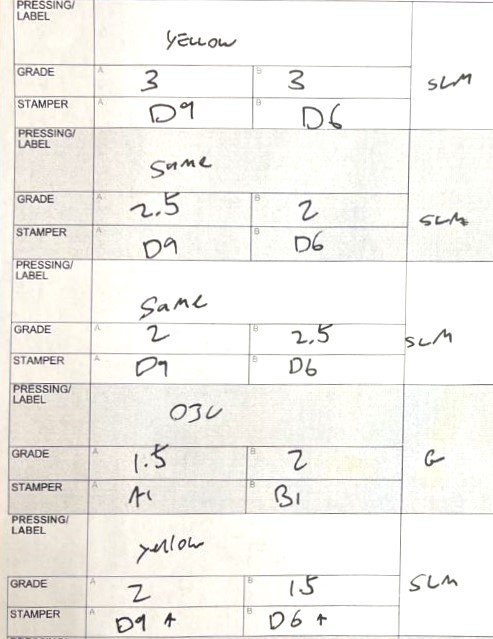
The stamper numbers you see below belong to a different album.

The notes for the FR original pressings we played read:

  • Less spacious, more bright and flat.

They’re not bad sounding, they’re just not as good sounding as the RFR reissues, which, incidentally, won the shootout.

We’ve lately been giving out much more stamper information than we used to, but we make it a point to never give out the stamper information for our shootout winners, as finding those very special pressings has been the work of a lifetime and is certainly not something that should be given away for free.

Rules of Thumb

It’s just another one of a number of rules of thumb collectors use (“A method or procedure derived entirely from practice or experience, without any basis in scientific knowledge; a roughly practical method”), one that will sometimes lead you astray if what you are trying to find are not just good sounding pressings of albums, but the best sounding pressings of albums.

Same with reissue versus original. Nice rule of thumb, but it only works, to the extent that it works at all, if you have enough copies of the title to know that you’re not just assuming the original is better. You actually have the data — gathered from the other LPs you have played — to back it up.

Who Knew?

Who knew the recording would sound so much better on the right reissue pressings?

Certainly not us, not until we had done the shootout.

The difference between the way we do things and the way others do them boils down to this: We assumed that the original could be the best, and then we tested that assumption and found out we were wrong.

But the right reissues of this Mercury — again not the ones you see pictured — is indeed an exceptionally good sounding record.

This is why we do shootouts, and why you must do them too, assuming that owning the highest quality pressings is important to you.

(more…)

Is Digital Really the Problem on this Cowboy Junkies Album?

Hot Stamper Pressings of Digital Recordings with Audiophile Sound 

The RCA domestic pressings cut at Sterling are not worth the vinyl they’re pressed on.

Don’t be one of those die-hard analog types who point fingers at the fact that there was digital in the recording chain when their pressing doesn’t sound good.

It’s got nothing to do with digital. It has everything to do with Sterling doing a bad job mastering the domestic vinyl.

(Keep in mind that a very large group of audiophiles, including some well-known reviewers, had no idea there was a digital step used in the process of making some of the records they had raved about. Apparently the only way to hear it is when you already know it’s there.)

Our notes for the domestic pressing below read:

  • Flat and dry vox.
  • Shifted up [tonally]
  • A bit scooped [or “sucked out” in the midrange, meaning the middle of the midrange is missing to some degree]

The midrange suckout effect is easily reproducible in your very own listening room. Pull your speakers farther out into the room and farther apart from each other and you can get that sound on every record you own. I’ve been hearing it in the various audiophile systems I’ve been exposed to for more than 40 years.

Why Defend the Indefensible?

When good mastering houses like Kendun and Sterling and Artisan make bad sounding records, we offer no excuses for their shoddy work. The same would be true for the better-known cutting engineers who’ve done work for them, as well as other cutting operations.

Individuals working for generally good companies sometimes produce substandard work product.

How is this news to anyone outside of the sycophantic thread posters, youtubers, and self-identified record experts who write for the audiophile community?

(more…)

How Can the Best Stampers Also Be the Worst Stampers?

Hot Stamper Pressings of Contemporary Jazz Available Now

Recently we conducted a shootout for a superb Contemporary recording, one that we had auditioned a couple of times before and one which we felt we knew the music and the quality of the sound well.

It’s not the record you see pictured.

For now we’re keeping the title a mystery, consistent with the idea that we give out lots of bad stampers on this blog, but almost never do we give out the good ones.

Why, you ask?

The cost of discovering the right stampers is usually high, can take decades, and is fundamentally at the heart of how we make our money: by finding amazing sounding pressings with stampers we know to be good, cleaning them up, playing them, and offering those that, for whatever mysterious reasons that no one has figured out, including us, tend to have the best sounding grooves.

This time around we kept track of the stamper numbers for all the pressings we played, something we are making a habit of doing these days and using to highlight discoveries in the sound of the records we play.

In this case, we discovered an anomaly we thought we would bring to the audiophile world’s attention: the fact that the stampers for the best souding pressing were also the stampers for the worst sounding pressing, because they were the stampers for all the pressings.

One copy earned our White Hot Stamper grade, our highest, for its clearly superior sound, and another one earned our lowest Hot Stamper grade of 1.5+. The rest were quite good, in between those two, which is a very common outcome for most of our shootouts: lots of records in the middle of the distribution, some winners at the top and some losers at the bottom.

(more…)

Domestic Pressings of Clear Spot? Forget ‘Em!

Hot Stamper Pressings of the Music of Captain Beefheart Available Now

We did this shootout many years ago, so many years ago that I cannot find a record of it.

I remember we thought the German pressings were perhaps a bit boosted on both ends and not as natural sounding as the domestic pressings.

After a multitude of improvements in our cleaning and playback, we would agree with our previous understanding that the German pressings are often wrong, but now we also know how right the right ones can be.

It turns out tha some German pressings are not particularly good, another piece of the puzzle that fell into place during our most recent shootout, as painful as that turned out to be considering the money wasted on them.

Did we have the bad German stamper pressings last time around? Who knows?

The producer, Ted Templeman, (Doobie Brothers, James Taylor) brought his mainstream talents to bear on this music, and when the Captain’s free-form tendencies smashed into Templeman’s conservatism, the result was this musical supernova — out there, but not too far out there.

(Play Trout Mask Replica sometime if you miss that feeling from your old hippie days of being on acid. With that music, drugs are entirely superfluous.)

I don’t know how many audiophiles like Captain Beefheart, probably not too many, but if you’re ever going to try one of his albums, this is the place to start: his masterpiece.

(more…)

“Tom, what about the argument that the engineers had to make the records sound good on the equipment of the day?”

More Letters from Customers and Critics Alike

OK, what about it? Let’s dig in.

One of our good customers had some questions about a commentary we wrote entitled a kinder, gentler approach to record reviewing.

Tom, what about the argument that the engineers had to make the records sound good on the equipment of the day? Now that we have better gear, these guys can make the record sound the way it was originally intended. I think Chad said this about Rudy Van Gelder at some point in the video.

For the benefit of the reader, the video in question can be found on youtube under the title “Michael Fremer, Chad Kassem, Geoff Edgers: A Journey Back to Vinyl.”

Edgers was invited, apparently under pretext as it turns out, to talk about his article, but instead he was pressed into defending me most of the time. Kassem and Fremer — two individuals whose talents, such as they are, could not be more ill-suited to the work they have chosen for themselves — beat up on Edgers for about two hours.

As an aside, Geoff is a good guy and he certainly didn’t deserve this kind of mistreatment. Fremer and Kassem won’t apologize to him — that’s not something they are known to do — so please allow me to apologize to Geoff on their behalf.

I’m sure he has trouble understanding to this day why he was forced into acting as a spokesman for Better Records. Regardless of how he feels about it, we thank him for his service to the cause. (To be clear, he didn’t exactly take my side, which is the right thing for a reporter to do. He wanted to know why our disagreements upset them so much.)

For those of you who like to watch bickering and sniping from a couple of thin-skinned egomaniacs who can’t stand the fact that someone doesn’t think the records they like — or in the case of Chad, produce and sell — are any good, have I got a video for you.

If you want to undertand how seriously you should take these two guys, both at the top of their respective mountains, watch the video and make your own judgments.

Our letter writer continues:

Suppose that the RL cut of Zeppelin 2 had never existed, because Ludwig knew better than to cut it that way, knowing that most stereos couldn’t play it? And then Chad released something that sounded like that. Or the argument that albums were engineered for listening to on the AM radio.

I think these guys believe they are improving on the mastering, and giving it the sound it should have had all along.

Dear Aaron

Yes, you are correct, this is indeed their position. They think these newly remastered pressings are a big improvement over earlier editions, and on quieter vinyl to boot!

Allow me to quote Michael Fremer, a man who apparently cannot get enough of these new records, even though his shelves are stuffed.

(more…)

The Original Mercury Pressings Don’t Sound Good on this Title, But Why?

Hot Stamper Pressings of Mercury Classical Recordings Available Now

For Mercury classical and orchestral recordings, the original FR pressings (when there are such pressings) on the plum label are the way to go, right? 

In some cases, yes. We talk about how much better the FR pressings for The Firebird are compared to the much more common, and still quite good, M2 reissue pressings here.

And the FR pressing of the Rachmaninoff record you see pictured above may indeed have the best sound.

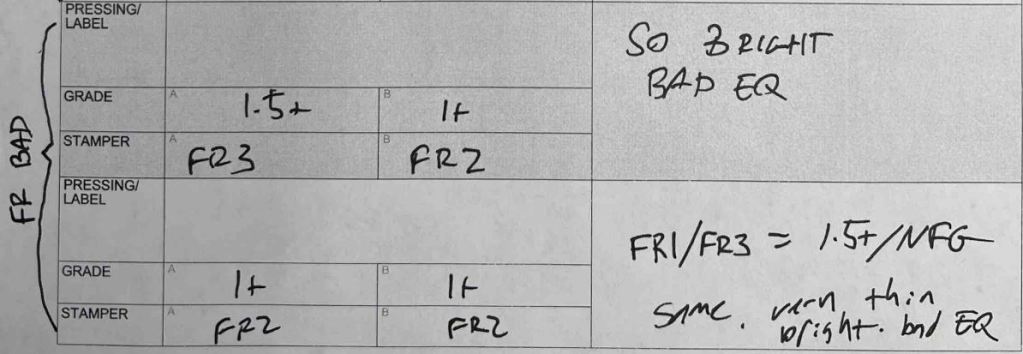
The stamper numbers you see below belong to a different album.

(We’ve lately been giving out much more stamper information than we used to, but for now we are keeping this title closer to the vest.)

Note that we had FR1, FR2 and FR3, all originals, yet none of them could be considered good enough to offer our customers.

It’s just another one of a number of rules of thumb collectors use (“A method or procedure derived entirely from practice or experience, without any basis in scientific knowledge; a roughly practical method.”), one that will sometimes lead you astray if what you are trying to find are not just good sounding pressings of albums, but the best sounding pressings of albums.

Same with reissue versus original. Nice rule of thumb, but it only works, to the extent that it works at all, if you have enough copies of the title to know that you’re not just assuming the original is better. You actually have the data — gathered from the other LPs you have played — to back it up.

Who knew the recording would sound so much better on the right reissue pressings?

(more…)

Before and After Science – Rules Are Made to Be Broken

Hot Stamper Pressings of Art Rock Recordings Available Now

The domestic pressings of Before And After Science are typically grainy, low-rez and hard sounding — they’re simply not competitive with the smoother British Polydors.

But our best Hot Stamper pressing isn’t an import; it was made right here in the good old US of A.

Say what? Yes, it’s true. We were SHOCKED to find such hot stamper sound lurking in the grooves of a domestic Eno LP. It’s the One and Only.

In thirty plus years of record playing I can’t think of any domestic Eno LP that ever sounded this good.

Now hold on just a minute. The British pressings of Eno’s albums are always the best, aren’t they?

For the first three albums, absolutely. But rules were made to be broken. This pressing has the knockout sound we associate with the best British originals of Eno’s albums, not the flat, cardboardy qualities of the typical domestic reissue.

Kinda Blind Testing

Since the person listening and making notes during the shootouts has no idea what the label or the pressing of the record is that he is evaluating — this is after all a quasi-scientific enterprise, with blind testing being the order of the day — when that domestic later label showed up at the top of the heap, our jaws hit the floor.

(more…)

Paraphrasing Hayek – Our Curious Task

F. A. Hayek summarized his views well when he noted that:

“The curious task of economics is to demonstrate to men how little they really know about what they imagine they can design.”

Our curious task has been to demonstrate to audiophiles and the reviewers who write for them how mistaken they are to think that they can understand the sound of a recording by playing a small number of pressings of it.

Similarly, the modern mastering engineer operates with the understanding that he can design and operate a cutting system that produces sound superior to that which was produced by the engineers of the past.

Based on the hundreds of remastered records we have auditioned, this is clearly a case of overpromising and underdelivering.

These assumptions, and the mistaken approach to record collecting that flows from them, are clearly unsupportable.

The scores of commentaries we have written on both subjects provide all the evidence required to falsify them, and — with a fair amount of effort, sorry for the trouble — can be found among the 5000+ postings on this blog.

The Hot Stamper pressings we offer, so much bigger, livelier, and more engaging than anything produced by these so-called audiophile mastering houses, are simply the physical evidence of our deeper and more correct understanding of the true nature of records and their mysterious and confounding properties.

Digging Deep

Everything we think we know about records is based on strictly empirical findings, findings that resulted from critically auditioning thousands and thousands of albums. Many of these albums we have played by the score. For some titles, such as the more popular Beatles’ albums, we have played more than a hundred copies.

No one else has ever dug as deep as we have into the mysteries of pressing variations, for the simple reasons that no individual or group would be motivated to do so and have the resources required to accomplish such a feat.

(more…)

Revisiting the Analog Vs. Digital Debate with Donald Fagen

Hot Stamper Pressings of the Music of Steely Dan Available Now

Many years ago we did a big shootout for this album. Afterwards we asked this question:

Do all the pressings of The Nightfly sound like CDs?

The average copy of this digitally recorded, mixed and mastered LP sounds just the way you would expect it to: like a CD.

It’s anemic, two-dimensional, opaque, thin, bright, harsh, with little extreme top and the kind of bass that’s all “note” with no real weight, solidity or harmonic structure. Sounds like a CD, right? (That’s the way many of my CDs sound, which is why I rarely listen to them these days.)

But what if I told you that the best copies of The Nightfly can actually sound like a real honest-to-goodness ANALOG recording, with practically none of the nasty shortcomings listed above? You may not believe it, but it’s true.

How do I know it’s true?

The same way I came to learn practically everything I believe about the sound of equipment and records. I heard it for myself. (Keeping in mind that I am sure to be wrong about some things. Not to worry. When I find out which things those are, I will post them in this section of the blog where they can join the other 175+ entries.)

I heard a copy sound so natural and correct that I would never have guessed it was digital. On my honor, that’s the truth. The best copies of The Nightfly can actually be shockingly analog.

Simply put, the question before the house is: Can this record sound analog? We’ll be taking the affirmative.

The problem with the typical copy of this record is gritty, grainy, grungy sound — not the kind that’s on the master tape, the kind that’s added during the mastering and pressing of the record. When that crap goes away, as it so clearly does on a copy we played recently, it lets you see just how good sounding this record can be. And that means really good sounding.

On most copies, the CD-like opacity and grunge would naturally be attributed to the digital recording process. That’s the conventional wisdom, so those with a small data sample (in most cases the size of that sample will be one) could be forgiven for reaching such a conclusion. Based on our findings it turns out to be false.

The bad pressings do indeed sound more like CDs. The best pressings do not.

If you like having your biases confirmed, then by all means, keep your digital-sounding copy and pretend you know why The Nightfly sounds bad on vinyl.

(more…)

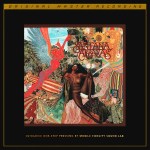
Did Carlos Santana Want to Make Music or Produce Fireworks?

Hot Stamper Pressings of the Music of Santana Available Now

Our good customer Aaron has lately been putting a great deal of time and money into the pursuit of perfect sound. His progress in audio since he discovered Hot Stampers and the kind of high quality vintage equipment we’ve recommended he use to play them has been remarkable.

In 2022 he wrote to tell us that the Super Hot Stamper Abraxas we had sent him and the Mofi One-Step he already owned were comparable in sound quality. Knowing what an awful label Mobile Fidelity is, and what a foolish idea Half-Speed Mastering is, you can imagine that we might have been a wee bit skeptical of this estimation, and we asked him to clarify his position.

Aaron also has made many improvements to his system since then. He carefully listened to both versions of Abraxas again and reported his findings. We believe that there is much to be learned from the kind of shootout that Aaron did for the album.

Hey Tom,

Oh, it’s a fascinating comparison! Here’s some data points, with the final one being the most relevant to your question.

I did another series of shootouts yesterday with my new vintage amp and speakers, and I included Abraxas in it. The bass on the onestep is monstrous and unreal. Sometimes the cymbals and chimes leap out of the speakers. I understand why people go gaga for this record. If you listen for sound, it doesn’t get any better than this.

Then I put on the hot stamper. The bass was back under control. Driving, but not dominating. The overall character was lighter and less ponderous. It was more listenable, more musical, and overall it was a relief to be less distracted by the fireworks. The vocals are back in front where they belong, and more palpable.

But, the hot stamper simply doesn’t grab ahold of you the way the one-step does.

When you describe the sound of the MoFi One-Step of Abraxas, with bass that’s “monstrous and unreal. Sometimes the cymbals and chimes leap out of the speakers,” all I hear in my head is a classic case of smile curve equalization, the kind MoFi has been using since the day they produced their first rock record in 1978, Crime of the Century. Years ago we noted:

We get these MoFis in on a regular basis, and they usually sound as phony and wrong as can be. They’re the perfect example of a hyped-up audiophile record that appeals to people with lifeless stereos, the kind that need amped-up records to get the music to come to life.

I’ve been telling people for years that the MoFi was junk, and that they should get rid of their copy and replace it with a tonally correct version, easily done since there is a very good sounding Speakers Corner 180g reissue currently in print which does not suffer from the ridiculously boosted top end and bloated bass that characterizes the typical MoFi COTC pressing. [Of course, we no longer recommend anyone buy Crime of the Century on Speakers Corner. The better our system gets, the less we like them.]

That’s the sound of MoFi all right. The Hot Stampers we offer would never have those “qualities,” if you care to call them that.

Leaping cymbals and chimes? Are they supposed to do that?

Also, the bass on our early pressing would have to be “back under control” or we wouldn’t have sold it to you as a Hot Stamper.

Unsurprisingly, without all that extra added bass, the sound is “lighter and less ponderous.” Saints be praised.

Smile Curve Redux

With the smile curve adding to the top and the bottom, what suffers the most? The midrange. There’s less of it relative to the  now-boosted frequency extremes. We described the effect here:

The Doors first album they released was yet another obvious example of MoFi’s predilection for sucked-out mids. Scooping out the middle of the midrange has the effect of creating an artificial sense of depth where none belongs. Play any original Bruce Botnick engineered album by Love or The Doors and you will notice immediately that the vocals are front and center.

The midrange suckout effect is easily reproducible in your very own listening room. Pull your speakers farther out into the room and farther apart and you can get that MoFi sound on every record you own. I’ve been hearing it in the various audiophile systems I’ve been exposed to for more than 40 years.

Nowadays I would place it under the general heading of My-Fi, not Hi-Fi. Our one goal for every tweak and upgrade we make is to increase the latter and reduce the former.

Or as Aaron might have phrased it, “The vocals are back in front where they belong, and more palpable.” You sure got that right.

Musicality

Aaron was impressed with how much more musical our pressing is, noting: “It was more listenable, more musical, and overall it was a relief to be less distracted by the fireworks.”

Then he concludes with this, sending my head into a spin: “But, the hot stamper simply doesn’t grab ahold of you the way the onestep does.”

(more…)