Mistaken Ideas

We used to refer to them as myths but we’ve come to the conclusion that mistaken ideas is more correct.

It’s also a less pejorative way of saying that some things audiophiles believe are lacking in the kind of hard evidence that one would think should be required to defend them.

The fact that good evidence is not required for audiophiles to believe practically anything they think they know about records and audio is one reason we write so much about these subjects on this blog.

Donovan – Painting with Too Broad a Brush

More of the Music of Donovan

Reviews and Commentaries for the Music of Donovan

Back in 2009 we wrote: “Donovan’s albums are never well recorded so if you’re looking for audiophile sound this is not the record for you. Although the sound varies here from track to track, some tracks do sound quite nice.” 

Although we have yet to play a copy of this particular album that sounds any good to us, we couldn’t have been more Wrong about the rest of his catalog. [As of 2022 we think we may have found a good sounding pressing of this album, so stay tuned, there is more to come for Sunshine Superman as we search for enough copies with which to do a shootout.)

Since 2009 we have found a number of superb sounding Donovan records, the best of which to date is The Hurdy Gurdy Man, surely the man’s masterpiece.

(more…)

The UK Imports of On the Third Day Are Made from Dubs

Hot Stamper Pressings of the Music of The Electric Light Orchestra Available Now

It’s obvious, or should be, that the British vinyl pressings are made from sub-generation copy tapes.

The imports make it sound as if someone threw a blanket over your speakers.

We know this because we had a bunch of them cleaned up for our shootout many years ago and they all sucked.

We tend to buy Electric Light Orchestra records on import vinyl; those are the ones that have proven themselves to have the best sound.

Most of the domestic pressings of their albums sound as though they were mastered from dub tapes.

But On The Third Day is proof that this is not always the case, just as Siren proves that the best Roxy Music albums are not always British.

(more…)

The Original Is Better? Sez Who?

Hot Stamper Pressings that Sound Their Best on the Right Reissue Available Now

Which albums sound better on the right vintage reissue pressing?

These do.

Just to take one example: The original Reprise pressing of Jazz Waltz, whether in mono or stereo, has never sounded very good to us. The mono is quite a bit worse than the stereo – no surprise there – but both must be considered poor reflections of the master tape.

We sold one many years ago, describing it this way: “Beautiful original with decent sound — rich, smooth and sweet.” Which it was, but from us that’s little more than damning it with faint praise.

The Discovery pressing is so much bigger, clearer and livelier it’s almost hard to imagine it and the 1962 Reprise original were both made from the same tape.

Something sure went wrong the first time around — I think it should be safe to say at least that much.

Does the Original Always Have the Best Sound?

Not for those of us who play records rather than merely collect them.

(more…)

A Very Bad Porky/Pecko Cutting of My Aim Is True

Hot Stamper Pressings of Elvis’s Albums Available Now

My notes for the one and only UK pressing I’ve played in many years, the one with Porky is the dead wax, note its many weaknesses:

Really loud and full.

Too loud and hot vocal.

Strains a lot.

You know what the sound of this record reminds me of?

An old 45 RPM 7″ single. Remember those?

It’s not unusual for 45 RPM singles from back in the day to be very loud, very compressed, and they often have much-too-hot vocals designed to jump right into your lap.

Mono mixes sometimes have some of that same lowest-common-denominator sound.

This mix is stereo but it sounds like it’s coming right out of a jukebox.

No doubt Mr. Peckham was told to make the record sound that way, and he did his job very well.

But audiophiles looking for good sound should heed this warning and avoid the UK LPs of the album. It’s a joke next to the domestic pressings with the right stampers. (The right stampers are hard to find but you will never hear a good sounding early pressing unless you have a copy with the stampers that sound right, a tautology to be sure but one worth noting.)

(more…)

Diminishing Returns in Audio? Sez Who?

Hot Stamper Pressings of the Music of Sergio Mendes Available Now

UPDATE 2026

The commentary you see below was written in 2005 or thereabouts. Some changes have been made and links to newer commentaries added.


Thoughts from 2005

I often read about the idea of “diminishing returns” regarding the piece of equipment under review in an audio magazine, as if to say that we are so close to audio perfection that a gain of a few percent is the most we can hope for from this or that new megabuck amp or speaker.

It has been my experience that precisely the opposite is true. 

There are huge improvements to be made on a regular basis, even without spending all that much money (keeping in mind that this is not exactly a poor man’s hobby).

If you are actively involved in seeking out better equipment, trying new things, and tweaking the hell out of your system as much as time and patience permit, I think an improvement of 10-25% per year in perceived sound quality is not an unreasonable expectation.

(more…)

What, You’re Selling Your TAS Super Disc List LPs? Say It Isn’t So!

Hot Stamper Pressings of the Music of David Crosby Available Now

UPDATE 2025

The bulk of this listing was written more than ten years ago and updated last year. Please to enjoy!

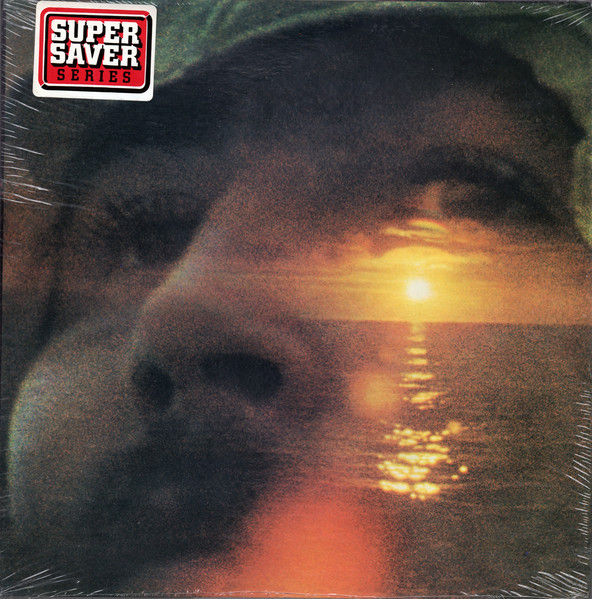
Also, whatever you do, don’t buy the Super Saver pressing of David Crosby’s debut like the one you see pictured, assuming you want to hear the album sound the way it should. Original only, and the right one of course.


We ran across a website years ago that confirmed our worst prejudices regarding audiophiles and their apparent desire to rely on gurus such as Harry Pearson to tell them which recordings sound good and which don’t.

This flies in the face of everything we stand for here at Better Records.

Since no two records sound the same, a list of so-called Super Discs is practically meaningless.

“Practically meaningless” hits the nail right on the head as far as we are concerned.

Picture yourself standing in your local record store with a record in your hands, one you happen to know is on the TAS List. This knowledge makes the record slightly more likely to sound better than any other record you might have randomly picked up in the store. Insignificantly, trivially more likely. In other words, as a practical matter, not all that much more likely.

Why is this? Three reasons:

  1. Many Super Discs are not on the TAS List;
  2. Some of the records on the TAS List are not deserving of Super Disc status; and most importantly,
  3. Most pressings of titles on the TAS List don’t sound especially good — only the right ones do. (I pictured the David Crosby album you see above with the cover you definitely don’t want in order to hammer home that point.)

But that’s not even the point. Ask yourself this:

Why on earth would anyone want to collect the records on The TAS List, when most of those records contain music that appeals to a very small group of people not named Harry Pearson?

(more…)

Is The Pink Label The Hot Ticket for Jethro Tull’s Brilliant Stand Up Album?

Hot Stamper Pressings of the Music of Jethro Tull Available Now

Well, it certainly can be, but sometimes it isn’t, and failing to appreciate that possibility is a classic case of misunderstanding a crucially important fact or two about records. Audiophile analog devotees would do well to keep these facts in mind, especially considering the prices original British pressings are fetching these days.

Simply put: Since no two records sound alike, it follow that the right label doesn’t guarantee the right sound.

A shootout years ago illustrated both of these truths.

We had a number of Pink Island British pressings to play — if you hit enough record stores often enough, in this town anyway, even the rarest pressings are bound to show up in clean condition from time to time — along with Sunrays (aka Pink Rims), later Brits, early Two Tone domestics and plain Brown Label Reprise reissues. All of them can sound good. (We do not waste time with German and Japanese pressings, or any of the later Chrysalis label LPs. Never heard an especially good one.)

What surprised the hell out of us was how bad one of the Pink Label sides sounded. It was shockingly thin and hard, practically unlistenable.

Keep in mind that during our shootouts the listener has no idea which pressing is being played, so imagine hearing such poor reproduction on vinyl and then finding out that such bad sound was coming from a copy that should have been competitive with the best, on the legendary Pink Island label no less. (Of course the other Pinks were all over the map, their sides ranging from good to great.)

Hearing one sound this bad was completely unexpected, but hearing the unexpected is what we do for a living, so I suppose it shouldn’t have been. Having dubious looking reissues and the “wrong” pressings beat the originals and the so-called “right” pressings from the “right” countries is all in a day’s work here at Better Records.

The audiophiles who collect records by label are asking for trouble with Stand Up.

Assuming they want the best sound, that is.

(more…)

What Kind of (Audio) Fool Was I?

Thinking Critically About Records Is Key to Understanding Them

This commentary was written in 2007 or thereabouts.


Today’s audiophile seems to be making the same mistakes I was making as a budding audiophile more than thirty forty five years ago.

Heavy Vinyl, the 45 RPM 2 LP pressing, the Half-Speed Limited Edition — aren’t these all just the latest audiophile fads, each with a track record more dismal than the last?

And isn’t it every bit as true today as it was in the past that the audiophiles who buy these “special” pressings rarely seem to notice that many of them don’t actually sound very good?

Was Devo right? Is everything in audio getting worse?

Our Story Begins

One Man Dog has long been a favorite James Taylor album of mine. It didn’t catch on too well with the general public when it came out but it caught on just fine with me. I used to play it all the time. As a budding but misguided audiophile back in the early ’70s, I foolishly bought the import pressing at my local record store, The Wherehouse, assuming it would sound better and be pressed on quieter vinyl. The latter may have been true, probably was true, but the former sure wasn’t. Turns out even the average domestic original is far better sounding, but how was I to know?

Compare and Contrast? What For?

Back in those days it would never have occurred to me to buy more than one copy of a record and do a head to head comparison to see which one sounded better. I approached the subject Platonically, not scientifically: the record that should sound better would of course sound better, so what is the point of testing?

Later on in the decade a label by the name of Mobile Fidelity would come along claiming to actually make better sounding pressings than the ones the major labels put out, and — cluelessly — I bought into that nonsense too.

(To be fair, sometimes they did — Touch, Waiting for Columbus and American Beauty come to mind, but my god, Katy Lied, Year of the Cat and Sundown have to be three of the worst sounding records I’ve ever played in my life.)


UPDATE 2015

Obviously, we no longer agree with much of that except for the one MoFi record that has stood the test of time, Touch.


The Learning Curve Is Looking Awfully Flat

Pardon my pessimism, but it seems to me the learning curve these days is looking awfully flat. There doesn’t seem to be a whole lot of learning going on. If such learning were actually going on, how would most of these audiophile labels still be in business?

Don’t get me wrong: some progress has been made. Reference, Chesky and Audioquest thankfully no longer burden us with their awful LPs. But is the new Blue or Fragile really any better than the average MoFi from 1979? Different yes, but better? I know one thing: I couldn’t sit through an entire side of either of them on the remastered pressings. And I love both of those albums.

Compared to the real thing, can any of these records pretend to compete sonically? A few, I guess, but too few, and they seem to be pretty darn far between.

(more…)

John writes: “The only problem I have with my evaluations is that I never heard his records.”

More Commentaries Prompted by Forums, Videos and Comments Sections

Please check out the interview Wired conducted with me a few years back.

If you have some time on your hands, maybe too much time on your hands, go to the comments section and read the 300 plus postings that can be found there, the writers of which seem to be offended by the very idea of Hot Stampers.

They also decry the obvious shortcomings of analog vinyl itself, as well as the ridiculously expensive equipment some “credulous, misguided audiophiles,” their terms, use to play vinyl records, as if you didn’t know already!

Here is one that I found to be especially interesting, from a psychological perspective if not from an audio one. (Emphases added.)

Bad, mismatched system setup. Customer base probably has the same. Also evaluation process is questionable. Uses a mediocre solid state amp and looks for “tubey magic” because of some misplaced concept of “accuracy” as I discussed before. [Man, this guy has got our number all right, ouch!]

Yes, there is a lot of bad stuff out there, and it does give the stereo industry as a whole a bad name. I have heard some pretty crappy, expensive setups in my day.

I was listening to Phoebe Snow’s “Second Childhood” on my best system last night. Boy, I love my new turntable!

The only problem I have with my evaluations is that I never heard his records. My comments are probably correct, but it would be interesting to audition a few of his “golden” albums just to confirm he hasn’t really found anything. The reason I am confident that he probably does not have anything is because virtually every repressing I’ve heard is better than the original. Claiming otherwise hurts his credibility.

John

There is one sentence in the paragraphs above that should raise a giant red flag and help you to appreciate how reliable John’s analysis of our stereo and methods might turn out to be. If you didn’t catch it the first time through, give it another shot. Okay, here goes:

The reason I am confident that he probably does not have anything is because virtually every repressing I’ve heard is better than the original.

That’s so strange! Virtually every repressing I’ve heard is worse than the original.

What gives?

If I may paraphrase our writer: the reason I am confident that he probably does not know anything about records or audio is that he thinks repressings are always better than vintage pressings.

We’ve critically auditioned tens of thousands of records, including many hundreds of repressings, admittedly on our “bad, mismatched system setup,” and I guess we must have gotten it all wrong over the 38 39 years we’ve been in the audiophile record business. The shame of it all!

Obviously, John knows he does not need to try one of our Hot Stampers. You can see him talking himself into the wisdom of doing nothing with every paragraph he writes.

It’s easy for him to be right by simply pretending to know something he cannot possibly know.

(Knowledge that is not backed up by empirical findings [1] comes in for a lot of criticism here at Better Records, and for good reason. Guessing, speculating and assuming are poor approaches to separating good pressings from bad ones.)

And if he did ever order one, and had at least a halfway decent stereo to play it on, it would turn his world upside down so fast it would make his head spin, and the possibility of that happening would be very, very upsetting. It makes no sense for John to risk such an outcome.

Even if our records were as cheap as the ones he is buying, even the superior sound would not justify the psychological damage that would result. He would basically have to start his collection over again, as this customer did.  A few hundred others just like him have done the same, and they’re the ones that will be keeping us in business for years to come. To paraphrase another famous saying, “They’ve heard the future, and it works!”

Better for John to follow the path he is on. It’s working for him. Why would he want to rock his own boat?

(more…)

Where Can I Find Your Hot Stamper Beatles Pressings in Mono?

Hot Stamper Pressings of Rubber Soul Available Now

One of our good customers had a question about our Hot Stampers recently:

I notice you don’t mention whether the Beatles recordings are stereo or mono. The Rubber Soul that just arrived is stereo. I’m guessing that the one I reordered is also stereo.

Do you guys stock the mono versions? Do you say on the site when something is mono. Let me know, as I like mono versions too.

I was close with Geoff Emerick and he always stressed to me that they spent tons of time on the mono mixes and not much on the stereos (up through Revolver). So let me know if/when you have mono for Rubber Soul and Revolver and perhaps I can snatch them up.

Brian

Brian,

All our records are stereo unless we specifically mention otherwise, as are our Beatles records.

We never sell Beatles records in mono, ever.

Here is a little something I wrote about it: Revolver in disgraceful mono

They spent time on the mono mixes because getting the levels right for all the elements in a recording is ten times harder than deciding whether an instrument or voice should be placed in the left, middle or right of the soundstage.

And they didn’t even do the stereo mixes right some of the time, IMHO.

But in my book, wall to wall beats all stacked up in the middle any day of the week.

(more…)