Dubious Sound I Used to Like

Here is a sampling of the questionable records and/or pressings I used to like a whole lot more than I do now.

Through trial and error I learned that they were clearly inferior to other pressings, although at the time I couldn’t have known they were inferior because I hadn’t yet heard anything better.

Looking back, it’s often embarrassing that I used to think highly of these records, but it would be foolish to deny it.

Making mistakes and learning from them is an important aspect of this hobby. Every audiophile on the journey to better sound should have a sizable group of records they left behind.

As our stereos and critical listening skills improve, it becomes clear that plenty of records just aren’t as good as we thought. These are some of mine.

One of the Great Audio Disasters, Courtesy of Mobile Fidelity

More of the Music of Steely Dan

We recently amended this listing. Scroll down to see what we have to say about it in 2023.

More MoFi bashing, but boy does this MoFi deserve it. In our estimation, it is tied with the Cisco 180g pressing (2007) for the worst version ever.

I remember back in 1977 when Aja was released. I was a big Steely Dan fan by then, having been turned on to their albums with Countdown to Ecstasy in 73. With each new Dan record I became more impressed with their music, from Pretzel Logic to Katy Lied to Royal Scam and finally on to this, their commercial breakthrough.

At the time I thought the album sounded pretty good on my plain old ABC original.

Then I got a copy of the Mobile Fidelity pressing and I thought it sounded much, much better.

Side two of the MoFi had bass that was only hinted at on my domestic copy. Wow! Listen to all that bass!

Sometime in the 80s, I realized that the MoFi was hideously phony sounding, and that all the bass on side two was boosted far out of proportion to what must be (I’m guessing) on the master tape.

If I May

How much bass is on the master tape is of course of no concern to anyone not mastering the record. The bass has to be right on the record, not the tape.

The song Home At Last has at least an extra three or four DBs added around 50 cycles. It’s ridiculous.

And that’s just the bottom end; the highs are every bit as wrong.

(more…)

Ridiculously Phony and Compressed Sound – The White Album on MoFi

Sonic Grade: F

An Audiophile Hall of Shame pressing and another MoFi LP reviewed and found seriously wanting. The phony sound here is perfectly suited to the stone age stereos of the past. I should know. I had a stereo like that back in 1982 when this record came out, and I thought it sounded great.

The last time I played a copy of the MoFi, I could not believe how ridiculously bright, phony and compressed it was.

As sibilant as any Beatles record they ever did. Cry Baby Cry spits like crazy!

And to think I used to like their version when it came out back in the 80s.

A good example: on Yer Blues, the MFSL pressing positively wreaks havoc with all the added bass and top end The Beatles put on this track. The MoFi version is already too bright, and has sloppy bass to start with, so the result on this track is way too much BAD bass and way too much BAD spitty 10k-boosted treble. The MoFi is nothing like the good imports, which have way too much GOOD bass and treble.

Yer Blues ROCKS! Listen to the big jam at the end of the song, where John’s vocal mic is turned off but his performance is still caught by a room or overheard mic. They obviously did this on purpose, killing his vocal track so that the “leaked” vocal could be heard. (We have since learned from Ken Scott that it was mistake, but one they liked and left in.)

Those crazy Beatles! It’s more than just a cool “effect.” It actually seems to kick the energy and power of the song up a notch. It’s clearly an accident, but an accident that works. I rather doubt George Martin approved. That kind of “throw the rule book out” approach is what makes Beatles recordings so fascinating, and The White Album the most fascinating of them all.

The EQ for this song is also a good example of something The Beatles were experimenting with, as detailed in their recording sessions and later interviews with the engineers. They were pushing the boundaries of normal EQ, of how much bass and treble a track could have. This track has seriously boosted bass, way too much, but somehow it works.
(more…)

Waiting for the Sun – Don’t the DCC Pressings All Sound Different Too?

More of the Music of The Doors

I recently had a chance to listen again to this DCC pressing for the first time in many years. I was putting it up on ebay to sell and dropped the needle to check the sound. I can’t say I liked what I heard. Knowing the record as well as I do, I could her that the DCC was clearly to be brighter in the midrange.

When I went back to read what I had said about the DCC years ago, I saw that I had described that copy the same way. You can read it for yourself.

Our old review follows.

We rate the DCC LP a B Minus

We used to like the DCC pressing of this Doors album. Now… not so much. It’s a classic case of Live and Learn.

Keep in mind that the only way you can never be wrong about your records is simply to avoid playing them. If you have better equipment than you did, say, five or ten years ago, try playing some of your MoFi’s, 180 gram LPs, Japanese pressings, 45 RPM remasters and the like. You might be in for quite a shock.

Of course the question on everyone’s mind is, “How does this Hot Stamper copy stack up to the famous DCC pressing?” After all, the DCC was the one we were touting all through the ’90s as The One To Beat.

Well, to be honest, the DCC is a nice record, but a really special original copy throws a pretty strong light on its faults, which are numerous and frankly fairly bothersome.

The top end on the copy I played was a touch boosted, causing a number of problems.

For one, the cymbals sounded slightly tizzy compared to the real thing, which had a fairly natural, though not especially extended, top end.

But the real problem was in the midrange. Morrison sounded thinner and brighter, more like a tenor and less like a baritone, with a somewhat hi-fi-ish quality added to the top of his voice. Folks, I hate to say it, but if someone had told me that the record playing was half-speed mastered, I probably would have believed it. I detest that sound, and the DCC pressing bugged the hell out of me in that respect.

Morrison has one of the richest and most distinctive voices in the history of rock. When it doesn’t sound like the guy I’ve been listening to for close to forty years, something ain’t right.

The mid-bass was also a tad boosted — not in the deep bass, but more in that area around 100-200 cycles, causing the sound to be overly rich. None of the originals we played had anything like it, so I’m pretty sure that’s a bit of added EQ Hoffman introduced for reasons best known to him. (Did he like it that way, or was he pandering to some of the audiophile community’s preference for overly rich sound, the kind they confuse with “analog”? Nobody knows.)

Not So Fast There, O Hot Stamper Guru

But wait a minute — don’t all records sound different? Is it really fair to paint his version with such a broad brush on the basis of having played only one copy?

Of course not. Perhaps other copies sound better. It wouldn’t be the first time. (Maybe they sound worse. Think about that.)

So here’s our offer to you, dear customer: We absolutely guarantee our Hot Stamper copies will handily beat the DCC pressing or your money back. We’ll even pay the return domestic shipping if for some reason you are not 100% satisfied with the sound of our Hot Stamper. Now there’s an offer you can’t refuse, for any one of you who love the album and have a wad of money burning a hole in your pocket.

(more…)

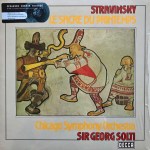
Boy, Was We Ever Wrong About Solti’s Rite of Spring

Hot Stamper Pressings of the Music of Igor Stravinsky Available Now

This is a VERY old and somewhat embarrassing commentary providing the evidence for just how wrong we were about the sound of Solti’s 1974 recording for Decca.


Here is what we had to say about the album in 2008:

This is an amazing recording, DEMO QUALITY SOUND, far better than the Decca heavy vinyl reissue that came out in the 2000s. [That part is no doubt true.]

This record is extremely dynamic; full of ambience; tonally correct; with tons of deep bass. Because it’s a more modern recording, it doesn’t have the Tubey Magic of some Golden Age originals, but it compensates for that shortcoming by being less distorted and “clean.” Some people may consider that more accurate. To be honest with you, I don’t know if that is in fact the case.

However, this record should not disappoint sonically and the performance is every bit as exciting and powerful as any you will find. The Chicago Symphony has the orchestral chops to make a work of this complexity sound effortless.


Skip forward to the present, roughly ten years later. We had three or four copies on hand to audition when we surveyed the work a couple of years ago in preparation for a big shootout.

The Solti did not make the cut. It was not even in the ballpark.

(more…)

The Doors’ Debut – MoFi Reviewed

More of the Music of The Doors

Sonic Grade: D 

If anyone still thinks that this pressing is anything but a bad joke played on the audiophile public — so sucked out in the midrange, bass shy and compressed to death — that person still has a way to go in this hobby.

A very long way.

You can hear that something is off with this pressing from another room. The sound is bad enough to have earned a place in our Mobile Fidelity Hall of Shame.

But wait just a gosh darn minute.

I liked the MoFi just fine when it came out. I guess I had a way to go in this hobby too.

That was back in the early ’80s. I like to think I’ve learned a thing or two in the last forty years.

Some reviewers and a great many audiophiles may be stuck in the 80s, but I sure as hell don’t think I am one of them.

(more…)

Stravinsky / Le Sacre du Printemps – Speakers Corner Reviewed

More of the music of Igor Stravinsky

We used to think this was one of the better Speakers Corner Deccas.

Having recently played the London pressing of the same performance (CS 6885), cut by Decca of course, we think we are almost certainly wrong about the quality of the sound, but who knows? Maybe Speakers Corner remastered the record properly and fixed its shortcomings.

Hah, just joking. In our experience that has never happened and we think it is very unlikely that it ever will.

Years ago we wrote the following:

Wow! What a performance! What dynamic full bodied sound! To be fair, I pulled out my original London, one of those awful mid-’70s English pressings that are never quiet, and yes, some of the ambience on the original is missing here on the new version, but everything else seems right: dynamics, tonality, the frequency extremes (including some pretty awesome deep bass).

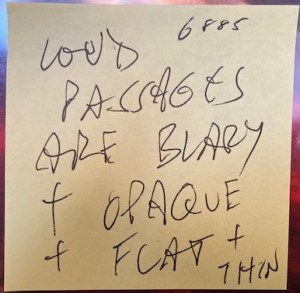
Some of the above could be right, the parts about the tonality and such. Speakers Corner could have added some bass and lower midrange to make the sound less thin, and taken out some of the upper midrange to make the loud passages less blary, but it certainly doesn’t solve the most serious issues we had with the recording, which is the fact that it is opaque and flat, two qualities that are the death of orchestral music on vinyl.

Here are the notes we made for the London.

The two paragraphs you see reproduced below are also full of bad advice we had given out in the past:

1. Can’t be sure we would still feel that way but I’m guessing this is a good record if you can pick one up at a cheap price. 

2. If you have a quiet original, great, consider yourself lucky. As few of you have any copy at all, I recommend this one. The alternative is to miss Solti’s energetic performance and the precision of the Chicago Symphony, one of the few orchestras capable of making sense out of this complex and infuriating work. (At least it used to infuriate audiences. Now our modern ears can take a difficult work like this and appreciate the complex rhythms and atonality as the expression of a truly original mind.

This paragraph we would still agree with wholeheartedly:

This is not music to play while you are having dinner. This is music to engage the mind fully. It belongs in any collection. Yours in fact. Unless you have small speakers, in which case you would be wasting your money, as small speakers cannot begin to reproduce the power of this work in the hands of Solti and the CSO [or anybody else for that matter].

City to City Is a Disaster on Simply Vinyl (and I Used to Sell It)

More of the Music of Gerry Rafferty

Sonic Grade: F

An Audiophile Hall of Shame pressing and another Simply Vinyl pressing debunked.

We had two copies of the Heavy Simply Vinyl pressing to audition as part of our big shootout from many years ago.

We actually used to like it, but it now sounds worse than we remember, especially in the low end, which is a blurry mess.

Better than any domestic copy I suppose, but that’s not really saying much, since those are terrible. 

Rolling Stone Rave Review

Even in his mother’s womb, Gerry Rafferty must have expected the worst. This Scotsman entitled his melancholy 1971 solo album Can I Have My Money Back? (the answer was “No!”). And when Stealers Wheel, the group he subsequently formed with Joe Egan, became an overnight success with the hit single “Stuck in the Middle with You,” only to lapse into morning-after obscurity, he probably said, “I told you so.” On City to City, his first LP in three years, Rafferty sticks grimly to his guns. Not only does he use the same producer (Hugh Murphy) and several of the same musicians, but a similar un-self-pitying fatalism pervades the record.

(more…)

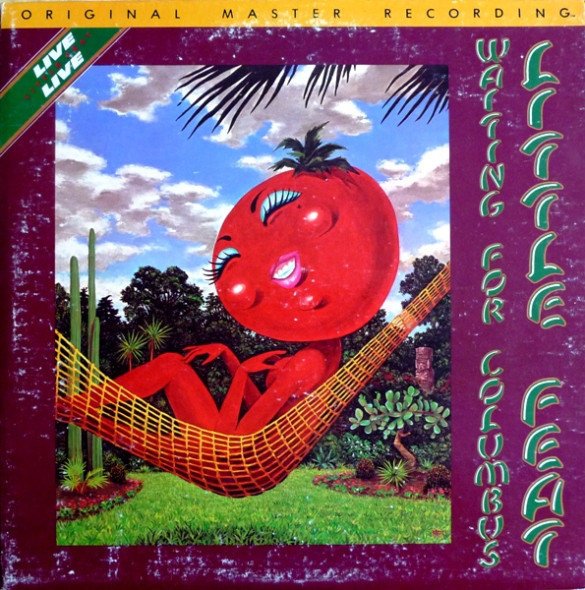
Waiting for Columbus – A MoFi Pseudo-Hot Stamper

Hot Stamper Pressings of the Music of Little Feat Available Now

Sonic Grade: C

Ten or fifteen years ago we did a listing for this Mobile Fidelity pressing as a Pseudo-Hot Stamper. Here is what we had to say about it at the time:

This is actually a pretty good sounding record, all things considered. We put this one through our cleaning process and gave it a listen. Although our Hot Stamper copies do sound better, they’re also quite a bit more expensive. This copy had the best sound we heard out of the three or four we played, which makes it a Hot Stamper I suppose, but we are instead just calling it a Very Good Sounding Copy.

Waiting for Columbus is one of the greatest live rock and roll albums ever made, containing performances by one of the greatest rock and roll bands to ever play. If you only buy one Little Feat album in your lifetime, make it this one.

We spent years trying to get shootouts together for this album, but kept running into the fact that in a head to head shootout the right MoFi pressing — sloppy bass and all — was hard to beat.

This is no longer the case, courtesy of that same old laundry list you have no doubt seen on the site countless times: better equipment, tweaks, record cleaning, room treatments, et cetera, et cetera. Now the shortcomings of the MoFi are clear for all to see, and the strengths of the best non-half-speed mastered pressings are too, which simply means that playing the MoFi now would be an excruciating experience. All I can hear is what it does wrong. I was so much happier with it when I didn’t know better.

(more…)

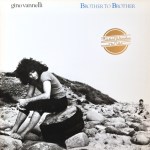
Brother to Brother – A Half-Speed Mastered Disaster

More of the Music of Gino Vannelli

More of Our Favorite Titles from 1978

Sonic Grade: F

An Audiophile Hall of Shame pressing and a Half-Speed Mastered Bomb if there ever was one.

Wooly bass, sucked-out mids, compressed to death, this record is one of the worst of the A&M Half-Speed series, and that is saying a lot.

We’ve played at least a dozen titles from this series and only one of them was any good.

The regular A&M pressings with the right stampers just kill it.

This pressing is every bit as bad.

(more…)

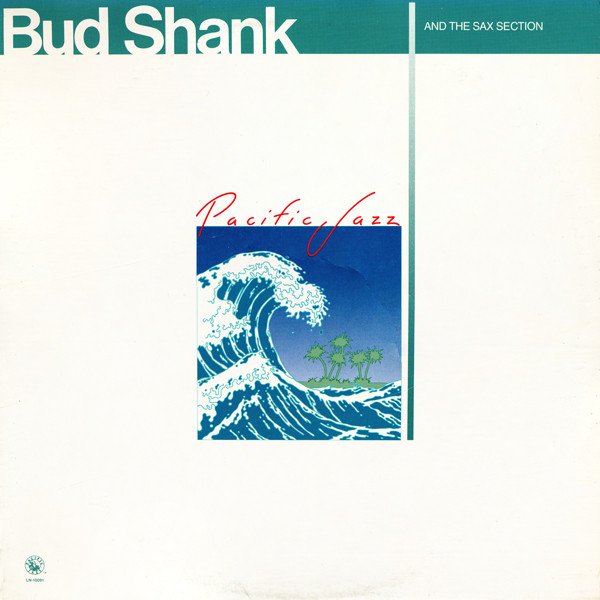
We Used to Sell the Dubby Reissues of Bud Shank And the Sax Section, Ouch

More of the Music of Bud Shank

I used to sell reissues of this record back in the day some twenty odd years ago. While they aren’t terrible — lackluster is a more apt description — we can clearly hear now that they are made from second generation tapes.

The stage is recessed and collapsed, and the sound never gets big enough nor lively enough to free itself from the speakers. (This happens to be our all-too-common experience with many of the Heavy Vinyl pressings we audition and consequently write mean things about. Can you blame us? We loathe that sound.)

It’s yet another example of a record we was wrong about. Live and Learn, right?

I would not buy any Pacific Records pressing with this style reissue cover. We’ve never heard one sound better than mediocre on our current system.


This record sounds best this way:

(more…)