Dubious Sound I Once Liked

This list contains a sampling of the bad sounding records I used to like. (Not all are bad sounding. Some are just not nearly as good sounding as I thought.)

Through trial and error I learned that they were clearly inferior to other pressings, although at the time I couldn’t have known they were inferior because I hadn’t yet discovered anything better.

Looking back, it’s embarrassing that I used to like these records, but it would be foolish to deny it.

Making mistakes and learning from them is an important aspect of this hobby. Every audiophile on the journey to better sound should have a sizable group of records they left behind a long time ago.

As our stereos and critical listening skills improve, it becomes clear that plenty of records just aren’t as good as we thought they were. These are some of mine.

Not as Good a TAS List Title as We Thought, Sorry!

Hot Stamper Pressings of Living Stereo Titles Available Now
We had a handful of copies of this famous TAS List title in the backroom, so we decided it was high time to get a shootout going. We pulled all the pressings of the music (both Billy the Kid and Rodeo) we had on hand on every label and proceeded to needle-drop them in preparation for a big Copland shootout.

Much to our chagrin, most of the copies of LSC 2195 we played were unacceptable. The sound, for the most part, was very much not to our liking. Our notes read:

  • Smeary — (more records with smeary sound can be found here),
  • Dry — (more records with dry sound can be found here),
  • Bright — (more records with bright sound can be found here),
  • Flat — (more records with flat sound can be found here),
  • Hi-Fi-ish — (more records with hi-fi-ish sound can be found here),

Those records weren’t cheap. That was a lot of money down the drain. Not only can’t we sell records that sound as bad as this Living Stereo — our customers simply would not buy them — but we would never even try. Unlike other record dealers, we actually know what our records sound like. We don’t care about the reputations of the records we sell. We only care about their sound.

Some of the records on the TAS List seem better suited to the old school audio systems of the 60s, 70s and 80s than the modern systems of today.

(more…)

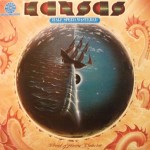
Point of Know Return – CBS Half-Speed Reviewed

Hot Stamper Pressings of Proggy Rock Albums Available Now

Both this album and Leftoverture are way too bright and thin.

What were the engineers thinking — that brighter equals better?

In the case of these two titles it most definitely does not. It’s the sound that most audiophiles are fooled by to this day.

Brighter and more detailed is rarely better. Most of the time it’s just brighter. Not many half-speed mastered audiophile records are dull. They’re bright because the audiophiles who bought them preferred that sound. I did too, a couple of decades ago [make that four decades ago].

Hopefully we’ve all learned our lessons by now, expensive and embarrassing as such lessons usually turn out to be. 

Waking Up a Dull Stereo

If your system is dull, dull, deadly dull, the way older systems tend to be, this record has the hyped-up sound to bring it to life in no time.

There are scores of commentaries on the site about the huge improvements in audio available to the discerning (and well-healed) audiophile. It’s the reason Hot Stampers can and do sound dramatically better than their Heavy Vinyl or Audiophile counterparts: because your stereo is good enough to show you the difference.

With an old school system you will continue to be fooled by bad records, just as I and all my audio buds were fooled thirty and forty years ago. Audio has improved immensely in that time. If you’re still playing Heavy Vinyl and Audiophile pressings, there’s a world of sound you’re missing. We discussed the issue in this commentary:

My advice is to get better equipment and that will allow you to do a better job of recognizing bad records when you play them.

(more…)

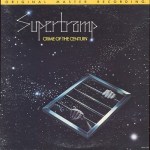
Dreamer Tells You What You Need to Know About this MoFi

Hot Stamper Pressings of the Music of Supertramp Available Now

This commentary was written about 2000, when the Speakers Corner pressing had just come out. We liked it back then, but I doubt we would care much for it now.

Listen to the vocals at the end of Dreamer.

If they are too bright, the bells at the end of the song sound super-extended and harmonically clear and clean.

But at what price? Now the vocals are too bright. Which is more important, good vocals or good bells?

There has to be balance. This is something audiophiles — and audiophile labels, who should obviously know better — seem to have difficulty appreciating.

We used to get these MoFis in on a regular basis, and they usually sound as phony and wrong as can be. They’re the perfect example of a hyped-up audiophile record that appeals to people with lifeless stereos, the kind that need amped-up records to get them to come to life.

I’ve been telling people for years that the MoFi was junk, and that they should get rid of their copy and replace it with a tonally correct version, easily done since there is a very good sounding Speakers Corner 180g reissue currently in print which does not suffer from the ridiculously boosted top end and bloated bass that characterizes the typical MoFi COTC pressing.

Brighter and more detailed is rarely better. Most of the time it’s just brighter. Not many Half-Speed mastered audiophile records are dull. They’re bright because the audiophiles who bought them preferred that sound. I did too, a couple of decades ago [make that four decades ago].

Hopefully we’ve all learned our lesson by now, expensive and embarrassing as such lessons so often turn out to be.

If your system is dull, dull, deadly dull, the way many of our older systems tended to be, this record has the hyped-up sound to bring it to life in a hurry.

There are scores of commentaries on the site about the huge improvements in audio available to the discerning (and well-healed) audiophile. It’s the reason Hot Stampers can and do sound dramatically better than their Heavy Vinyl or audiophile counterparts: because your stereo is good enough to show you the difference.

(more…)

Debussy / La Mer / Haitink

The Music of Claude Debussy Available Now

This is an older review. When we revisited this title recently, we felt it was badly lacking in Tubey Magic, a real deal killer for us here at Better Records.

It’s a decent sounding record, not much more than that, but it does have a top performance. If you see one for cheap in the bins, pick it up and give it a spin.

We prefer Ansermet’s performances for Decca of both La Mer and Prelude to the Afternoon of a Faun.

Our review for the album from years ago can be seen below. As for other records we think we got wrong — we may change our minds again! — you can find more under the heading of Live and Learn.

(more…)

Witches’ Brew on Classic Records and How Crazy Wrong We Were, Part Two

Hot Stamper Living Stereo Classical and Orchestral Titles Available Now

As I noted in Part One of this commentary, I promised to find my old blurb for the Classic pressing of Witches’ Brew from the catalog I sent out for years in the mid-’90s.

Well, I found it.

The excerpt from the earlier commentary seen below gets to the heart of the problem with my (embarrassing) review.

“With an old school audio system you will continue to be fooled by bad records, just as I and all my audio buds were fooled thirty and forty years ago. Audio has improved immensely in that time. If you’re still playing Heavy Vinyl and Audiophile pressings, there’s a world of sound you’re missing. We would love to help you find it.”

Ouch.

I apparently had one of those systems in the ’90s, because my system sure wasn’t doing a very good job of showing me how awful the Classic pressing of Witches’ Brew was.

Also, my guess that the Classic pressing was 10db more dynamic is risible. That number was clearly plucked out of thin air by someone who didn’t know what he was talking about (10db is a lot).

I will take some solace from my comment that  “90% of the magic of the original is here,” which means that even in 1994 I could hear that Bernie’s cutting system had problems reproducing the Tubey Magical Living Stereo sound that was all the rage at the time, mostly owing to Harry Pearson’s listing so many RCAs on his Super Disc List.

And, although we still like Gibson’s reading of the work, these days our favorite performance of Danse Macabre is this one on EMI, one we only discovered about five years ago. It’s one advantage to being in the record business. You get to play lots and lots of records, and playing large numbers of records is practically the only way to find the ones that are even better than the ones you know.

(more…)

Rainbow Seeker – Live and Learn

Reviews and Commentaries for Mobile Fidelity Records

A classic case of Live and Learn

[This commentary is at least fifteen years old. We mention Disc Doctor below, and once we had discovered the Walker System in 2007, we stopped using it to clean our records.]

Hot Stampers discovered! It took years, decades even, but it FINALLY happened. This copy has a side one with all the sound I always knew must be on the tape but somehow never seemed to make it to the vinyl. This copy has that sound!

Let me backtrack a bit. I’ve been recommending the MOFI for as long as I can remember, because it has always been the only copy that didn’t sound like a bad cassette.

The domestic pressings and imports I had run into over the years had no top end whatsoever, no bass below 50 or 60 cycles, and enough veils over the midrange to cover an entire harem. (No top and no bottom is our definition of boxy sound.)

The sound was also Pure Compressed Cardboard.

The best MOFI copies had an actual top end; a real bottom too. (Not a tight or deep one but that’s MOFI for you.) I’ve always loved the music, so even though the sound was somewhat washed out and lifeless, you could listen to the MOFI and enjoy it for what it was: not perfect, but a whole lot better than the alternatives. (The CD was hopeless by the way, no surprise there.)

Ah, but all that changed this week. We finally broke through.

I had just picked up a sealed original copy at a local store and was considering putting it up on the site, sealed of course. Then a thought went through my mind. I’ve always loved this record. What if this copy is The One? So I did the unthinkable. I cracked it open, and soon enough the needle was in the groove on my favorite track, Fly With Wings of Love.

To my surprise it had the BEST SOUND I had EVER heard for that song. When all was said and done, when all the copies in the backroom had been disc doctored, along with my three MOFI copies, and each carefully evaluated, sure enough this is the side two that turned out to be the King. I give it an A with Two Pluses. The typical domestic copy gets an F.

Wait, there’s more.

So with all our copies cleaned and ready to play, it was now time to play all the side ones. Even more shocking and surprising, one copy had a side one that was OUT OF THIS WORLD. Master tape sound, As Good As It Gets, perfection.

That’s this copy. Side two is pretty good, maybe a B+ or so. Better than average, but no Hot Stamper.

Since this is one of my favorite pop-jazz albums, I can’t recommend this album highly enough. It may not be deep — for real piano trio jazz check out Sample’s The Three — but it’s not trying to be. It is what it is — sophisticated, melodic, well-crafted piano-based easy-going jazz. With the awesome Eric Gale on guitar too.


Further Reading on Half-Speeds

The best place to start is here:

How come you guys don’t like Half-Speed Mastered records?

(more…)

Parallel Lines – MoFi Reviewed

Hot Stamper Pressings of the Music of Blondie Available Now

I became a giant fan of this album the moment I heard it, but I always felt that the sound of my old original left something to be desired. So many copies are thick and lifeless; the music wants to cook but the sound seems to be holding it back.

The record I had in the ’70s was probably not that good anyway. Fortunately, it only took us another 35+ years to figure out how to find the best pressings.

And like an idiot I’m sure I had traded my original domestic pressing in for the MoFi when it came out in the early ’80s, the kind of dumbass audiophile move I discuss in the commentary What Kind of Fool Was I?

As previously noted, the MoFi, one of those Jack Hunt turgid muckfests (check out City to City for the ultimate in murky MoFi sound), is incapable of conveying anything resembling the kind of clean, clear, oh-so-radio-friendly pop rock sound that Mike Chapman and the band were aiming for.

The recording has copious amounts of Analog Richness and Fullness to start with. Adding more is not an improvement; in fact it’s positively ruinous.

Is it the worst version of the album ever made?

(more…)

One of the Great Audio Disasters, Courtesy of Mobile Fidelity

More of the Music of Steely Dan

We recently amended this listing. Scroll down to see what we have to say about it in 2023.

More MoFi bashing, but boy does this MoFi deserve it. In our estimation, it is tied with the Cisco 180g pressing (2007) for the worst version ever.

I remember back in 1977 when Aja was released. I was a big Steely Dan fan by then, having been turned on to their albums with Countdown to Ecstasy in 73. With each new Dan record I became more impressed with their music, from Pretzel Logic to Katy Lied to Royal Scam and finally on to this, their commercial breakthrough.

At the time I thought the album sounded pretty good on my plain old ABC original.

Then I got a copy of the Mobile Fidelity pressing and I thought it sounded much, much better.

Side two of the MoFi had bass that was only hinted at on my domestic copy. Wow! Listen to all that bass!

Sometime in the 80s, I realized that the MoFi was hideously phony sounding, and that all the bass on side two was boosted far out of proportion to what must be (I’m guessing) on the master tape.

If I May

How much bass is on the master tape is of course of no concern to anyone not mastering the record. The bass has to be right on the record, not the tape.

The song Home At Last has at least an extra three or four DBs added around 50 cycles. It’s ridiculous.

And that’s just the bottom end; the highs are every bit as wrong.

(more…)

Ridiculously Phony and Compressed Sound – The White Album on MoFi

Sonic Grade: F

An Audiophile Hall of Shame pressing and another MoFi LP reviewed and found seriously wanting. The phony sound here is perfectly suited to the stone age stereos of the past. I should know. I had a stereo like that back in 1982 when this record came out, and I thought it sounded great.

The last time I played a copy of the MoFi, I could not believe how ridiculously bright, phony and compressed it was.

As sibilant as any Beatles record they ever did. Cry Baby Cry spits like crazy!

And to think I used to like their version when it came out back in the 80s.

A good example: on Yer Blues, the MFSL pressing positively wreaks havoc with all the added bass and top end The Beatles put on this track. The MoFi version is already too bright, and has sloppy bass to start with, so the result on this track is way too much BAD bass and way too much BAD spitty 10k-boosted treble. The MoFi is nothing like the good imports, which have way too much GOOD bass and treble.

Yer Blues ROCKS! Listen to the big jam at the end of the song, where John’s vocal mic is turned off but his performance is still caught by a room or overheard mic. They obviously did this on purpose, killing his vocal track so that the “leaked” vocal could be heard. (We have since learned from Ken Scott that it was mistake, but one they liked and left in.)

Those crazy Beatles! It’s more than just a cool “effect.” It actually seems to kick the energy and power of the song up a notch. It’s clearly an accident, but an accident that works. I rather doubt George Martin approved. That kind of “throw the rule book out” approach is what makes Beatles recordings so fascinating, and The White Album the most fascinating of them all.

The EQ for this song is also a good example of something The Beatles were experimenting with, as detailed in their recording sessions and later interviews with the engineers. They were pushing the boundaries of normal EQ, of how much bass and treble a track could have. This track has seriously boosted bass, way too much, but somehow it works.
(more…)

Waiting for the Sun – Don’t the DCC Pressings All Sound Different Too?

More of the Music of The Doors

I recently had a chance to listen again to this DCC pressing for the first time in many years. I was putting it up on ebay to sell and dropped the needle to check the sound. I can’t say I liked what I heard. Knowing the record as well as I do, I could her that the DCC was clearly to be brighter in the midrange.

When I went back to read what I had said about the DCC years ago, I saw that I had described that copy the same way. You can read it for yourself.

Our old review follows.

We rate the DCC LP a B Minus

We used to like the DCC pressing of this Doors album. Now… not so much. It’s a classic case of Live and Learn.

Keep in mind that the only way you can never be wrong about your records is simply to avoid playing them. If you have better equipment than you did, say, five or ten years ago, try playing some of your MoFi’s, 180 gram LPs, Japanese pressings, 45 RPM remasters and the like. You might be in for quite a shock.

Of course the question on everyone’s mind is, “How does this Hot Stamper copy stack up to the famous DCC pressing?” After all, the DCC was the one we were touting all through the ’90s as The One To Beat.

Well, to be honest, the DCC is a nice record, but a really special original copy throws a pretty strong light on its faults, which are numerous and frankly fairly bothersome.

The top end on the copy I played was a touch boosted, causing a number of problems.

For one, the cymbals sounded slightly tizzy compared to the real thing, which had a fairly natural, though not especially extended, top end.

But the real problem was in the midrange. Morrison sounded thinner and brighter, more like a tenor and less like a baritone, with a somewhat hi-fi-ish quality added to the top of his voice. Folks, I hate to say it, but if someone had told me that the record playing was half-speed mastered, I probably would have believed it. I detest that sound, and the DCC pressing bugged the hell out of me in that respect.

Morrison has one of the richest and most distinctive voices in the history of rock. When it doesn’t sound like the guy I’ve been listening to for close to forty years, something ain’t right.

The mid-bass was also a tad boosted — not in the deep bass, but more in that area around 100-200 cycles, causing the sound to be overly rich. None of the originals we played had anything like it, so I’m pretty sure that’s a bit of added EQ Hoffman introduced for reasons best known to him. (Did he like it that way, or was he pandering to some of the audiophile community’s preference for overly rich sound, the kind they confuse with “analog”? Nobody knows.)

Not So Fast There, O Hot Stamper Guru

But wait a minute — don’t all records sound different? Is it really fair to paint his version with such a broad brush on the basis of having played only one copy?

Of course not. Perhaps other copies sound better. It wouldn’t be the first time. (Maybe they sound worse. Think about that.)

So here’s our offer to you, dear customer: We absolutely guarantee our Hot Stamper copies will handily beat the DCC pressing or your money back. We’ll even pay the return domestic shipping if for some reason you are not 100% satisfied with the sound of our Hot Stamper. Now there’s an offer you can’t refuse, for any one of you who love the album and have a wad of money burning a hole in your pocket.

(more…)