Jazz Albums We’re Obsessed With

God Bless the Child Has Some of Don Sebesky’s Best Arrangements

Hot Stamper Pressings of the Music of Kenny Burrell Available Now

This is one of our favorite orchestra-backed jazz records here at Better Records. A few others off the top of my head would be Wes Montgomery’s California Dreaming (1966, also Sebesky-arranged), Grover Washington’s All the King’s Horses (1973) and Deodato’s Prelude (also 1973, with brilliant arrangements by the man himself).

On a killer copy like this the sound is out of this world. Rich and full, open and transparent, this one defeated all comers in our shootout, taking the Top Prize for sound and earning all Three Pluses.

What’s especially notable is how well recorded the orchestra’s string sections are.

They have just the right amount of texture and immediacy without being forced or shrill. They’re also very well integrated into the mix. I wouldn’t have expected RVG to pull it off so well — I’ve heard other CTI records where the recording quality of the orchestration was abominable — but here it works as well as on any album I know.

[Or maybe I just had a bad pressing of a very good recording!]

Both sides impressed us with their deep, wide soundstaging and full extension on both the top and the bottom.

The bass is deep and defined; the tonality of the guitar and its overall harmonic richness are right on the money.

The piano has the weight and heft of the real thing.

This kind of warm, rich, Tubey Magical analog sound is gone forever. You might have to go all the way back to 1971 to find it!

Watch out for some of the later pressings, even the later ones still mastered by Rudy Van Gelder. A case in point:
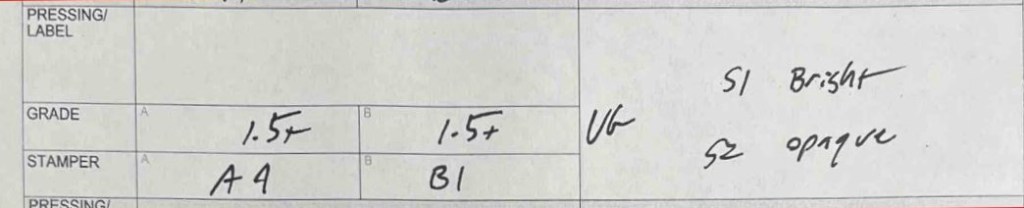
VAN GELDER in the dead wax is no guarantee of high quality sound, on any record.

Side one of this original pressing with later stampers was bright and side two opaque. This pressing was not awful, or even mediocre — the reissues without VAN GELDER in the dead wax would most likely be much worse sounding, we stopped buying them years ago — but at 1.5+ we would say these grades point to the sound is good, not great.

The only way to guarantee higher quality sound is to put the album through a shootout with a good-sized pile of cleaned pressings and find the one that sounds the best using the rigorous testing methodologies we recommend. For this kind of work to be meaningful and reproducible, top quality playback is a must.

There is of course a way to avoid doing all that work and spending all the kind of money it takes to acquire piles of pressings — most of which you will eventually have no use for — and that’s to buy a Hot Stamper copy of the album from us.

The Music

The high point for side one is clearly the first track. It’s got a Midnight Blue relaxed groove going on, the kind that Kenny Burrell seems to be able to bring to any session he plays on. Or maybe it’s the rhythms Ray Barretto works out in the songs that make them so relaxed and swinging at the same time.

Side two is magical from start to finish. The two extended songs, both more than eight minutes in length, leave plenty of room for the band — and the orchestra! — to stretch out.

(more…)

On Waka/Jawaka Transparency Is Key

Hot Stamper Pressings of the Music of Frank Zappa Available Now

Not long ago we discovered the secret to separating the men from the boys on side one: TRANSPARENCY.

On the lively, punchy, dynamic copies — which are of course the best ones — you can follow the drumming at the beginning of ‘Big Swifty’ note for note: every beat, every kick of the kick drum, every fill, every roll.

It’s all there to be heard and appreciated. If that track on this copy doesn’t make you a huge fan of Aynsley Dunbar, I can’t imagine what would. The guy had a real gift.

Big Swifty!

The 17-plus-minute-long Big Swifty is a suite in which each section slowly, almost imperceptibly blends into the next, so that you find yourself in a completely new and different section without knowing how you got there — that is, until you go back and play the album and listen for just those transistions, which is what makes it worth playing hundreds and hundreds and hundreds of times.

Big Swifty is a jazz suite with amazingly innovative work by Sal Marquez on trumpet. He single-handedly turns this music into a work of brilliance. I can’t imagine a more talented player.

Zappa on guitar is excellent as well. Aynsley Dunbar plays his ass off, only falling short when it comes time to do his drum solo on Waka/Jawaka.

The interplay of each of these rock musicians is in the tradition of the greatest jazz artists stretching all the way back to the 50s.

And since the drumming throughout this record is so crucial to the music itself, a copy that really gets that right is one that probably gets everything right.

(more…)

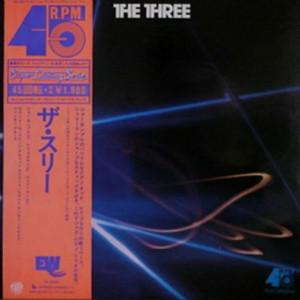
The Three at 45 RPM Has Energy Like No Recording We’ve Ever Heard

Hot Stamper Pressings Featuring Shelly Manne Available Now

When it comes to blockbuster sound that jumps out of the speakers, the wind is at your back with The Three because this is one seriously well-recorded album. If this record doesn’t wake up your stereo, nothing will.

We call it a “blockbuster” because it does not sound very much like a jazz trio performing in a club or some such venue.

But where is the harm in that? It’s not trying to.

What it’s trying to be is huge and powerful in your home. Everything has been carefully and artificially placed in the soundfield. Shelly Manne’s cymbals are placed as far left and as far right as possible on the “stage,” making him the longest-armed drummer to have ever sat behind a kit.

The drum solo on side two is full of energy and so dynamic. Why aren’t more drum kits recorded this well?

Check out the pictures inside the fold-open cover to see all the mics that were used on the drums. That’s where that wall-to-wall, floor-to-ceiling sound comes from.

It’s a phenomenal big speaker jazz Demo Disc.

Play this one as loud as you can. The louder you play it, the better it sounds.

Speaking of Energy

The transients found on this recording are uncannily lifelike. Listen for the huge amounts of kinetic energy produced when Shelly whacks the hell out of his cymbals.

This is a quality no one seems to be writing about, other than us of course, but what could possibly be more important? On this record, the more energetic copies took the players’ performances to a level beyond all expectations. It is positively shocking how lively and dynamic the best copies of this record are.

I know of no other jazz recording with this combination of sonic and musical energy.

(more…)

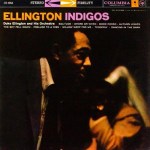
The Amazingly Spacious Sound of Ellington Indigos

Hot Stamper Pressings of the Music of Duke Ellington Available Now

This original 6-Eye Stereo pressing blew us away with its superbly well-recorded romantic big band jazz, of which Ellington was a true master.

A near-perfect demonstration of just how good 1958 All Tube Analog sound can be – no modern record can hold a candle to a pressing as good as this one.

If you like the sound of relaxed, tube-mastered jazz, you can’t do much better than Ellington Indigos. Many of the other Six Eye copies we played suffered from blubbery bass and transient smearing, but the clarity and bass definition here are surprisingly good. The warmth and immediacy of this sound may just blow your mind.

We played a handful of later pressings that didn’t really do it for us. They offer improved clarity, but can’t deliver the tubey goodness that you’ll hear on the best early pressings. We won’t be bothering with them anymore. It’s tubes or nothing on this album, and that means the best 6 Eye Stereo original pressings will always win our shootouts.

The key for vintage super-tubey recordings is balancing clarity with richness. The easiest way to test for those two qualities on this album is to find a track with clear, lively, loud trumpets that also includes rich trombones and other low brass.

On side one that track is Where or When. If your copy has clear, lively trumpets and rich, full-bodied, Tubey Magical low brass, it is definitely doing an awful lot of what it needs to do right.

Some of you may recognize that this is precisely why Bob and Ray Throw a Stereo Spectacular is our all time favorite test disc. (Was might be more accurate. It was for me, but I retired. The younger generation now running the show has their own favorite test discs, as is only fitting. They didn’t spend ten or fifteen years working on the stereo and room with the record the way I did.)

(more…)

Oscar Peterson’s Best Recording? Sure Sounds Like It to Us

Hot Stamper Pressings of the Music of Oscar Peterson Available Now

I’ve known this was a well recorded album since I first heard the DCC Gold CD back in the 90s.

It sounded great to me at the time, although I had nothing to compare it to. I was not an Oscar Peterson fan in those days. The CD may be very good, but it is unlikely to hold a candle to any of our Hot Stamper vinyl pressings.

I now realize that this album is clearly one of the best jazz piano recordings ever made. In its own way it’s every bit as good as  another landmark recording we talk about, The Three, recorded in 1975.

This album checks off a number of important boxes for us here at Better Records:

The description for the amazing copy we found in our shootout more than a decade ago has been reproduced below.

The Right Sound from the Get Go

Side one starts out with a solid, full-bodied piano and snare drum, a sure sign of great sound to come. This side was richer and fuller than all the other copies we played. That rich tonality is key to getting the music to work. It keeps all the instrumental elements in balance. The natural top on this side is just more evidence that the mastering and pressing are top drawer. Great space and immediacy, powerful driving energy — this side could not be beat.

And side two was every bit as good! The sound was jumpin’ out of the speakers. There was not a trace of smear on the piano, which is unusual in our experience, although no one ever seems to talk about smeary pianos in the audiophile world (except for us of course).

Ray Brown’s bass is huge, probably bigger than it would be in real life, but I can live with that. Once again, with this kind of extended top end, the space of the studio and harmonics of the instruments are reproduced brilliantly.

Testing with Oscar

Lately we have been writing quite a bit about how good pianos are for testing your system, room, tweaks, electricity and all the rest, not to mention turntable setup and adjustment.

  • We like our pianos to sound natural (however one chooses to define the term)
  • We like them to be solidly weighted
  • We like them to be free of smear, a quality that for some reason is rarely mentioned in the audiophile reviews we read [more on smear at the end of this commentary]

Here are some of our favorite jazz records with top quality piano sound

Other records that we have found to be good for testing and improving your playback can be found here.

(more…)

What to Listen For on Birds of Fire

Hot Stamper Pressings of Jazz-Rock Fusion Albums Available Now

Birds of Fire as a recording is not about depth or soundstage or ambience.

It’s about immediacy, plain and simple.

All the lead instruments positively jump out of the speakers — if you are lucky enough to be playing the right pressing.

This is precisely what we want our best Hot Stampers to do. In most cases, the better they do it, the higher their grade will be.

The main problem with this record is a lack of midrange presence. If the keyboards, drums and guitars are not front and center, your copy does not have the presence it should. On the best copies the musicians are right in the room with you. We know this for a fact because we heard the copies that could present them that way, and we heard it more than once.

Which of course gets to the reason shootouts are the only real way to learn about records.

The best copies will show you qualities in the sound you had no way of knowing were there. Without the freakishly good pressings you run into by chance in a shootout you have no way to know how high is up. On this record up is very high indeed.

A True Demo Disc

Birds of Fire is one of the top two or three Jazz/Rock Fusion Albums of All Time. In my experience, few recordings within this genre can begin to compete with the Dynamics and Energy of the best pressings of the album — if you have the Big Dynamic system for it.

(more…)

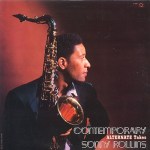
Sonny Rollins Helped Us See the Light Many Years Ago

The following commentary was taken from our mid-90s catalogs, the ones that came out back in the days when it was still possible to find great jazz records like Alternate Takes for cheap, often still sealed.

The Analogue Productions Heavy Vinyl recuts done by Doug Sax had come out a few years earlier, starting in 1992. Those remastered records were in print at the time I wrote this, and I was pretty pissed off at the way they sounded.

Here is our listing with some minor changes from long ago:

Acoustic Sounds had just remastered and ruined a big batch of famous jazz records, and shortly thereafter a certain writer in The Absolute Sound had said nice things about them.

Said writer and I got into a war of words over these records, long, long ago. You’ll notice that no one ever mentions these awful records anymore, and for good reason: they suck. If you own any of them, do yourself a favor and get either the CD or a good LP for comparison purposes. I expect you will hear what I’m talking about.

In my essay on reviewers I attack him for giving a big “Thumbs Up” in TAS to the botched remastering of Sonny’s Way Out West. The OJC reissue, though superior, is still only a pale shadow of the original.

The Real Deal

Now we have the real thing! This LP has three alternate takes from that session, all mastered by George Horn, and surprise, surprise, surprise, they sound just like my original, much better than (but not so different from) the OJC, and worlds away from the muted flab of the Analogue Productions LP!

(more…)

Touch – A Great Test for Tweeters

Hot Stamper Pressings of Well Recorded Jazz Albums In Stock Now

Mobile Fidelity, maker of some of the worst sounding records in the history of the medium, is the KING on this title. We know of no better pressing than the right version of the MoFi. (There are three different stampers for the MoFi, and only one of them ever wins shootouts.)

Klemmer says pure emotion is what inspired the album’s creation. Whatever he tapped into to find the source of that inspiration he really hit pay dirt with Touch. It’s the heaviest smooth jazz ever recorded. Musically and sonically, this is the pinnacle of Klemmer’s smooth jazz body of work. I know of none better. (If you want to hear him play more straight-ahead jazz try Straight from the Heart on Nautilus Direct to Disc.)

High Frequency Testing

MoFi was famous for demonstrating on an actual scope that the standard domestic ABC pressing had nothing above about 8 or 10 thousand cycles up top, which is why they all sound insufferably dull and dead. Some MoFi copies have no real top end either, which is the reason to we do these shootouts — to find the copies that are actually mastered and pressed right, not just the ones that should have been.

(more…)

Hampton Hawes at the Piano Is His Best Album

Hot Stamper Pressings of the Music of Hampton Hawes Available Now

This Contemporary Yellow Label LP has the best sound and the best music we have ever heard on a Hampton Hawes album.

When we frist dropped the needle on this one many years ago we could not believe our ears — it’s got The Big Sound, that’s for sure.

If you’re a fan of jazz piano trios playing live-in-the-studio, this Contemporary from 1958 surely deserves a place in your collection. Of course it’s a personal favorite of yours truly.

This is my favorite Hampton Hawes record of all time. He died less than a year after these sessions. Looking at the cover, you can almost see in his face his acceptance of the end he knew was coming. He plays with deep emotion here.

Ray Brown and Shelly Manne (the same rhythm section who back Joe Sample on my all-time favorite piano trio album, The Three) accompany Hawes beautifully here.

As good as The Three may be, it is not remotely as natural sounding as this Contemporary recording by Roy DuNann. Due to the multi-miking approach Lee Herschberg took for the session, Shelly Manne’s drums on The Three stretch from speaker to speaker, presenting us with a drummer whose arms are impossibly long.

On this Contemporary recording the drummer is placed in the soundfield in one fixed location and his drum kit is the size of a standard jazz kit of the ’50s. I’m good with either approach, but there’s no question which one is more natural.

Drop the needle on “Blue In Green” on side two — the sound of the bowed bass is WONDERFUL. The version of “Killing Me Softly With His Song” that opens the album is especially lovely. (One high point of this album is the interview that Lester Koenig conducts with Hampton Hawes on the back cover. Lester died soon thereafter himself.)

(more…)

Red Clay Is a RVG/CTI Masterpiece

xxx

Hot Stamper Pressings of the Music of Freddie Hubbard Available Now

Red Clay is one of our favorite CTI albums – Red Clay (the song and the album) is Hubbard’s soul jazz masterpiece, and it’s a record that belongs in every audiophile’s jazz collection.

Lenny White drums up a storm on this album – on this copy he is playing right in the room with you.

If you’re a Hubbard fan, or perhaps a fan of early-70s soulful jazz, this title from 1970 is surely a Must Own.

We’ve recently compiled a list of records we think every audiophile should get to know better, along the lines of “the 1001 records you need to hear before you die,” but with more of an accent on the joy these amazing audiophile-quality recordings can bring to your life. Red Clay is a good example of a record most audiophiles may not know well but would benefit from getting to know better.

Hubbard was a master of funky jazz, and the song “Red Clay” is arguably the funkiest jazz track he ever committed to tape. At 12 minutes in length it is a transcendentally powerful experience — and the bigger your speakers and the louder you turn them up the more moving that experience is going to be!

The intro to “Red Clay” begins with a stylized free-form jam, sounding like a bop-jazz band of old, then takes form and solidifies into a groove of monstrous proportions. Ron Carter’s bass playing is stellar! It’s big and lively with tons of presence and energy.

5 stars: “This may be Freddie Hubbard’s finest moment as a leader, in that it embodies and utilizes all of his strengths as a composer, soloist, and frontman. [It] places the trumpeter in the company of giants such as saxophonist Joe Henderson, pianist Herbie Hancock, bassist Ron Carter, and drummer Lenny White… This is a classic, hands down.”

(more…)