150-250

The Best Danse Macabre on Record

Hot Stamper Pressings of the Music of Saint-Saens Available Now

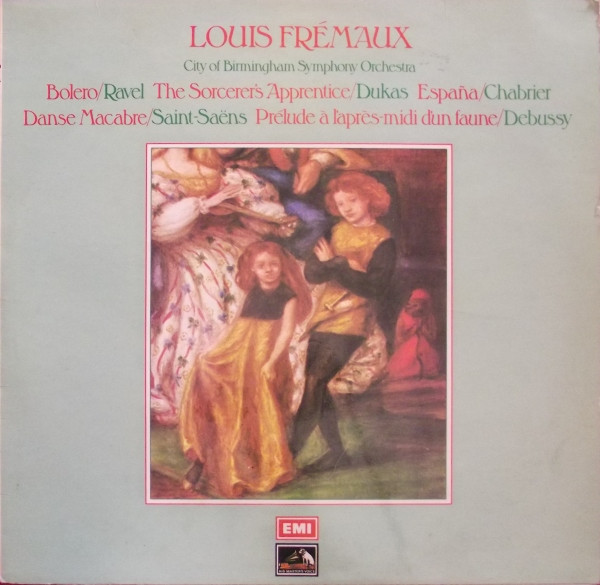
Saint-Saens’ symphonic poem, Danse Macabre, the second piece on the second side, is the heart of the album and its raison d’être for us. This is where the real fireworks can be found, although that’s not really fair as there are fireworks aplenty on both sides.

What we have here is the best Danse Macabre we have ever played.

We have always been fans of Gibson’s performance on the legendary Witches’ Brew. As good as that recording may be, this one is clearly superior in practically every way — it’s bigger, clearer, richer, more resolving, more spacious, more real and, to my surprise, more EXCITING and involving.

If you own a copy of LSC 2225, hopefully not the awful Classic Records Heavy Vinyl pressing, you need to hear what Fremaux and the City of Birmingham Symphony Orchestra have accomplished on this wonderful 70s EMI.

Audiophiles (especially those of us with large dynamic speakers) have always been drawn to the biggest and most exciting orchestral spectaculars, and we have plenty on the site at all times to satisfy the need to hear these kinds of records at their properly-mastered, properly-pressed best.

Why spend money on another underperforming modern reissue that you will end up rarely playing when much more powerful and involving sound can be found on our site, sound so good it has the potential to change your life.

Four Exceptional Orchestral Showpieces

The Sorcerer’s Apprentice (Dukas)

This piece opens the side. There is depth and richness to beat the band, as well as clarity and tonal correctness that let you forget the recording and just enjoy the music.

A superb performance as well, as good as any we know of. And the sound is the equal of the best recordings we’ve played.

Espana. Rhapsody For Orchestra (Chabrier)

As good as Fremaux is, I think the Ansermet (CS 6438) might still have the edge, but both are so good that it might just come down to a matter of taste. You cannot go wrong with either.


UPDATE 2023

And now we actually prefer the famous Argenta recording for Decca that’s on the TAS List, CS 6006.


(more…)

Oscar Peterson’s Best Recording? Sure Sounds Like It to Us

Hot Stamper Pressings of the Music of Oscar Peterson Available Now

I’ve known this was a well recorded album since I first heard the DCC Gold CD back in the 90s.

It sounded great to me at the time, although I had nothing to compare it to. I was not an Oscar Peterson fan in those days. The CD may be very good, but it is unlikely to hold a candle to any of our Hot Stamper vinyl pressings.

I now realize that this album is clearly one of the best jazz piano recordings ever made. In its own way it’s every bit as good as  another landmark recording we talk about, The Three, recorded in 1975.

This album checks off a number of important boxes for us here at Better Records:

The description for the amazing copy we found in our shootout more than a decade ago has been reproduced below.

The Right Sound from the Get Go

Side one starts out with a solid, full-bodied piano and snare drum, a sure sign of great sound to come. This side was richer and fuller than all the other copies we played. That rich tonality is key to getting the music to work. It keeps all the instrumental elements in balance. The natural top on this side is just more evidence that the mastering and pressing are top drawer. Great space and immediacy, powerful driving energy — this side could not be beat.

And side two was every bit as good! The sound was jumpin’ out of the speakers. There was not a trace of smear on the piano, which is unusual in our experience, although no one ever seems to talk about smeary pianos in the audiophile world (except for us of course).

Ray Brown’s bass is huge, probably bigger than it would be in real life, but I can live with that. Once again, with this kind of extended top end, the space of the studio and harmonics of the instruments are reproduced brilliantly.

Testing with Oscar

Lately we have been writing quite a bit about how good pianos are for testing your system, room, tweaks, electricity and all the rest, not to mention turntable setup and adjustment.

  • We like our pianos to sound natural (however one chooses to define the term)
  • We like them to be solidly weighted
  • We like them to be free of smear, a quality that for some reason is rarely mentioned in the audiophile reviews we read [more on smear at the end of this commentary]

Here are some of our favorite jazz records with top quality piano sound

Other records that we have found to be good for testing and improving your playback can be found here.

(more…)